

Team & Talent 11 min read
Spot Your Team's Skills Gap
A skills gap stays invisible until your best person quits. Here's how to run a skills audit and map your team's capability before it costs you.
A curated set of 35 spreadsheets for the people who run people. Map your team's capability on a skills matrix, find what's missing with a gap analysis, and settle who owns what with a RACI matrix — your team's capability and risk on one grid, not buried in someone's head.
Most teams carry their capability in their heads — who can cover what, who's the only one who knows the process, where the next gap will open when someone leaves. A skills matrix puts that on a single grid you can actually act on: spot key-person risk, plan training, and make the case for a hire with evidence instead of a hunch. For task-by-task coverage on a line or shift, an ILUO matrix records who is signed off to run each task alone — and flags the ones only one person can.
Onboarding rarely fails on process. It fails on lead time — the laptop that took ten business days nobody counted backward from. The New-Hire Welcome Packet & First-Week Printables Pack is the paper half of somebody’s first week: the packet you hand over, and the back-dated countdown you work first, ending in a day-five slip that asks the new hire what was not ready. The free first-day agenda and who-to-ask pair is two of its nineteen sheets, and what an onboarding buddy is covers the role every packet names and almost none briefs.
Not sure which of the twelve people-ops jobs to start with? The free people-ops readiness scorecard asks twelve questions, weights each gap by what it costs a small team, and names the one workbook to open next. If the answer is “most of them”, the HR Manager Toolkit Bundle is all twelve in the order to use them, with a rollout and a cadence calendar to keep them running.
Pair it with a gap analysis to see the distance between where the team is and where it needs to be, and a RACI matrix to make responsibilities unambiguous across a project or a reorg. To map the seats you can't afford to lose, a succession plan scores each critical role's bus factor and flags your single points of failure. When people do leave, an exit-interview & turnover-analytics workbook turns each departure into a trend — your turnover rate by team and manager, the regrettable split, the reasons people go, and the cost of turnover; capture one exit free with the exit-interview form, or see how it compares to HR analytics software.
When someone asks for a change to how they work, the interactive process is the dated back-and-forth that follows — and the ADA sets no response clock on a private employer, so the target is one you set yourself. The accommodations request & records workbook runs it across every open request: how long each has sat without a documented contact, and where the same kind of ask got opposite answers from two managers. It records the process and the decision, never a diagnosis. Try it on one request with the free single-request log, or see how an owned file compares to HR case-management software.
Growing the other way needs its own arithmetic. A headcount plan is the roles you mean to hire, each with a start date and a cost you can defend — and the hard part is the cost, because some employer taxes stop at a wage base while health cover costs the same at any salary, so the real multiplier differs for every hire. The headcount & hiring-plan budget workbook computes it per hire and phases the spend month by month; sketch a single quarter free with the quarterly headcount planner, or see how an owned workbook compares to workforce-planning software.
Then there is the hardest version of someone leaving: a reduction in force, where the role goes rather than the person failing. A Reduction in Force (RIF) Layoff Workbook makes you write the criteria before you read the names, and ranks every comparator pool against a target set in advance. It then shows you who the selection lands on by department, site and length of service, and keeps the file index that records how and why. Sketch one pool free with the single-factor selection starter, or see how the workbook compares to an HR consulting engagement. Nothing here is legal advice, and neither the starter nor the workbook replaces a qualified employment lawyer — take the completed selection file to one before you notify anyone.
When it comes to pay, set salary bands and check compa-ratio and pay equity in a workbook you own, instead of a per-seat compensation platform. And to keep the day-to-day covered, a PTO & absence tracker logs who's off and flags when a shift runs short — see what PTO accrual means, or how a tracker compares to HR leave software.
When it's time to hire, interview on evidence rather than a gut feeling: a structured interview asks every candidate the same questions and scores them like-for-like, and an interview scorecard & question bank ranks your slate and recommends a hire — see how it compares to ATS software. Once you've made the hire, give them a strong start: a 30-60-90 plan maps a new starter's first three months into goals, owners, and check-ins — the onboarding end of the funnel that begins with a job applicant tracker.
A plan is only half of a start, though. The other half is the accounts and the laptop — and the same list run backwards on the day somebody leaves. That is the joiner-mover-leaver process, and the leg a plain checklist tends to lose is the middle one: a role change needs the new access granted and the old access removed, with nobody chasing the second half. An onboarding & offboarding equipment & access tracker works the whole roster at once, ranks what is still open by how sensitive it is and how long it has been open, and flags the systems where switching an account off strands what that person owned. See how it compares to IT onboarding software, or start free with the single-person checklist.
And to point the whole team at the same quarter, set OKRs — objectives and key results scored each cycle — in an OKR & Goal-Setting Workbook that rolls every team up to one company view, instead of a per-seat goal-tracking app. Then keep the thread with each person in a one-on-one: a 1:1 Meeting & Goal-Tracking Workbook logs every meeting, carries action items forward, and tracks whether goals are on pace — instead of a per-seat performance-management platform. And when review season lands, the Performance-Review Phrasing & Feedback Wording Bank supplies the wording the review form actually asks for — 189 phrases by competency and rating level, each with the evidence it requires — while the calibration workbook decides the rating. See behavior-based feedback and calibration, or the narrower templates for managers hub for line managers without an HR function. And when a conversation has to become paperwork, the HR Letters & Employment-Document Template Pack carries the 24 documents an employment relationship produces — with a router that names which document the situation calls for and what has to already be on file, and a filing line on every one saying which of the two employee files it belongs in. Start free with the coaching note & verbal-warning record, or read what to document when an employee underperforms.
Earlier than any of that sits the document everyone puts off. An employee handbook is where a business records the calls it has already made, so they are not re-decided case by case, and the Employee Handbook Starter Kit computes which federal employment-law thresholds your headcount has crossed, classifies each of sixteen handbook sections against them, and screens your own drafted wording against the phrasings that can create an implied contract or undercut an at-will statement — down to the at-will acknowledgment at the back. Federal floors only: where the answer is local it names what varies and hands you the question. One file you own, bought once, with no account and no subscription. Nothing here is legal advice, and the kit is not a substitute for counsel reviewing the handbook you issue. Settle the twelve decisions it starts from first — free, no signup — in the Handbook Decision Worksheet, read what goes in a first employee handbook, or see how an owned kit compares to an HR platform.
Recommended templates
35 templates
Skills matrices, gap analysis, a RACI matrix, and PTO & coverage tracking — in Excel and Google Sheets. The Hire & Onboard Kit covers the hiring end: pipeline, interview scoring and the first ninety days.
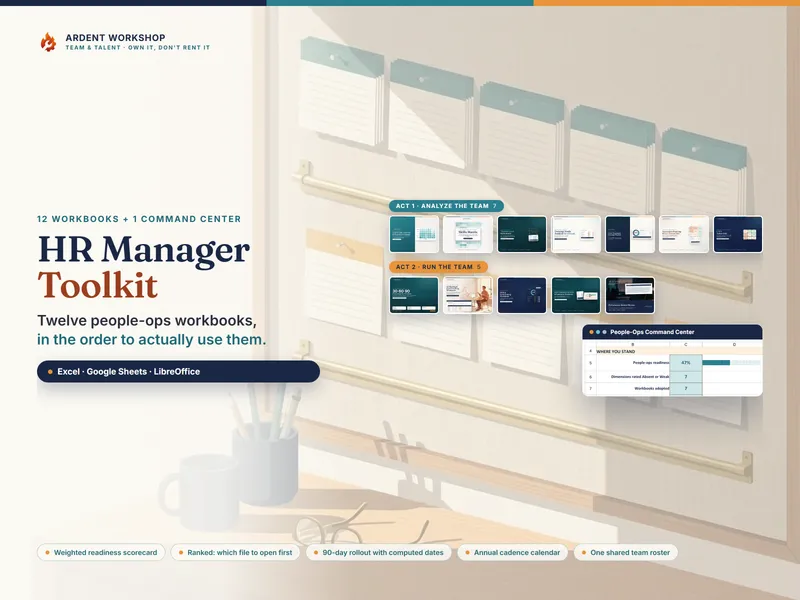
Twelve people-ops workbooks - skills matrix, succession, 9-box, onboarding, 1:1s, OKRs, reviews - plus the file that tells you which to open first.

Three hiring workbooks - applicant tracker, interview scorecard, 30-60-90 plan - plus a fourth that turns the interview into the new hire's first ninety days.
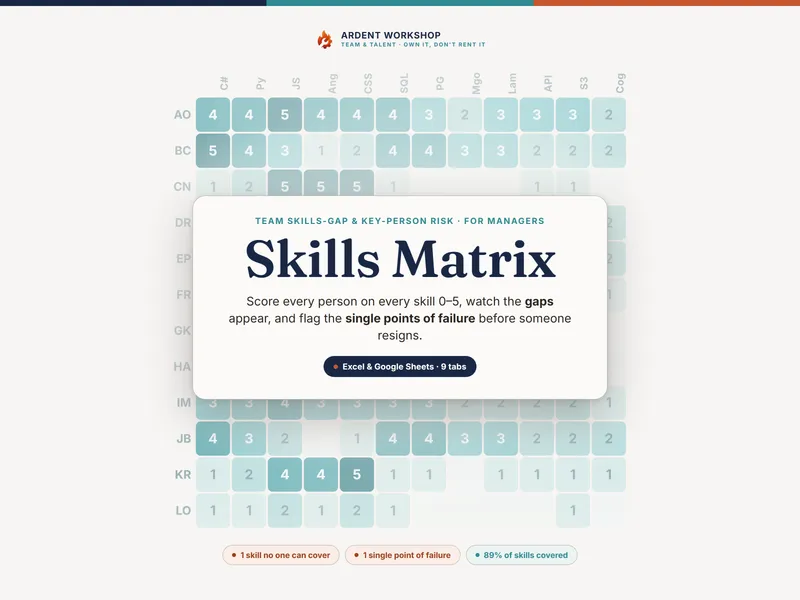
A 9-tab skills matrix for Excel & Google Sheets: score your team 0-5, find the skills gaps, and flag single points of failure before someone resigns.
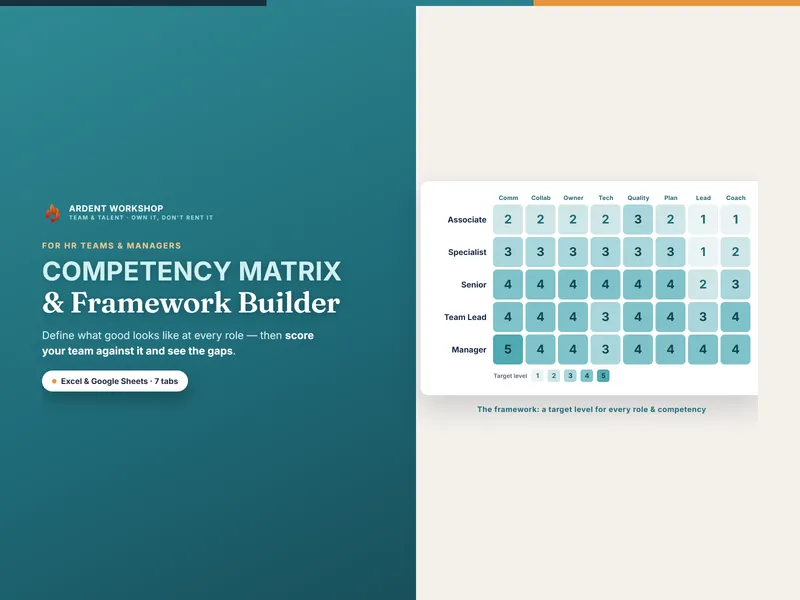
A competency matrix and framework builder for Excel & Google Sheets — define role targets, score your team 1–5, and see every competency gap.

A structured interview scorecard for Excel & Google Sheets — score every candidate on the same competencies, auto-rank your slate, plus 100+ questions.
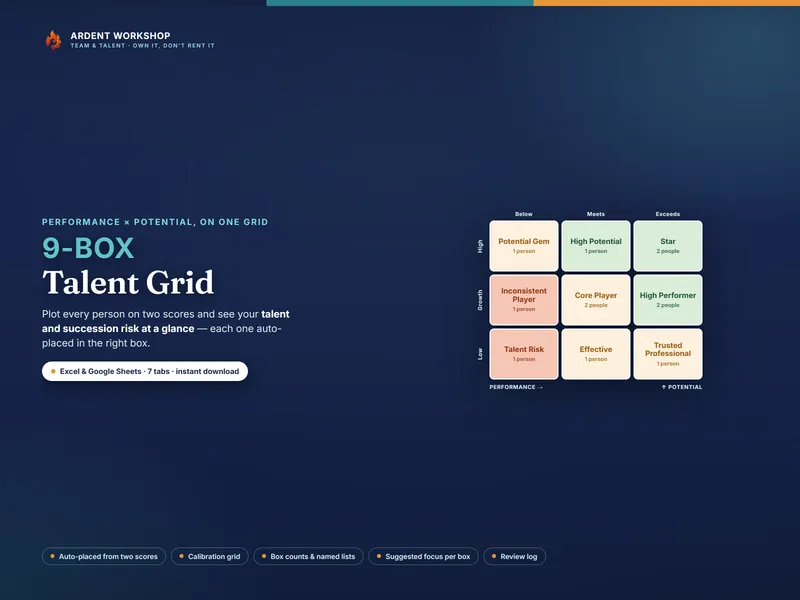
A 9-box talent grid for Excel & Google Sheets — score performance and potential, auto-place each person, and see succession risk on one grid.

A stay-interview & retention-risk tracker for Excel & Google Sheets — score flight risk and impact, auto-rank who to keep, and track the action for each.

An exit-interview and turnover-analytics workbook for Excel & Google Sheets — log departures and see turnover rate, regrettable split, reasons, and cost.
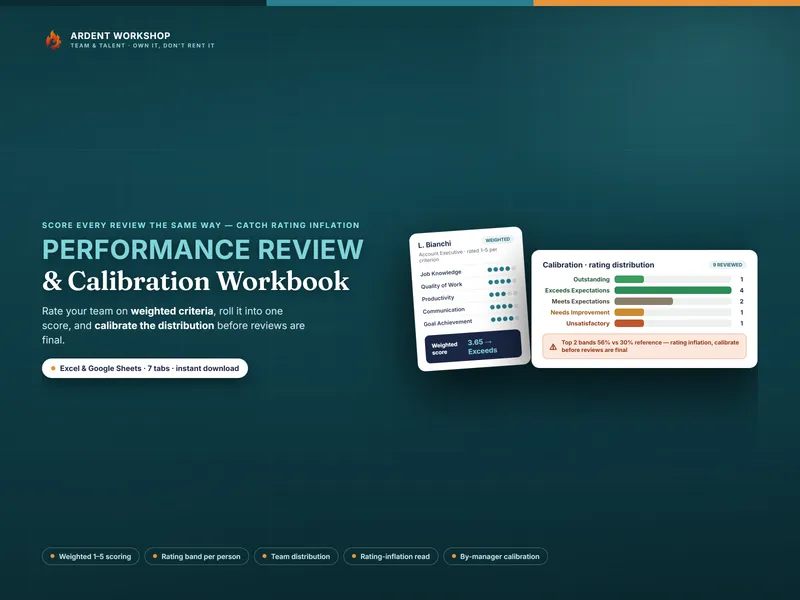
A weighted performance review template for Excel & Google Sheets — score your team on shared criteria and calibrate the rating distribution.

189 performance review phrases by competency and rating level, plus 54 more for goals and calibration — each naming the evidence it requires.
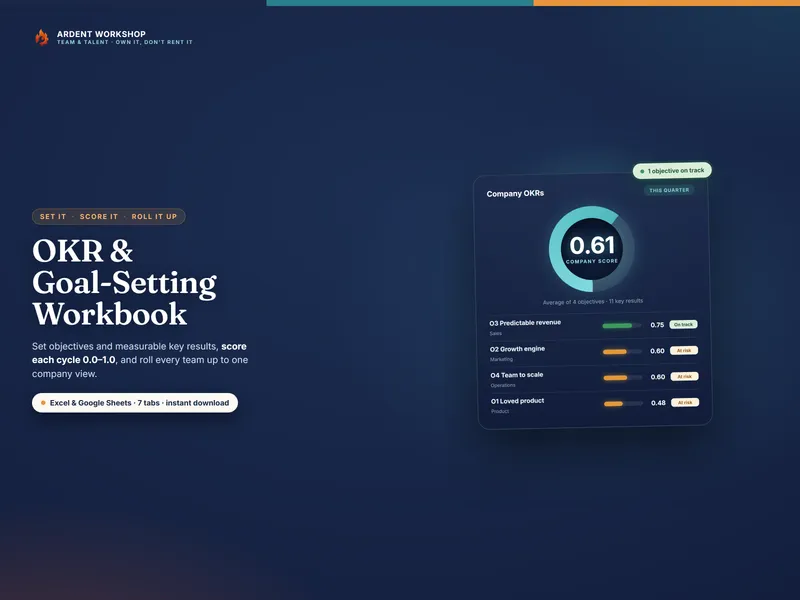
An OKR workbook for Excel & Google Sheets — set objectives and key results, score progress 0.0–1.0 each cycle, and roll every team up to one company view.
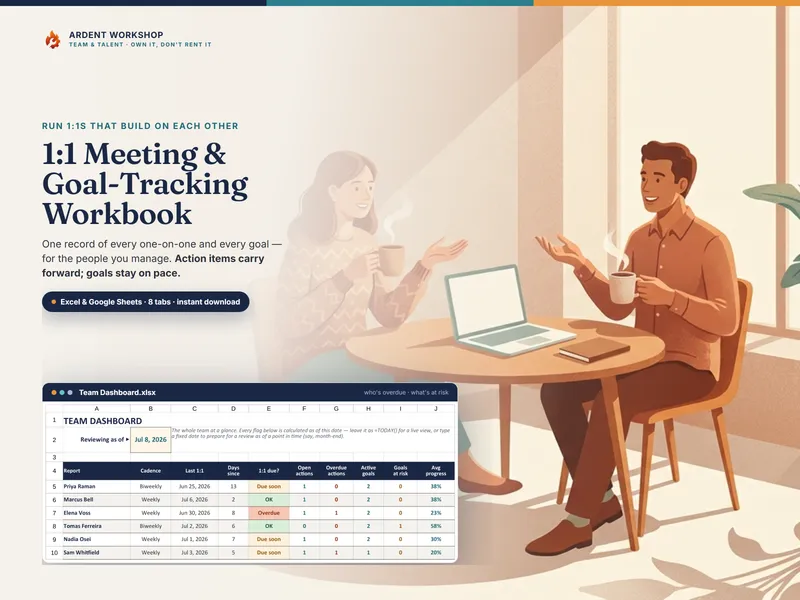
A 1:1 meeting & goal-tracking workbook for Excel & Google Sheets — log every one-on-one, carry action items forward, and track goal pace across your team.

New-hire onboarding printables: 19 print-and-write-on sheets across 9 PDFs — the packet you hand over, plus the back-dated countdown you work first.
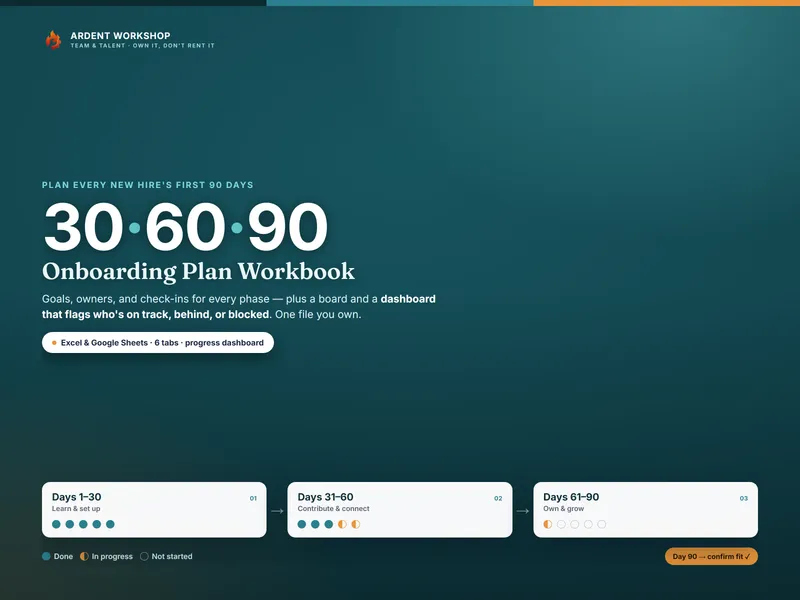
A 30-60-90 onboarding plan for Excel & Google Sheets — plan and track every new hire's first 90 days with goals, check-ins, and a progress dashboard.

An onboarding and offboarding tracker for Excel, Google Sheets and LibreOffice — rank open accounts and unreturned laptops by sensitivity and days open.
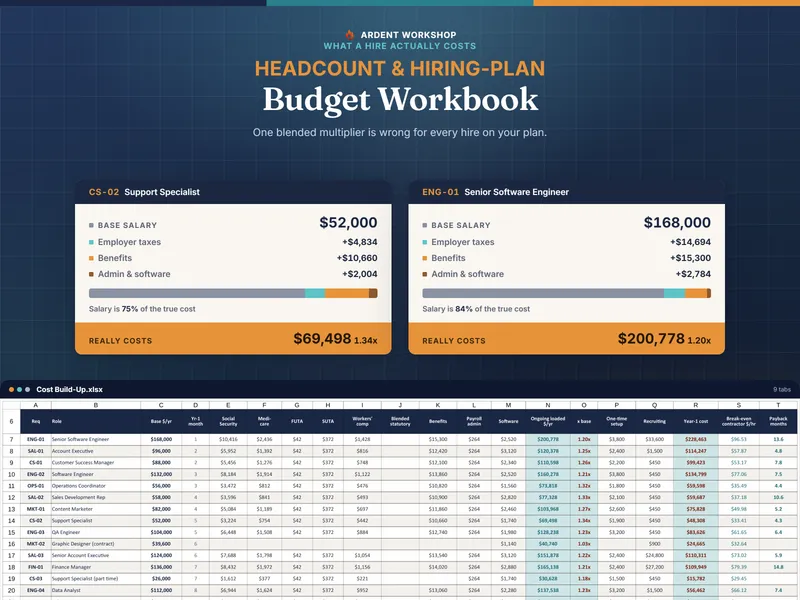
Cost every planned hire from your own employer tax rates and wage bases, phase the spend month by month, and find out which month breaks the budget.
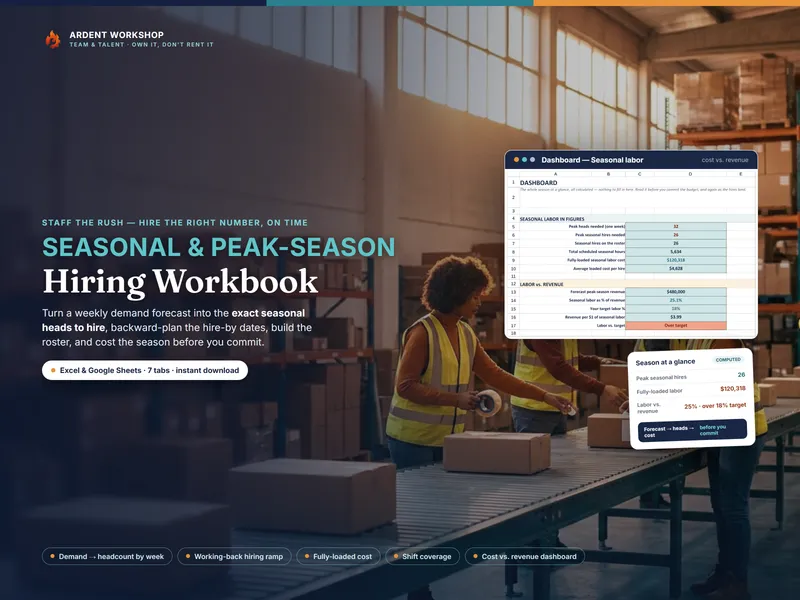
Staff up for a peak without over- or under-hiring: a workbook that sizes seasonal headcount from your forecast, times the hiring ramp, and costs the season.

A mentorship program tracker for Excel & Google Sheets — pair mentors and mentees, set goals, log sessions, and see outcomes on one program dashboard.
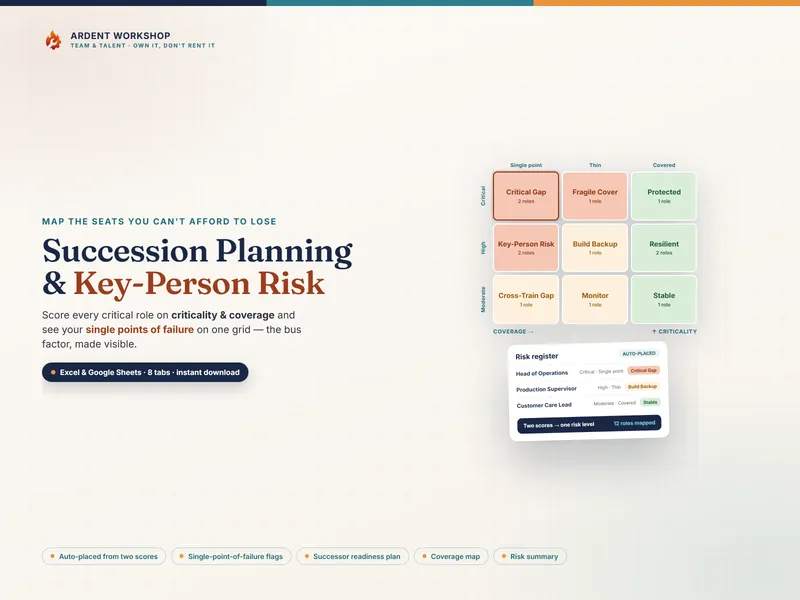
A succession-planning & key-person-risk workbook for Excel & Google Sheets — score criticality and coverage to map your single points of failure.

Handbook prose is free everywhere. Knowing which policies you are subject to, and whether your wording just made a promise, is not. Fillable PDF.
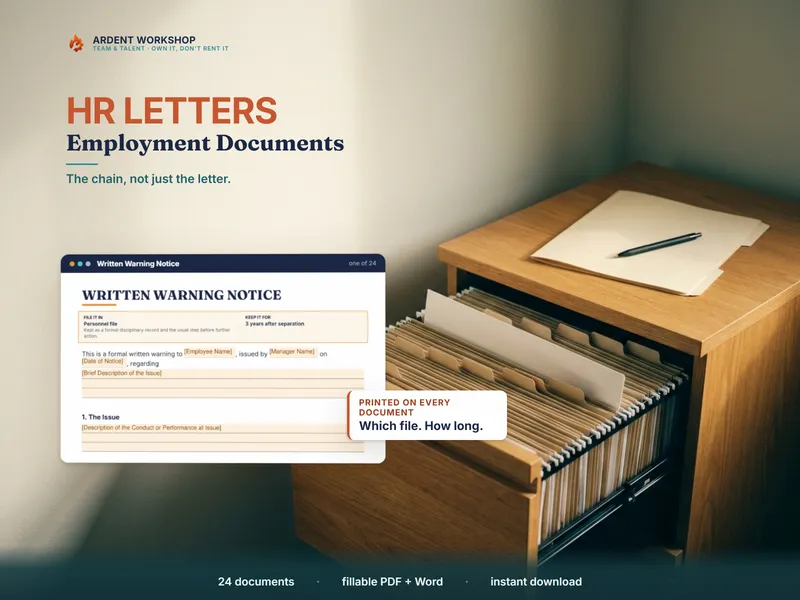
The letter is the easy part. This is the chain — which document a situation needs, what must already be on file, and where it gets filed. PDF + Word.

A reduction in force (RIF) layoff selection workbook for Excel & Google Sheets — set the criteria first, rank each pool, keep the file that shows why.

An ADA reasonable-accommodation tracker for Excel & Google Sheets that flags requests which have gone quiet, and where the same ask got opposite answers.
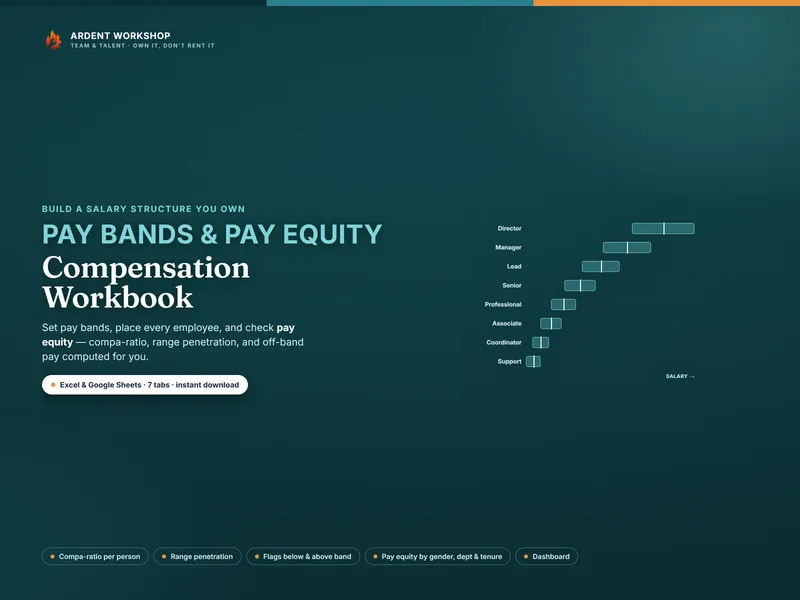
A pay-band & pay-equity workbook for Excel & Google Sheets — set salary bands, compute compa-ratio and range penetration, and screen pay equity.
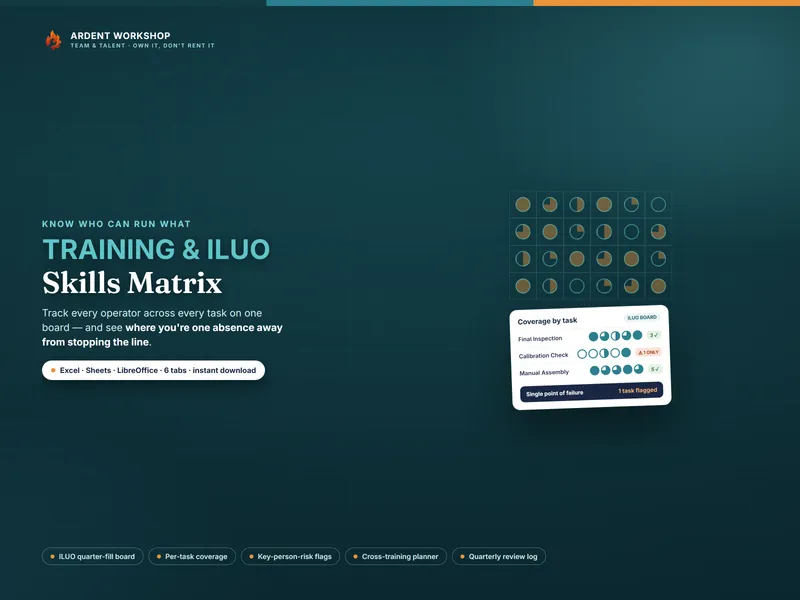
An ILUO skills matrix for Excel & Google Sheets — track each operator's level on every task, see coverage at a glance, and flag key-person risk.
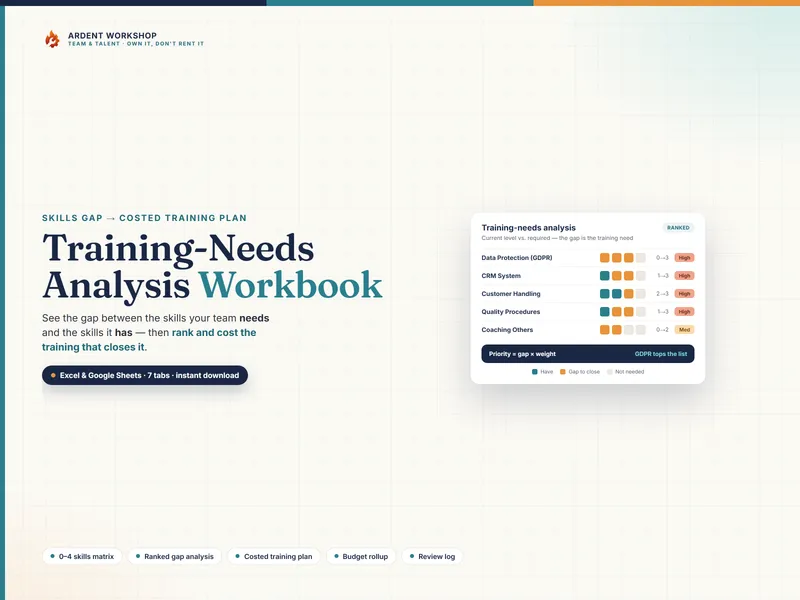
A training-needs analysis workbook for Excel & Google Sheets — rate skills 0–4, rank the gaps by priority, and turn them into a costed training plan.
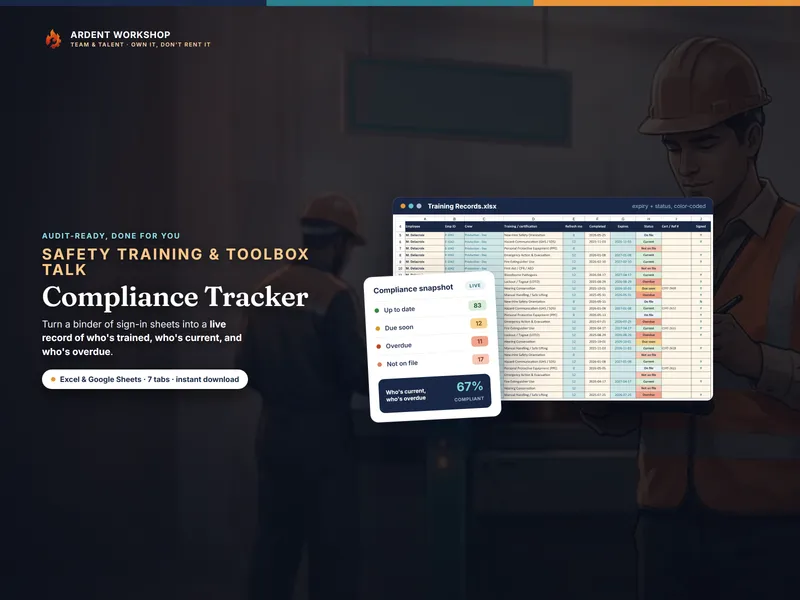
A safety-training & toolbox-talk tracker for Excel & Google Sheets — automatic refresher expiry, color-coded status, and audit-ready compliance dashboard.
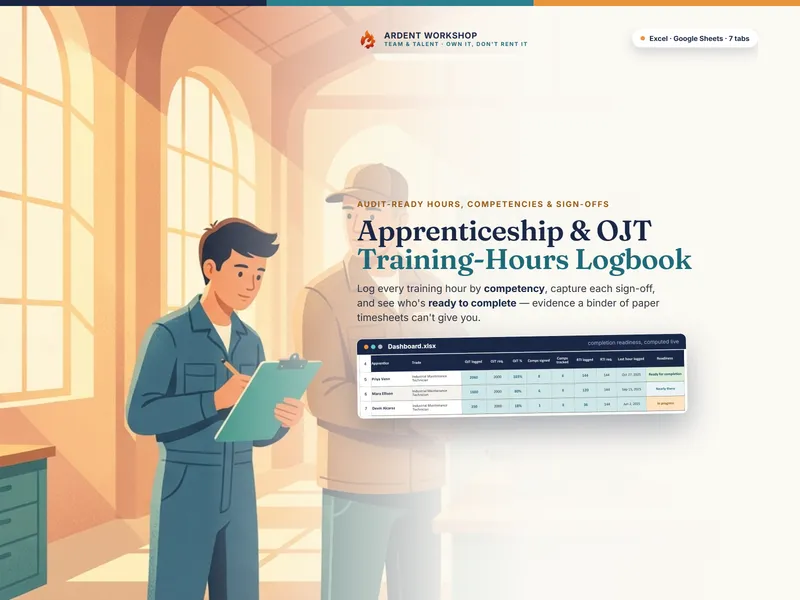
An apprenticeship & OJT training-hours logbook for Excel & Google Sheets: log hours by competency, capture sign-offs, and track completion readiness.
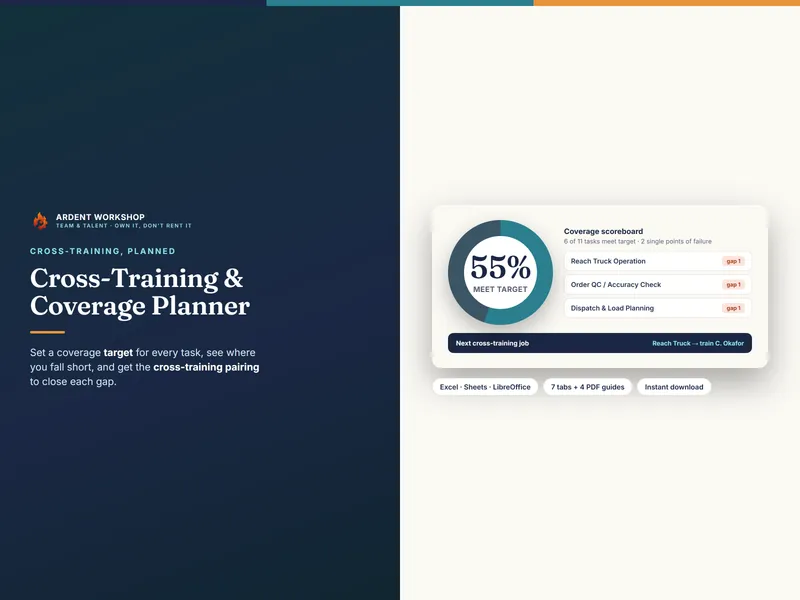
A cross-training and coverage planner for Excel & Google Sheets — set a coverage target per task, see the gaps, and get the pairings to close them.
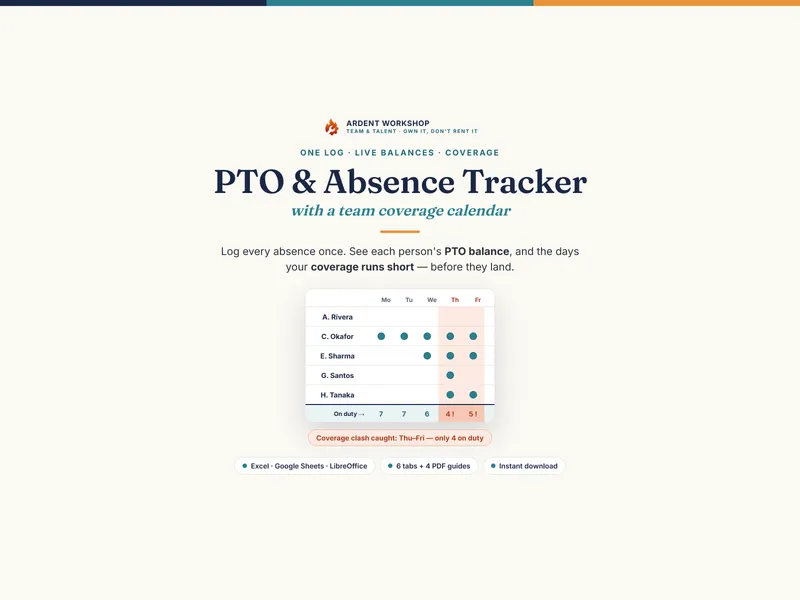
A PTO and absence tracker for Excel & Google Sheets — log leave once, see each person's balance, and a team calendar that flags coverage clashes.
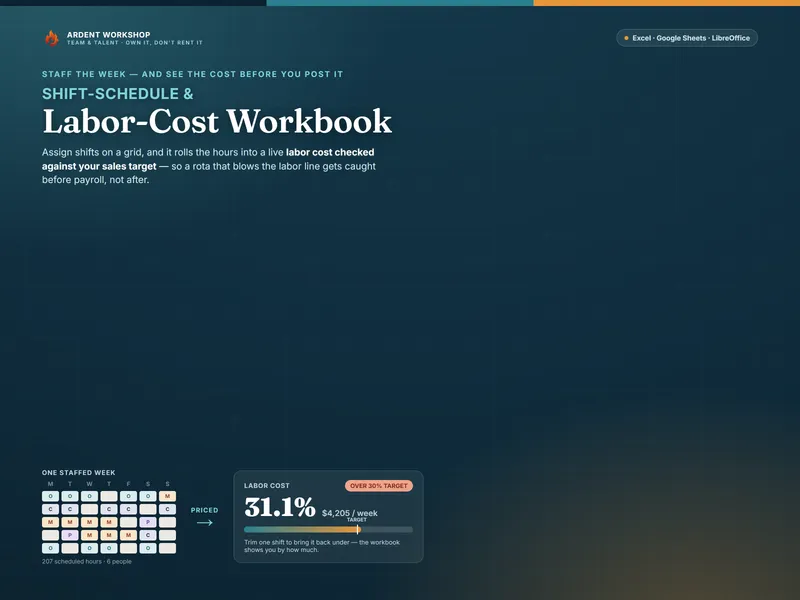
A shift schedule and labor-cost workbook for Excel & Google Sheets: staff the week, price the hours, and check labor cost against your sales target.
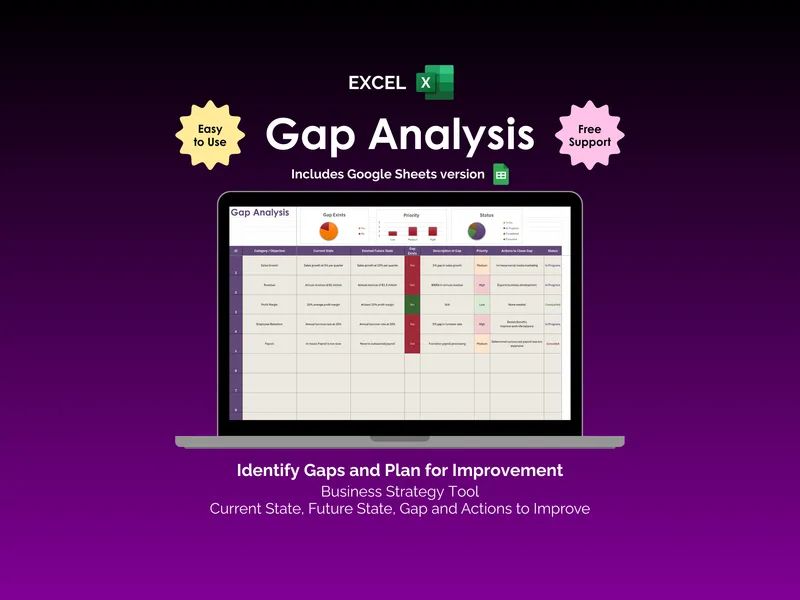
Most strategy decks describe goals. They skip the gap. This excel gap analysis template forces the conversation: current state, future state, gap, and the actions to close it.
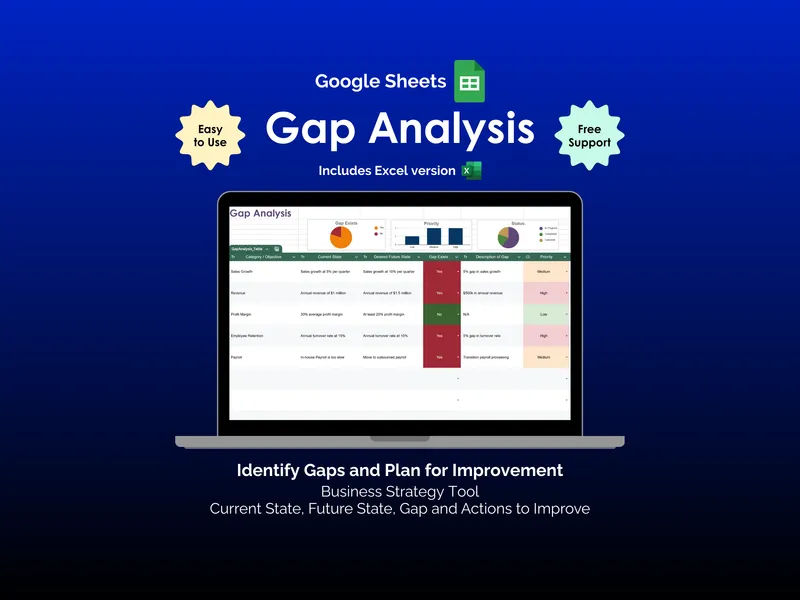
Your last strategy review listed goals. Did it tell you what to fix first? This google sheets gap analysis template ranks every gap by priority and status with live charts.
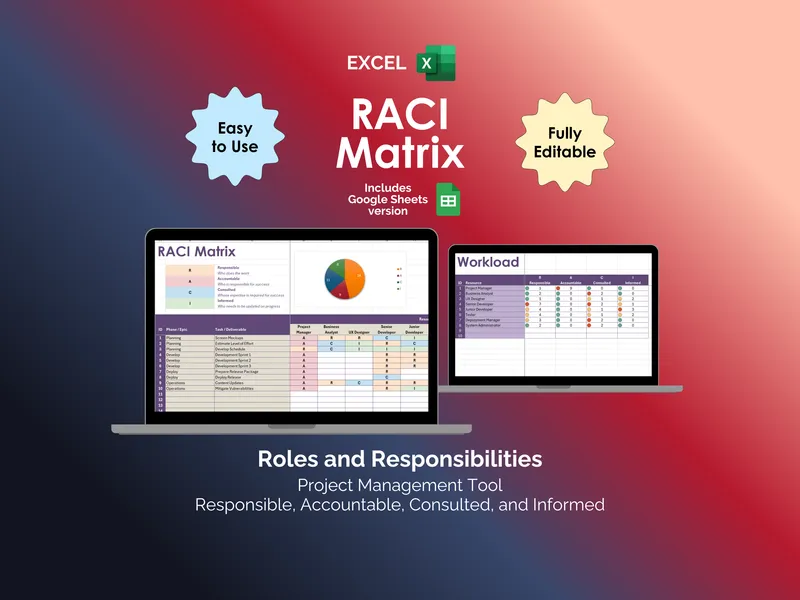
A RACI chart isn't paperwork. It's how you spot the person you're about to burn out. Excel RACI matrix template with a live workload view per resource.
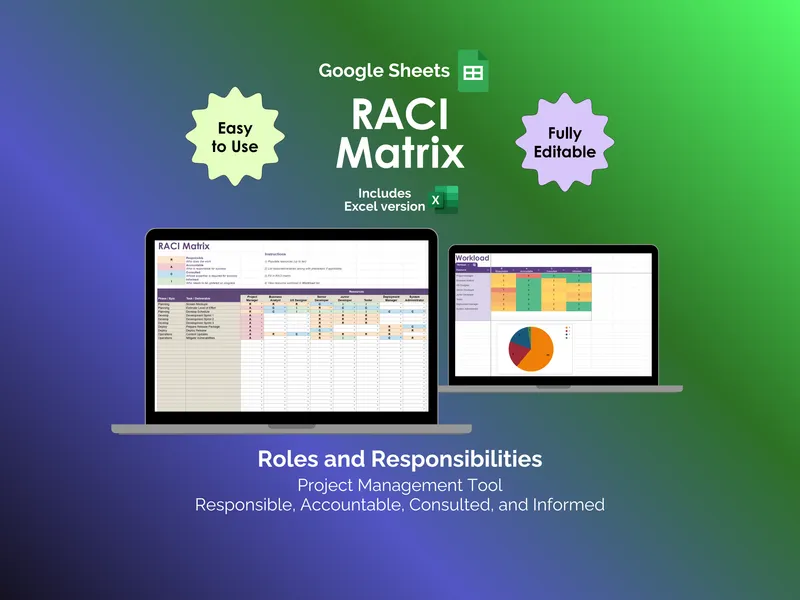
Is anyone on your team quietly drowning under the work? This google sheets raci matrix template doubles as a raci chart template with a live workload view.
Where we fit
Most tools force a choice between a blank spreadsheet you build from scratch and a monthly app that's overkill. Ardent Workshop is the rung in between — structure you own.
Free, but you build and maintain every formula, tab and layout yourself.
Owned, structured, connected workbooks — a one-time price, yours to keep.
Powerful, but overkill, rented and locked-in — built for someone bigger than you.
Reading list
Manager-facing playbooks for mapping your team's capability and spotting the gaps before they become emergencies.
A skills gap stays invisible until your best person quits. Here's how to run a skills audit and map your team's capability before it costs you.

Every small team has someone who, if they disappeared tomorrow, would take part of the operation with them. Here are the eight kinds, the tell for each, and the specific fix each one actually needs.

When two employees don't get along, it is often an undefined seam between their jobs, not a personality clash. How to tell which, and fix the right one.

The signs of employee burnout show up in your schedule, coverage, and time-off records before anyone says a word. Here's how to read them.

How to track employee training and certifications so nothing lapses silently — the fields records need and the system that flags them before an audit does.

One raise, three people with a real case. Score retention risk, market gap and scope change separately so the money goes where it actually changes something.

Compa-ratio divides a salary by its pay-band midpoint, so you can compare pay across unlike roles — and find the underpaid person raw salaries hide.

How small shops set fair pay for a first employee: read the market, build a simple pay range, and budget the real cost beyond the hourly wage.

Employee vs contractor for a small business: what each really costs, where the legal line actually sits, and how to decide before you bring on help.

A three-person shop needs a handbook—not a corporate binder. Here's what actually goes in one, and how to write it in an afternoon.

An employee offboarding checklist for small shops: a 15-minute, four-pass routine — keys, access, knowledge, money — to run before someone's last day ends.

The annual performance review is quietly dying — and small teams have the least reason to keep it. Here's what's replacing it in 2026, and how to run it.

How to manage an underperforming employee: run this diagnostic before you write anyone off. Most underperformance is fixable — here's the coaching system.

How to write a performance improvement plan that someone can actually meet: the seven parts every PIP needs, the test each part must pass, and a filled-in eight-week example with every date worked out.

Why small-team managers in 2026 ask employees 'why do you stay?' before they quit — how stay interviews work and why they beat exit interviews.

Build a structured interview scorecard in 20 minutes: pick the competencies, anchor the 1-5 scale, and score during the interview instead of arguing after.

Promote from within or hire externally? Promoting is cheaper and better-informed — until the role needs a skill nobody on your bench has. Three tests decide it.

The 9-box grid maps your team by performance and potential on one page. Here's how a talent review actually works—and how to run one.

You hired help — now what? A first-time boss's guide to running a simple, useful one-on-one with your first employee, without the awkwardness.

Your most reliable employee is often your team's biggest single point of failure. Here's how to find your bus factor and lower it before someone leaves.

Build a vacation coverage plan for your small team in one afternoon: sort the work into three buckets, name backups, and stop dreading time-off requests.

How to hire seasonal staff before your fall rush: size peak-week headcount, work the hiring ramp backward from opening day, and budget the real cost.

Skills-based hiring is 2026's loudest trend — but most companies only announce it. Here's how managers actually hire for skills, not degrees.

Hiring your first helper after years working solo? How to onboard them well—the first week, the slow start, and a system to train without losing your rush.