
Trackers 11 min read
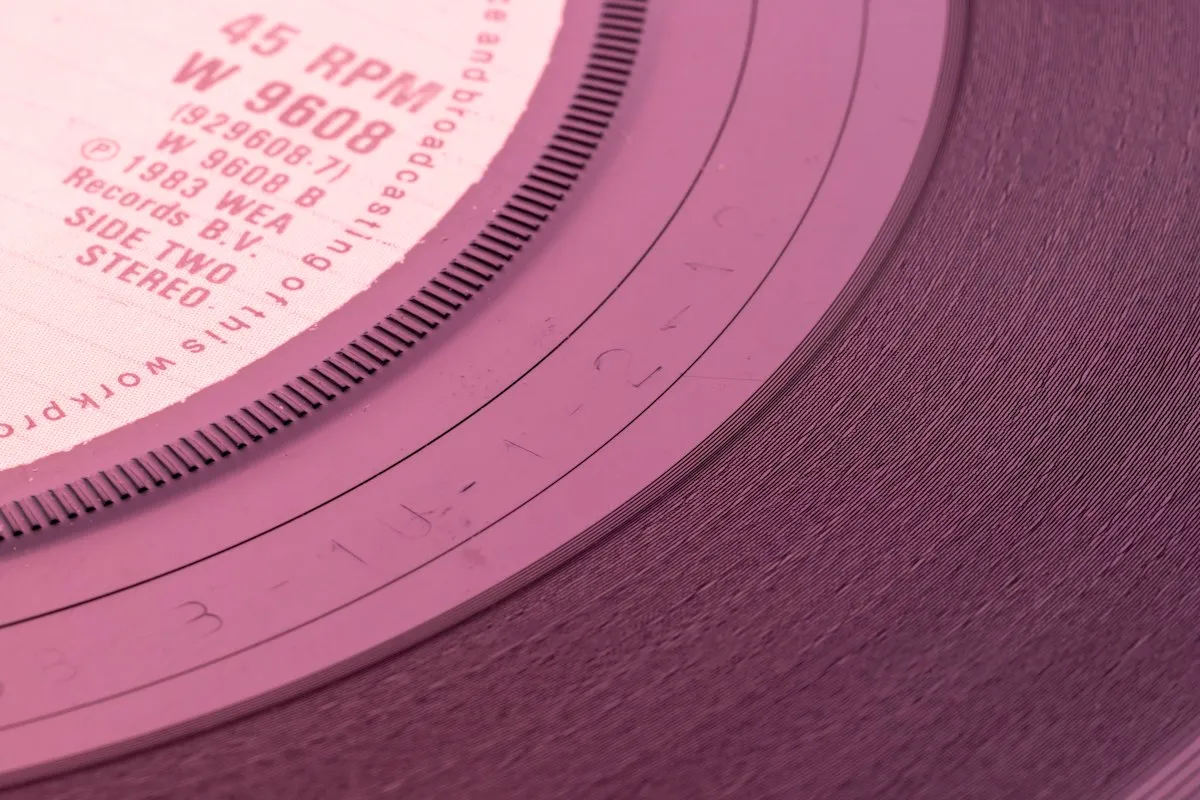
How to Grade Vinyl Records
How to grade vinyl records yourself on the Goldmine scale: the light, touch and listening tests for each grade, how to grade the sleeve separately, and what each grade does to a record's value.
A curated set of 6 collection trackers for Excel and Google Sheets — records, trading and sports cards, sneakers, LEGO sets, photocards and board games. Each one records what that hobby actually argues about, not just what you own.
Two copies of the same record, card or pair of shoes can differ in value by a wide margin, and the difference is almost never the title. It is the condition — and in most hobbies, condition has its own scale with its own shorthand. A collection list that leaves it out can tell you what you own, but not what it is worth, whether the copy in front of you is a good price, or which pieces are worth insuring.
Just want a list to start with? The free collection trackers are one-tab starters for most of these hobbies — free, ungated, and pre-loaded with an example so you can see them working first.
Track the collection
6 templates
Records graded media and sleeve separately; cards with a grading break-even and true cost basis; sneakers with cost per wear; LEGO sets with cost per piece; photocards with a trade board; board games with cost per play.
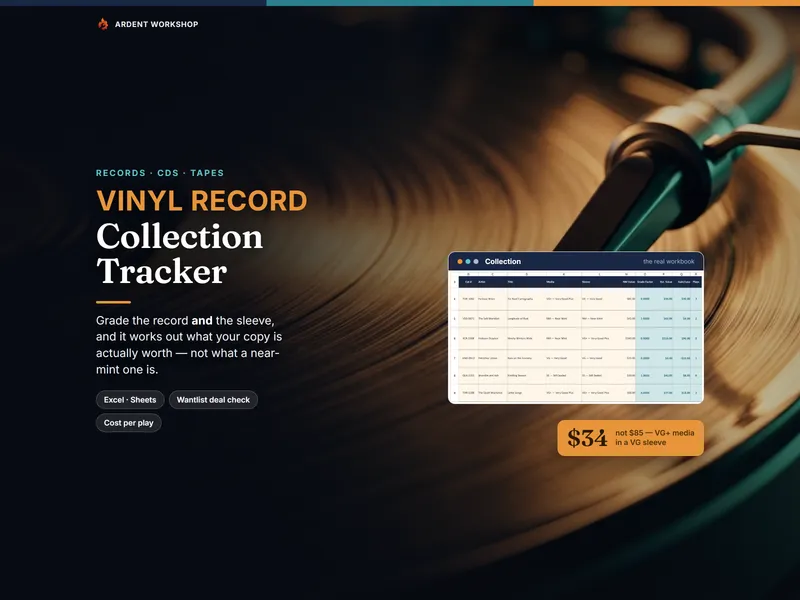
A vinyl record collection tracker for Excel and Google Sheets. Grade media and sleeve separately for a real value, and price any copy against your ceiling.
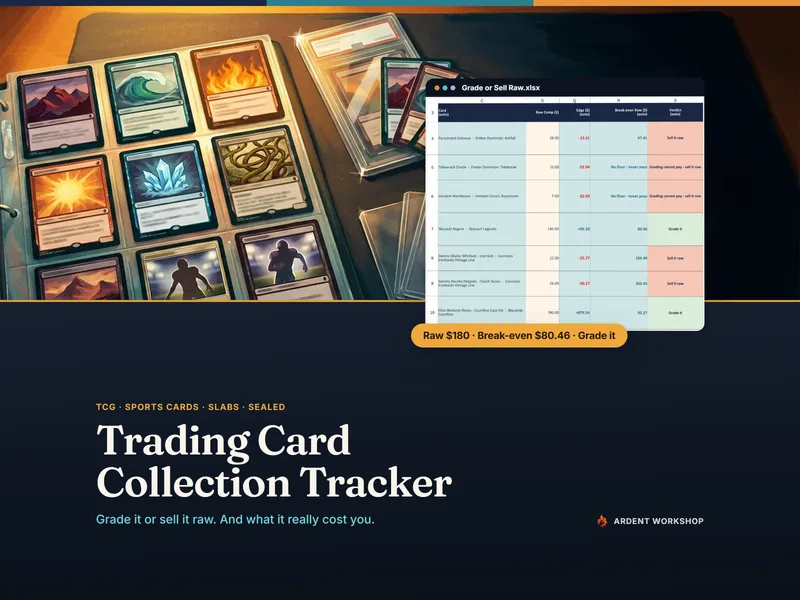
A trading card and sports card collection tracker for Excel & Google Sheets — grading break-even, true net cost basis, set completion, computed dashboard.
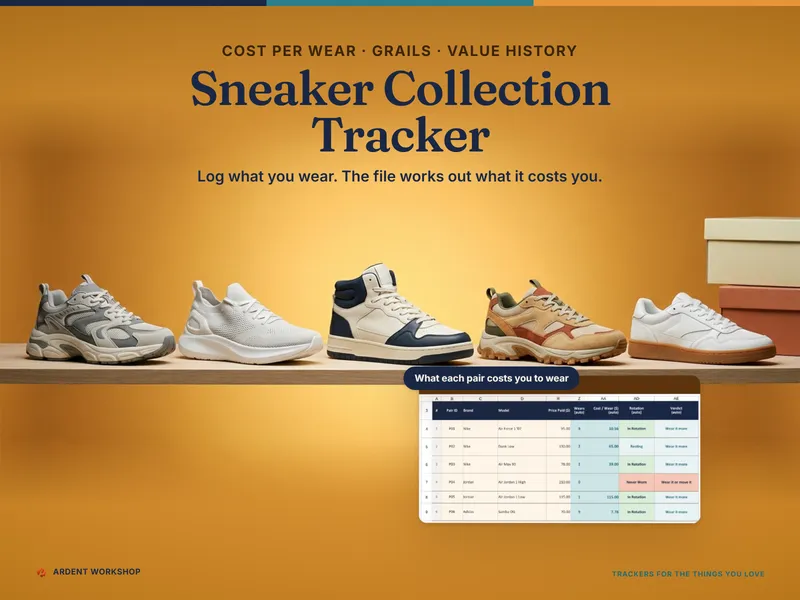
A sneaker collection tracker for Excel and Google Sheets. Get a real cost per wear on every pair, and a valuation history that records where each figure came from.
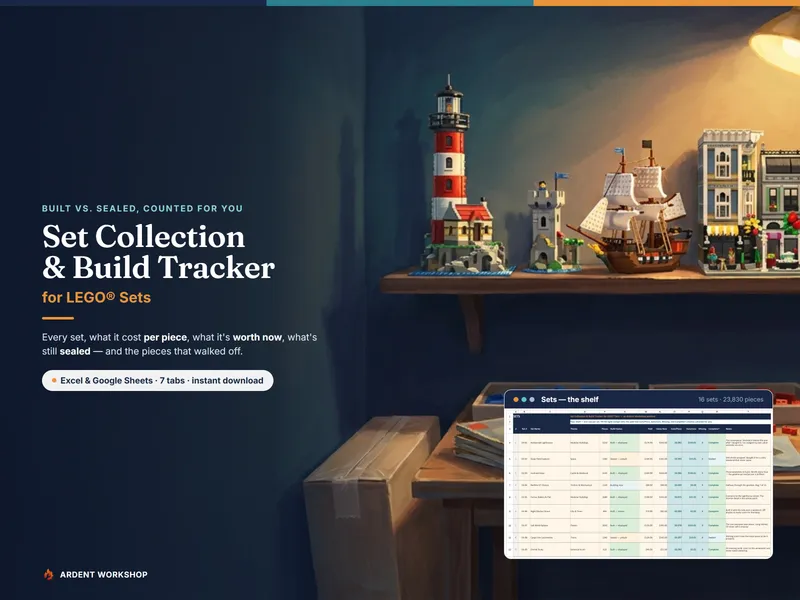
A LEGO set collection tracker for Excel & Google Sheets — catalog every set, compute cost per piece and gain/loss, and count what's still sealed.
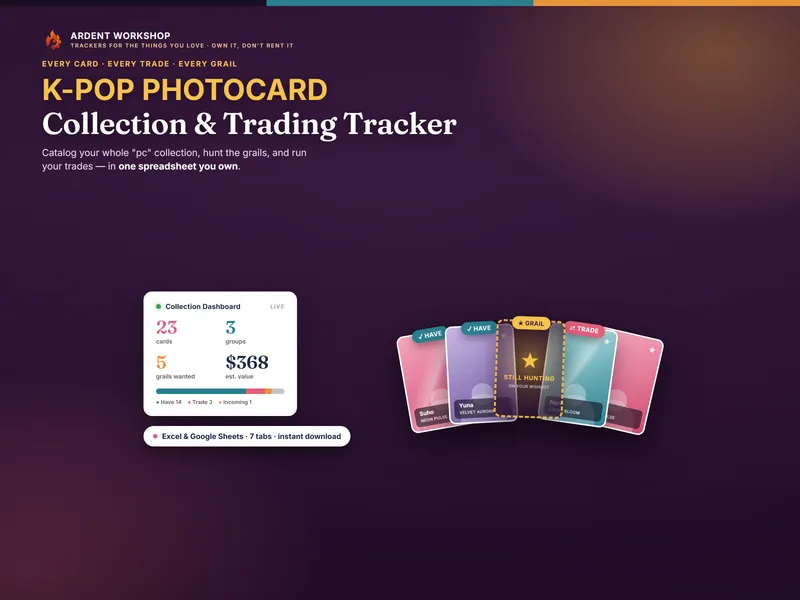
A K-pop photocard collection and trading tracker for Excel & Google Sheets — catalog every card, hunt grails, run trades, and see it on a live dashboard.
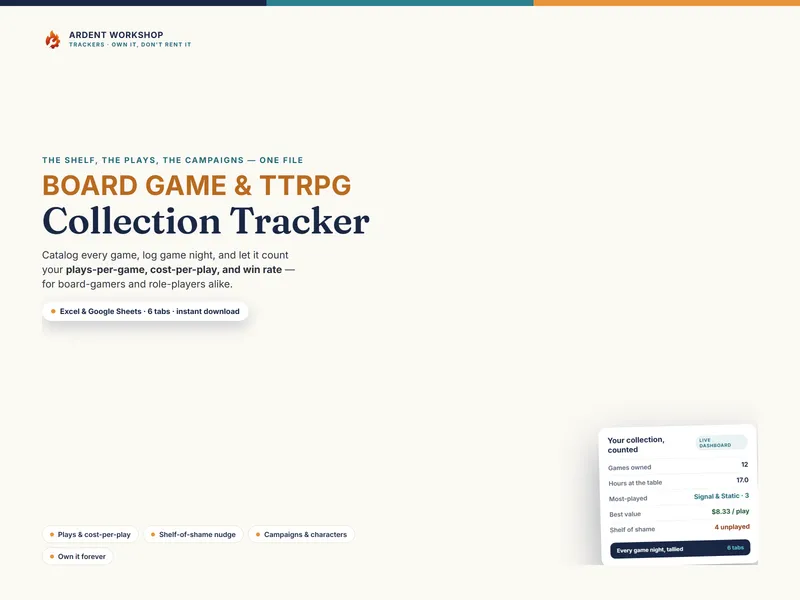
A board game & TTRPG collection tracker for Excel & Google Sheets — catalog your shelf, log plays, and track cost-per-play, win rate, and campaigns.
A notes app or a blank spreadsheet holds a list, and then stops — the grade, the cost basis and the arithmetic are yours to build. A collection app does the arithmetic for as long as you keep paying for it, and your catalog lives on its servers. These sit in the middle: workbooks you buy once and keep, with the arithmetic already built in and every figure starting as a number you typed.
Where we fit
Most tools force a choice between a blank spreadsheet you build from scratch and a monthly app that's overkill. Ardent Workshop is the rung in between — structure you own.
Free, but you build and maintain every formula, tab and layout yourself.
Owned, structured, connected workbooks — a one-time price, yours to keep.
Powerful, but overkill, rented and locked-in — built for someone bigger than you.
Condition decides value
Reading list
How to grade a record yourself, what each number on a card grade means, how to catalog a collection properly, and how to thin one without regret.
How to grade vinyl records yourself on the Goldmine scale: the light, touch and listening tests for each grade, how to grade the sleeve separately, and what each grade does to a record's value.
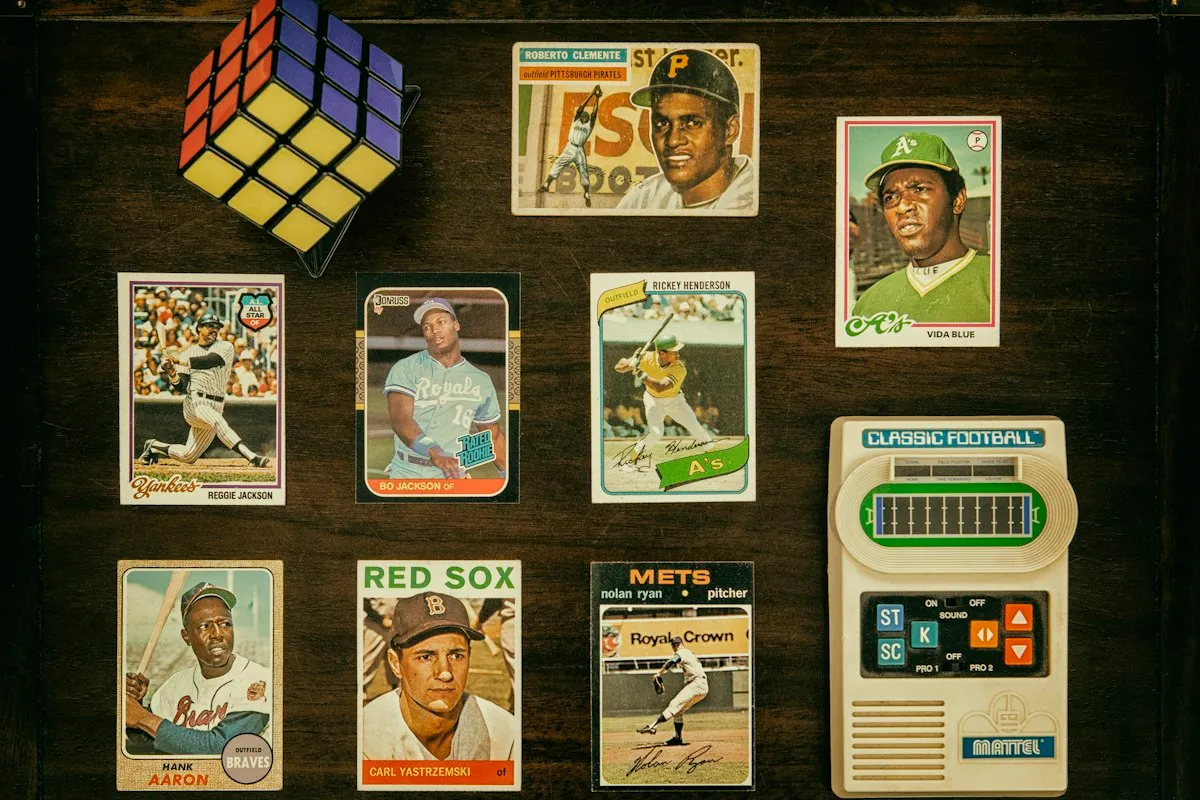
What each number on the trading card grading scale means at PSA, BGS and CGC, the centering tolerances behind every grade, and when grading costs more than it adds.

A collection is an inventory you never wrote down. Here's the field list and the three-pass method for cataloging one in a weekend.

Every collection is seven different things wearing the same jacket. Here's how to downsize a collection by sorting it into types, not piles.