The mechanics of a recipe cost
Every cost-per-unit calculation has three layers:
- Ingredient cost per recipe. For each ingredient, convert the purchase price (per pack, bag, bottle) to a recipe-unit price (per gram, ounce, cup) and multiply by the recipe's quantity. Sum across all ingredients.
- Cost per serving (or unit). Divide the recipe cost by yield. A batch that produces 24 cookies has a per-cookie ingredient cost = recipe cost ÷ 24.
- Loaded cost per unit. Add packaging (box, label, ribbon) and an allocation of direct labor (active production minutes × hourly rate ÷ units produced).
The pack-to-recipe conversion is the hard part
You buy butter in 1-lb packages for $5.49. Your recipe calls for 8 oz. That's $2.75 in butter for that recipe — but only if you correctly converted pounds to ounces and remembered that the package yields slightly less than 16 oz once you account for the wrapper.
Multiply that across 14 ingredients in a wedding cake and the cost swings $20 in either direction depending on whether the spreadsheet handles conversions correctly. The single most useful feature of a real recipe-costing tool is a conversion engine: a single ingredient record (price + pack size + unit) that any recipe can pull from.
Yield — the number that quietly kills margins
Yield is how many servings or units a recipe actually produces. The catch: nominal yield (what the recipe says) and actual yield (what you get) are rarely the same. A cake recipe rated for 12 servings might yield 10 generous slices, or 14 thinner ones, depending on your portion standards.
Cost per serving moves inversely with yield: same ingredient cost, fewer servings, higher per-serving cost. If you're consistently getting 10 servings from a 12-serving recipe, your per-serving cost is 20% higher than the spreadsheet thinks.
Direct labor is part of recipe cost — yes, really
The most common mistake home bakers and small food sellers make is leaving themselves out of the cost. Active production time, even if you "love doing it," is a real input that has to clear a real wage before the math works.
Rules of thumb:
- Time the recipe. Stopwatch. Active minutes only — mixing, decorating, packing. Not proof time (that's not labor).
- Pay yourself something defensible. $20–$40/hour for skilled production work is conservative. Use what you'd pay someone to replace you.
- Divide by yield. 60 minutes of labor on a 24-cookie batch at $25/hour = $25 ÷ 24 = $1.04 of labor per cookie.
Skip this step and a $15 dozen cookies that took an hour to make is paying you $5 net after ingredients and packaging. That's not a business; that's a hobby that costs money.
From cost to price
Recipe costing produces a loaded cost. Pricing is what you do next:
- Cost-plus markup. Multiply cost by 2x, 3x, or 4x depending on the category. Simple, but doesn't account for what the market will bear.
- Target margin. Set a gross margin (e.g., 60%) and solve for price: price = cost ÷ (1 − margin). At 60% margin, a $4 cost prices at $10.
- Market price minus margin check. Set the price based on competitor pricing, then verify the margin is acceptable. If it isn't, the product is wrong, not the price.
Common mistakes
- Skipping labor. Already covered. Single biggest pricing error in handmade food.
- Estimating instead of measuring. "About a cup" is not a unit of cost.
- Forgetting packaging. The box, the dome, the ribbon, the gold sticker — all real.
- Pricing custom orders the same as standard. Custom cakes have higher labor per unit. If the price doesn't reflect that, you're effectively discounting your most labor-intensive work.
- Not re-costing after ingredient price changes. Butter and flour prices move. Recipe costs from January don't describe May.
- Costing in isolation. Two recipes use the same ingredient at different prices because the spreadsheet has the cost typed twice. Use a master ingredient list — one source of truth.
Related templates and concepts
Recipe costing rolls up into COGS for accounting, and the per-unit number is the input to profit margin for pricing decisions. For the full small-business toolset, see the templates for home bakers hub.
Templates that implement this
Templates that cost a recipe
4 templates
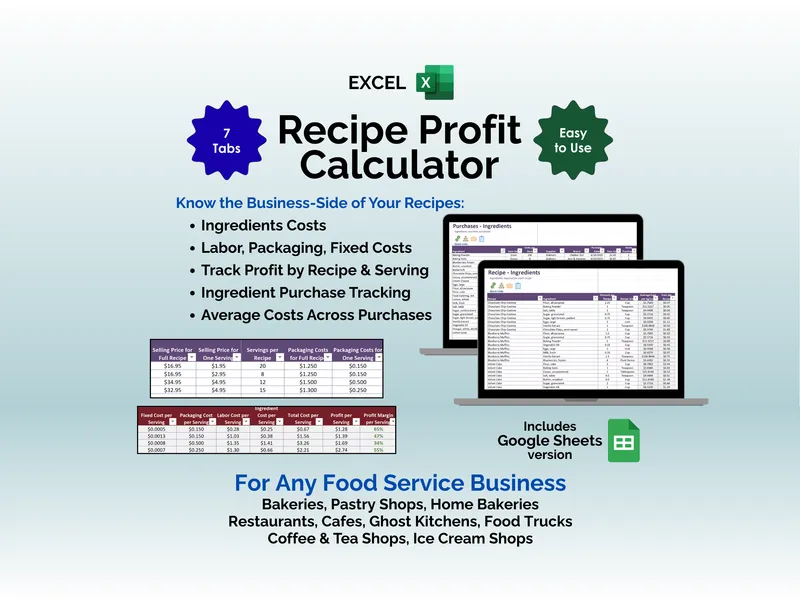
Ingredient pricing, batch yield, per-serving cost, labor allocation, and a target margin — all linked so changing a flour price updates every cake.
- $7.95 Excel
Recipe Profit Calculator - Excel
Pricing cakes by gut feel and hoping it covers cost? This excel recipe profit calculator turns ingredients, yield, and labor into a real margin per recipe and per serving.
Operator OSView details - $7.95 Sheets
Recipe Profit Calculator - Google Sheets
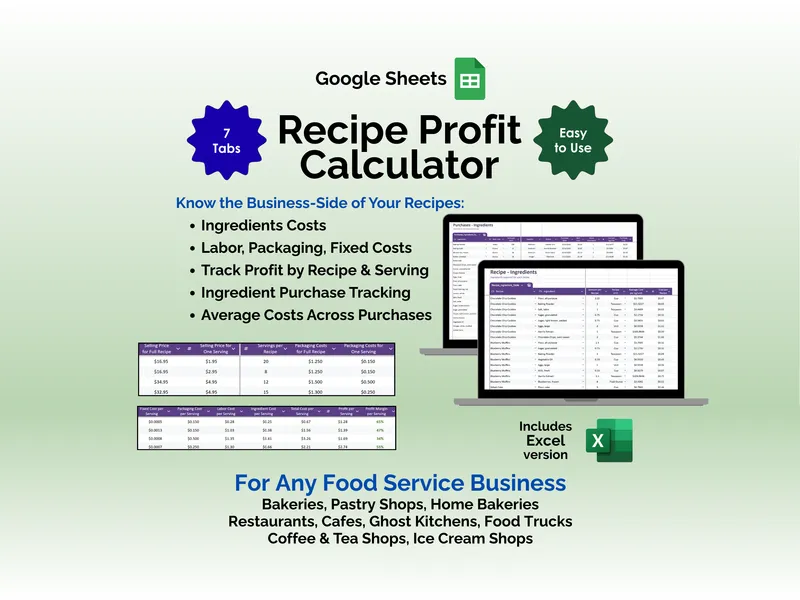
Food businesses guess at pricing because the costing math is annoying. This google sheets recipe profit calculator returns per-recipe and per-serving margins automatically, with unit conversions and purchase averaging.
Operator OSView details - $29.95 Excel
Bakery Business Manager - Excel
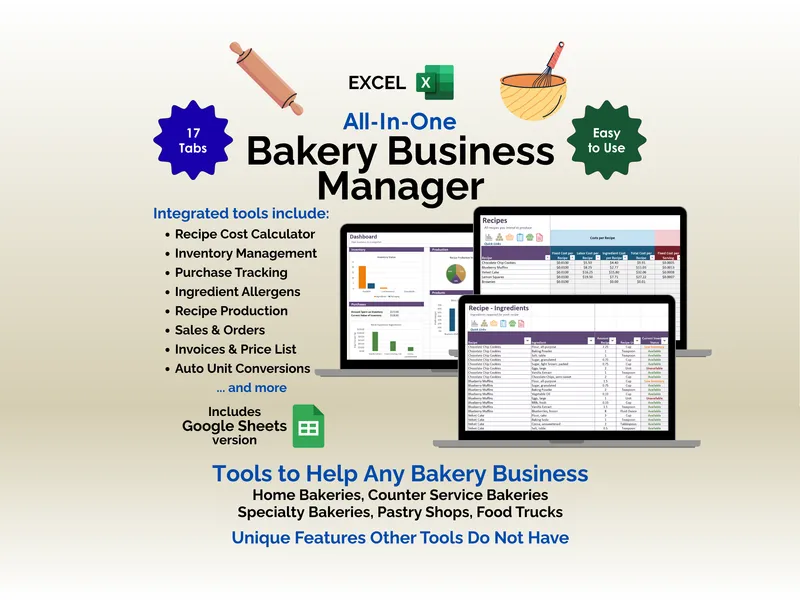
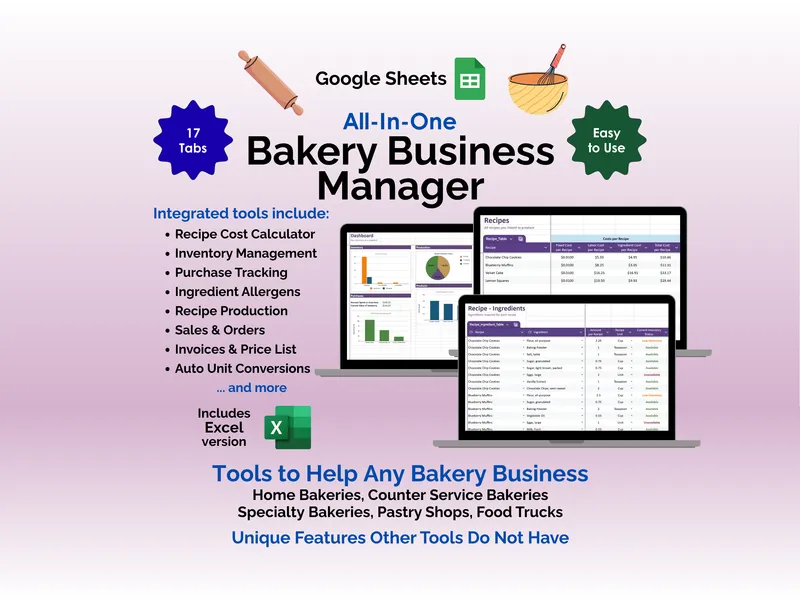
Bakery Business Manager is a 17-sheet workbook for home bakers and small bakeries, connecting ingredient inventory, recipe costing, sales, invoices, and profit. Excel and Google Sheets versions are included.
Operator OSView details - $29.95 Sheets
Bakery Business Manager - Google Sheets
Home bakers price by feel and lose money on every order. This Google Sheets bakery business manager turns recipe costs into product margins across 17 connected tabs.
Operator OSView details