

Operator OS 8 min read
5 Craft Fair Pricing Mistakes
Most craft fair vendors underprice, overprice, or confuse buyers. Here are the five pricing mistakes that silently kill your sales — and how to fix each one.
A curated set of 15 templates — spreadsheets, printables and the guides that go with them — for craft fair sellers, market vendors and handmade product makers. Price for the booth and the algorithm, build SKUs that survive your next product launch, and stop pricing in your head at 2am.
Craft selling lives in two worlds at once — the in-person table where you watch shoppers pick up your $24 candle and put it back down, and the online shop where the same candle has to compete with a thousand listings. The templates in this collection are built for solo makers who work both: pricing models that include labor and booth fees, SKU systems that track variants and editions, an inventory tab that scales to a real product line without pretending you're Amazon.
Pair them with the field guides below — the craft fair prep checklist, the shopper-type breakdown, and the post on why handmade sellers chronically undercharge.
Recommended templates
15 templates
Pricing, SKU systems, business management, time tracking and print-at-home booth signage — in Excel, Google Sheets and print-ready PDF.
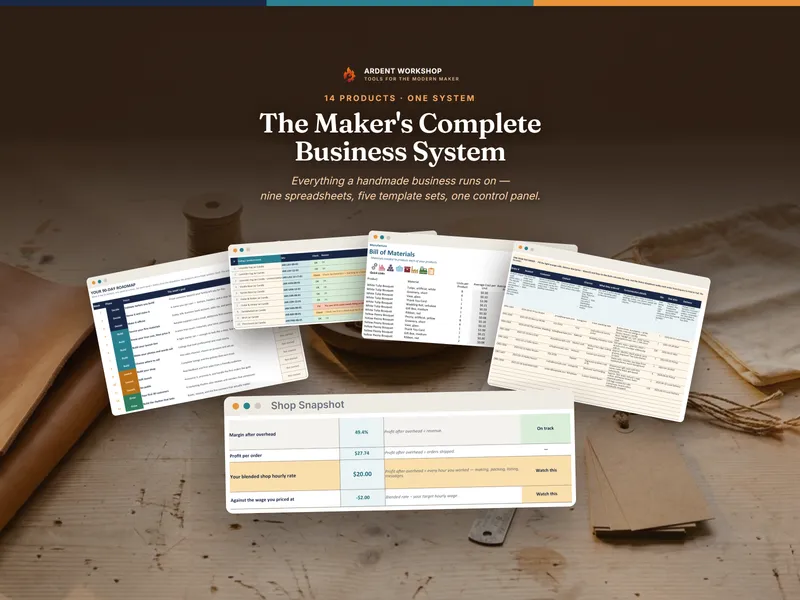
The Maker's Complete Business System: a handmade-seller bundle of 14 products — pricing, orders, inventory, listings, shop policies and legal templates.
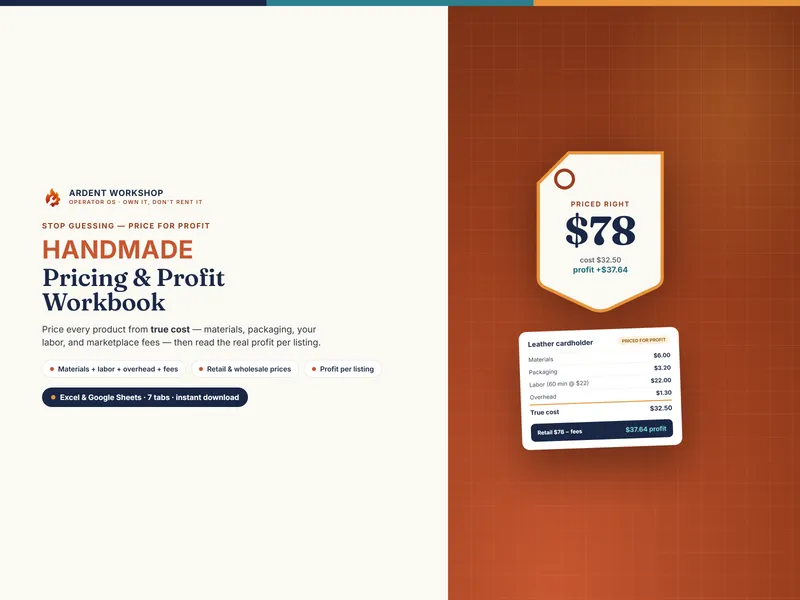
A handmade pricing workbook for Excel & Google Sheets — price every product from true cost (materials, labor, overhead, fees) and see the real profit on each.

13 printable booth sign and price-card types imposed on one shared cut-and-fold grid, plus a fillable PDF that computes your multi-buy offer price.

Cost every candle and soap from one ingredient table, reprice the whole catalog at once, and see margin at retail and wholesale. Excel + Google Sheets.

Cost every piece from the metal it weighs and the components it consumes — then see what retail, wholesale and consignment each pay you per bench hour.

A sticker and print-shop costing workbook for Excel & Google Sheets — pieces per sheet, the real cost of one good sticker, and profit per design.
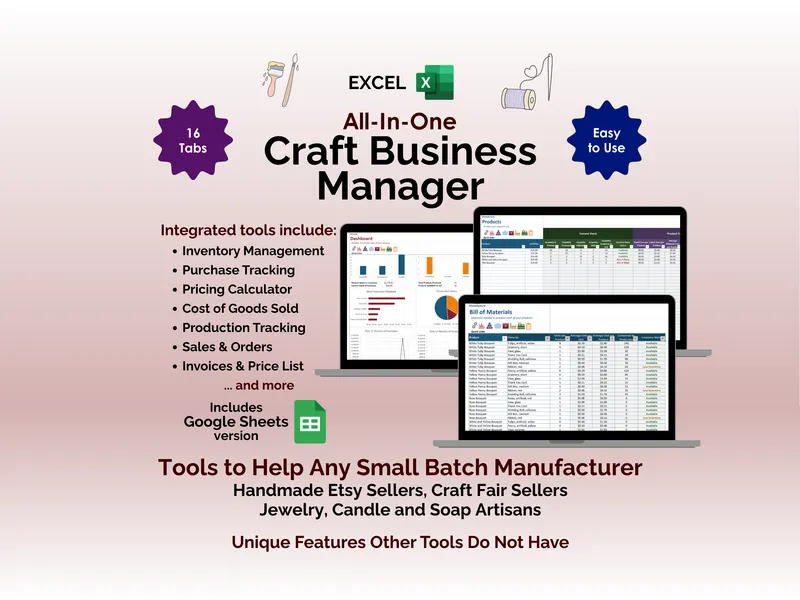
Craft Business Manager is a 16-tab workbook for handmade sellers, connecting materials, product costs, production batches, sales, and invoices. Excel and Google Sheets versions are included.
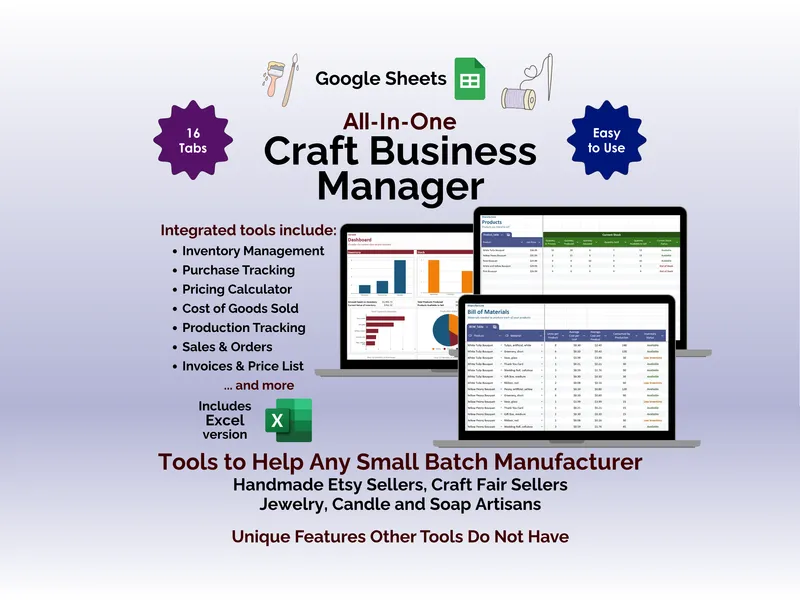
Sit ten craft sellers down and you'll get two answers about margin. This google sheets craft business manager turns raw material costs into priced products automatically.

The price to charge worked back from what a product costs you to make, Etsy's real fees applied to every listing, and a target blended from what your competitors actually charge.
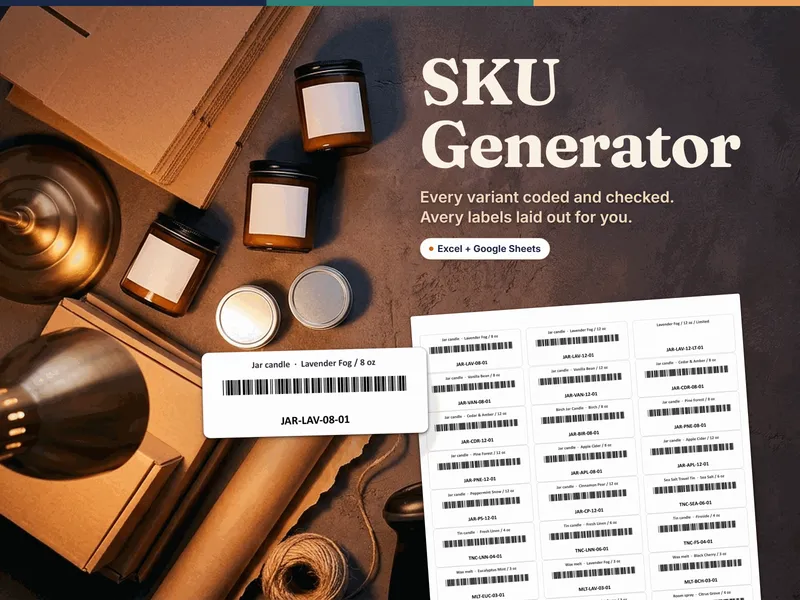
SKU generator for Excel: build a SKU for every variant from your own codes, catch clashes and duplicates, and print Avery 5160 barcode labels.
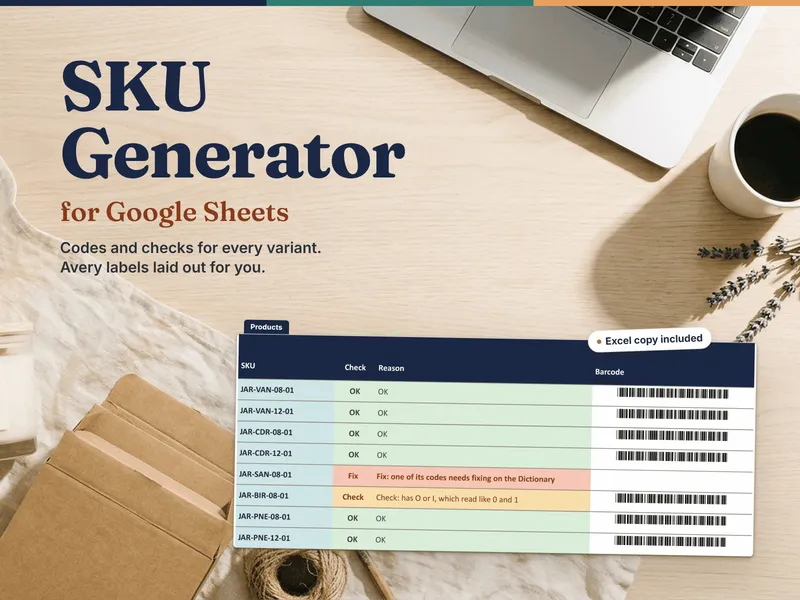
Google Sheets SKU generator: one-click copy, a SKU for every variant from your own codes, clash and duplicate checks, and Avery 5160 barcode labels.
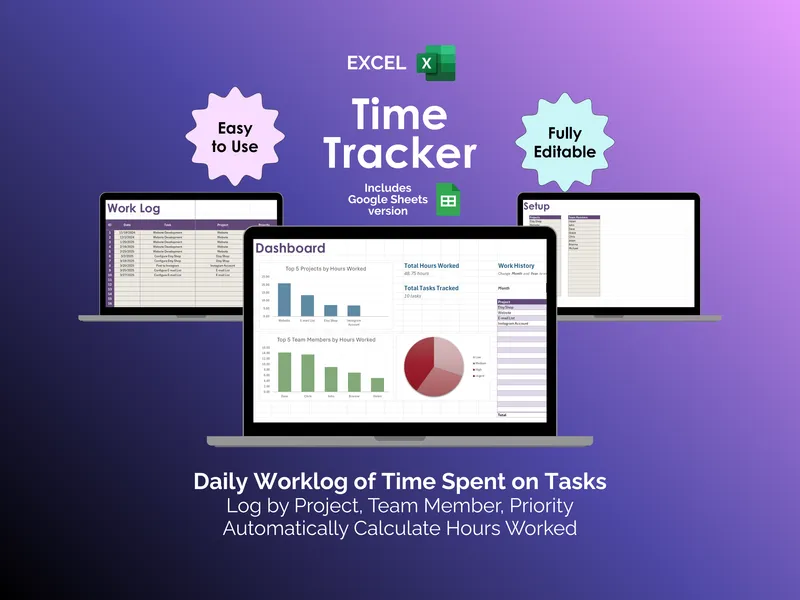
It's Friday afternoon and you owe three clients an invoice. This excel time tracker logs hours by project, team member, and priority, then totals them for you.
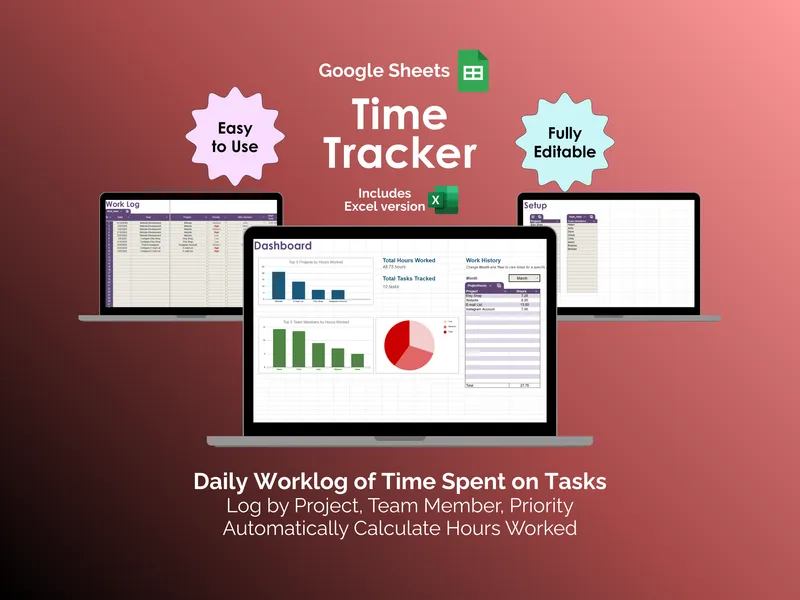
When was the last time your invoice matched what you actually worked? This google sheets time tracker logs daily hours and totals them for you.

Six tools in one workbook: the price to charge worked back from your costs, profit after every Etsy fee, tag scoring, and pricing against your competition.

Paste your Etsy monthly statement and read the year: revenue, fees, expenses, and what the month actually left you, totaled month by month.
Where we fit
Compare the setup effort, collaboration, and automation you need. Ardent Workshop sells ready-made templates; a custom spreadsheet or software platform may fit better depending on the job.
Build the structure around your own process, with time set aside for formulas, layout, and maintenance.
Owned, structured, connected workbooks — a one-time price, yours to keep.
Consider a platform when you need shared workflows, automation, or integrations. Check the specific plan, permissions, and export options.
Running an operation that's genuinely outgrown the file? Ardent Seller isn't the generic SaaS app this ladder warns about — it's maker-first software built by the same workshop: your data stays yours, you can start free or pay as you go with no subscription required, and it's sized for your operation, not someone bigger. The platform to graduate to when a spreadsheet honestly can't keep up.
Reading list
Pricing mistakes, fair prep, shopper psychology, and how to stop running a hobby as a business.
Most craft fair vendors underprice, overprice, or confuse buyers. Here are the five pricing mistakes that silently kill your sales — and how to fix each one.

Handmade sellers undercharge for predictable reasons. Here's the simple materials-plus-labor-plus-margin formula to stop leaving money on the table on every sale.
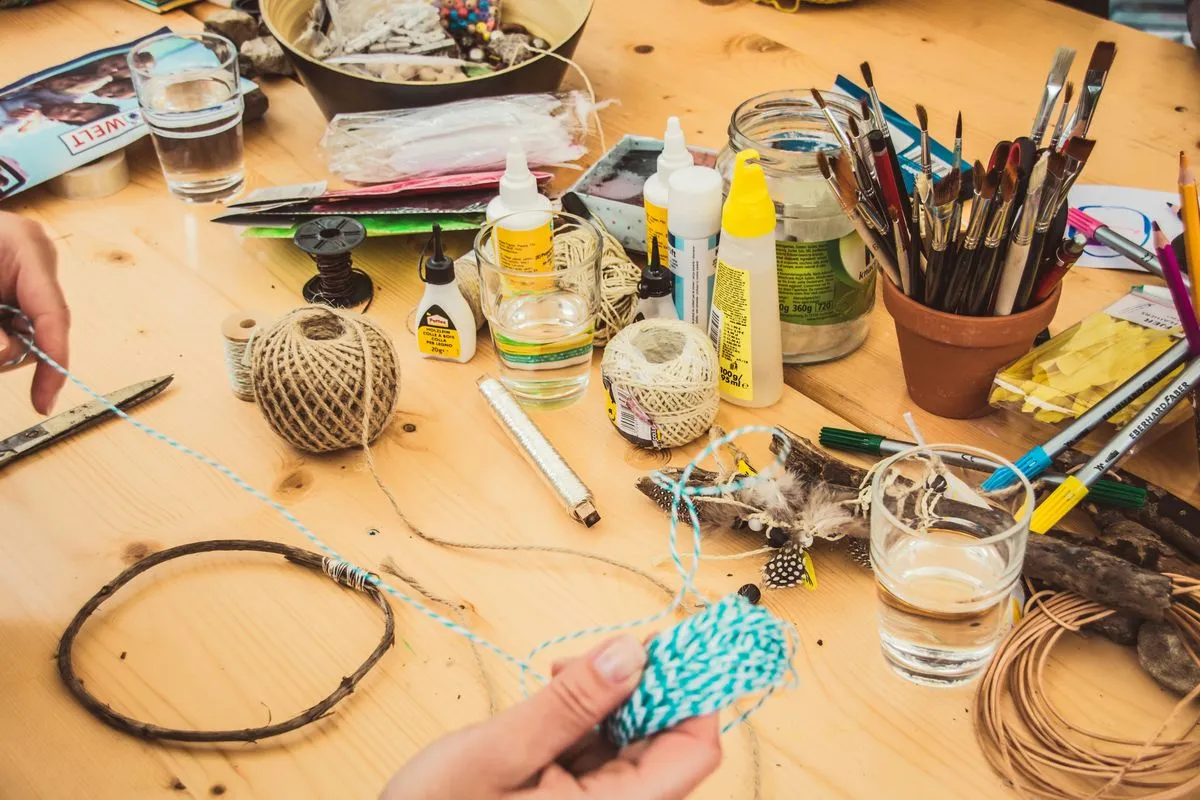
The five pricing, inventory, and bookkeeping mistakes most handmade sellers make — and the fixes that keep a craft business profitable instead of just busy.

A tactical checklist for summer craft fairs — inventory planning, pricing, booth setup, and tracking what actually sells so you go home with profit, not stock.
Your holiday capacity is a number, not a feeling. The September math that tells you how many pieces you can actually make — and when to close the order book.
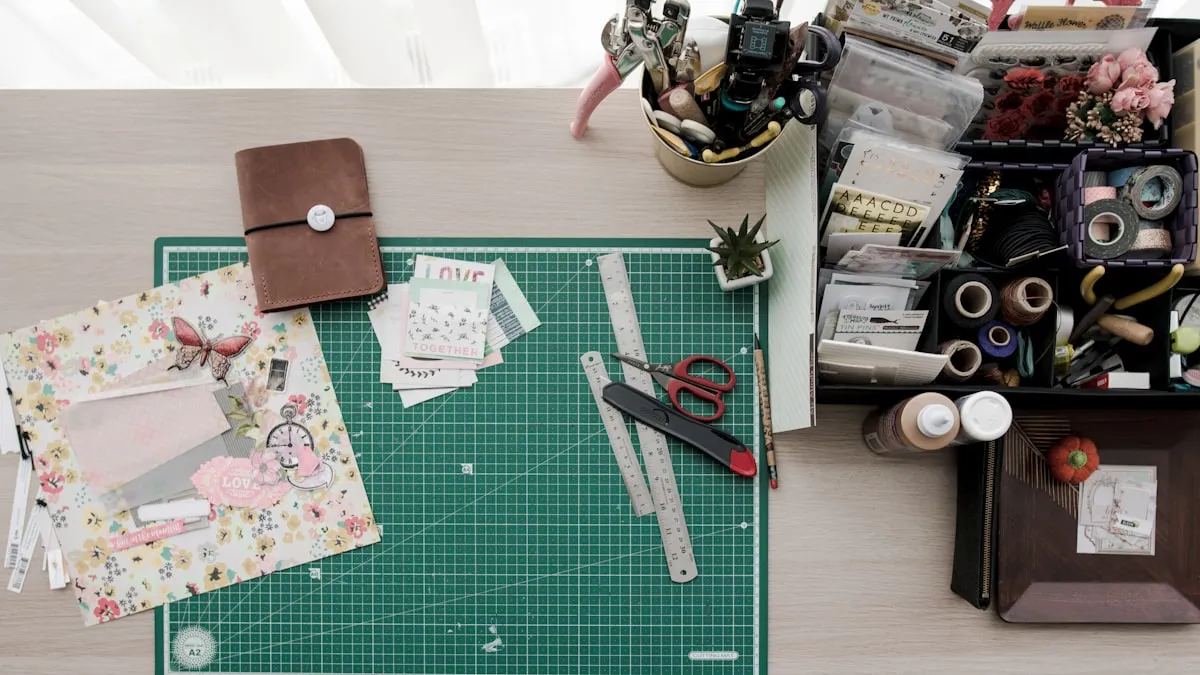
Most craft sellers lose money on forgotten supplies, materials that expired in a drawer, and products they can't price because they never tracked the real cost.

A field guide to the seven shopper personalities that walk past your booth — what they actually want, and the exact move that turns each one into a sale.
A hypothetical look at a maker juggling handmade orders with the kids home all summer—what breaks by July, and the system that saves the season.

A field guide to the 10 spreadsheets every craft seller and home baker builds at 2 a.m. — what each one tries to fix, and why it always gets abandoned.
Your shop runs on everything you carry in your head. Here's how to turn that into a written manual—SOPs anyone can follow—so it survives a day off.

Five shop policies do the heavy lifting for an online store. Here's what each one has to say, the one blank only you can fill, and where it goes.

The five roles handmade and maker businesses hire first, in order — and the one core skill that makes each new hire actually pay off.

Employee vs contractor for a small business: what each really costs, where the legal line actually sits, and how to decide before you bring on help.

You hired help — now what? A first-time boss's guide to running a simple, useful one-on-one with your first employee, without the awkwardness.