

Life Admin 9 min read
New Homeowner's Home Maintenance Calendar
A season-by-season home maintenance calendar for new homeowners — the small tasks that keep a $15 filter from becoming a $5,000 repair.
You get the keys, and then you get the avalanche: utilities to transfer, an address to change in forty places, a home warranty nobody explained, and a building full of things whose location only the previous owner knows. These are the checklists and workbooks for that year.
Not because it is busy, but because of what is briefly visible and briefly askable — and both close within about a week. That is why the order of this work matters more than the length of the list: almost everything genuinely urgent about a new house is urgent because it gets harder, not because it is dangerous to do later.
The other thing nobody hands you at closing is a number. The mortgage, the taxes, and the insurance escrow are on your closing disclosure. The electricity, gas, water, sewer, trash, internet, the softener lease, and the monitoring contract are on no document you have ever been given. In the setup binder's own worked example, the full set of recurring accounts adds up to $742 a month.
One rule runs through all of these, and it is what makes them safe to print and leave on a counter: record where things are and how the house runs — never an account number, a policy number, a door or alarm code, or a login.
Start free, no signup: the New-Home Move-In Checklist — the ten things to do first and who needs your new address, shown filled in. Then the home shutoff & breaker location map, for the afternoon you walk the house with a flashlight, and the First 30 Days in a New Home guide: the week-one safety pass and the paperwork with a deadline.
If you want the whole year in one download, the New-Homeowner Bundle puts six home products together: the move-in binder, the maintenance and warranty log and the true-cost calculator on this page, plus a first-year playbook, a seasonal wall calendar and a home inventory. A Command Center workbook ties them together: type your closing date once and 62 first-year jobs get due dates from Day 1 to Year 1, each naming the file to open and the tab or chapter inside it. It is also built to be given at closing, one purchase per household.
New to any of it? Read what a home warranty actually is (and why a seller-paid one may have started months before your closing), or the step-by-step guide to what to do the first week in a new house. Once you are settled, the templates for homeowners hub covers keeping it running.
Recommended tools
5 templates
A setup binder that runs the whole first year off your closing and move-in dates, the manual that records how the house works once you are settled, a long-run maintenance and warranty log, and the calculator for what a house really costs to own.
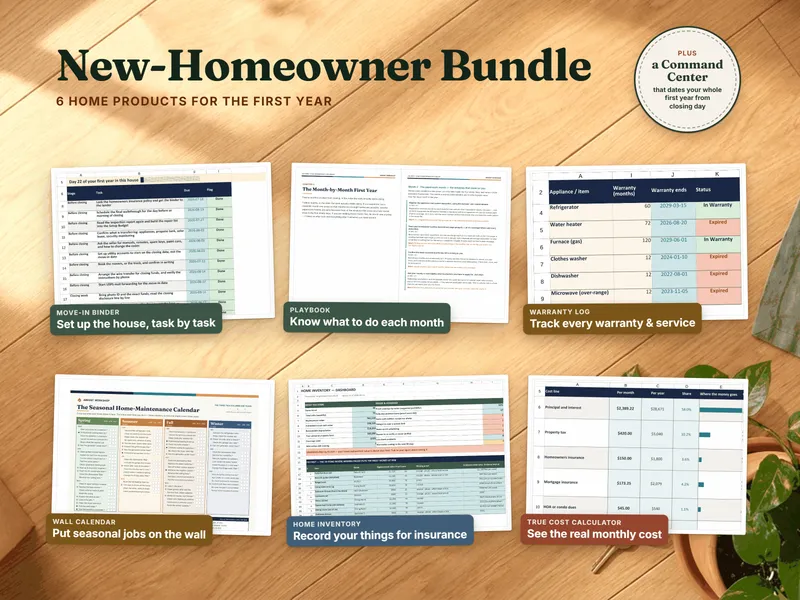
Six new-homeowner products in one bundle, plus a Command Center that turns your closing date into a dated first-year plan, deadlines and a money check.
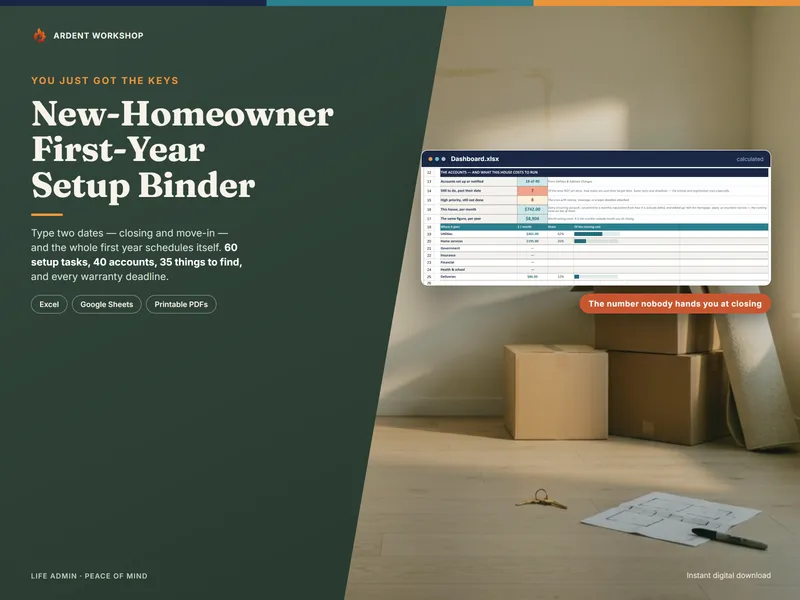
Type two dates and the first year in a new house schedules itself: 60 setup tasks, 40 account transfers, warranty deadlines, and the monthly running cost.
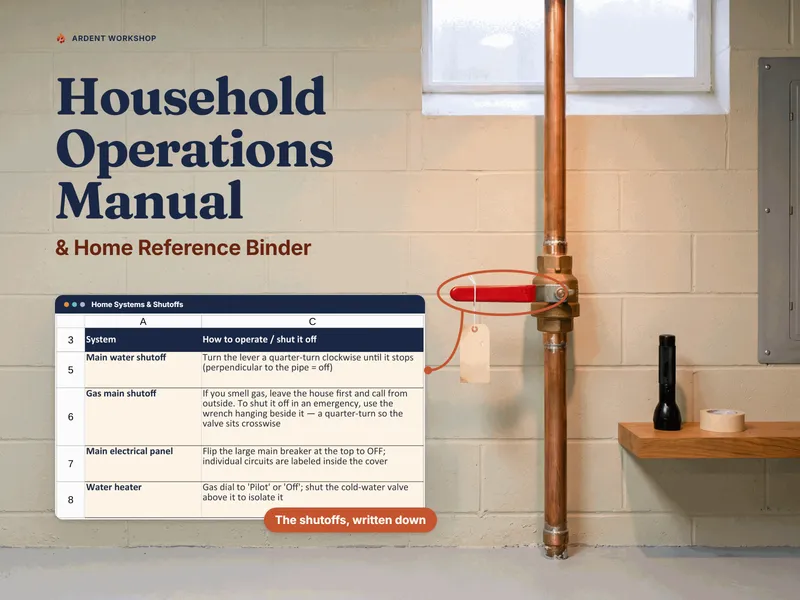
Household operations manual for Excel, Google Sheets & Word: shutoffs, a maintenance schedule that computes what's due, and a house-sitter packet.
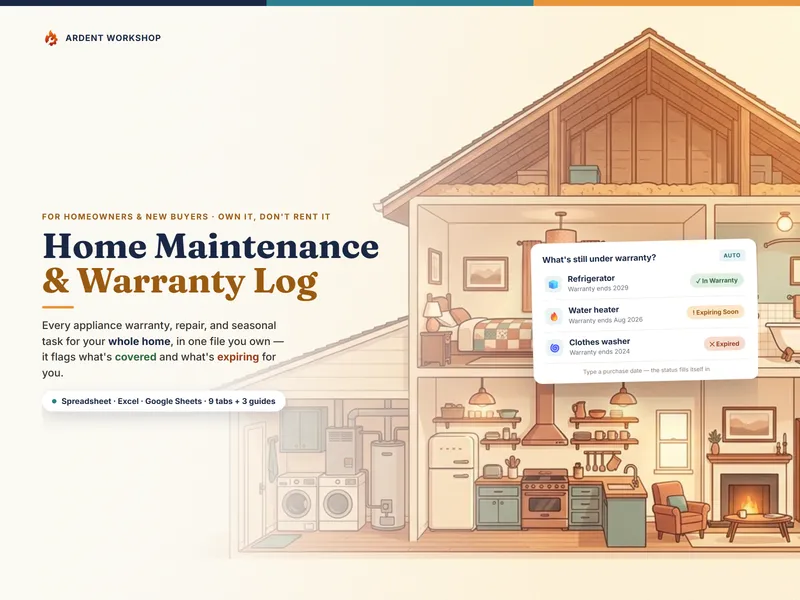
Track every appliance warranty, repair, and seasonal task in one spreadsheet you own — type a purchase date and it flags what's still under warranty.

Find what a specific home really costs per month — the mortgage payment plus the seven lines listing sites leave out — and the year owning beats renting.
Where we fit
Compare the setup effort, collaboration, and automation you need. Ardent Workshop sells ready-made templates; a custom spreadsheet or software platform may fit better depending on the job.
Build the structure around your own process, with time set aside for formulas, layout, and maintenance.
Owned, structured, connected workbooks — a one-time price, yours to keep.
Consider a platform when you need shared workflows, automation, or integrations. Check the specific plan, permissions, and export options.
Reading list
Building a first-year maintenance calendar, a ten-minute moving budget, weighing a fixer-upper against move-in ready, and why a home inventory is worth the afternoon.
A season-by-season home maintenance calendar for new homeowners — the small tasks that keep a $15 filter from becoming a $5,000 repair.

Build a moving budget in 10 minutes — the five cost buckets most people forget, from deposits to the buffer, before you book the truck.

The fixer-upper's lower price is the most misleading number in real estate. Here's how to score a fixer-upper against a move-in-ready home honestly.

Turn household chaos into clarity with a home inventory spreadsheet that protects, organizes, and brings peace of mind.