Skills-based hiring is the most-announced hiring trend of the decade. It is also, by the numbers, the least-practiced.
Walk through any 2026 talent conference, scan any “future of work” report, and you’ll hear the same refrain: stop screening for degrees, start hiring for skills. Most managers nod along. A lot of companies have even rewritten their job postings to prove they mean it. And then — quietly, on Monday morning — they hire almost exactly the same people they always did.
That gap between what employers say about skills-based hiring and what they actually do is the real story of 2026. The trend is genuine, the logic is sound, and the upside is large. But it only pays off for the managers who treat it as an operational change, not a press release. This is a look at where skills-based hiring actually stands right now — and how to be on the right side of the gap.
What Is Skills-Based Hiring?
Skills-based hiring is the practice of evaluating candidates on the specific capabilities a role requires — demonstrated competencies, work samples, and assessments — rather than on proxies like a four-year degree, a brand-name employer, or years of tenure. Instead of asking “Does this person have a bachelor’s degree?” it asks “Can this person actually do the work this job requires?”
The distinction matters because a degree is a proxy, not a measurement. It correlates loosely with capability, but it screens out enormous numbers of people who can do the job and lets through plenty who can’t. Skills-based hiring replaces the proxy with the thing it was standing in for.
In practice, it shows up as three concrete changes:
- Job postings describe required capabilities, not credentials (“can build and maintain a reporting dashboard” instead of “BA in a quantitative field”).
- Screening uses structured assessments, work samples, or skills tests rather than résumé keywords.
- Interviews score candidates against a defined rubric of the skills the role needs, applied the same way to everyone.
All three are the same underlying change: the skills each role actually requires, written down somewhere durable, with every candidate scored against them the same way. That artifact is a skills matrix — and it is also the thing most “skills-based” hiring programs never get around to building, which is precisely why the gap below exists.
The Trend Is Real — and the Math Is on Its Side
The case for skills-based hiring isn’t hype. It rests on three durable facts that aren’t going away.
The talent pool you’re ignoring is enormous. More than 70 million U.S. workers — roughly half the workforce — are what the nonprofit Opportunity@Work calls STARs: people Skilled Through Alternative Routes (opens in new tab) rather than a bachelor’s degree. Military service, community college, bootcamps, apprenticeships, and years of on-the-job experience all build real skills. A degree filter treats every one of those workers as invisible.
Skills predict performance better than degrees do. This is the part managers underrate. According to McKinsey’s research on skills-based talent strategies (opens in new tab), hiring for skills is five times more predictive of job performance than hiring for education, and more than twice as predictive as hiring for work experience. You are not lowering the bar by dropping the degree requirement. You are usually raising it — by measuring the thing you actually care about.
The people you hire this way tend to stay. The same McKinsey work found that workers without a four-year degree stay in their roles, on average, 34% longer than degree-holders. For a manager, retention is the gift that keeps giving: every person who stays is a backfill you didn’t have to run and institutional knowledge you didn’t lose.
Put together, the pitch is almost too good: a bigger candidate pool, better performance prediction, and longer tenure. Which is exactly why 2026’s job postings are full of skills language — and exactly why the next section matters so much.
The Catch: Most Companies Only Announced It
Here’s the finding that should reframe how you read every “we’re a skills-first employer” headline. In a landmark 2024 study, Harvard Business School and the Burning Glass Institute examined what actually happened after companies removed degree requirements. The verdict, right in the title: skills-based hiring is “a long road from pronouncements to practice.” (opens in new tab)
Across more than 11,000 job postings at U.S. firms from 2014 to 2023, dropping the degree requirement raised the share of hires without a bachelor’s degree by just 3.5 percentage points. Scaled across the economy, fewer than 1 in 700 new hires actually benefited (opens in new tab) from the reforms. The announcement was real. The hiring barely moved.
When the researchers sorted companies by what they actually did, three groups emerged:
| Group | Share of companies | What they did |
|---|---|---|
| Skills-based leaders | 37% | Dropped the degree screen and changed who they hired — driving nearly all of the real-world increase in non-degree hiring |
| In name only | 45% | Rewrote postings but kept hiring the same degree-holding candidates |
| Backsliders | 18% | Made short-term gains, then drifted back to old habits |
In other words: for the 45% “in name only” group, “skills-based hiring” was words, not action. Only about a third of companies translated the policy into a different person walking through the door.
And for that third, the payoff was concrete. At the leading companies, non-degree workers were hired at meaningfully higher rates, showed retention roughly 10 percentage points higher than their degree-holding peers, and — for candidates moving into roles that used to require a degree — saw an average salary increase of 25%. The leaders didn’t just feel good about their values. They got more stable teams from a wider pool.
Why the Gap Exists
If the data is this clear, why do so many companies stall at the announcement? Because removing a line from a job posting is easy, and changing how you actually decide is hard. Three habits quietly pull managers back to the degree filter:
- The résumé is still the first thing they see. Most applicant-tracking systems and hiring managers skim for familiar signals — a degree, a recognizable employer, the “right” major. Nobody decided to keep screening for pedigree. It’s just the path of least resistance when 200 résumés land in the inbox.
- Nobody defined the skills. “Hire for skills” is meaningless until someone writes down which skills, at what level. When the role’s real requirements were never specified, the degree rushes back in as a lazy stand-in for “seems competent.”
- The interview isn’t structured. An unstructured “let’s just chat and see if they’re a fit” conversation rewards candidates who present like the people already on the team — which usually means the same backgrounds and the same credentials. Without a rubric, gut feeling wins, and gut feeling is where bias lives.
None of these are failures of intent. They’re failures of system. And systems are fixable.
What Skills-Based Hiring Leaders Do Differently
The 37% who made it real didn’t have better values than everyone else. They had better mechanics. The difference between an “in name only” employer and a genuine skills-based leader comes down to a handful of operational choices:
| In name only | Skills-based leader | |
|---|---|---|
| Job posting | Removes “degree required,” keeps everything else the same | Lists specific capabilities and the level each requires |
| Screening | Eyeballs résumés for familiar signals | Uses a work sample or structured assessment up front |
| Interview | Free-form conversation, gut-feel verdict | Same skills rubric, scored identically for every candidate |
| Decision | “Who did we like best?” | “Who scored highest against the skills the role needs?” |
| After the hire | Hopes it works out | Maps the new hire into the team’s capability grid |
The throughline is simple: leaders define the target before they evaluate the candidate. They decide what “good” looks like — the actual skills, at the actual levels — and then they measure each person against that fixed standard instead of against each other or against a credential.
That single discipline is what closes the policy-practice gap. It’s also entirely doable for a five-person team or a hiring manager filling one role. You do not need an enterprise talent suite. You need a clear definition of the job and a consistent way to score against it.
How to Audit Your Own Hiring for Skills, Not Credentials
You can find out which side of the gap you’re on with a quick self-audit. Pull up the last role you hired for — or the one you’re about to post — and run it through four questions.
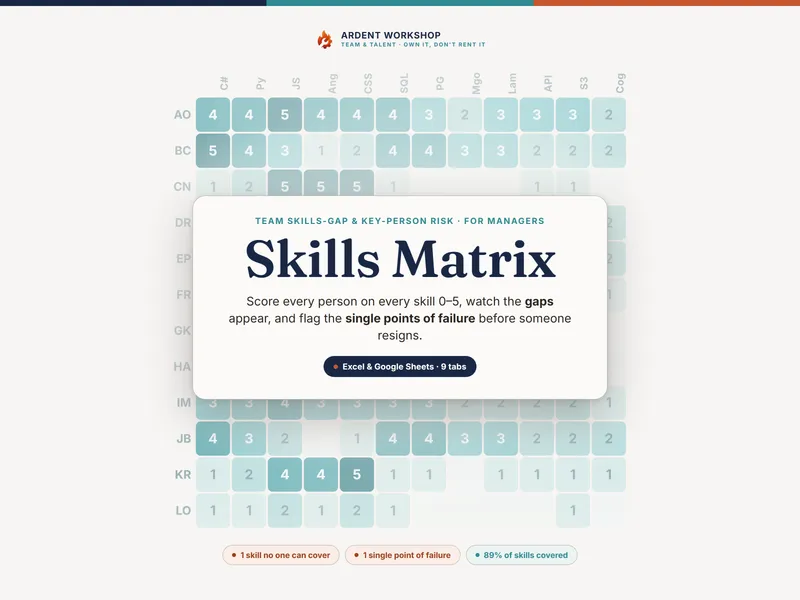
- Did you write down the skills the role actually needs? Not the degree, not the years of experience — the concrete capabilities. “Can reconcile a monthly budget,” “can write a clear customer email under pressure,” “can configure the scheduling system.” If you can’t list 8–12 specific skills for the role, you don’t have a job description; you have a wish. A Skills Matrix - Excel gives you a structured place to define each role’s required skills and the level each one demands, so “good fit” becomes something you can actually measure.
- Does your posting and screen test for those skills? Look at how a candidate proves they have each capability. If the only evidence you collect is a résumé, you’re screening for storytelling, not skill. Add one small work sample or a short structured question per core skill.
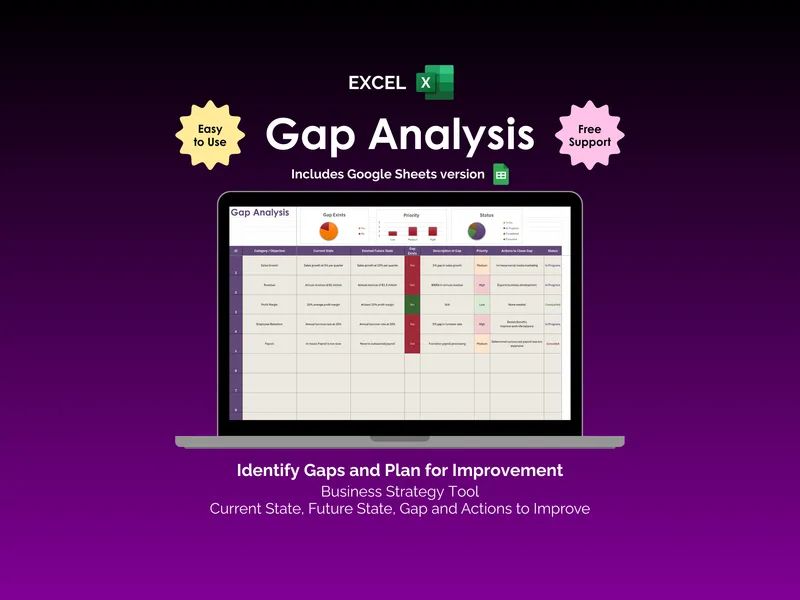
- Where are your real gaps — and is this hire meant to close one? Before you evaluate anyone, know what you’re missing. Running a quick gap analysis on your team’s current capabilities tells you whether this role should prioritize, say, data skills you’re thin on versus a skill you already have covered. It turns “hire someone good” into “hire someone who closes this gap.”
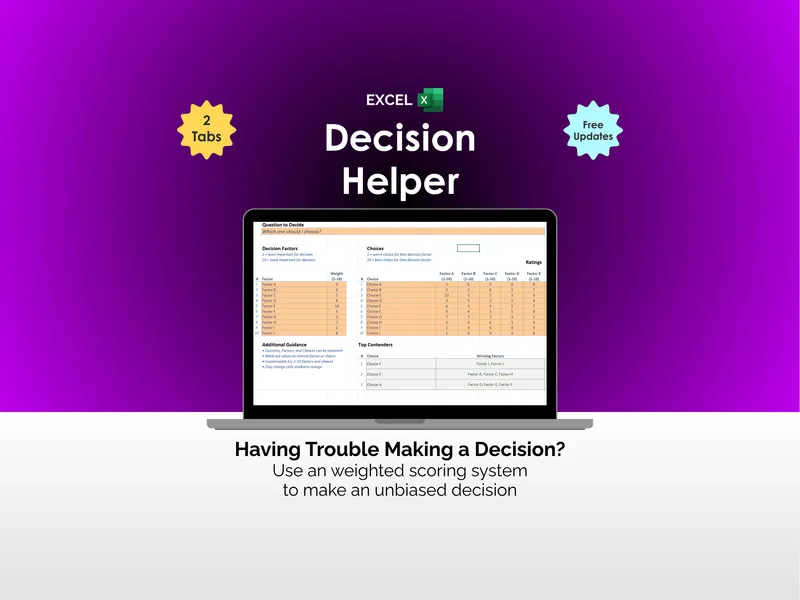
- Are you scoring every candidate the same way? Build a simple rubric — the skills down one side, a 0–3 rating across — and fill it in for each finalist during the interview, not from memory afterward. When the choice comes down to two strong candidates, a structured decision tool that weighs each skill by how much the role needs it keeps the final call anchored to the job instead of to whoever interviewed most charmingly.
Notice that none of this requires you to lower your standards. It requires you to write them down. The degree was never the standard — it was a shortcut you used because defining the real standard felt like work. It is work. It’s also the entire difference between the 37% and everyone else.
And the audit doesn’t end at the offer letter. Once someone is hired, the same skills you screened for become the backbone of how you manage capability and risk on the team. That’s why it pays to map who on your team can do what before someone quits — skills-based hiring and skills-based team management are the same muscle, used at two different moments.
Own the Grid, Don’t Rent the Platform
There’s a tempting fork here. One path is to keep doing it by gut and stay in the “in name only” group by accident. The other is to buy a $40-per-seat-per-month enterprise talent-acquisition platform, most of which is overkill for any team hiring a handful of people a year.
There’s a better middle. The thing that actually makes hiring skills-based is structure you control: a defined list of the skills each role needs, a consistent rubric, and a record of how candidates scored. You can own that structure outright instead of renting it forever. A Skills Matrix - Excel is built for exactly this — set up your roles and required skill levels once, score candidates against them, and the gaps and standout strengths surface on their own. Set up once, yours forever, no subscription and no vendor sunsetting the feature you depend on.
That’s the same philosophy whether you’re hiring your first employee or your fiftieth: don’t let a credential do your thinking for you, and don’t rent the tool that does. Define what the work requires, measure for it, and keep the structure you build.
The Bottom Line
- Skills-based hiring means evaluating candidates on the capabilities a role actually requires — not on a degree, a brand-name employer, or tenure as a stand-in.
- The trend is well-founded. It opens a talent pool of 70+ million skilled workers, predicts performance about five times better than education does, and tends to produce longer-tenured hires.
- But most companies only announced it. Harvard and the Burning Glass Institute found that dropping degree requirements moved non-degree hiring by just 3.5 points — fewer than 1 in 700 hires — with all the real change concentrated in the 37% of companies that changed their mechanics, not just their wording.
- Leaders define the target first. They specify the skills and levels a role needs, screen and interview against a fixed rubric, and score every candidate the same way.
- You can do this without enterprise software. Write down the skills, run a quick gap analysis, score candidates on a 0–3 grid, and own that structure instead of renting it.
The companies winning the skills-based shift in 2026 aren’t the ones with the best values statement. They’re the ones who turned “we hire for skills” into a grid, a rubric, and a different person at the desk. Being one of them starts with a single honest question about your next hire: do you actually know what skills this job needs — or are you about to let a degree decide for you?