
Operator OS 10 min read
How to Price Baked Goods
Many home bakers significantly underprice their products. Here's how to calculate your true recipe costs and set prices that actually turn a profit.
A curated set of 12 spreadsheets — and the guides that go with them — for cottage-food bakers and small bakery owners. Cost a recipe, price a custom cake, track an order calendar, and figure out whether that wedding tier is actually paying you.
Most home bakers we hear from have the same arc: you start baking for friends, someone insists on paying, suddenly there's an Instagram page and a custom-cake DM you don't know how to price. The templates in this collection are built around that exact reality — ingredient costing down to the gram, packaging and overhead baked into the price, an inventory tab that doesn't pretend you're running a warehouse, and an order book your phone can read on a Saturday morning.
Pair the spreadsheets with the guides below — they cover the questions we get asked most about pricing wedding cakes, costing a single recipe, and turning a baking side hustle into something closer to a real job.
Recommended templates
12 templates
Recipe costing, business management, inventory and pricing — in Excel and Google Sheets.

Cottage food label workbook: ingredient statements ordered by weight, an allergen matrix, label rules for 51 jurisdictions, and two-way batch tracing.
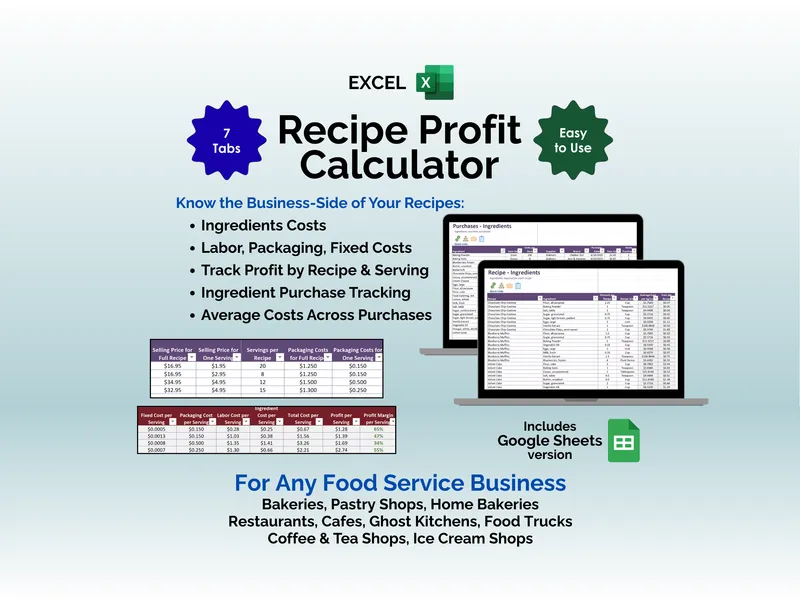
Pricing cakes by gut feel and hoping it covers cost? This excel recipe profit calculator turns ingredients, yield, and labor into a real margin per recipe and per serving.
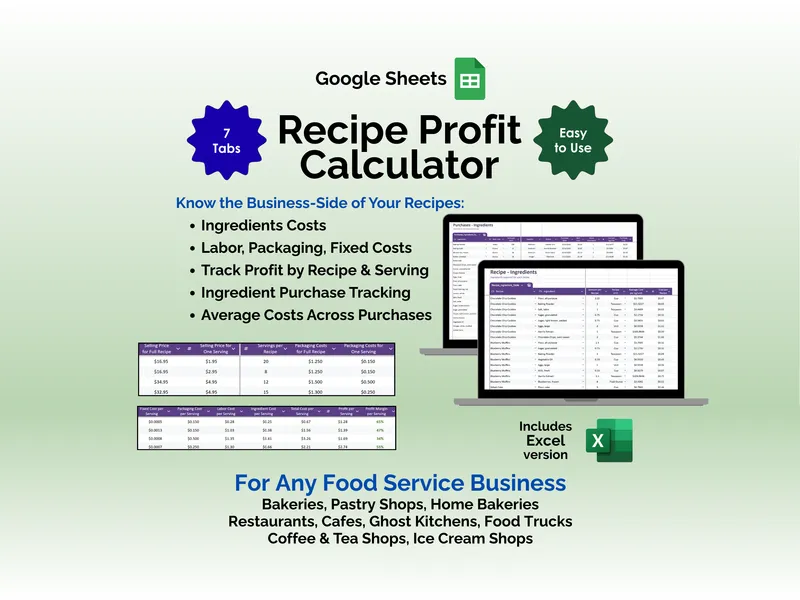
Food businesses guess at pricing because the costing math is annoying. This google sheets recipe profit calculator returns per-recipe and per-serving margins automatically, with unit conversions and purchase averaging.
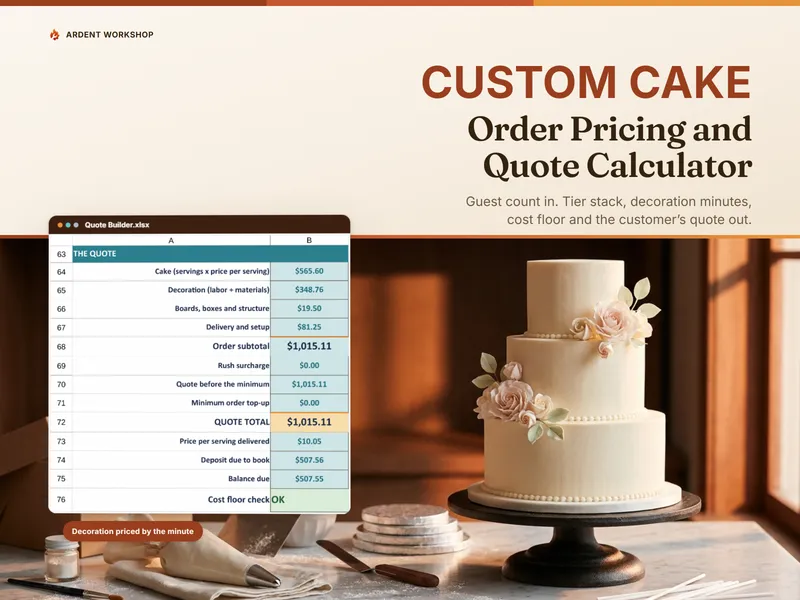
Type the guest count and this custom cake workbook sizes the tier stack for wedding or party portions, prices the design by the minute and prints the quote.
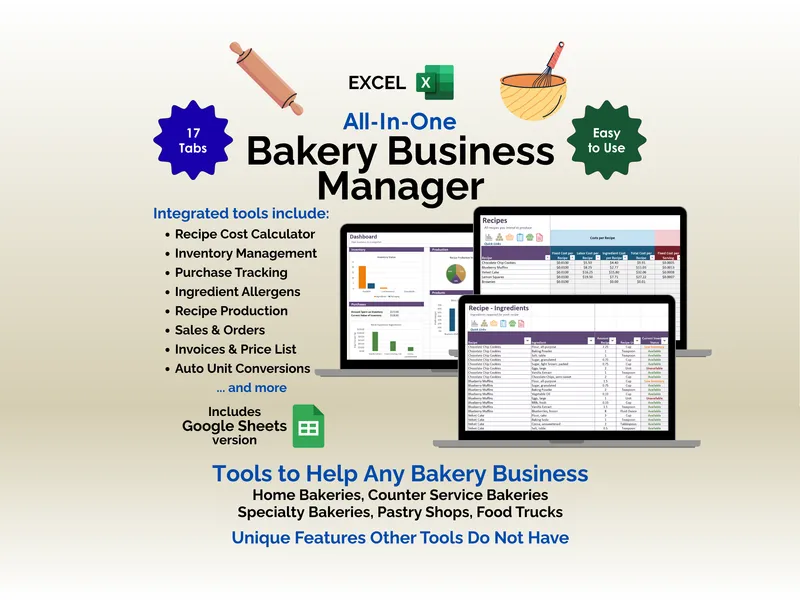
Bakery Business Manager is a 17-sheet workbook for home bakers and small bakeries, connecting ingredient inventory, recipe costing, sales, invoices, and profit. Excel and Google Sheets versions are included.
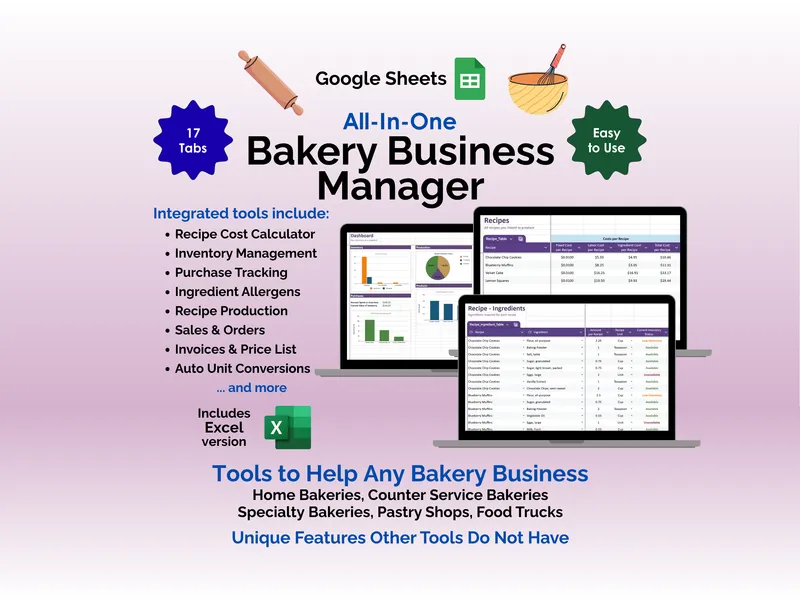
Home bakers price by feel and lose money on every order. This Google Sheets bakery business manager turns recipe costs into product margins across 17 connected tabs.

A kitchen and pantry inventory spreadsheet that writes your shopping list and your use-it-up list for you. 11 tabs, Excel and Google Sheets.
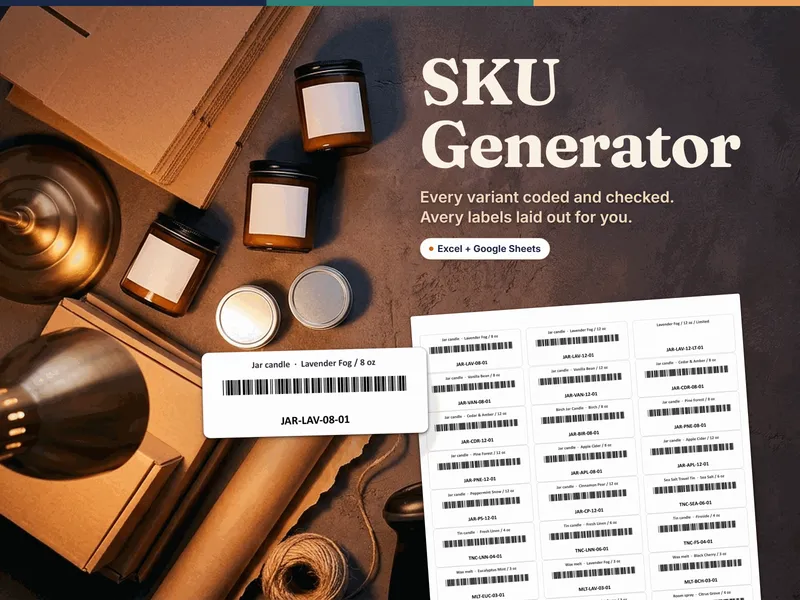
SKU generator for Excel: build a SKU for every variant from your own codes, catch clashes and duplicates, and print Avery 5160 barcode labels.
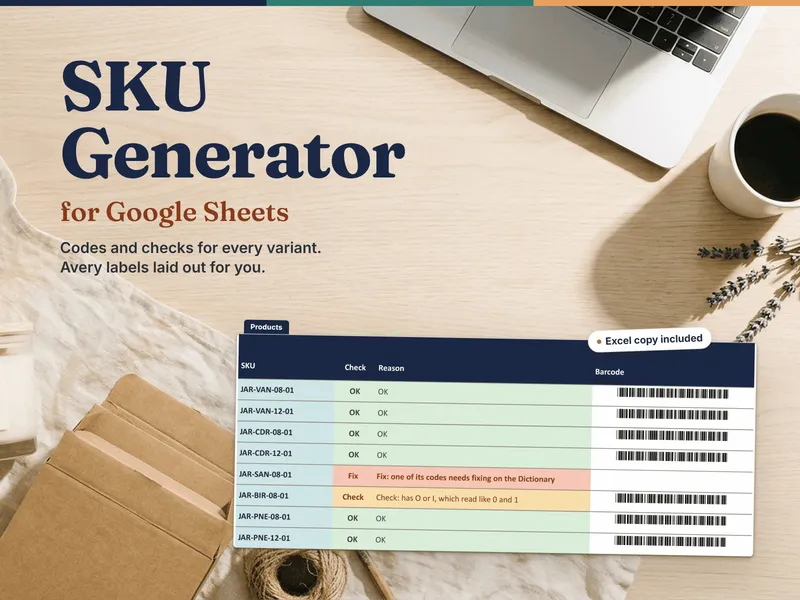
Google Sheets SKU generator: one-click copy, a SKU for every variant from your own codes, clash and duplicate checks, and Avery 5160 barcode labels.

The price to charge worked back from what a product costs you to make, Etsy's real fees applied to every listing, and a target blended from what your competitors actually charge.

Paste your Etsy monthly statement and read the year: revenue, fees, expenses, and what the month actually left you, totaled month by month.
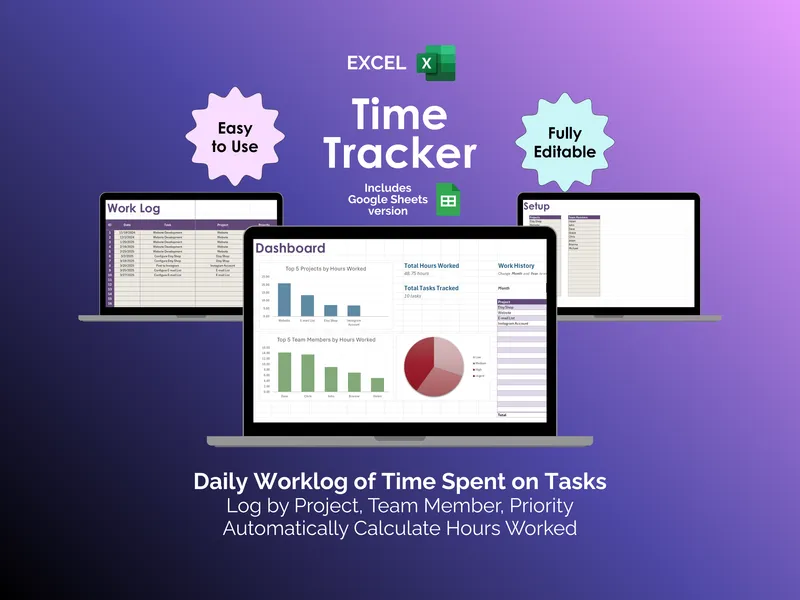
It's Friday afternoon and you owe three clients an invoice. This excel time tracker logs hours by project, team member, and priority, then totals them for you.
Cottage food
Every state has some version of a cottage food law: it lets you sell certain low-risk, shelf-stable foods made at home without a commercial kitchen, in exchange for limits on what and where you sell — and an obligation to label honestly and keep records. The labeling half is where most home bakers get caught out, because a recipe is written in cups and a label has to be ordered by weight.
Revenue caps and the state rules themselves are a separate question, and already free — our own Ardent Seller platform publishes a maintained 50-state cottage food guide and a live revenue cap tracker. Nothing here is legal advice; check your own state before you print a run of labels.
Where we fit
Compare the setup effort, collaboration, and automation you need. Ardent Workshop sells ready-made templates; a custom spreadsheet or software platform may fit better depending on the job.
Build the structure around your own process, with time set aside for formulas, layout, and maintenance.
Owned, structured, connected workbooks — a one-time price, yours to keep.
Consider a platform when you need shared workflows, automation, or integrations. Check the specific plan, permissions, and export options.
Running an operation that's genuinely outgrown the file? Ardent Seller isn't the generic SaaS app this ladder warns about — it's maker-first software built by the same workshop: your data stays yours, you can start free or pay as you go with no subscription required, and it's sized for your operation, not someone bigger. The platform to graduate to when a spreadsheet honestly can't keep up.
Reading list
Real talk on pricing, costing, and the hidden expenses that quietly eat your margin.
Many home bakers significantly underprice their products. Here's how to calculate your true recipe costs and set prices that actually turn a profit.
Ten quiet signs your home baking hobby has turned into a real bakery business — and what to do once you finally admit it.

Renting a commercial kitchen isn't a bigger home kitchen — it's a different cost structure. Run the break-even before you sign anything.

The 5 signs you've crossed from hobby baker to unpaid business — and the conversations, prices, and boundaries that turn requests for cakes into actual income.

Your holiday capacity is a number, not a feeling. The September math that tells you how many pieces you can actually make — and when to close the order book.

A step-by-step pricing framework for home bakers quoting custom wedding cakes — tiers, complexity multipliers, deposits, delivery, and the math most bakers skip.
Summer baking quietly eats home bakers' profits—melting buttercream, double energy bills, faster spoilage. Here's how heat cuts margins and how to fix it.