Your most reliable team member just gave notice.
Two weeks. You say all the right things about wishing them well — and then a quiet alarm starts going off in the back of your head. Wait. Aren’t they the only one who knows how the month-end close actually works? Who handles the client who emails at 9 p.m.? Who remembers why that weird workaround exists in the first place?
If that scenario makes your stomach drop, you’re not alone — and you probably don’t have a talent problem. You have a visibility problem. The skills your team depends on are real. You just can’t see them until the person carrying them walks out the door.
This post is about fixing that before the resignation lands. A skills audit — done in an afternoon, not a quarter — turns the knowledge living in your people’s heads into something you can actually look at, plan around, and protect. Here’s how to run one.
The Problem Isn’t Talent. It’s Visibility.
Most teams don’t fail because they lack skilled people. They fail because no one has mapped who can do what — so the gaps stay invisible until they become emergencies.
Think about how capability usually gets tracked: it doesn’t. It lives in memory. You know, roughly, that Priya is “good with the data stuff” and Marcus “handles the client decks.” But roughly is exactly the problem. Roughly can’t tell you that Priya is the only person who can do the data stuff. Roughly doesn’t warn you that three of your five critical processes depend on a single human. Roughly only becomes precise the moment it’s already too late to fix cheaply.
The scale of this is bigger than any one team. McKinsey’s reskilling research found that 87% of companies either already have skill gaps or expect them within a few years (opens in new tab) — yet most can’t point to where their own gaps actually are. That’s the gap behind the gap: not the missing skill, but the missing picture of the skill.
What Is a Skills Gap?
A skills gap is the difference between the capabilities your team currently has and the capabilities your work actually requires. It can be a skill nobody has (you need someone who can run paid ads, and no one can), or — more dangerously — a skill only one person has, which becomes a gap the instant that person is unavailable.
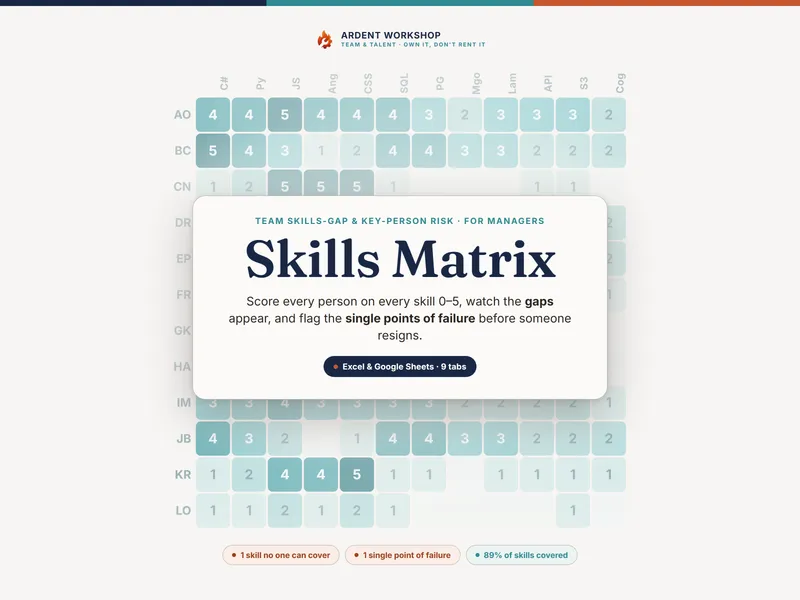
The tool that makes a skills gap visible is a skills matrix: a simple grid that maps every person on your team against every skill the team needs, with a rating in each cell. People down one side, skills across the top, proficiency in the middle. Some call it a competency matrix or a capability grid; the idea is the same. Once your team’s capability is on a single page, the gaps stop hiding — they’re the empty columns and the lonely single ratings staring back at you.
Why the Gap Stays Hidden Until Someone Quits
Skills gaps hide for three predictable reasons. Naming them is the first step to seeing past them.
- Capability is invisible by default. Work gets done, deadlines get hit, and the how never surfaces. As long as the output keeps coming, no one asks which single person is producing it.
- Competence masks fragility. A great employee quietly absorbs the awkward, undocumented tasks no one else wants. From the outside, “everything’s fine.” From the inside, you’ve built a single point of failure and rewarded it with more responsibility.
- Most teams only audit after the loss. The skills review happens during the exit interview, when you’re frantically asking a half-checked-out employee to “write down everything you do” before Friday. That’s the most expensive, lowest-quality time to capture it.
The cost of waiting is not abstract. Gallup estimates that replacing an employee costs one-half to two times their annual salary (opens in new tab) — and that’s before you count the knowledge that walks out with them. Across the U.S., that same research pegs the annual bill for voluntary turnover at roughly $1 trillion. A chunk of that cost is avoidable, and it’s avoidable specifically because the gap was knowable in advance.
How to Run a Skills Audit in 5 Steps
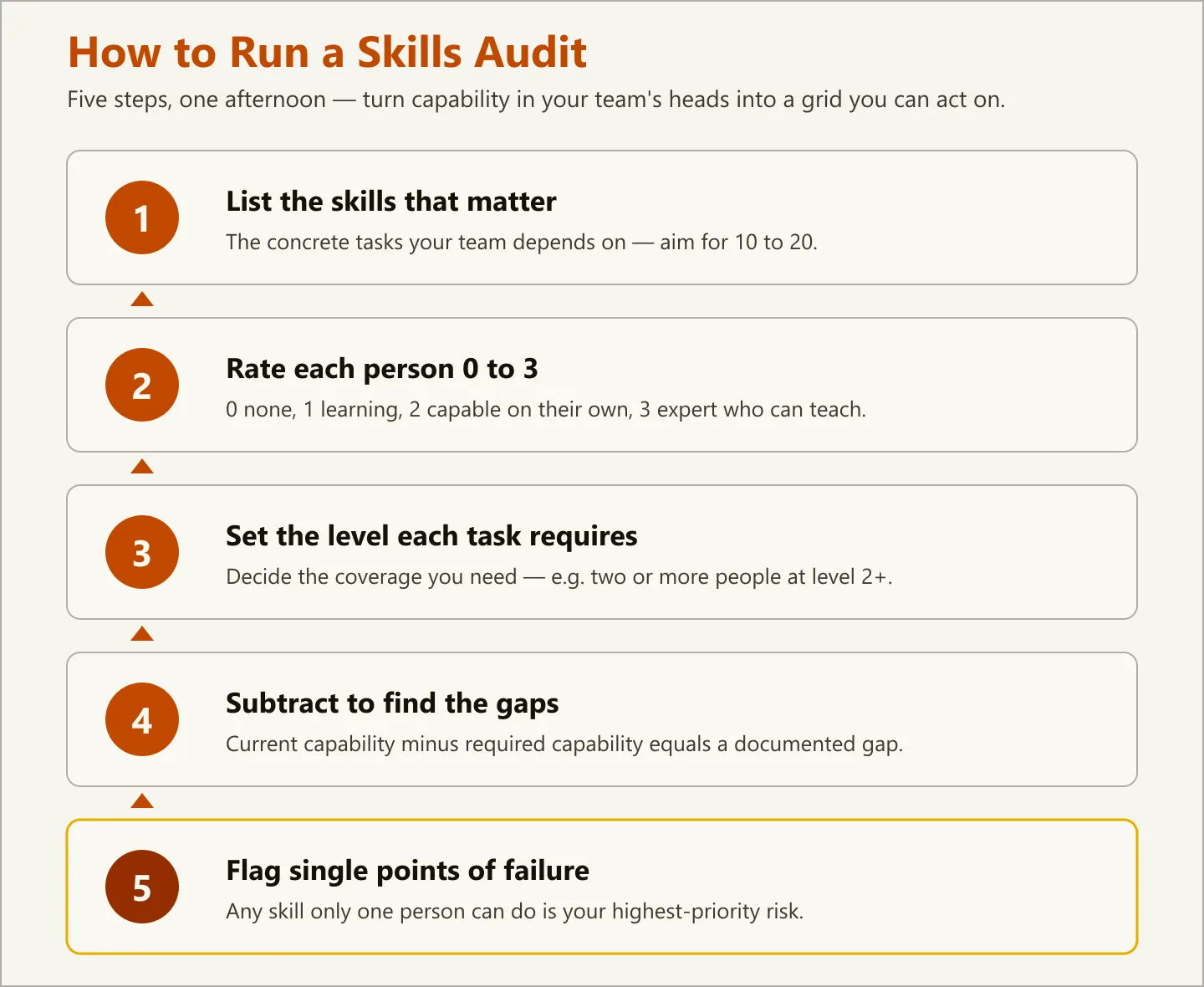
A skills audit is the process of systematically listing the skills your team needs, rating each person against them, and flagging the gaps and risks. You can run a useful first pass in a single afternoon — you don’t need consultants or a six-week project. Here’s the sequence.
- List the skills that actually matter. Not job titles — concrete capabilities. “Reconcile the monthly accounts,” “write a client proposal,” “configure the CRM,” “run the Saturday shift solo.” Aim for 10–20 skills that the team genuinely depends on. If a task would cause a scramble when its owner is out, it belongs on the list.
- Rate each person’s proficiency. Use a simple, honest scale — a 0–3 works well: 0 = none, 1 = learning / needs help, 2 = capable on their own, 3 = expert / can teach others. Resist the urge to over-engineer the scale. Four levels are enough to make the picture clear.
- Define the level each task requires. For every skill, decide the minimum coverage you need — for example, “at least two people at level 2 or higher.” This target is what turns a static snapshot into a gap analysis. Without a target, a matrix is just a description; with one, it’s a diagnosis.
- Subtract to find the gaps. Compare current capability against required capability. Where you fall short — a skill no one has, or a skill below the coverage you need — that’s a documented gap, not a vague worry.
- Flag single points of failure. Highlight every skill that exactly one person can do. These are your highest-priority risks regardless of how skilled that one person is, because skill concentrated in a single head is fragility wearing a disguise.
That’s the whole method. The output is a single grid you can scan in thirty seconds and act on for the next six months.
What a Skills Matrix Actually Shows You
Here’s an illustrative example — a small team rated 0–3 across five critical skills, with a coverage target of “two or more people at level 2+.”
| Skill | Priya | Marcus | Dana | Sam | Coverage vs. target |
|---|---|---|---|---|---|
| Month-end close | 3 | 0 | 1 | 0 | ⚠️ Single point of failure |
| Client proposals | 1 | 3 | 2 | 0 | ✅ Covered |
| CRM configuration | 2 | 0 | 0 | 2 | ✅ Covered |
| Paid ads | 0 | 1 | 0 | 0 | ❌ Gap — no one capable |
| Saturday shift solo | 2 | 2 | 3 | 1 | ✅ Strong |
Read across and down, and the story tells itself:
- Month-end close is a bus waiting to happen. Only Priya can do it (a lone “3”), and Dana is barely started. If Priya leaves, your close breaks.
- Paid ads is a true skills gap. Nobody is capable. This is a hire-or-train decision, not a cross-training one.
- CRM and proposals are healthy — two-plus capable people each. You can lose someone here without the work stopping.
Notice what the grid did: it converted a fuzzy feeling (“I think we’d be in trouble if Priya left”) into a specific, defensible claim (“the month-end close has a bus factor of one, and paid ads is an open gap”). That’s the entire value of putting it in writing. A purpose-built Skills Matrix - Excel does this math for you — you enter ratings and it surfaces the gaps and single points of failure automatically — but even a hand-drawn version on a whiteboard beats keeping it in your head.
The Bus Factor: Your Most Dangerous Number
The bus factor is the number of people who would have to be unavailable before a critical task can no longer get done. The morbid name comes from software teams — “what if a key person got hit by a bus?” — but the real-world versions are far more common: someone quits, goes on parental leave, gets sick, or takes a long-overdue vacation.
A bus factor of 1 means a single point of failure. It’s the number that should keep you up at night, and it’s almost always higher than managers assume, because the most capable people accumulate the most undocumented responsibilities. Your best employee is statistically your biggest bus-factor risk.
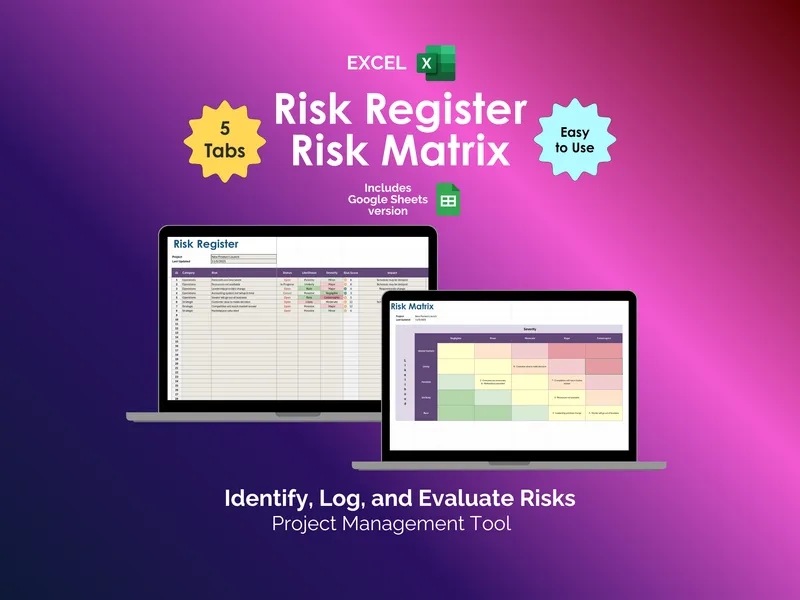
The fix isn’t to distrust your stars — it’s to treat key-person risk like any other operational risk: name it, log it, and assign an owner to reduce it. The same discipline project managers use for delivery risks applies here. A Risk Register and Matrix - Excel lets you record each single point of failure with a likelihood, an impact, and a mitigation plan, so “Priya is our only month-end person” becomes a tracked item with a due date instead of a vague worry you keep forgetting until review season.
Turning the Audit Into a Plan: Train, Cross-Train, or Hire
A skills audit is only useful if it changes what you do next. Every gap you find resolves into one of three moves:
- Cross-train when the skill exists on the team but is concentrated in one person. This is your cheapest, fastest fix — and it directly lowers your bus factor. Pair your single expert with a level-1 learner and set a target date to get them to level 2.
- Train or upskill when the whole team is thin on a skill that’s becoming more important. This is an investment decision: time, budget, and a plan.
- Hire when the skill doesn’t exist on the team and can’t be built fast enough to matter. The audit makes this case for you — “we have zero capability in paid ads and it’s now core to growth” is a far stronger hiring argument than a gut feeling.
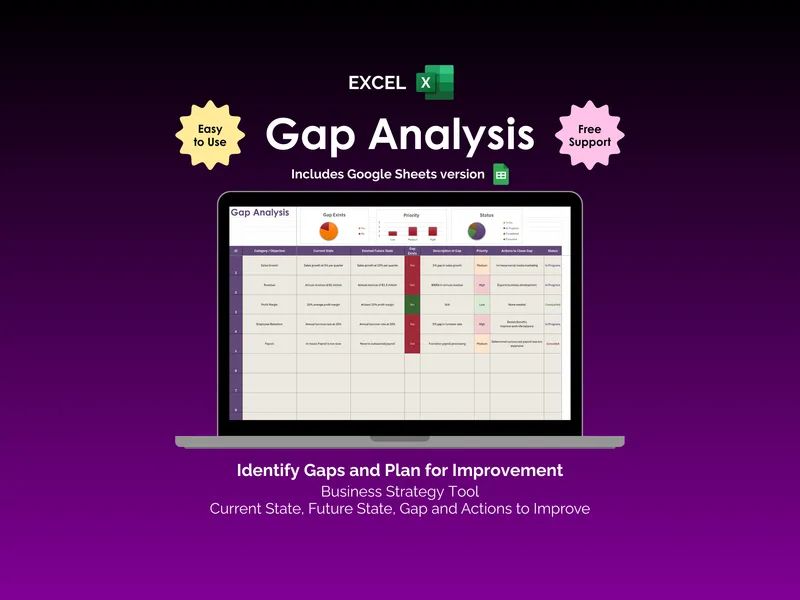
To prioritize, run a quick gap analysis: rank each gap by how critical the skill is and how exposed you are. A critical skill with a bus factor of one jumps the line; a nice-to-have skill nobody has can wait. While you’re at it, pair the audit with a clear map of who actually owns what — a RACI matrix your team won’t ignore turns “someone should handle that” into a named, accountable person, which is half the battle in closing a gap.
It’s worth remembering that capability gaps are one of the hidden costs of running any project or team — the kind that never show up on a budget line until they blow up a timeline. Auditing them is how you move the cost from “surprise” to “planned.”
Own the Grid, Don’t Rent the Software
You don’t need a $30–80-per-month HR platform to do this. Enterprise talent-management software is overkill for most teams — overbuilt, expensive, and rented forever. At the other extreme, a blank spreadsheet is free but means rebuilding the formulas, the rating scale, and the gap logic yourself every time.
The sweet spot is a structured workbook you own: set up once, yours forever, no subscription, no login, no vendor deciding to sunset the feature you depend on. That’s exactly what the Skills Matrix - Excel is built for — a ready-made grid that scores your people against your skills, compares current capability to what each role needs, and surfaces the training and hiring priorities automatically. It’s the difference between describing your team and seeing it.
Run the audit once and you’ll wonder how you managed without the picture. Run it twice a year and you’ll catch the next gap while it’s still a cross-training conversation — not a two-weeks’-notice emergency.
The Bottom Line
- A skills gap is invisible by default and usually surfaces at the worst possible moment: when the person carrying it quits.
- The fix is a skills audit — list the skills that matter, rate each person 0–3, set a required coverage level, subtract to find the gaps, and flag every single point of failure. You can do a first pass in an afternoon.
- Watch your bus factor. Any skill only one person can do is a single point of failure, and your most capable people are usually your biggest risk.
- Every gap becomes a decision: cross-train (cheapest), upskill, or hire. The audit turns gut feelings into defensible plans.
- Own the structure, don’t rent it. A one-time workbook beats both a blank spreadsheet and a monthly SaaS subscription for nearly every team running fewer than a few hundred people.
The best time to map your team’s capability was before your star started job-hunting. The second-best time is this afternoon.