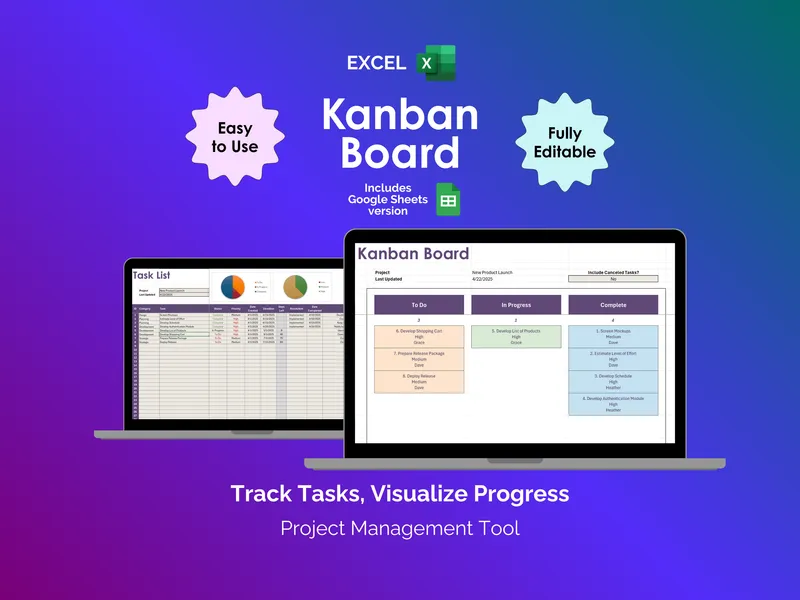
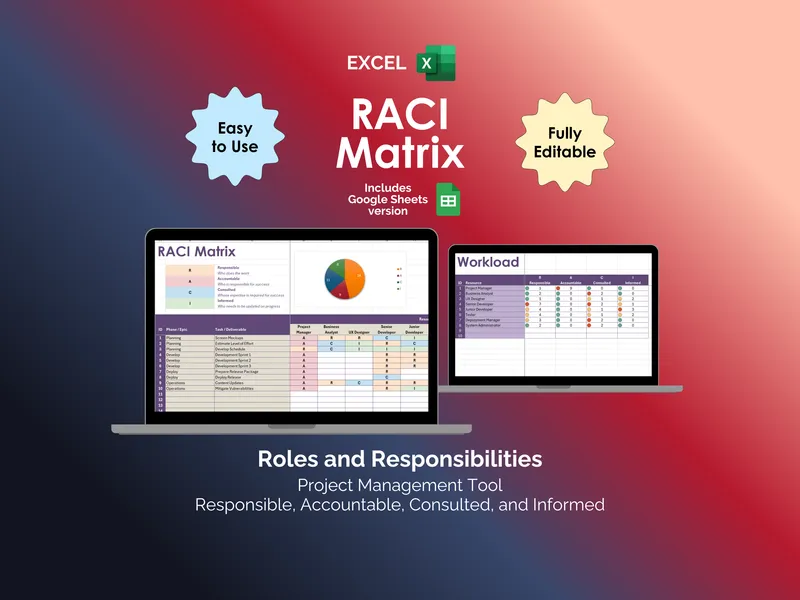
It’s Friday afternoon, you have three invoices to send, and the only record of what you actually worked on this week is scattered across calendar events, Slack threads, and your memory. This excel time tracker pulls all of that into one daily worklog so freelancers, consultants, and billable-hour professionals can reconstruct the week, defend every billed minute, and send invoices that match what you really did.
You get both an Excel workbook and a Google Sheets version (because some clients live in one ecosystem and some live in the other), so the same time tracking spreadsheet works whether you bill an Etsy Shop side hustle, a design retainer, or a full agency team.
The Setup tab is where you start, and it’s deliberately the simplest sheet in the file. You list your projects in one column and your team members in the next, and from then on every other tab pulls from those lists via dropdowns. That matters because consistent naming is what makes the dashboard math work later (no more “Acme” vs “Acme Co.” splitting your totals in half).
The Work Log tab is the daily driver. Each row captures Date, Task, Project, Priority (High, Medium, Low), Who Worked, Start Time, and End Time, and the Hours Worked column calculates itself the moment you fill in start and end. You can log a fifteen-minute support call and a six-hour build session side by side, and the spreadsheet doesn’t care which order you enter them in.
The Priority field is more useful than it looks. Tagging each entry High, Medium, or Low gives you a defensible answer when a client asks why their retainer hours went to a particular task, and it gives you a personal answer when you wonder why a “quick” project consumed your whole Tuesday. The color-coded tags make scanning the log fast even after a hundred entries.
The Dashboard tab is where the excel time tracker earns its keep. It surfaces your Top 5 Projects by Hours Worked and Top 5 Team Members by Hours Worked as bar charts, a pie chart breakdown of where time is going, and headline totals for Total Hours Worked and Total Tasks Tracked. There’s also a Work History panel with a month filter, so you can answer “what did March actually look like?” without rebuilding a single formula.
What sets this time tracking spreadsheet apart is that it’s fully editable and lives entirely in files you already own, not in another SaaS subscription pinging your inbox. Add a Rate column, rename Priority to Status, drop in a client like an Instagram Account-only brand, or extend the Work Log to a thousand rows; nothing is locked down and nothing phones home.
Download it once, drop it in the folder where you keep client work, and you have a permanent record of your time that you can pull up in court, in a client review, or three years from now when someone asks how long that kind of project usually takes.