The last bell of the school year rings at 11:40 on a Friday, and somewhere a maker is doing math she doesn’t want to do.
Picture a seller — let’s call her Dana. She’s a composite, stitched together from the patterns common to craft sellers and home makers every single June, not a real person. But if you run a handmade business and you have kids, you already know her. She makes embroidered goods and a small line of stickers, ships maybe forty orders a week in her good season, and has spent nine months building a rhythm: pack orders after drop-off, design in the quiet hours, restock supplies on Tuesdays. That rhythm has a name. The name is “school.”
And school just ended.
This is a story about what happens to a handmade business when the kids are home all summer — where it breaks, why it breaks in almost exactly the same spot for almost everyone, and the system that turns a survivable summer into a genuinely good one. It’s written as one continuous scenario on purpose, because the failure isn’t a single mistake. It’s a slow accumulation, and you only see it clearly if you watch it build.
June: the optimism trap
The first week feels fine. Better than fine.
Dana wakes up Monday with a plan that lives entirely in her head: she’ll work while the kids “do their own thing.” There are no lunch packs, no bus, no 7 a.m. scramble. She has reclaimed two whole hours. She tells herself this is the summer she finally gets ahead.
By Wednesday the two hours have a hole in them. The kids are bored by 9:30. The younger one needs a snack, then needs the snack negotiated, then spills the snack. Dana answers a customer message standing at the counter, forgets to log the custom order details, and reassures herself she’ll remember. She ships six orders that day instead of her usual ten and decides that’s just a slow start.
Here is the optimism trap, stated plainly: makers plan their summer around the time they gained and ignore the structure they lost. Dana gained two hours of no-school. She lost every external cue that used to run her day — the bus that forced a hard start, the pickup time that capped the workday, the silent house that made deep design work possible. Time without structure isn’t the same as time. It’s just hours that get eaten by whoever needs you most loudly.
The orders don’t stop for June. That’s the cruel part. Summer is often a strong season for handmade — wedding gifts, market season, vacation impulse buys. So demand holds steady or climbs while the maker’s usable workday quietly collapses. Nobody notices on a single Wednesday. The gap compounds.

July: the week it all caught up
By the second week of July, Dana is behind in the specific, sweaty way that’s hard to climb out of.
It looks like this. A customer messages asking where their order is — the custom one, the details she never logged. Dana digs through her message history at 10 p.m., reconstructs what she thinks they wanted, and makes it from memory. It’s slightly wrong. The customer is gracious but disappointed, and Dana eats the cost of a remake. Meanwhile she’s out of the backing material she swore she’d reorder on a Tuesday that never happened, because Tuesdays don’t exist in July. Two markets she committed to in the spring are now eight days away and she has no finished inventory count she trusts.
The kids, sensing the tension, get louder. The work gets slower. She starts doing the thing that ends a lot of small businesses quietly: she works after they’re asleep, every night, until she’s running the whole operation on four hours of sleep and resentment.
The breakdown is never really about time management. It’s about memory. When Dana had school-shaped structure, she could hold the business in her head — what’s ordered, what’s in stock, what’s promised to whom — because the day fed her the same prompts at the same times. Summer removes the prompts. The business is still there; it’s just no longer being whispered to her on a schedule. So it falls out of her head and onto the floor, one dropped detail at a time.
That’s the turning point in every version of this story. Not a dramatic blowup — just the moment the maker realizes she cannot personally remember her way through summer.
The turning point: she stopped pretending summer was normal
The fix doesn’t start with a productivity hack. It starts with an admission: summer is a different operating season, and it needs a different operating plan. Trying to run a June–August business on a September–May system is the actual mistake. Dana stops trying to recreate her school-year rhythm and builds one designed for a house full of kids.
Three shifts carry the whole turnaround.
-
She moved the business out of her head and into a system she could trust. The single highest-leverage change. Instead of holding orders, custom details, stock levels, and market deadlines in working memory — the thing summer destroys — she put them somewhere external that didn’t care how chaotic the kitchen was. Every incoming order got logged the moment it arrived, with the custom details captured right then, while she still knew them. Stock got a real count, not a vibe. This is exactly the role a tool like the Craft Business Manager (Google Sheets version here) is built to play: it becomes the brain that doesn’t get interrupted by a spilled snack. The reason this matters more in summer than in any other season is simple — summer is when your own memory is least reliable, so the cost of relying on it is highest.
-
She batched the work to fit the day she actually had, not the day she wished for. Dana stopped trying to do “a little of everything, all day.” A fragmented day is the worst possible shape for handmade work, which has setup and cleanup costs every time you switch tasks. Instead she clustered work into a small number of protected blocks built around the realities of having kids home — early morning, a midday quiet window, and after bedtime — and assigned each block one job. Cutting and prepping on one day. Stitching on another. Photography and listing on a third. Batching cut her switching costs and, just as importantly, made the work fit into windows a parent can actually defend.
-
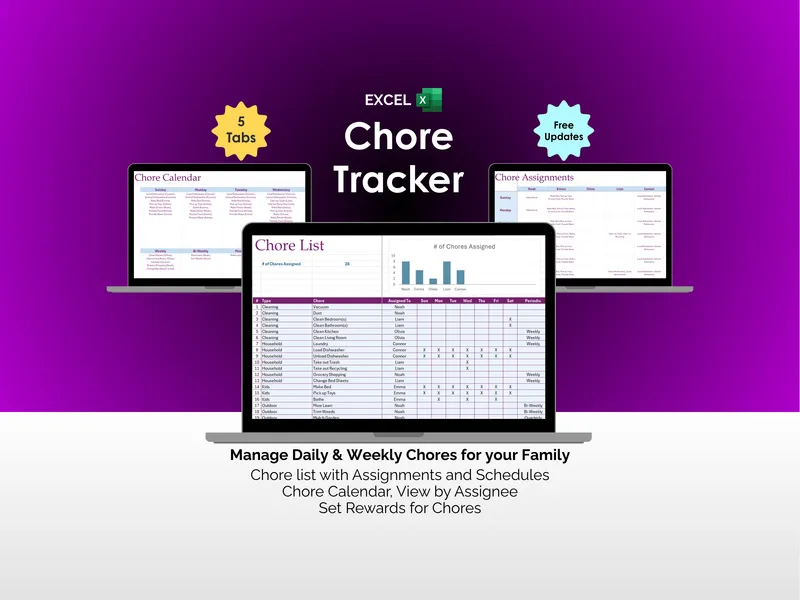
She gave the kids their own system, so they weren’t competing with the business for the same attention. This is the part makers skip, and it’s the one that quietly buys back the most time. A bored kid will out-negotiate any to-do list. Dana set up a simple, visible chore-and-activity board for the kids — a Chore Tracker works well for this, and the principle is the same whether it’s a spreadsheet or a poster on the fridge — so that “what do I do now” had an answer that wasn’t “interrupt mom.” (Parents who’ve watched a summer schedule fall apart by week two know this dynamic well: structure for the kids is structure for you.) Older kids got a short list of paid tasks (real help: stamping logos, counting stock, peeling sticker backs). The boredom didn’t vanish, but it stopped landing entirely on her.
The summer work-block schedule (a worked example)
Here’s an illustrative version of the rhythm Dana landed on. The exact hours don’t matter — the structure does. Notice that no block asks her to do deep work while actively supervising young kids, and every recurring business chore (the reorder she kept forgetting) has a fixed home.
| Block | When | Kids are… | Business job | Why it works |
|---|---|---|---|---|
| Early window | Before kids wake | Asleep | Deep design / custom work | The only reliably quiet hours; protect them |
| Mid-morning | After breakfast | On their activity board | Order packing & shipping | Repetitive, interruption-tolerant work |
| Midday | Quiet/screen window | Settled for ~1 hr | Logging orders, stock check, reorders | The “memory” tasks that summer breaks |
| Afternoon | Out / pool / play | With you, off-duty | No business work | A real boundary prevents burnout |
| Post-bedtime | Asleep | Asleep | Batched stitching or photography | Optional catch-up, capped — not nightly |
The point of writing it down isn’t rigidity. It’s that a plan on paper survives a chaotic morning; a plan in your head does not. When Wednesday goes sideways — and it will — you glance at the structure and slot back in, instead of spending your willpower re-deciding the whole day from scratch.
If you think better in columns than rows, the same logic maps cleanly onto a board: a Kanban Board with lanes for To Make → Making → Ready to Ship → Shipped turns “what’s the state of everything” into something you can see in five seconds instead of reconstruct from memory at 10 p.m.
Set this up before summer breaks you, not after
The hard truth in Dana’s story is that she built her system in mid-July, after a remake, a missed reorder, and two weeks of bad sleep. Everything she did would have worked just as well — and cost far less — if she’d done it the last week of school. Summer doesn’t ambush makers. It arrives on a published calendar. Use the head start.
Here’s the pre-summer setup checklist, the version that turns “survive” into “actually had a good season”:
- Decide your summer capacity honestly. Look at your real usable hours, not your wished-for ones. If you’ll have half the workday, plan for half the output — or open a waitlist instead of overpromising.
- Get every open order and custom detail into one trusted place before the chaos starts, so nothing lives only in your memory.
- Do a real inventory count now, while you still have a quiet hour, and note your reorder points for every key supply. (If you’ve never trusted your numbers, this is the season to fix the inventory trap for good.)
- Pre-order long-lead supplies for the whole summer if your cash flow allows it, so a forgotten Tuesday can’t stall you.
- Block your work windows around your kids’ actual rhythm and write them down where you’ll see them.
- Build the kids’ activity/chore system before they’re bored, not after.
- Set a hard “shop closed” boundary — at least a few evenings a week — and protect it like a customer deadline.
- Communicate ship times clearly in your listings and replies so summer expectations are set up front.
You will not check every box perfectly. That’s fine. The goal isn’t a flawless summer; it’s a system that catches the details you’ll inevitably drop, so a dropped detail costs you a glance instead of a remake.
What this means for your summer
If you take one thing from Dana’s season, take this: the maker who thrives with kids home all summer isn’t the one with the most discipline — it’s the one who stopped relying on memory and willpower and built a system that works while distracted.
The specifics will be yours. Your kids are different ages, your products have different lead times, your quiet windows fall at different hours. But the failure pattern is remarkably consistent, and so is the fix:
- Summer is a distinct season, not a worse version of the school year. Plan it as its own thing.
- Your memory is the first casualty. Move orders, custom details, and stock counts out of your head and into a system the moment they happen.
- Batch the work to fit the day you actually have. Fragmented attention is the enemy of handmade margins.
- Give the kids a system too, so they’re not competing with your business for the same scarce attention.
- Set boundaries on paper before you need them. A capped evening and a written plan are what stand between a busy season and burnout.
Do that, and August looks different. Not effortless — you have kids home, after all — but steady. The orders ship. The customers get what they ordered. The markets have inventory. And you get to actually be present for the summer instead of mortgaging every night of it.
When the spreadsheet isn’t enough
For a lot of makers, a well-built spreadsheet carries them through years of summers. But there’s a version of this story where Dana’s business keeps growing — more orders, more SKUs, more custom work, maybe a second person helping pack — and the moment arrives where logging everything by hand becomes its own full-time job.
That’s the natural graduation point. And when your handmade business outgrows a spreadsheet, Ardent Seller (opens in new tab) is the next step — inventory, orders, and production tracking built for makers who’ve gotten too busy to track it all manually, kids home or not.
Start where Dana started, though: get this summer out of your head and into a system. Future-you, the one not awake at 2 a.m. reconstructing a custom order from memory, will be grateful.