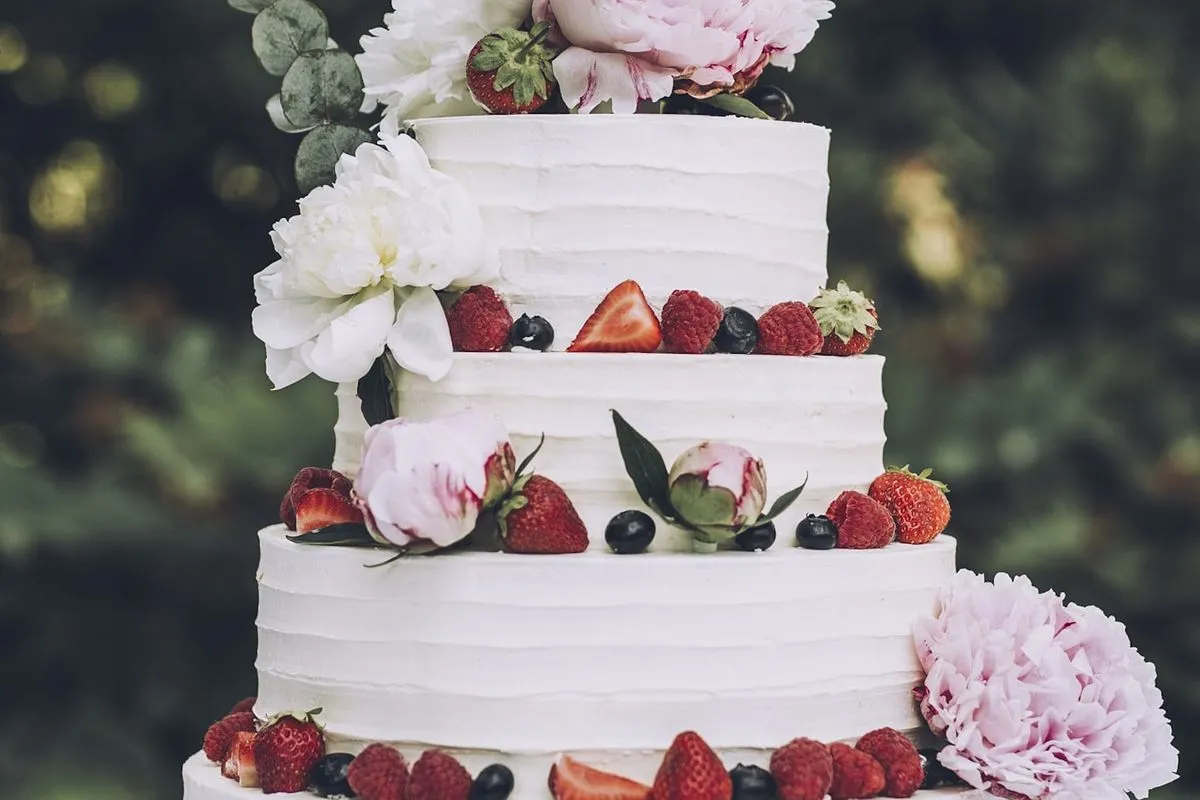
Price per serving is the unit custom cake is sold in
Ask a baker what a wedding cake costs and the honest answer is a range — it depends on the guest count, the tiers, and the design. Ask what it costs per serving and you have a number that can be quoted before any of that is finalized, and compared cake to cake, order to order, season to season. That is what makes the per-serving price, rather than the flat total, the useful number to compare one cake quote against another.
The calculation itself is simple — the quoted total divided by the number of servings — but both halves of that fraction hide a decision. The total has to include far more than cake and frosting, and the serving count depends entirely on how big a "serving" is defined to be.
How is a serving defined?
A serving is a slice of a fixed size, measured in square inches of the cake's top surface. Change the slice size and the same cake yields a different number of servings — which is why "how many does this cake feed?" has no single answer without first asking what size slice is being cut.
Two slice sizes are in play, and they are not interchangeable — a quote has to say which one it assumes. The sizes below are the editable defaults the Custom Cake Order Pricing & Quote Calculator ships with, a starting point to change to your own rather than an industry standard:
- Party slice — 3 square inches of top area (about a 1.5 by 2 inch slice on a 4-inch-tall tier). The larger, more casual portion cut for a birthday, shower or office party, where the cake is often the main dessert on the table.
- Wedding slice — 2 square inches of top area (about a 1 by 2 inch slice on the same tier). The smaller portion cut when the cake sits alongside a full meal and other desserts.
The arithmetic follows from there. A 12-inch round has a top area of about 113 square inches, so it yields roughly 37 party servings at 3 square inches a slice, or 56 wedding servings at 2 — the same cake, counted two ways. The free printable cake servings chart lists both counts for 19 round, square and sheet sizes and 14 standard tier stacks, if you want the table rather than the arithmetic.
Because a wedding slice is smaller, the same cake yields more wedding servings than party servings from identical tiers. That is the entire explanation for why one cake seems to "feed" two different numbers depending on who is asking — the cake has not changed, the slice has.
Why price per serving alone underprices a decorated cake
A price-per-serving figure scales with the base of the cake — more servings means more batter, more filling, more buttercream. It does not scale with the work layered on top of that base, and on a custom cake the work is usually where the real cost sits:
- Decoration. Sugar flowers, fondant piping, hand-painted details and structural elements are priced by the minutes they take to make, not by how many servings the cake underneath happens to yield. A small cutting cake with an elaborate topper can carry more decorating labor than a much larger plain sheet cake.
- Structure. Multi-tier stacks need internal support, dowels or plates, and the assembly time to build and transport them safely — cost that exists per tier and per stack, not per serving.
- Delivery and setup. Driving, on-site assembly and a rush turnaround are costs the guest count did not create and a flat per-serving rate will not recover.
Quote purely from servings and a simple, undecorated cake and a heavily decorated one of the same size land at the same price — which means the decorated order is being sold at a loss relative to the work it actually took.
How a cost-floor check catches it
The fix is to price the cake and the decoration separately, then check the combined total against what the order actually costs to fulfill before sending the quote. A cost floor adds the ingredients, the decoration labor, structural supplies, and delivery — plus a share of overhead and admin time — and compares that total to the quoted price to confirm a real margin survives, not just a servings-based number that looks reasonable on its own.
A quote that clears the per-serving math can still fail the floor check once decoration minutes and delivery are counted honestly — which is the order a per-serving price alone will never catch, because per-serving pricing was never measuring the decoration in the first place.
The free printable cake servings chart covers the serving-count half of this on its own, no signup required, and how to price a custom cake order walks the other half — the whole quoting sequence from inquiry to deposit — on a worked 100-guest order. The paid Custom Cake Order Pricing & Quote Calculator carries a guest count through to a tier stack, prices every decoration element by the minute, and runs the finished quote against a cost floor before it produces a deposit and balance.
Templates that implement this
Tools that price the cake, the decoration, and the order
4 templates
In the Custom Cake Order Pricing & Quote Calculator, a guest count resolves to a tier stack, a per-serving base, and every decoration element priced by its own labor minutes — then checked against a cost floor before the quote goes out. The others cost the recipe underneath it and run the wider bakery books.
- $9.95 Spreadsheet
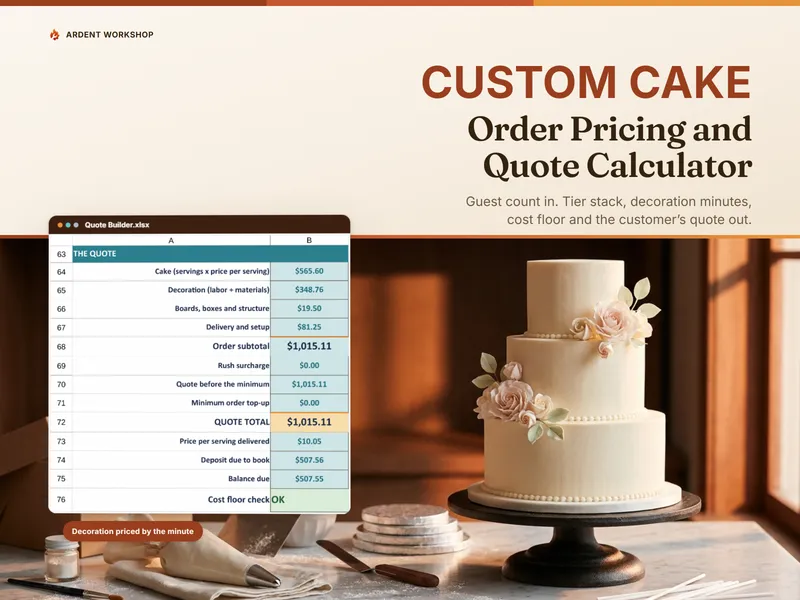
Custom Cake Order Pricing & Quote Calculator — Servings, Decoration Minutes, Cost Floor and a Printable Quote for Excel and Google Sheets
Type the guest count and this custom cake workbook sizes the tier stack for wedding or party portions, prices the design by the minute and prints the quote.
Operator OSView details - $7.95 Excel
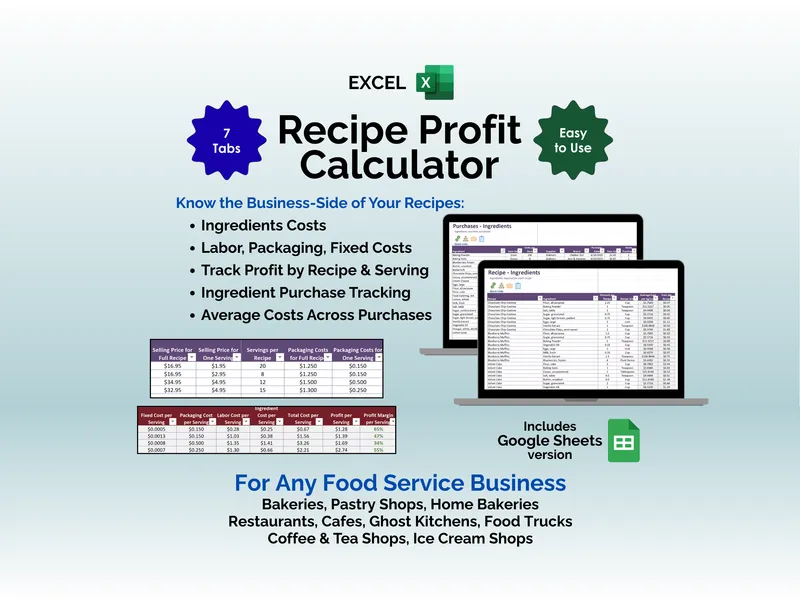
Recipe Profit Calculator - Excel
Pricing cakes by gut feel and hoping it covers cost? This excel recipe profit calculator turns ingredients, yield, and labor into a real margin per recipe and per serving.
Operator OSView details - $7.95 Sheets
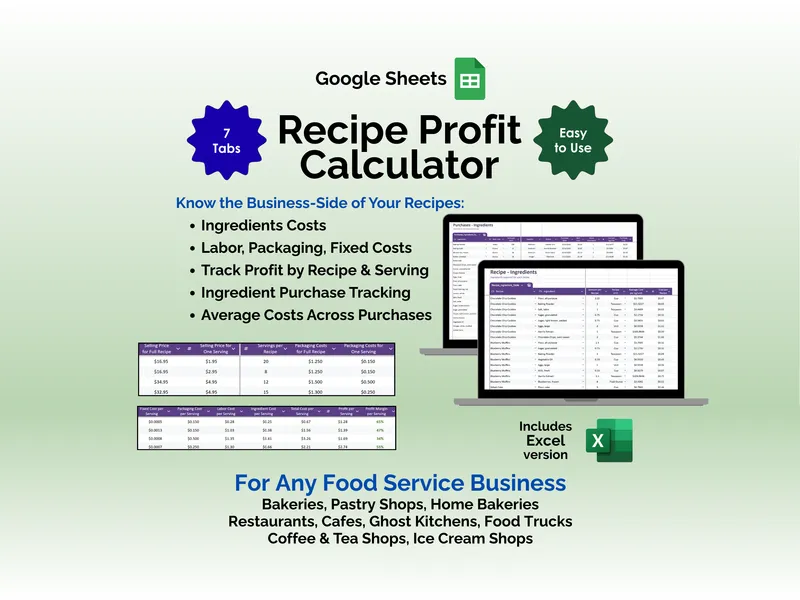
Recipe Profit Calculator - Google Sheets
Food businesses guess at pricing because the costing math is annoying. This google sheets recipe profit calculator returns per-recipe and per-serving margins automatically, with unit conversions and purchase averaging.
Operator OSView details - $29.95 Excel
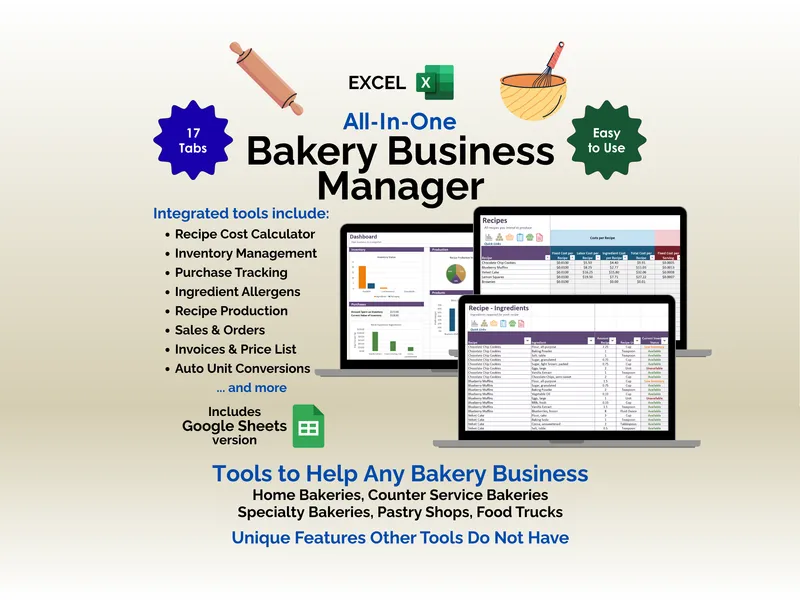
Bakery Business Manager - Excel
Bakery Business Manager is a 17-sheet workbook for home bakers and small bakeries, connecting ingredient inventory, recipe costing, sales, invoices, and profit. Excel and Google Sheets versions are included.
Operator OSView details
Frequently asked questions
- How do you calculate price per serving?
- Divide the cake's quoted total by the number of servings it yields. The serving count is not looked up — it is each tier's top area divided by the slice size the baker has set, rounded down to a whole serving and summed across the tiers. In the worked 100-guest example from the Custom Cake Order Pricing & Quote Calculator, a quote of $1,015.11 on a stack yielding 101 servings works out at $10.05 per serving — an illustrative figure from that example, not a market rate.
- Why does the same cake feed two different numbers of people?
- Because the slice changed, not the cake. A party portion is cut larger than a wedding portion, so dividing the same top area by a smaller wedding slice returns more servings. Both numbers are correct for the slice they assume, which is why a serving count means nothing until the slice size behind it is stated.
- Is price per serving enough to quote a decorated cake?
- No. Price per serving scales with the base of the cake — batter, filling and buttercream — and not with the decorating hours, the internal structure, or the delivery. Quote from servings alone and a plain cake and a heavily decorated one of the same size land at the same price. Price the decoration separately by the time it takes, then check the combined total against what the order costs to fulfill.