The paradox this document sits inside
A letter of instruction carries no legal force, and yet it is written to be the first piece of paper a family reaches for in the week after a death or a hospitalization. Those two facts feel like they should contradict each other. They don't, because a letter of instruction and a will are built to answer two completely different questions. A will settles who gets what — eventually, and usually after some formal process. A letter of instruction answers "what do we do on Tuesday," and no legal instrument is built to do that job. Understanding that split is most of what there is to understand about this document.
What goes in a letter of instruction
A useful letter of instruction is, above everything else, a map to where things are and who to call. In practice that tends to cover:
- Where the signed will is kept — the physical location, and who else has a copy or knows where it is.
- Accounts — which banks, investment, pension or retirement, and insurance accounts exist, and who they're held with. The location and the institution, not the balances or the login.
- The professionals — the solicitor or attorney who drafted the will, any financial advisor, an accountant — names and how to reach them.
- Who needs to be told — family, close friends, an employer, a landlord — and roughly in what order.
- Pets — who takes them, and anything a new caretaker would need to know in the first day.
- Sentimental items — what a specific object means, and who you'd want to have it. A formal will often skips this entirely.
None of this is legal language, and it doesn't need to be. It's written the way you'd actually explain it to someone standing in your kitchen.
What it is not
A letter of instruction does not distribute property. It does not override a will, a trust, or a beneficiary nomination on a bank, pension, or insurance account — those instruments control, and where a letter says something different, the letter loses. It has no witnesses, no notarization, and no filing, and it isn't meant to have any of those things. Saying this plainly, up front, is what makes the rest of the document trustworthy: a letter of instruction earns its place by being useful, not by pretending to a legal authority it doesn't have. The medical half of the same picture — who decides about your care, and what you'd want — is a different family of documents again; see what an advance directive is.
The questions it is built to answer
A letter of instruction is aimed at findability questions rather than legal ones. Who inherits the house is a legal question, and it can usually wait — often it has to. The questions that don't wait are smaller and more immediate: which bank does Dad actually use, is there a second account somewhere, who is the solicitor or attorney, where is the original will, does anyone know the vet's name for the dog. A will, even a clear and fully executed one, is silent on every one of those questions. A letter of instruction is built to answer exactly them. Getting those answers out of someone's head in the first place is a conversation, not a form — the free How to Start the Conversation mini-guide is 14 pages on how to open it, with no signup.
Letter of instruction vs a will
The two aren't competitors and they don't do the same job at different strengths — they do different jobs entirely. A will is formally executed to whatever standard your jurisdiction sets, and it's what controls the legal distribution of an estate. A letter of instruction has no such standard: you can write it in an afternoon, on paper or on a computer, and update it any time something changes, with no formality required. That informality is exactly what lets it stay current, where a formally executed document has to be redone with the same formality every time it changes. They are not substitutes for each other: the will is what makes the big decisions binding, and the letter is what makes the everyday facts findable.
Whether a letter of instruction counts for anything is a local question
A letter of wishes, a side letter, a memorandum of wishes — the name changes from place to place, and so does how much notice anyone is expected to take of it. This page assumes the weakest case throughout: a note with no legal standing whatsoever, useful purely because it is findable. That assumption travels, because a document that is useful with no legal weight is useful everywhere. It does not tell you which document to obtain or sign; for that, ask a qualified professional where you live.
What to leave out — the safety rule
The one rule worth getting right is this: record where a thing is kept and who holds it — never a password, a PIN, a safe combination, or a full account number. Letters of instruction get printed, photocopied, left in a kitchen drawer, and mailed to out-of-town relatives. A location survives all of that handling safely. A secret does not. If credentials genuinely need to be passed on to someone, that belongs in a separate, secured record with its own access plan — not written into a document meant to be freely shared and easily found.
Where to keep it, and who should know
A letter of instruction nobody can find has failed at the one thing it exists to do. Keep it somewhere durable — a home safe, a fireproof box, or with your other important papers — and tell at least one other person, ideally more than one, that it exists and roughly where it is. The document doesn't need to be a secret; being found quickly is the entire point of writing it.
From "known" to "held"
A family can know something — everyone can recite what Mom wants, where she banks, who her lawyer is — without any document actually holding that information anywhere a stranger could find it. That gap between knowing and holding is exactly where families get stuck, and it's the one nobody worries about, because it feels solved already. A letter of instruction is one of the cheapest, fastest ways to move a fact from known to held: it takes what's already in someone's head and puts it somewhere a family member, an executor, or a hospital clerk can actually use it.
Where to start
Getting the facts out of your head and onto paper is usually the harder half — not writing the letter itself, but having the conversation that surfaces what needs to go in it.
Start free: the How to Start the Conversation mini-guide walks through the openings that tend to work and a first set of questions to ask. 14 pages, no signup, no email asked for.
For the full method — four sittings, 48 questions, and a ledger that separates what's known from what's actually written down — see Having the Talk. It's a playbook you buy once and keep: four PDFs, 97 pages, on your own drive, with no account and nothing to renew.
Two related reads: an estate binder is where a letter of instruction and the rest of a household's records end up living together, and conversation playbook vs estate-planning software covers what each of those tools actually produces. For the conversation itself, step by step, see how to talk to your parents about their will.
Templates that implement this
Turn a letter of instruction into a full conversation
3 templates
A letter of instruction records what you'd want your family to know. Having the Talk is the guide to the conversation that gets it out of your head and onto paper in the first place.
- $12.95 PDF
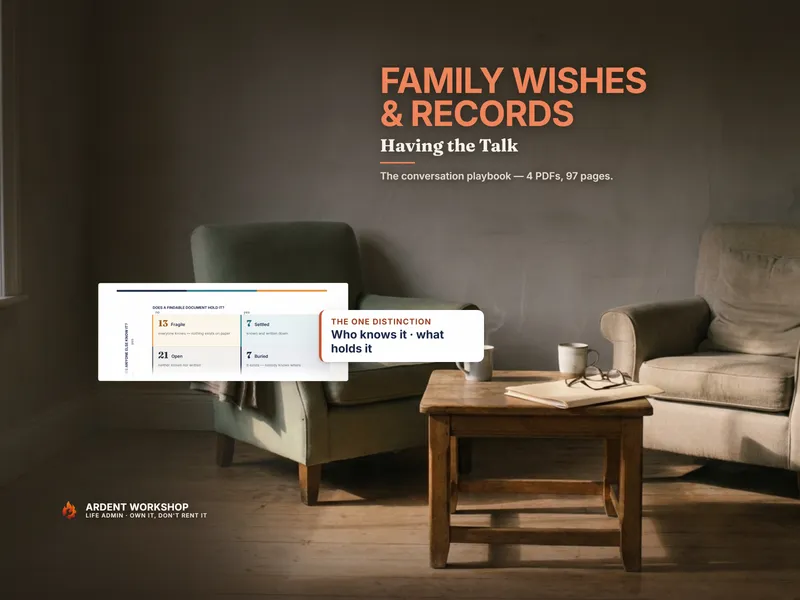
Having the Talk - Family Wishes & Records Conversation Playbook: How to Ask About Wills, Wishes & Where Everything Is
A plain-language playbook for the talk with an aging parent about wills, wishes and where the records are - 4 PDFs, 97 pages, 48 questions in four sittings.
Life AdminView details - $29.95 Spreadsheet
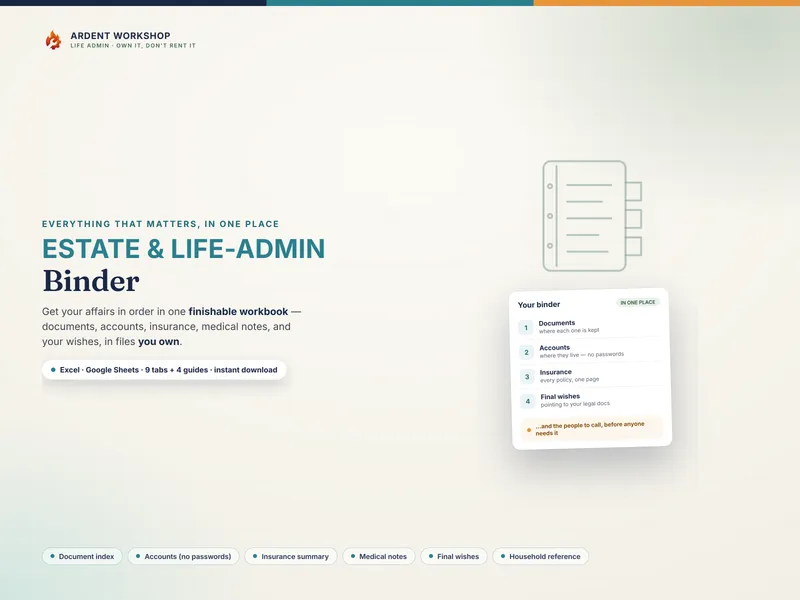
Estate & Life-Admin Binder — Important Documents, Accounts, Insurance & Final Wishes Organizer (Excel + Google Sheets)
An estate & life-admin binder for Excel & Google Sheets — organize important documents, accounts, insurance, and final wishes in one file you own.
Life AdminView details - $24.95 Spreadsheet

Executor's Estate Settlement Records & Task Binder — 60 Dated Tasks, Probate vs Non-Probate Asset Inventory, Creditor Claims & Estate Accounting (Excel + Google Sheets)
An executor checklist spreadsheet for Excel & Sheets — 60 tasks dated from the date of death, assets sorted probate or not, the accounting kept as you go.
Life AdminView details
Frequently asked questions
- Is a letter of instruction legally binding?
- No — that informality is what makes it a letter of instruction rather than a will. It is unwitnessed and unfiled, so it carries no legal force on its own, does not distribute property, and does not override a will, a trust, or a beneficiary nomination on an account or policy. Where a formal document and the letter say different things, the formal document is the one that governs. What the letter does instead is say what you would want and, above all, where everything actually is — a different job from the one a will does, not a smaller version of it. General information, not legal, medical, tax, or financial advice.
- What's the difference between a letter of instruction and a will?
- A will is signed, witnessed to whatever standard your jurisdiction requires, and legally distributes property — it settles who gets what. A letter of instruction does none of that. It is a plain, informal note that says where the signed will is kept, who the professionals are, which accounts exist and who holds them, who needs to be told, what should happen to a pet, and what a sentimental item means and who it's meant for. A will answers a legal question, eventually, often after a wait. A letter of instruction is written to answer the practical question a family tends to face first: what do we do this week.
- What should I put in a letter of instruction?
- The locations, not the assets: where the signed will physically sits, which bank, investment, pension or retirement, and insurance accounts exist and who they're with, who the solicitor or attorney is and any financial advisor, who should be called and in what order, where pets should go and what they need, and what your sentimental items are and who you'd like to have them. Locations and holders only — never the passwords, PINs, combinations, or full account numbers that open them. Anything a family or executor would otherwise have to hunt for belongs here.
- What should I leave out of a letter of instruction?
- Passwords, PINs, safe combinations, and full account numbers. Record where a thing is kept and who holds it, never the credentials that open it — a letter of instruction tends to get printed, photocopied, left in a drawer, and mailed to relatives, and a location survives all of that safely while a secret doesn't. If logins need to be passed on, that's a separate, secured record with its own access plan, not a line in this letter.
- Can I write or update a letter of instruction myself, without a lawyer?
- Yes — that informality is the point of it. Because it is not a formal instrument, there is no witnessing, no notarization, and nothing to file. You can write it in an afternoon and revise it any time something changes — which is the whole reason it can stay current, where a formally executed document has to be redone with the same formality every time. What formalities your own jurisdiction attaches to any document is a question for someone qualified there.
- Where should I keep a letter of instruction so it's actually found?
- Somewhere durable and somewhere known — a home safe, a fireproof box, or a folder with your other important papers, with at least one other person told it exists and where. A letter that only you know about fails at the one job it exists to do; being findable is the entire value of the document.