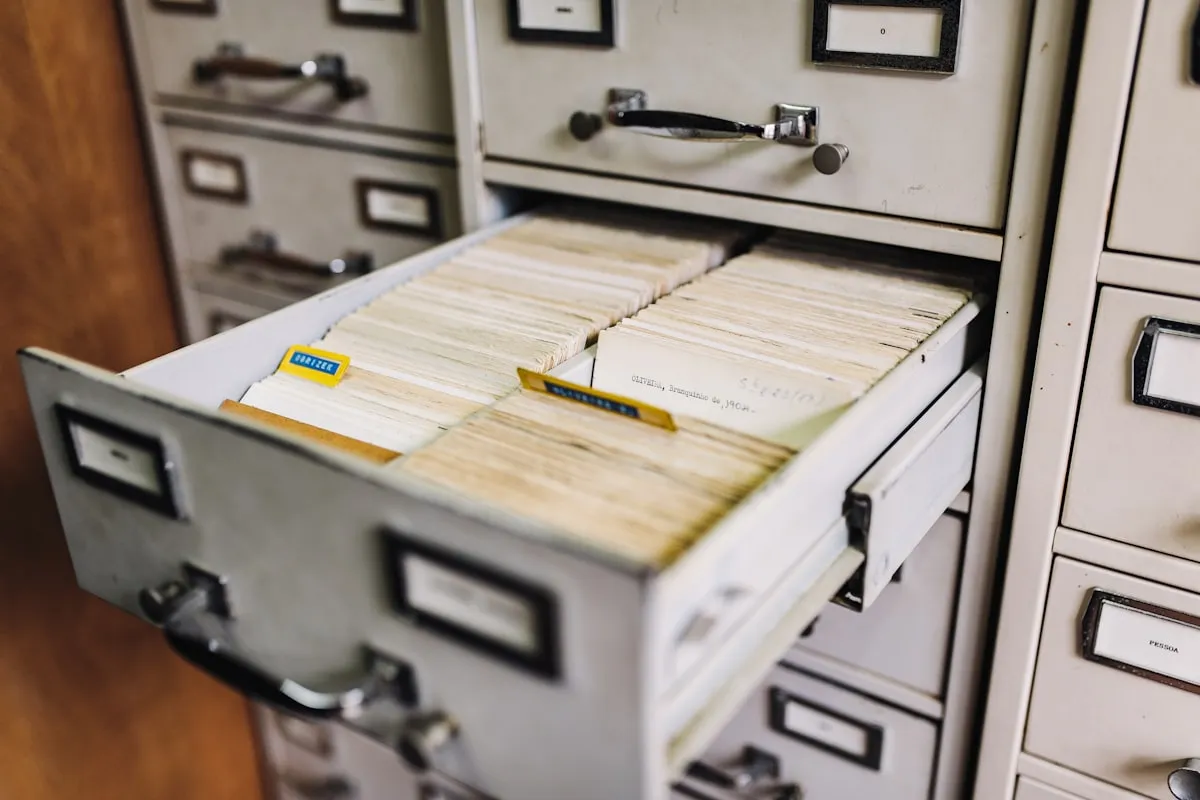
What's in an estate binder
An estate binder gathers the records an executor or surviving family will reach for first:
- Legal documents — where the signed will, any trust, the financial power of attorney, and the advance directive are kept.
- Accounts — banks, cards, loans, and especially investment and retirement accounts (and the named beneficiaries).
- Insurance — life, health, home, and auto policies, with insurer and contact.
- Property — the deed, vehicle titles, and a home inventory of valuable possessions.
- People to notify — the executor, attorney, financial advisor, employer, and close family.
- Final wishes — service preferences and the messages you'd want delivered.
An estate binder is not a will
An estate binder organizes information; completing it does not by itself appoint an executor, create a valid will or grant access to accounts. Execution requirements and the effect of recorded wishes depend on local law. California Courts' guide to wills, estates and probate illustrates the distinction between planning documents and estate administration in that state.
Keep the original legal documents and record their locations. Healthcare instructions have a different purpose from inheritance instructions: MedlinePlus describes advance directives. Confirm that each document meets the requirements where it will be used.
What an executor actually needs
When someone dies, the person settling the estate has to locate accounts, contact institutions, file claims, and honor wishes — usually while grieving, and often with no map. An estate binder hands them that map: the list of accounts so nothing is missed or left auto-paying, the insurer to call, the attorney who drafted the will, and where the signed original is kept. Doing this once, in life, can save an executor weeks of detective work and prevent forgotten accounts and lapsed policies.
Keep it safe — and keep the credentials out
Because an estate binder concentrates sensitive information, the rule that keeps it safe is to record where things live, never the keys: note which institution and the last four digits, not the passwords or full account numbers. The actual logins belong in a password manager with an emergency-access contact; the binder records that one exists. Store the binder in a home safe, a fireproof box, or — for a digital version — an encrypted drive you own, and tell your executor where it is and how to open it.
Estate binder vs life-admin binder
The two are largely the same record viewed from different moments. A life-admin binder keeps a household organized in life — useful any time someone has to step in. An estate binder emphasizes what's needed at the end of life. Build one workbook well and it serves both purposes: the same document index, accounts, insurance, and wishes that help during a hospital stay are exactly what an executor needs later.
Where to start
Begin with the free "What Documents Do I Need?" checklist to find what you have, then organize it in a binder you own. Want the rest of the household's records organized too? The Life Admin Bundle includes the Estate & Life-Admin Binder and eleven more household-records products, plus a Command Center: you mark each record's status, and it scores readiness by group and names the next ten records to fill in. If you care for someone else, the caregiver templates hub also has the caregiving binders the bundle does not include, such as the Caregiver Binder for Aging Parents. This is a record-organizing approach — not legal, financial, or tax advice, and not a substitute for a will or an attorney.
Templates that implement this
Build your estate binder
4 templates
A workbook that organizes where the will, accounts, insurance, and wishes live — and points to the legal documents that make them official.
- $29.95 Spreadsheet
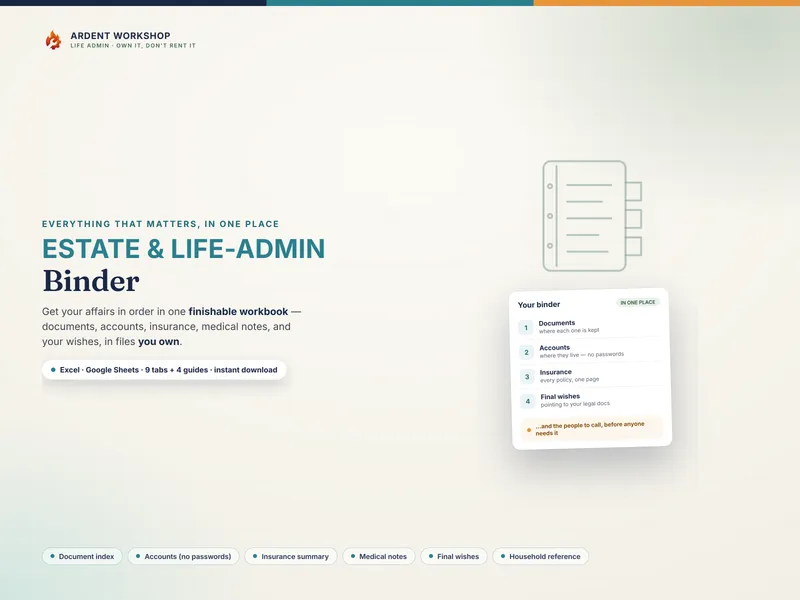
Estate & Life-Admin Binder — Important Documents, Accounts, Insurance & Final Wishes Organizer (Excel + Google Sheets)
An estate & life-admin binder for Excel & Google Sheets — organize important documents, accounts, insurance, and final wishes in one file you own.
Life AdminView details - $79.00 Bundle
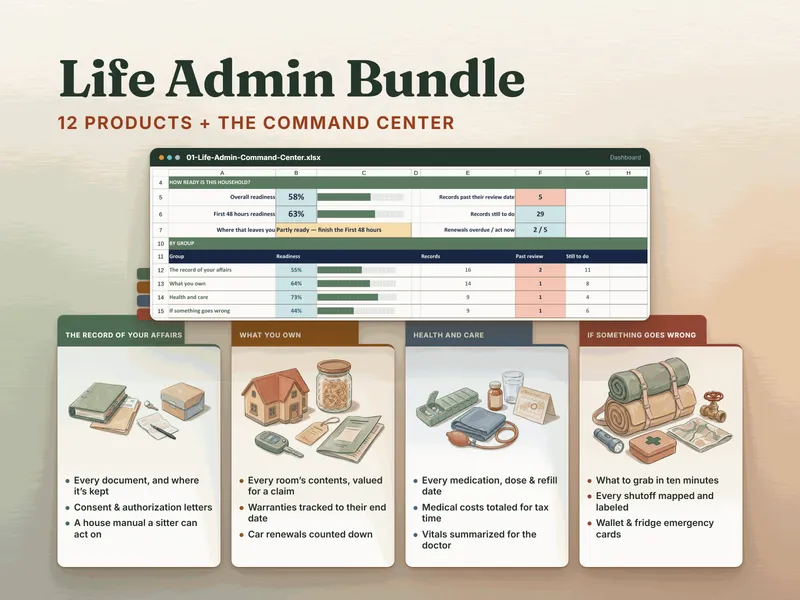
The Life Admin Bundle — 12 Household Records Products + a Readiness Command Center (Excel + Google Sheets + PDF)
Twelve Life Admin products in one bundle, plus a Command Center that scores how ready your household records are and names the next ten to fill in.
Life AdminView details - $14.95 Excel
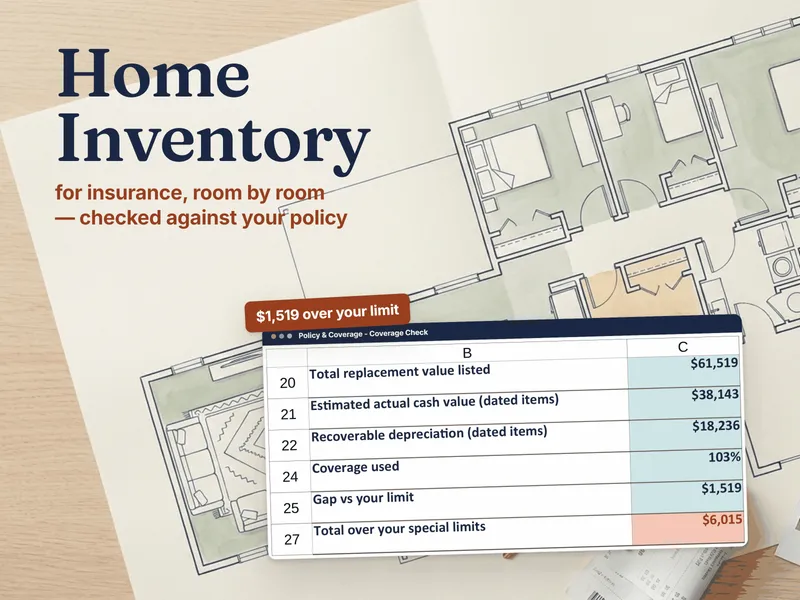
Home Inventory Spreadsheet for Excel — Room-by-Room Insurance Inventory with Proof Score, Coverage Check, Estimated ACV & Claim Worksheet
Excel home inventory for insurance: log what you own room by room, score your proof, check it against your policy limit and build a claim schedule.
Life AdminView details - $14.95 Spreadsheet
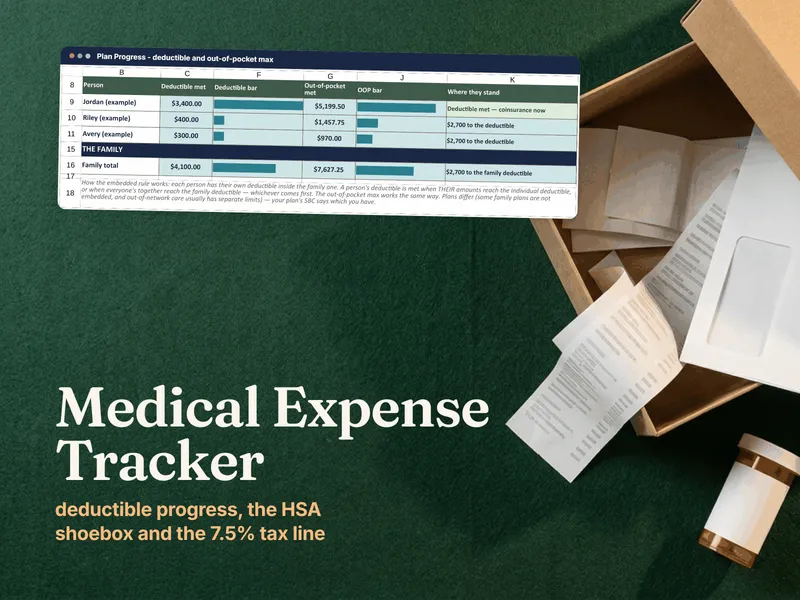
Medical Expense Tracker for Excel & Google Sheets — Deductible Progress, HSA Shoebox, FSA Deadline & the 7.5% Tax Line
Medical expense tracker for Excel and Google Sheets: log every bill from the EOB, see each person's deductible progress, the HSA shoebox and the 7.5% tax line.
Life AdminView details