What goes in a medication tracker
A medication tracker gathers the few things a family reaches for whenever someone has to keep a person on their medications — for an afternoon, a hospital stay, or the long haul:
- A medication list — every current medication, the dose, when it's taken, and what it's for. The page clinicians often ask for first; it's a record you keep, not medical advice.
- A dose schedule — what's taken at each part of the day (morning, midday, evening, bedtime, and as needed), so a fill-in helper can keep the routine straight.
- Refill tracking — when each prescription was last filled, how many days it lasts, and the refill-by date you work back to, so a prescription doesn't run out on a weekend.
- Appointments — what's coming up, the questions to ask before the visit, and what each past visit decided.
- An at-a-glance page — the summary a paramedic or fill-in caregiver needs first: conditions, allergies, the primary doctor, the pharmacy, and who to call.
- Providers and pharmacies — every doctor, specialist, and pharmacy, with direct numbers.
A medication tracker is not medical advice
This is the most important distinction. A medication tracker organizes information so the right people can find it; it does not diagnose, recommend or change treatment, set or adjust a dose, or replace a clinician. It records the medications a person is currently prescribed — read off the bottle — not which medications they should take, and the schedule a prescriber set, not one it invents. Always defer to the prescribing doctor and the pharmacist. The tracker's job is clarity: the right information, in front of the right person, at the moment it's needed.
Why track refills, not just the medications
The avoidable medication emergency is running out on a weekend. A medication tracker turns that into simple arithmetic: the last-filled date plus the days' supply tells you roughly when to reorder, so you note a refill-by date a week ahead. A status you set — okay, refill soon, overdue — then shows at a glance what needs attention, especially when one person is managing several prescriptions with different refill cycles.
Record the care, never the credentials
Because a medication tracker is shared by family, neighbors, and aides, the rule that keeps it safe to share is to record the care, not the credentials: write the medications, the doses, the providers, and where things are kept — never a pharmacy- or patient-portal login, an insurance password, or a full member number. (The Rx number printed on the bottle is fine; it only refills a prescription.) Real logins belong in a password manager the family shares.
Medication tracker vs caregiver binder
A medication tracker is the focused piece: medications, doses, refills, and the appointments around them. A caregiver binder is the wider system that adds the rest of coordinating an aging parent's care — insurance and coverage, a daily care schedule, key contacts, and where documents like the power of attorney and advance directive are kept. Many families start with the tracker and grow into the binder; build one well and it carries much of the other.
Where to start with a medication tracker
Begin with the free Med List starter — the one medication list to keep on the fridge — then organize the rest in a tracker you own. See the caregiver templates hub for the full set, and the step-by-step guide to organizing medications for an aging parent. This is a record-organizing approach — not medical advice, and not a substitute for a clinician or pharmacist.
Templates that implement this
Build your medication tracker
3 templates
A workbook that organizes every medication and dose, a schedule for the day, refill tracking, the appointments, and the providers behind the care — a record you own.
- $18.95 Spreadsheet
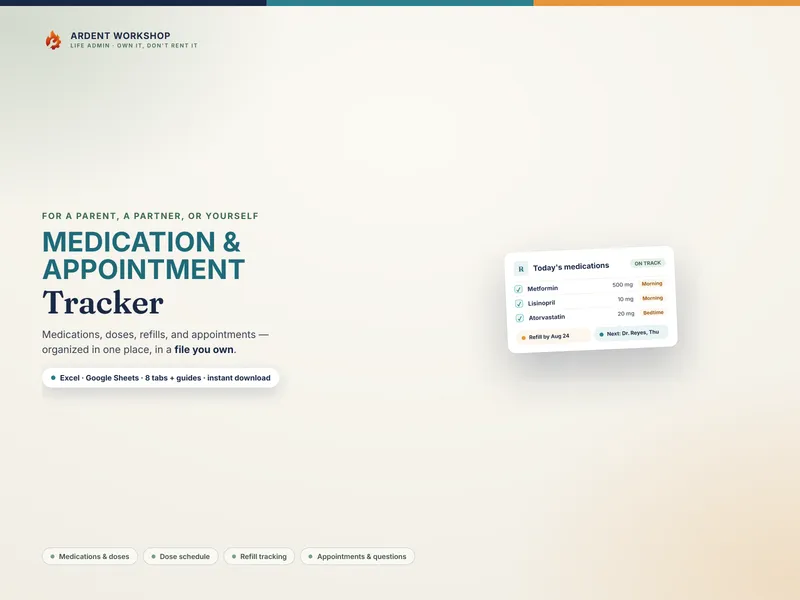
Medication & Appointment Tracker — Medication List, Dose Schedule, Refill & Appointment Organizer (Excel + Google Sheets)
A medication and appointment tracker to organize medications, doses, refills, and upcoming appointments in one file you own (Excel + Google Sheets).
Life AdminView details - $24.95 Spreadsheet

Caregiver / Aging-Parent Care Binder — Medications, Refill Alerts, Appointments & an Emergency Handoff Sheet That Writes Itself (Excel + Google Sheets)
Caregiver binder for an aging parent: medications with refill alerts, appointments, care team and documents — plus a self-writing emergency handoff sheet.
Life AdminView details - $4.95 Excel
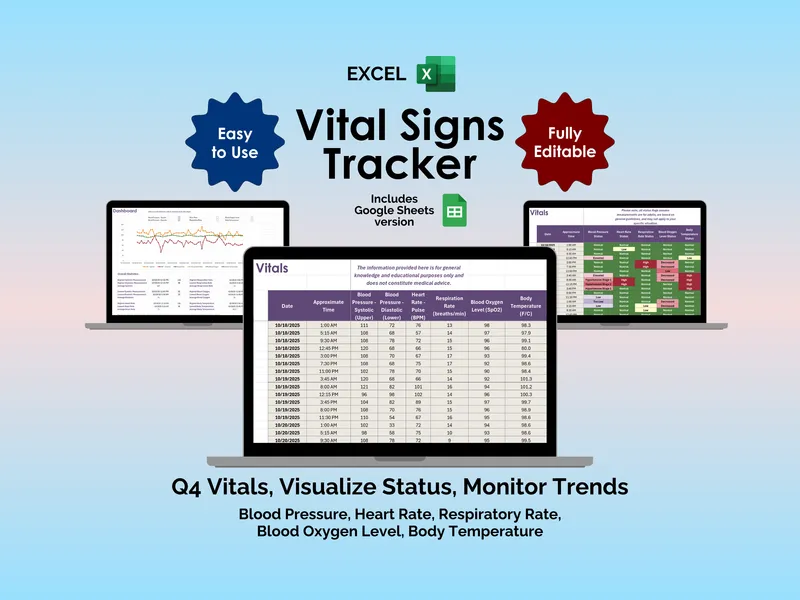
Vital Signs Tracker - Excel
Nobody warns you how loud a quiet number can feel. This excel vital signs tracker logs blood pressure, heart rate, SpO2, and temperature in one steady place.
Life AdminView details