Ask one person whether you should track your blood pressure at home and they’ll tell you it saved their parent’s life. Ask the next and they’ll roll their eyes at the friend who panics over a single high reading and texts the group chat at 11 p.m. Both of them are partly right.
So here’s the honest question, without the wellness-influencer hype on one side or the “just trust your doctor” hand-wave on the other: does tracking your health at home actually help, or is the annual checkup all most people really need? The answer isn’t “more data is always better,” and it isn’t “leave it to the professionals.” It depends on what you’re tracking and why — and once you see the dividing line, the choice gets a lot easier.
The Case for Tracking at Home
Home tracking wins when the thing you’re measuring changes faster than once a year. A single annual snapshot is a terrible way to understand anything that moves day to day — and a lot of the most important numbers do.
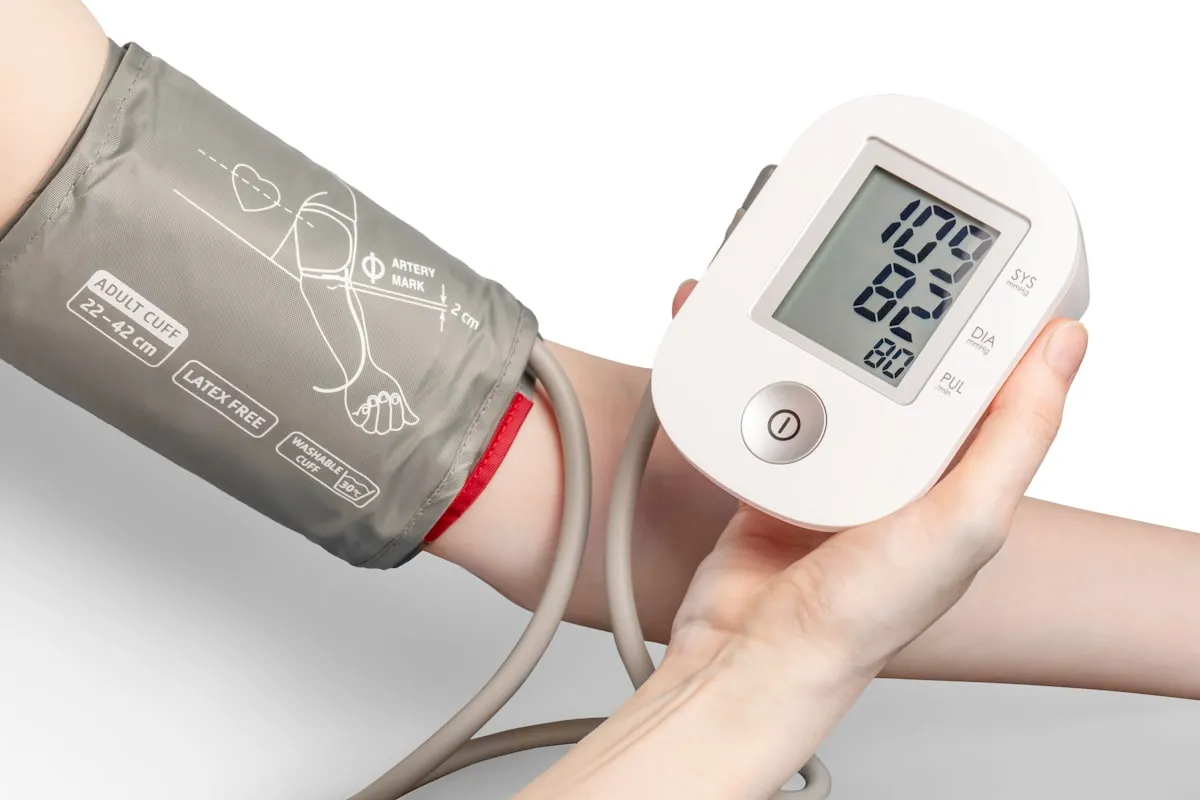
Blood pressure is the headline example. Nearly half of U.S. adults — 48.1%, or about 119.9 million people, per the CDC (opens in new tab) — have high blood pressure, and only about 1 in 4 of them have it under control. A number that common, that consequential, and that variable is exactly the kind of thing one reading in a fluorescent-lit exam room can’t capture.
The medical establishment agrees, which surprises people. The U.S. Preventive Services Task Force gives hypertension screening its strongest possible rating and explicitly recommends that a diagnosis be confirmed with blood pressure measurements taken outside the doctor’s office before starting treatment (opens in new tab). The American Heart Association and American Medical Association go further, urging widespread self-measured blood pressure monitoring at home (opens in new tab) because the evidence shows it actually lowers blood pressure and improves control.
Home tracking is also the only way to catch two patterns that hide from the annual visit:
- White-coat hypertension is when your blood pressure reads high in the clinic but is normal everywhere else — your body reacting to the appointment, not a real problem.
- Masked hypertension is the reverse: normal in the office, high in real life. This one is dangerous precisely because the checkup gives you an all-clear you haven’t earned.
Beyond blood pressure, the same logic applies to anything with a trend worth watching: weight over months, blood sugar, migraine frequency, or a flare-up of symptoms you want documented before you sit down with a doctor. Walking in with a 30-day log of dates, readings, and triggers turns a vague “I haven’t felt right lately” into something a clinician can actually work with. (We made the same argument about why a smartwatch isn’t enough for the health data that matters — and why a log you control beats a feed you don’t.)
The Case for Just Going to Your Checkup
The annual checkup wins for everything you physically cannot measure at home — and for not turning your health into a part-time job.
Here’s the uncomfortable counterpoint to the tracking crowd: a Cochrane systematic review of general health checks (opens in new tab) found they don’t reduce overall mortality, or deaths from heart disease or cancer — even though they do generate more diagnoses. More measuring, in other words, doesn’t automatically mean a longer or healthier life. That finding cuts against routine checkups and against the idea that obsessively logging numbers will save you. Data is not the same as health.
What the checkup does that a drawer full of home gadgets can’t:
- Bloodwork. Cholesterol, A1C, kidney and liver function, thyroid, vitamin levels — none of it is visible from your bathroom. A home scale will never tell you your LDL is climbing.
- The physical exam and screening schedule. A clinician feeling for something off, plus the age-appropriate screenings (and the judgment about which ones you need and when) is not a thing an app reminds you to do correctly.
- Interpretation. A number without context is just anxiety with a decimal point. One reading of 138/88 means almost nothing on its own; a professional knows whether it’s a pattern, a fluke, or a measurement error.
- Not living inside your own metrics. For a lot of people, tracking everything backfires. A normal heart rate that ticks up after coffee becomes a 2 a.m. spiral. There’s a real cost to monitoring you don’t need.
The checkup’s quiet advantage is boundaries. You go once, a trained person looks at the whole picture, and then you get to stop thinking about it.
Where the Real Dividing Line Is
The debate is usually framed as home tracking versus the checkup, and that’s the mistake. They answer different questions. Here’s the split that actually matters:
| Question | Home tracking | Annual checkup |
|---|---|---|
| A number that changes day to day (BP, weight, glucose) | Yes — trends beat snapshots | One data point, easy to mislead |
| Symptoms you want documented before a visit | Yes — a dated log is gold | Relies on memory in the room |
| Bloodwork, cholesterol, A1C, organ function | No — invisible at home | Yes — the whole point |
| Physical exam and age-based screenings | No | Yes |
| Interpreting what a reading means | Limited | Yes — context and judgment |
| Catching white-coat / masked hypertension | Yes | Misses both by design |
Notice that almost nothing appears in both columns. Home tracking and the annual checkup aren’t rivals — they’re the input and the analysis. The most useful patient in any exam room is the one who shows up with clean, relevant home data and gets the bloodwork and the professional read. The home log makes the 15-minute appointment dramatically more productive; the appointment makes the home log mean something.
The actual dividing line isn’t home vs. clinic. It’s purposeful tracking vs. anxious tracking. Logging your blood pressure because your doctor flagged it and wants a two-week record? Purposeful. Logging seven metrics because a video told you to, with no plan for what any of them would change? That’s where tracking stops helping and starts feeding worry. The same goes the other direction: skipping your checkup because your wearable says you’re “optimized” is trusting a gadget to do a doctor’s job.
The Verdict: It Depends — Here’s How to Decide
If you want a single rule: track at home with purpose, and bring it to your annual checkup. Don’t make either one carry the whole load.
Here’s how that plays out for different people:
- You’re healthy with no flagged conditions. Keep the annual checkup. Skip the daily-metrics habit — it mostly manufactures anxiety. The exception: a short, bounded log if a specific question comes up (“my readings felt high at the pharmacy machine — let me check for two weeks before my appointment”).
- You have, or are borderline for, a chronic condition (high blood pressure, prediabetes, a heart or thyroid issue). Track the one or two numbers your doctor cares about, consistently, and bring the record in. This is the scenario where home data genuinely changes outcomes — and where the evidence backing it is strongest.
- You’re a caregiver or watching an aging parent. A simple shared log of vitals and medications is one of the highest-value things you can keep, because the person living it often can’t report it reliably. (We walked through how to start that conversation in how to talk to an aging parent about tracking their health.)
- You’re tracking out of fear, not a plan. This is the one case to stop. Pick the smallest number of metrics that answer a real question, and let your checkup handle the rest.
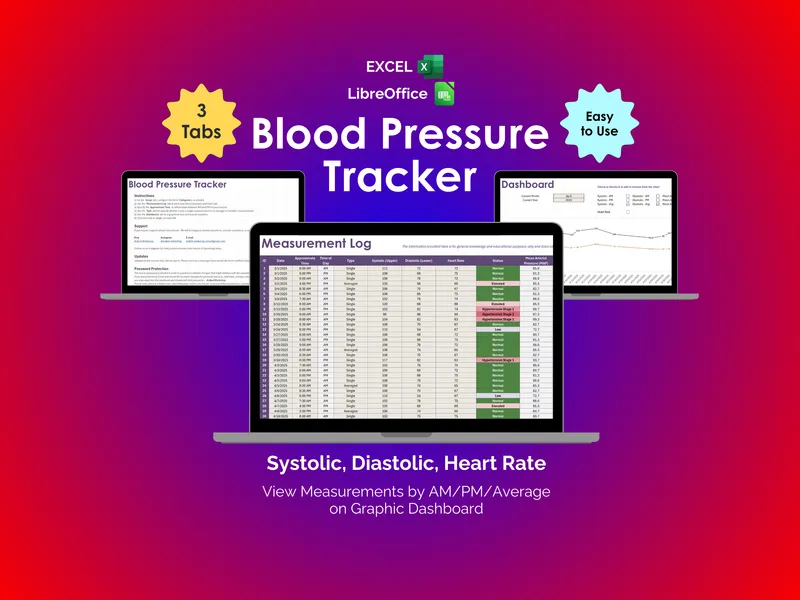
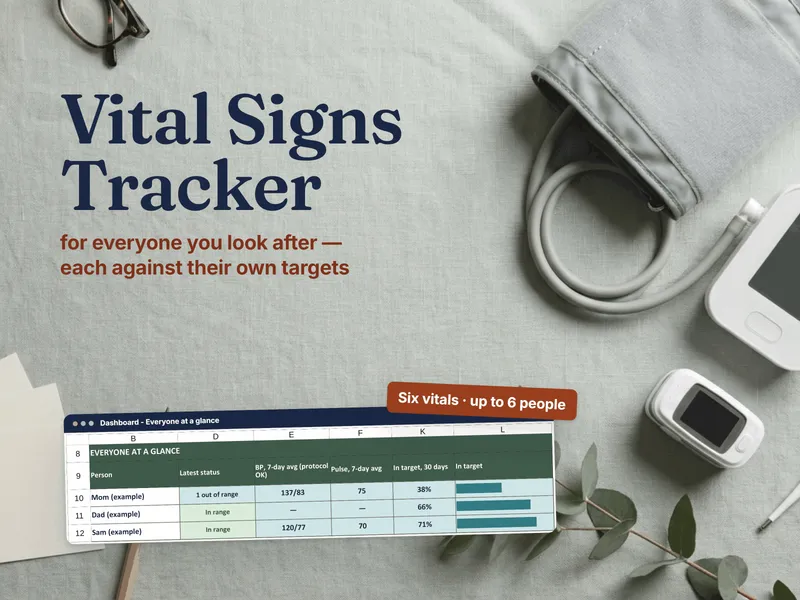
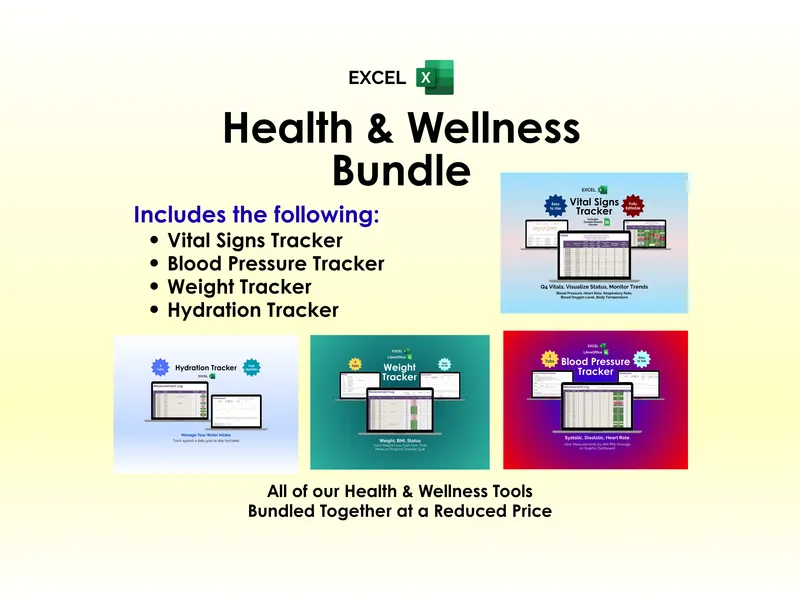
The reason a spreadsheet beats a stack of apps for this is ownership and continuity. App data gets trapped behind a login, resets when you switch phones, and rarely prints into something you can hand a doctor. A workbook you own does the opposite: it’s one connected file you keep for years, export to PDF, and actually carry into the appointment. That’s the idea behind the Blood Pressure Tracker for the single-number case, the broader Vital Signs Tracker when you’re logging more than one metric, and the Health & Wellness Bundle if you want the whole set in one place — structure you keep, not a subscription you rent. (And if it’s the cost side you’re trying to get a handle on, a Medical Expense Tracker does for bills what a vitals log does for numbers.)
The takeaway: home health tracking and the annual checkup aren’t a choice between two philosophies. One produces the data; the other reads it. Track the few things that matter, on purpose, in a record you control — then let your yearly visit do the part no gadget can. That’s not “more is better.” It’s the right data, read by the right person — which is the only version of health tracking that actually helps.