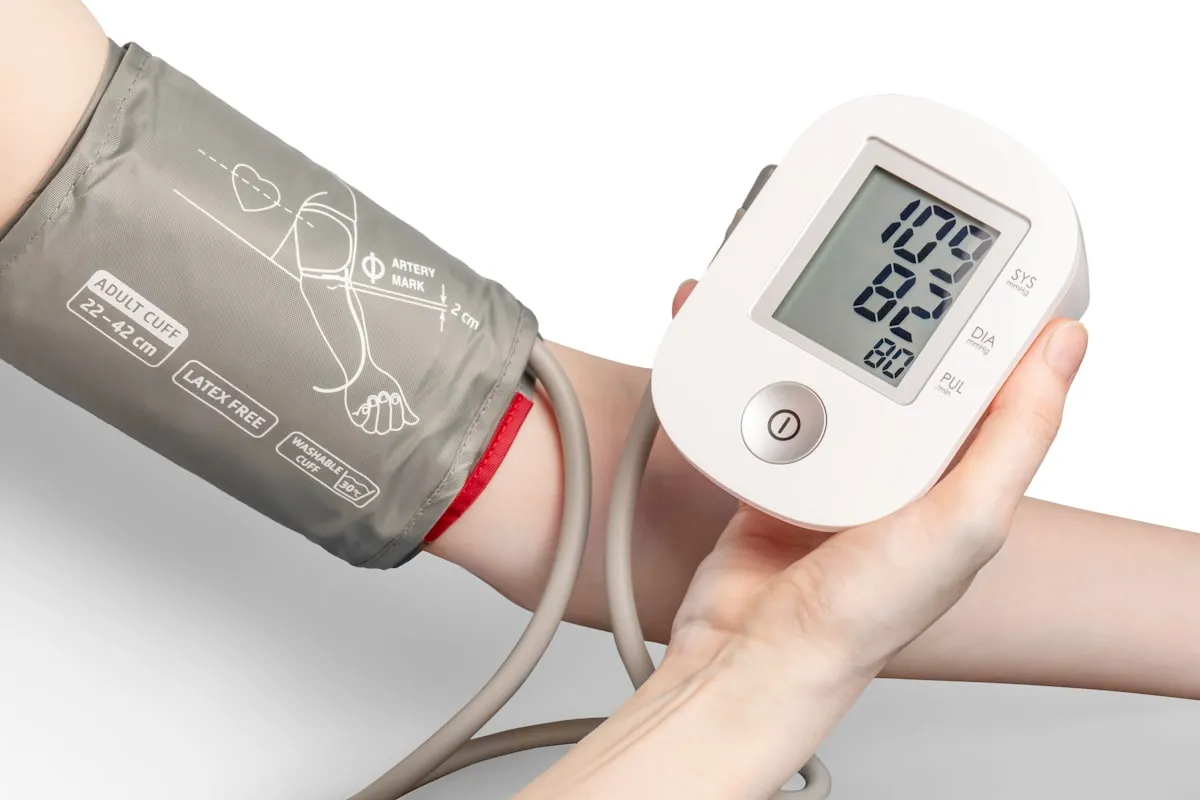
What goes in a caregiver binder
A caregiver binder — the aging-parent organizer a family shares — gathers the information they reach for whenever someone has to step in, for an afternoon, a hospital stay, or the long haul:
- A care summary — the one page a paramedic or fill-in caregiver needs first: conditions, allergies, blood type, the primary doctor, the preferred hospital, and where the advance directive (the written wishes for medical care) is kept.
- Medications — every current medication, the dose, when it's taken, and what it's for. A record you keep, not medical advice.
- Appointments and the care team — what's coming up, what each visit decided, and every doctor, specialist, and pharmacy with a direct number.
- Insurance and coverage — Medicare and any plans, what each covers, and where the cards are.
- A daily care schedule — the routine and who handles each part, so a substitute can step in.
- Important documents — where the power of attorney, advance directive, and ID are kept.
A caregiver binder is not medical advice
This is the most important distinction. A caregiver binder organizes information so the right people can find it; it does not diagnose, recommend treatment, or replace a clinician. It records the medications a parent is currently prescribed — not which medications they should take — and it records where the signed advance directive is kept, not what the resuscitation decision should be. Always defer to the treating clinician and pharmacist. The binder's job is clarity: the right information, in front of the right person, at the moment it's needed.
Record the care, never the credentials
Because a caregiver binder is shared by family, neighbors, and aides, the rule that keeps it safe to share is to record the care, not the credentials: write the medications, the providers, and where the cards and documents are — never a patient-portal login, an insurance password, or a full Medicare or member number. Real logins belong in a password manager the family shares; the binder just notes which portal exists. That's the same logic behind a life-admin binder versus a password manager.
Caregiver binder vs estate binder
The two overlap but emphasize different moments. An estate binder organizes what an executor needs to settle a person's affairs — the will, accounts, and final wishes. A caregiver binder is focused on the active work of coordinating care in life: medications, appointments, and the providers a family deals with week to week. Many families keep both; build one well and it carries much of the other. If you're weighing a subscription service instead of a binder, see caregiver binder vs care app.
Where to start with a caregiver binder
Begin with the free Caregiver Quick Sheet — the one page to keep on the fridge — then organize the rest in a binder you own. See the caregiver templates hub for the full set. This is a record-organizing approach — not medical, legal, or financial advice, and not a substitute for a clinician.
Templates that implement this
Build your caregiver binder
4 templates
A workbook that organizes a parent's medications, appointments, care team, insurance, and where the documents live — a record of care the family owns.
- $24.95 Spreadsheet

Caregiver / Aging-Parent Care Binder — Medications, Refill Alerts, Appointments & an Emergency Handoff Sheet That Writes Itself (Excel + Google Sheets)
Caregiver binder for an aging parent: medications with refill alerts, appointments, care team and documents — plus a self-writing emergency handoff sheet.
Life AdminView details - $59.00 Bundle
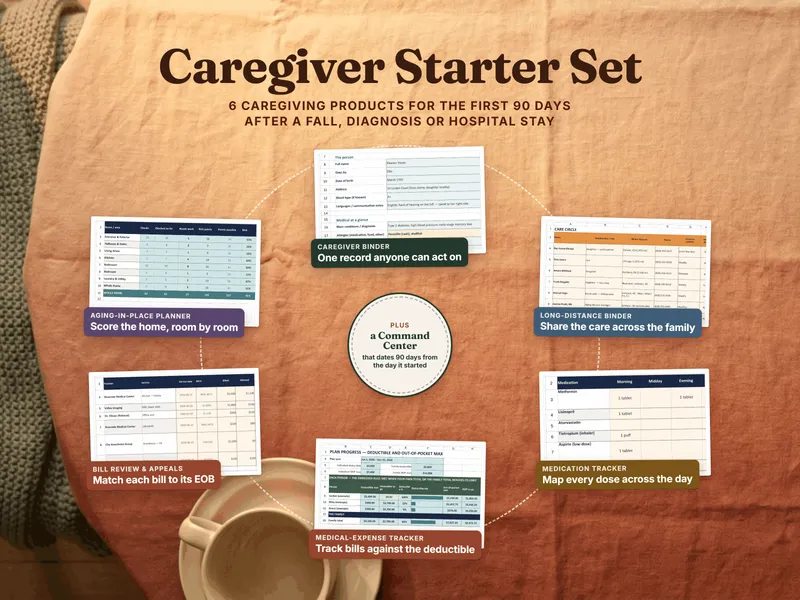
The Caregiver Starter Set — 6 Caregiving Products + a Command Center for the First 90 Days After a Fall, Diagnosis or Hospital Stay (Excel + Sheets)
Six caregiving products, plus a Command Center that plans the first 90 days after a fall, diagnosis or hospital stay, with owners and a cost split.
Life AdminView details - $29.95 Spreadsheet
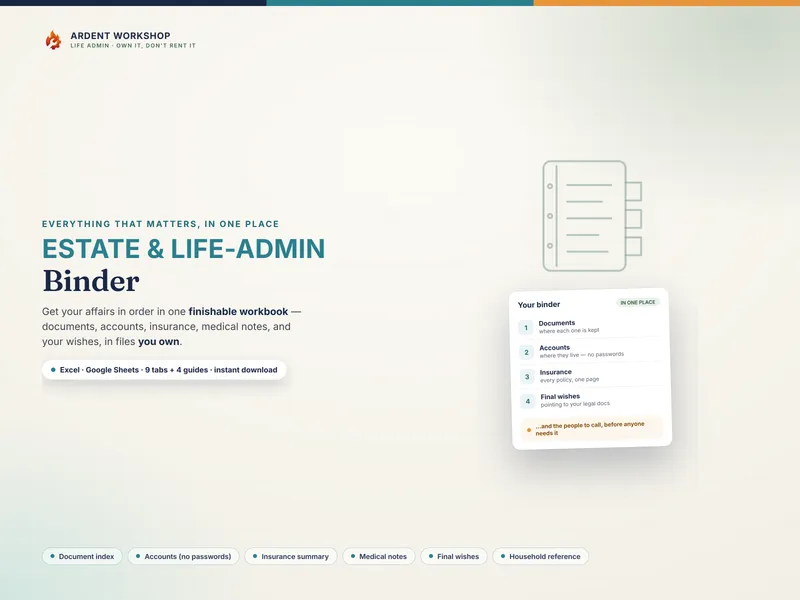
Estate & Life-Admin Binder — Important Documents, Accounts, Insurance & Final Wishes Organizer (Excel + Google Sheets)
An estate & life-admin binder for Excel & Google Sheets — organize important documents, accounts, insurance, and final wishes in one file you own.
Life AdminView details - $14.95 Spreadsheet
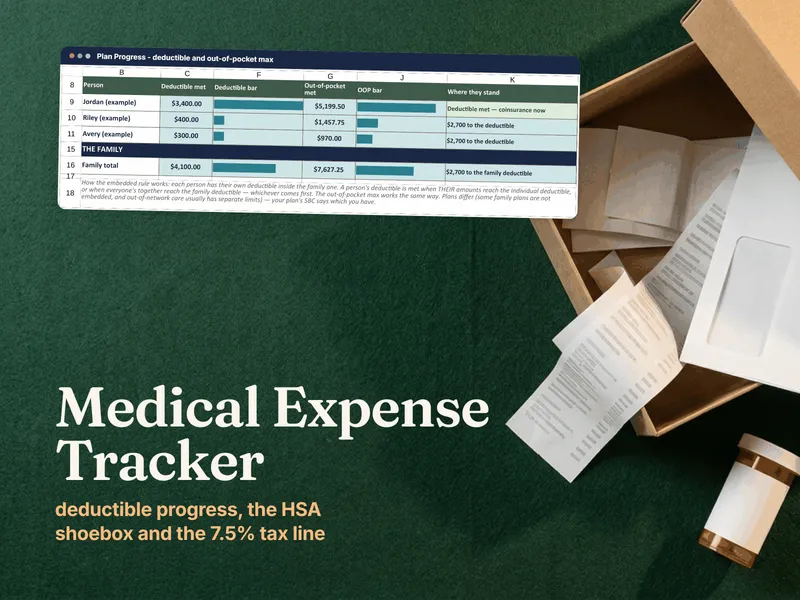
Medical Expense Tracker for Excel & Google Sheets — Deductible Progress, HSA Shoebox, FSA Deadline & the 7.5% Tax Line
Medical expense tracker for Excel and Google Sheets: log every bill from the EOB, see each person's deductible progress, the HSA shoebox and the 7.5% tax line.
Life AdminView details