Two copies of the same album can sit in the same crate at wildly different prices, and nothing on the label explains why. The difference is the grade — the two short codes, like VG+/VG, that say how much of the original record is still there.
The short version: handle the record by its edges, inspect both sides under one bright light held at a shallow angle, feel any mark with a fingernail, play anything expensive, grade the sleeve separately, and write the result media first, sleeve second.
Most people can read a grade. Far fewer can assign one to a record they are holding, and that is the skill that matters the moment you want to insure a shelf, sell a duplicate, or decide whether a copy in a shop is worth what the sticker says. It is also where a collection quietly goes wrong: a list of titles with no condition next to them cannot be priced. The Vinyl & Music Collection Tracker records media and sleeve grades side by side and turns them into a grade-adjusted value — but the grading itself is done with your eyes, fingernails and ears, so here is how to do it.
The Goldmine grades and how to tell them apart
The Goldmine grading scale runs from Mint (M) through Near Mint (NM), Very Good Plus (VG+), Very Good (VG) and Good (G) down to Poor (P). It takes its name from Goldmine, the record-collecting magazine whose Goldmine grading guide (opens in new tab) became the shared vocabulary for buying and selling used vinyl. Nobody enforces it; it works because everyone uses the same words.
If you only need the definitions, the what record grading means glossary entry covers them. This post is about the practical half: what each grade looks, feels and sounds like when the record is in your hands.
| Grade | What you see and feel | What you hear |
|---|---|---|
| Mint (M) | Absolutely perfect — no mark of any kind, on disc or sleeve | Nothing but the music |
| Near Mint (NM, also written M-, Mint Minus) | Shiny, with no visible defects; no spindle marks, and no writing or stickers on the label | No surface noise |
| Very Good Plus (VG+) | Light scuffs or very light scratches; slight warps that do not affect the sound | The marks do not affect the listening experience |
| Very Good (VG) | Groove wear you can see; light scratches deep enough to feel with a fingernail | Surface noise; some scratches may be audible, especially in soft passages, intros and endings |
| Good (G) or Good Plus (G+) | Significant groove wear; a worn label | Significant surface noise, but it plays through without skipping |
| Poor (P) or Fair (F) | Cracked or impossibly warped | Skips and/or repeats when played |
The two lines that matter most are the ones between VG+ and VG (can you hear it?) and between G and Poor (does it play through?). Almost every argument about a grade is an argument about one of those two lines.
How to grade a vinyl record at home, step by step
Grading a record takes about five minutes and needs nothing more than a bright light and a turntable. Work through the disc first, the sleeve second, and write down the reason for every grade you give.
- Wash your hands and handle the record by the edges and the label. Fingerprints left while grading are fingerprints the next grader will count against you.
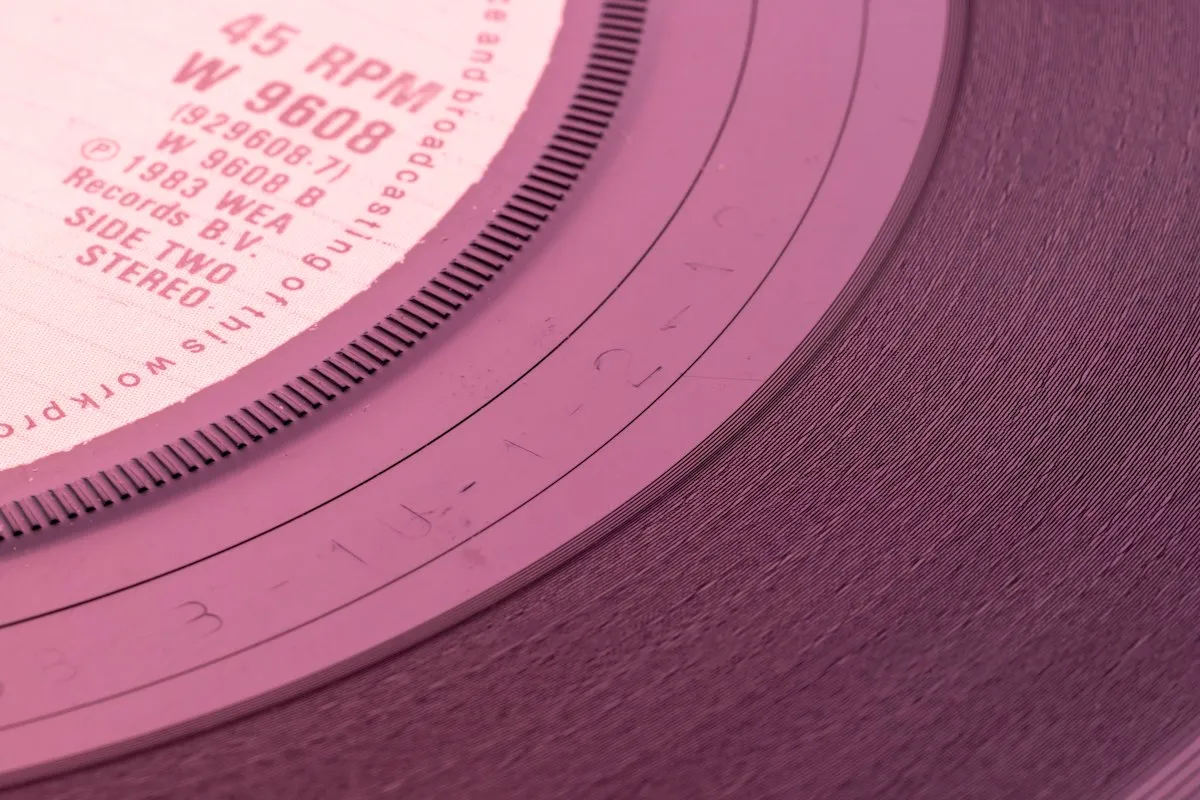
- Hold the record at a shallow angle under a single bright light and rotate it slowly. A bare bulb or a window works better than a room full of soft lighting. Marks that are invisible flat-on show up as bright lines when the light rakes across the grooves. Check both sides, including the runout area near the label.
- Run a fingernail lightly across any mark you find. A mark you can see but cannot feel is usually a surface scuff and is compatible with VG+. Goldmine’s guide describes Very Good records as having light scratches deep enough to feel with a fingernail, some of which may be audible, so a mark you can feel puts the record at VG or below.
- Check the label and the spindle hole. Goldmine’s Near Mint standard allows no spindle marks (the scuffs left by someone missing the spindle) and no writing, stickers or other markings on the label; its VG+ grade allows minor signs of handling, such as telltale marks around the center hole. Writing, stickers or tape on the label pull the grade down even if the vinyl is clean.
- Sight along the edge for warps. Hold the record level at eye height and turn it. A slight dish that does not affect play is acceptable at VG+; a warp that makes the tonearm ride up and down is not.
- Play-grade anything expensive. Listen to the lead-in groove, the gaps between tracks and the quietest passages on each side — that is where surface noise lives. Goldmine’s guide (opens in new tab) notes that most records are graded visually because dealers cannot play their whole stock, and that older LPs (the 1950s to about 1971) tend to play better than they look, while newer ones up to 1989 tend to play worse than they look. For a record that matters, the ear overrides the eye.
- Grade conservatively and write down why. “VG — light tick side two, track 3” is a grade you can defend six months later. “VG” alone is a guess you will have to redo.
How to grade a record sleeve
A record sleeve is graded on the same letters as the disc but with its own evidence, because a jacket wears differently from vinyl. Look for, in rough order of how much they cost you:
- Ring wear — the circular shadow the disc presses into the jacket over years on a shelf. A Near Mint cover is free of ring wear, creases and seam splits of any kind, so any visible ring takes a jacket below Near Mint.
- Seam splits — the bottom seam goes first. Goldmine allows a VG+ cover a split of less than an inch at the bottom; longer, or on more than one side, drops it further.
- Writing, stamps and price stickers — a name on the back or a store stamp is defacing, even when it is tidy.
- Cut-out markings — a punched hole, clipped corner or saw cut that marks a record as remaindered. Goldmine is explicit that a cover with a cut-out marking can never be Near Mint.
- Creases, corner dings and tape — each one is permanent, and tape often does more damage than the tear it was fixing.
Grade the inner sleeve, insert or poster as part of the package if they came with the record, and note any that are missing. A missing insert is not a grade; it is a completeness problem, and it belongs in your notes.
How to write a record grade
A record grade is written media first, sleeve second, separated by a slash. VG+/VG means a Very Good Plus disc in a Very Good jacket. Goldmine’s guide also calls VG+ Excellent (E), and a copy at the high end of VG+ is sometimes written VG++ or E+. M- (Mint Minus) and NM are the same grade.
If a listing gives only one grade, ask which half it describes. A single grade on a record often describes the disc, and the sleeve is the part being left out.
What a grade does to a record’s value
Condition is the biggest driver of a used record’s price, and value falls steeply below Near Mint. Goldmine’s guide puts it bluntly: “Nothing is more important in determining the value of your records than their condition!” Near Mint is the reference grade that price guides quote against. From there, Goldmine’s guide (opens in new tab) puts the drop at roughly:
- Very Good (VG): usually no more than 25% of the Near Mint value.
- Good, Good Plus and Very Good Minus (G, G+, VG-): 10 to 15% of Near Mint, “if you are lucky”.
- Poor and Fair (P, F): 0 to 5% of Near Mint, if they sell at all.
- Mint: no set percentage — it is negotiated between buyer and seller, and the guide says Mint should not be used unless more than one person agrees the record truly is in that condition.
Scarcity follows condition too: the guide estimates that no more than 2 to 4 percent of records surviving from the 1950s and 1960s are truly Near Mint, which is why those copies command such premiums.
For a record with a mixed grade, Goldmine’s rough rule is to take the value of each half at its own grade, add them together and divide by two.
That gap between the Near Mint figure in your head and the graded figure is where a collection’s value gets inflated. Goldmine’s guide observes that most people with collections “have an inflated sense of the condition of their discs.”
Common record grading mistakes
- Calling a record Mint. Goldmine’s rule is that Mint should never be used unless more than one person agrees the record truly is in that condition; short of that, your best copy is at most Near Mint. A sealed copy is not automatically Mint or Near Mint either: Goldmine’s guide warns that the record inside a sealed album might not be in Near Mint condition. Over-grading is the fastest way to lose a buyer’s trust.
- Grading under soft light. Ceiling light hides exactly the marks that separate VG+ from VG. One bright point source, angled, every time.
- Giving one grade for the whole package. The disc and sleeve are two grades. A single grade hides whichever half is worse.
- Grading from a photo. A photograph flatters vinyl. Grade a record in your hands, or treat a photo-based grade as provisional.
- Not writing down the reason. A grade without a note has to be re-done every time you look at the record — and it will drift upward.
Common questions about grading vinyl records
Can a record that has been played still be Near Mint?
Yes. Near Mint describes condition, not history. Goldmine’s standard is explicit that a Near Mint record does not have to be unplayed, and that a record used on an excellent turntable can remain Near Mint after many plays if the disc is properly cared for. What it cannot have is surface noise or any visible defect, and a Near Mint cover is free of creases, ring wear and seam splits of any kind.
Should I ever grade my own record Mint?
Almost never. Goldmine’s guide says Mint should not be used unless more than one person agrees the record or sleeve is truly in that condition, and it sets no percentage for what Mint is worth. Grade your best copies Near Mint. A buyer who receives a Near Mint record that looks perfect is pleased; a buyer who receives a Mint record with one hairline is not.
Why do media and sleeve get separate grades?
Because they wear in different ways and a buyer cares about them for different reasons. The disc decides how the record sounds; the sleeve decides how it looks on a shelf and how complete it is as an object. A clean disc in a split jacket and a scuffed disc in a sharp jacket are different records, and a single grade cannot tell them apart.
Put the grades where you can use them
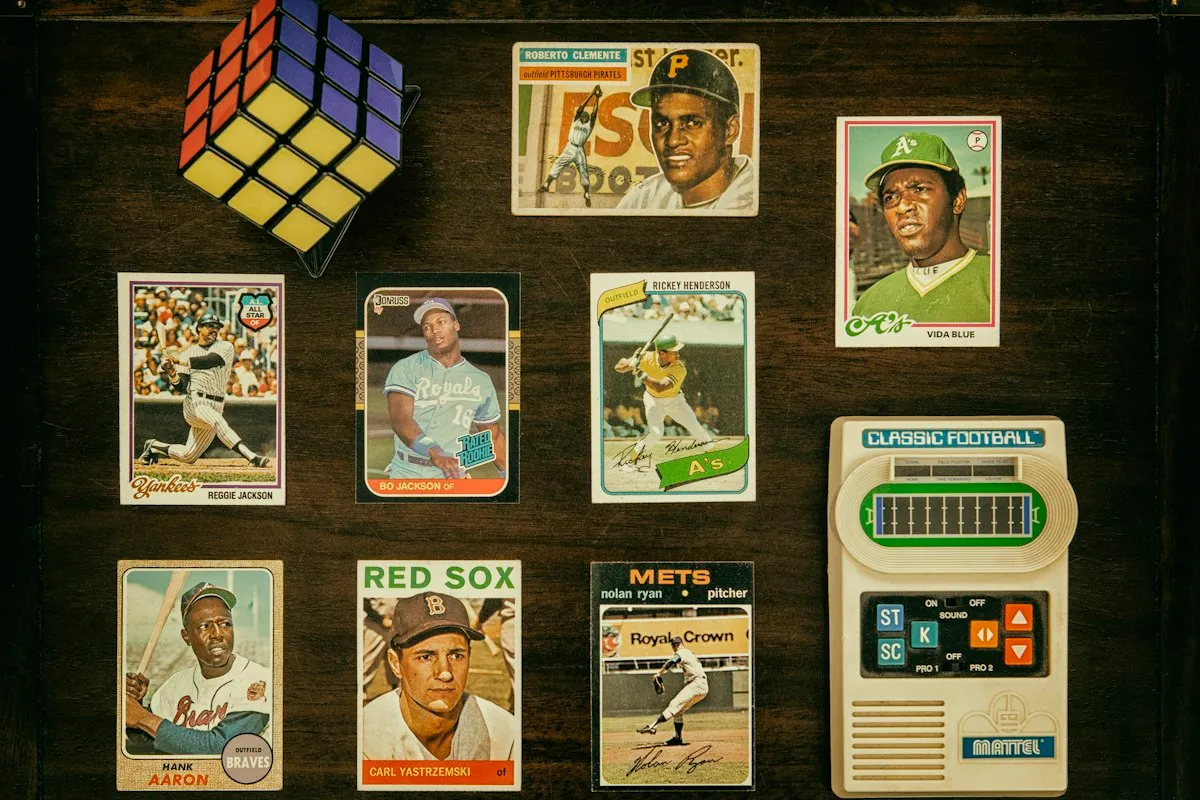
A grade written on a sticky note inside a jacket helps nobody. Once your records are graded, the grades belong in the same place as the titles, so the whole shelf can be priced at once — and so the next copy you are offered can be checked against what you already own. If you are starting that list from scratch, how to catalog a collection walks through what to record beyond the title. Collectors of cards will recognize the same logic in the trading card grading scale, where condition decides value just as steeply.
The Vinyl & Music Collection Tracker was built for exactly this: separate media and sleeve grades on every record, a grade-adjusted value from multipliers you control, and a wantlist that prices any copy you are offered at its grade against your own ceiling — in a file you keep, for Excel or Google Sheets, with no monthly subscription.