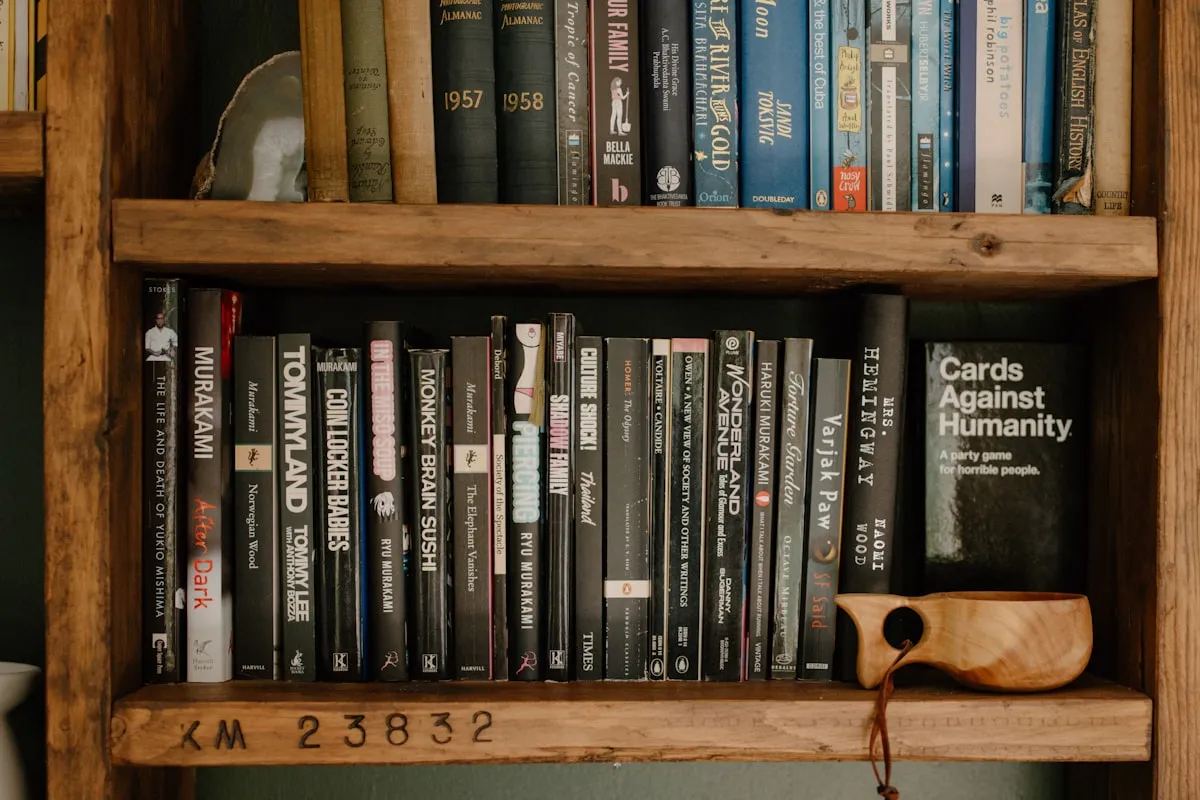
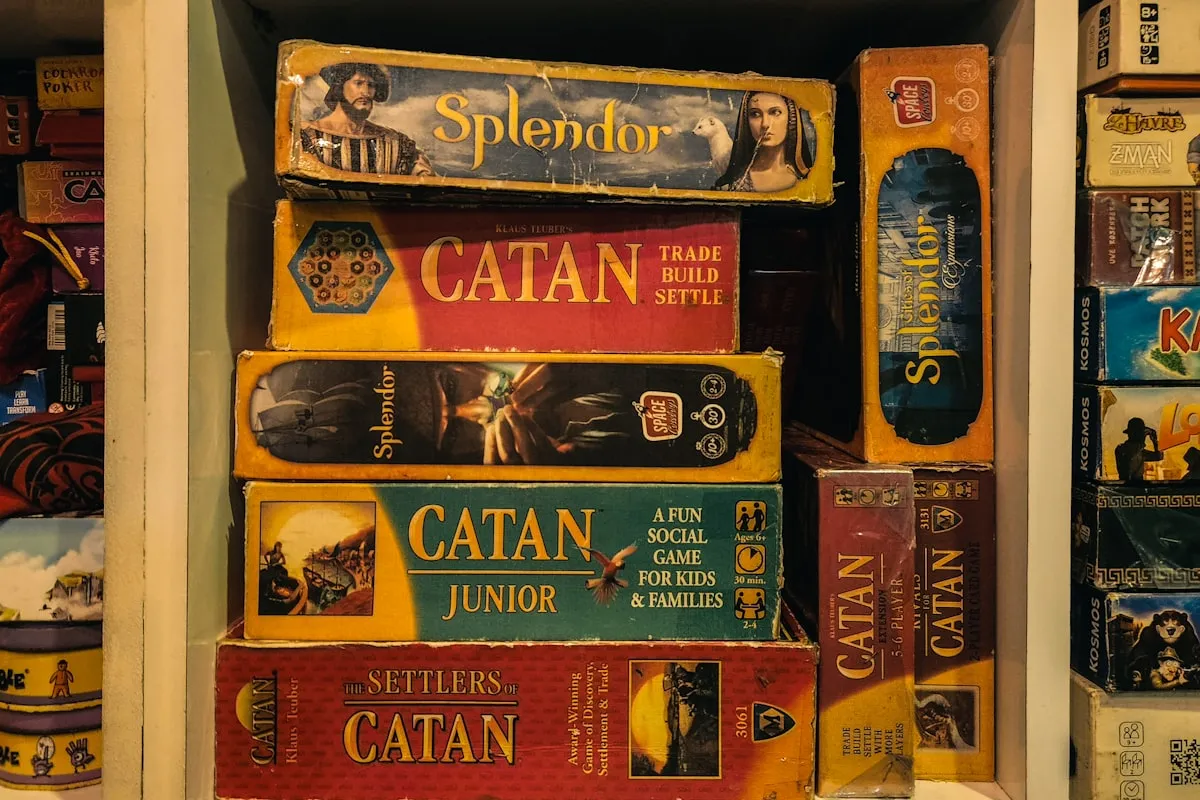
Your board-game shelf keeps growing — but do you actually know which games you play, which ones are still shrink-wrapped, or who really wins game night? The Board Game & TTRPG Collection Tracker is a workbook that catalogs every game and rulebook you own, logs each play, and does the math for you: plays-per-game, cost-per-play, win rate, hours at the table, and the gentle nudge of a “shelf of shame” for the games you own but never play.
It’s built for both shelf collectors and regular game-night groups — and for board-gamers and tabletop role-players alike. It works in Excel, Google Sheets, and LibreOffice, and it’s yours to keep.
What does the Board Game & TTRPG Collection Tracker do?
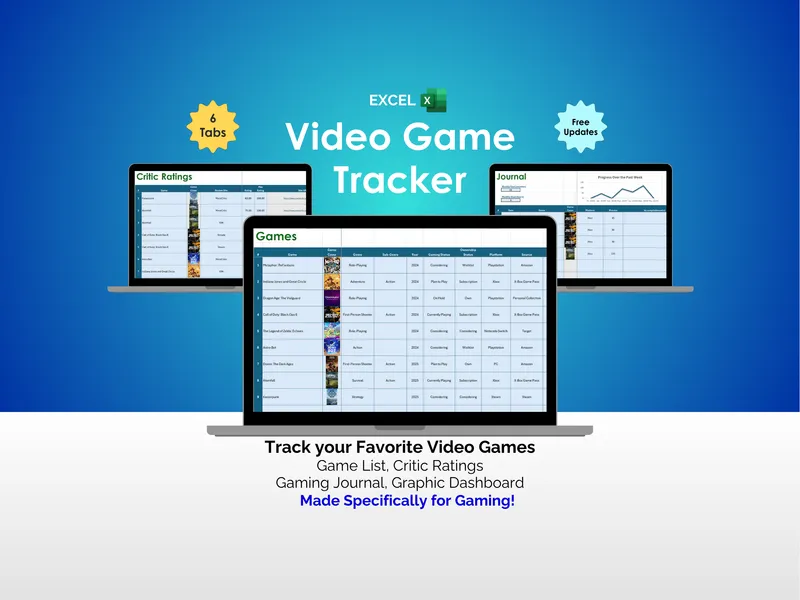
Six connected tabs turn a shelf of boxes into a collection you can actually see:
- Dashboard — your whole table at a glance: games owned, hours at the table, collection value, win rate, most-played games, best value by cost-per-play, a complexity breakdown, and a campaign snapshot. Every number updates itself.
- Games — the shelf: one row per game or rulebook, with type, player count, play time, complexity, mechanic, condition, and price. Plays and cost-per-play calculate for you as you log game nights.
- Play Log — a row per game night: who played, who won, your score, and how long it ran. This is what drives the stats.
- Campaigns — your tabletop RPG campaigns: system, GM or player, status, session count, and where you left off.
- Characters — your party roster across every table: class, level, player, and status (active, retired, deceased, an NPC ally).
- Read Me — a plain-English orientation, plus a Start Here guide, a Game Night Playbook, and a printable play log.
Why cost-per-play is the number that matters
A price tag tells you what a game cost. Cost-per-play tells you what it was worth. A $90 campaign game you’ve played fifteen times is six dollars a night — cheaper than a movie, and it’s yours. A $25 party game still in the shrink-wrap costs infinity. The dashboard ranks your most-played games and your best value by cost-per-play, and names the games you own but never play — so you can rescue them or let them go.
Why buy this instead of a blank spreadsheet?
Because the math is already built. Cost-per-play, win rate, most-played, and the shelf-of-shame list are computed for you — not blank cells you have to wire up. Type, complexity (a 1–5 weight), mechanics, condition, and RPG systems are all built-in dropdowns, so a new game takes a minute to catalog well. And it’s pre-loaded with a worked example so nothing looks empty on the first open — clear it and it’s yours.
Prefer Google Sheets? One click, no import
Your download includes a link to a ready-made native Google Sheet. Just click Make a copy and the whole workbook lands in your Drive — every dropdown, formula, and color already set up. No lossy import, nothing to rebuild. Or use the .xlsx in Excel or LibreOffice. It’s your file either way.
Own it, don’t rent it
There’s a blank spreadsheet on one side and a subscription app on the other. This sits in between: the structure of an app, in a file you own outright. No account, no monthly fee, no app that forgets your shelf the day you stop paying — just a workbook you keep, that will still open in ten years.
Want to try it first? The free game-shelf starter is a one-tab taste of the full workbook. And if you collect more than games, the rest of the Trackers line catalogs the other things you love the same way.
A personal collection log — a record-keeping template, not professional or purchasing advice. The example collection is fictional and illustrative. Game, publisher, and system names belong to their owners; this product is not affiliated with or endorsed by any game publisher.