Nobody printing the letter is being dishonest. The federal aid system counts grants, work-study and loans alike as financial aid, so a school listing a loan under "Your financial-aid award" is using the term correctly. The trouble is that the letter is answering the government’s question — what has this student been offered — while the family reading it is asking a different one: how much cheaper does this make the year? Gift aid answers that second question. A loan does not, and a letter that does not separate the two leaves you comparing colleges on the wrong number.
Gift aid vs loans: the quick verdict
- Gift aid — grants and scholarships — reduces the price. It is never repaid and never earned. This is the only kind of aid that belongs in a "what will this actually cost" comparison.
- Loans do not reduce the price. They move it later and add interest and an origination fee on top. Back them out of any figure you're using to compare colleges.
- Work-study is neither. It's a campus job the student has to find and work by the hour, paid across the year — not money off the bill.
- Two award letters can only be compared once loans and work-study are taken back out of both, and both are measured against the same cost of attendance to start with.
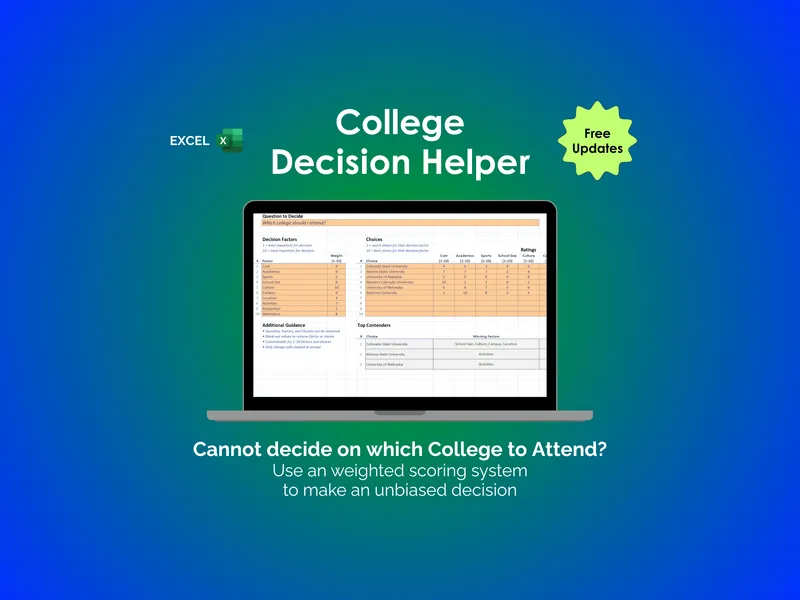
If you do only one thing with a letter before setting it beside another, do that subtraction. The free College Net-Price Estimator takes one college's cost of attendance and its award letter and returns the price underneath — gift aid only, no signup required. The full College Financial-Aid Award-Letter Comparison Calculator does it for up to six colleges at once.
Gift aid, loans, and work-study, side by side
| What matters | Gift aid | Loans | Work-study |
|---|---|---|---|
| Has to be repaid? | No | Yes, with interest and an origination fee | No — it's pay for hours already worked |
| Has to be earned? | No | No, but it has to be signed for and qualified for | Yes — a job the student finds, applies for, and works |
| Effect on the price | Reduces it | Defers it to later, at a cost | None — it's income alongside the bill, not a discount on it |
| When the money moves | Nets against the bill at the start of the term | Disburses at the start of the term, minus the fee — then has to be repaid, with interest, starting later | Paid out across the term as hours are worked |
| What changes year to year | Merit awards often carry a renewal condition; need-based aid is recalculated each year against the family's circumstances. Check each letter for which kind it is | Recalculated each year against the caps then in force — and the caps themselves can change, as the Parent PLUS caps did for 2026-27 | Eligibility recalculated each year; hours are never guaranteed |
The two-question test for any line on the letter
You don't need to memorize a school's own vocabulary for this — every school phrases its award letter a little differently, and the same word means different things at different colleges. Instead, ask the same two questions of every line:
- Does somebody have to repay it? If yes, it's a loan, whatever the letter calls it.
- Does somebody have to earn it? If yes, it's work-study, whatever the letter calls it.
- If the answer to both is no, it's gift aid — the only category that actually lowers the price.
That test works on a line labeled "Scholarship" and on one labeled "Federal Direct Loan" alike, and it works just as well on the wording a letter invents that doesn't match either — a "university grant," an "institutional award," a line with no category word at all. Run every line through the same two questions and the letter sorts itself, no matter how it's phrased.
What a loan actually costs
Two different clocks govern the two numbers. An interest rate is fixed by the July 1–June 30 window a loan first disburses in: for loans first disbursed between July 1, 2026 and June 30, 2027, the federal Direct Loan program charges an undergraduate 6.52% on Direct Subsidized and Unsubsidized loans, and charges a parent 9.07% on Direct PLUS. Origination fees run on the federal fiscal year instead, so they don't turn over on the same date: the current fee is 1.057% on Direct Subsidized and Unsubsidized loans and 4.228% on Direct PLUS, on loans first disbursed before October 1, 2027 — which covers every disbursement of the 2026-27 year. Both sets of figures are published by Federal Student Aid.
The fee is taken out before the money reaches the college — so a family that borrows $5,500 in Direct loans owes the full $5,500 back, with interest, while the college actually receives roughly $5,442 of it. Borrow $20,000 in Parent PLUS — the new per-year cap described below — and the parent owes $20,000 while the college receives roughly $19,154. In both cases the borrower owes more than the college is ever paid, which is one more reason a loan line should never be subtracted from a sticker price the way a grant is.
Whether interest starts piling up immediately depends on which loan it is. A Direct Subsidized Loan has its interest covered by the government for as long as the student stays enrolled at least half time. A Direct Unsubsidized Loan starts accruing interest from the day it disburses, enrolled or not.
There are also hard ceilings on how much of this a family can take on. A dependent undergraduate's Direct Loan annual limit is $5,500 in the first year, $6,500 in the second, and $7,500 in the third year and beyond, up to a $31,000 aggregate — of which no more than $23,000 can be subsidized. For each academic year beginning on or after July 1, 2026 — that is, from the 2026-27 award year on — Parent PLUS is capped at $20,000 per dependent student per year and $65,000 in total per dependent student, per Federal Student Aid's Parent PLUS limits, and a parent can only borrow up to the lesser of that cap and whatever the college certifies. A loan line that would push a family past those caps isn't fully available no matter what a letter implies — the gap has to close some other way.
Why the "aid" heading doesn't help you compare colleges
Put a grant, a loan, and a work-study award under one heading and add them up, and two colleges with very different real prices can print the same total. A college that closes its gap with grants and one that closes the identical gap with loans can hand you the same bottom-line number labeled "financial aid" — one of those colleges is actually cheaper, and the letter alone won't tell you which. The U.S. Government Accountability Office reviewed colleges' aid offers and found the same thing: many exclude key costs and factor in loans that must be repaid, which makes a college appear less expensive than it is.
The fix is the same one that applies to cost of attendance and net price: start from the college's full cost of attendance, subtract only the lines that pass the two-question test as gift aid, and stop there. What's left is the price. Loans and work-study still matter — they're how the rest of the price gets covered — but they belong in a separate column, not netted into the same subtraction as a scholarship.
What to do with the letter
Pull every line off the letter and sort it with the two-question test before you compare colleges at all. The free College Net-Price Estimator takes one college's cost of attendance and award letter and returns the net price underneath it — gift aid only, no signup required. The full College Financial-Aid Award-Letter Comparison Calculator does the same sorting across up to six colleges at once, prices every loan at the rate and fee that actually apply to it, projects the award forward against each college's own renewal rule, and tests a borrowing plan against the federal caps above before anyone signs anything. It's a workbook you own outright, not a calculator that wants an email address for one result — own it, don't rent it. Browse the rest of the search on the templates for college students hub.
Frequently asked questions
- Is a loan really “financial aid”?
- By the federal government's own vocabulary, yes — Federal Student Aid lists grants, work-study and loans together as types of financial aid, so a loan is one of the things a school can list on an aid award. But that's a labeling answer, not a financial one. A loan doesn't reduce what a year of college costs; it moves part of the cost later, adds interest, and takes an origination fee off the top before the school ever sees the money. If the question you're actually asking is “how much cheaper does this make the year,” a loan's answer is zero.
- What counts as gift aid on an award letter?
- Grants and scholarships — money that comes off the sticker price, is never repaid, and doesn't have to be earned by working a job. That's the entire category. It doesn't matter whether the source is the college, the state, the federal government, or an outside organization; if nobody has to pay it back and nobody has to work for it, it's gift aid.
- Is work-study gift aid?
- No. Work-study is eligibility to hold a particular kind of campus job — a position the student still has to find, apply for, and work by the hour, paid out across the school year rather than deducted from the bill at the start of a term. It isn't repaid, so it isn't a loan, but it also doesn't reduce the price the way a grant does; it's closer to a paycheck than a discount. Treat it as neither gift aid nor debt when you're comparing letters.
- How much does a federal student loan actually cost to borrow?
- For loans first disbursed between July 1, 2026 and June 30, 2027, a Direct Subsidized or Unsubsidized Loan for an undergraduate carries a 6.52% interest rate, and a Direct PLUS loan for a parent carries 9.07%. Origination fees run on the federal fiscal year rather than the award year, so they don't turn over on the same date: the current fee is 1.057% on Direct Subsidized and Unsubsidized loans and 4.228% on Direct PLUS, on loans first disbursed before October 1, 2027 — which covers every disbursement of the 2026-27 year. The origination fee is taken out before the money reaches the college, so the amount the borrower is on the hook to repay is always larger than the amount the college is actually paid. On a Direct Subsidized Loan, the government covers interest while the student is enrolled at least half time; on a Direct Unsubsidized Loan, interest starts accruing from the day the money disburses.
- How much can a family actually borrow?
- For a dependent undergraduate, Direct Loan annual limits are $5,500 in the first year, $6,500 in the second, and $7,500 in the third year and beyond, up to a $31,000 aggregate — of which no more than $23,000 can be subsidized. On the parent side, Parent PLUS is capped, beginning with the 2026-27 award year, at $20,000 per dependent student per year and $65,000 in total per dependent student; a parent can borrow up to the lesser of that cap and whatever the college certifies for the year.