There is a number on the college’s website. It is large, it is bolded, and it is wrong.
Not wrong in the “fake news” sense. Wrong in the “this is not what you are going to pay” sense. The published tuition is a starting price — the sticker on a windshield at a dealership. Underneath it, layered like sediment, are the actual bills: the fees that aren’t on the fees page, the housing markup, the textbook estimate the school quietly low-balls, the meal plan with money that evaporates in May, the loan fee that takes a cut before the check ever lands.
If you are sending a kid to college this fall — or going yourself, or watching the FAFSA numbers come back wondering what to make of them — the published price is not the question to ask. The question is: what is the all-in, every-bill-included, twelve-months-from-orientation cost of a year of college in 2026?
Short answer: A typical full year of college, all-in, in 2026 lands around $28,000–$32,000 at an in-state public, $50,000–$60,000 at an out-of-state public, and $40,000–$50,000 at the average private nonprofit after the tuition discount that nearly every school applies. The rest of this post is how those numbers are actually built — line by line, fee by fee — so you can see where the published price hides money and where it overstates it.
Let’s pull back the curtain layer by layer.
The headline number: what colleges publish
Here is what the College Board reports for the 2025–26 academic year — these are the numbers on the brochures.
| Institution type | Published tuition & fees | Total annual budget (incl. housing, food, transportation, books) |
|---|---|---|
| Public 2-year (in-district) | ~$4,150 | $21,320 |
| Public 4-year (in-state) | $11,950 | $30,990 |
| Public 4-year (out-of-state) | $31,880 | $50,920 |
| Private nonprofit 4-year | $45,000 | $65,470 |
Source: the College Board Trends in College Pricing 2025 report (opens in new tab). The “total annual budget” column is the school’s own estimate of what a full year costs — tuition, housing, food, books, transportation, personal expenses.
Already, two things are off.
First: the budget number is the school’s estimate of its costs, not yours. It assumes a campus meal plan, a campus dorm, no car, no plane tickets home for Thanksgiving, and a textbook line item that — as we’ll see in a moment — most schools low-ball.
Second: the published tuition is almost never what a private-college student pays. Per the 2024 NACUBO Tuition Discounting Study (opens in new tab), private nonprofit institutions discounted their published tuition by 56.3% for first-time, full-time undergraduates in 2024–25. The $45,000 sticker has, on average, about $25,000 of grant aid pre-applied — the school just doesn’t tell you that until you apply.
So the headline number is a ceiling, a floor, and a fiction, all at the same time. Let’s go underneath it.
Layer 1: Tuition and fees (the fees nobody puts on the tuition page)
Here is the trick: tuition is one line on the bill. Fees are roughly forty.
A typical public four-year university bill — in addition to base tuition — will include some combination of:
- Student activity fee
- Recreation center / wellness fee
- Technology fee
- Library fee
- Transportation / shuttle fee
- Student union / student services fee
- Athletic fee
- Health center fee (separate from health insurance)
- Course-specific lab fees (chemistry, art studio, nursing simulation, etc.)
- Studio fees (music, film, design)
- New-student / orientation fee (one-time, freshman year)
- Graduation fee (one-time, senior year)
- Records fee, transcript fee, degree audit fee
Most of these are not “optional.” A few of them are technically waivable (you can usually skip the campus rec membership if you ask, sometimes), but the vast majority are bundled into the published “tuition and fees” line. Which is fine — it just means the “tuition and fees” number on the website is doing more work than it looks like.
Behind the curtain: When you compare two schools, “tuition” is not the comparable unit. Ask the financial aid office for the full cost of attendance breakdown, line by line. The school is required to publish this. It is almost never linked from the homepage.
Layer 2: Room and board (the bundling that hides the math)
The College Board puts average room and board at around $14,398 for 2025–26 — about $8,196 for housing and $6,205 for the meal plan, per EducationData.org (opens in new tab).
Two things are happening underneath that line item that the brochure won’t explain.
Housing is priced as a package, not a market rent. A 9-month dorm room at $8,196 works out to about $911 a month — and in most college towns, you can rent a real apartment for less. The school is bundling: room + utilities + furniture + internet + RA staff + custodial + summer-storage-when-you-leave. Whether that’s a good deal depends on the city. In Boston, New York, or coastal California, the dorm is genuinely cheaper than an apartment. In a small Midwestern town, you’re often paying a 30–40% premium for the convenience of walking to class.
Meal plans have an expiration date that no one mentions at the orientation tour. Most flex-dollar meal plans either reset at the end of each semester or at the end of the academic year — meaning unused funds disappear. A BestColleges report (opens in new tab) noted that the Department of Education has proposed (but not yet finalized) a rule that would require schools to refund unused flex dollars; until that lands, the default at most institutions is forfeiture. A student who is studying abroad, going home for fall break, or just skipping dinner most weeknights can easily forfeit several hundred dollars a year. That money does not roll back to you. It rolls to the school.
Behind the curtain: Required meal plans for on-campus residents are not negotiable, but the size of the plan usually is. The biggest “unlimited swipe” plan is almost always over-purchased; the second-smallest plan is usually the right answer for any student who doesn’t have a hard-and-fast cafeteria schedule.
Layer 3: Books, course materials, and the “technology” line
Here is where the school’s published estimate diverges most from reality.
Typical school “books and supplies” estimates for 2024–25 ran around $1,000–$1,200 per year (as compiled by EducationData.org from College Board figures (opens in new tab)). But the National Association of College Stores Student Watch report (opens in new tab) — which actually tracks what students spent — put the real average at $341 for course materials, per student, for 2024–25. Roughly $39 per course.
Why the gap?
- The school’s “books” line is a holdover from when textbooks really did cost $100 per class. It hasn’t been re-baselined.
- Most students now buy used, rent, or use open-access materials.
- Many courses have moved to inclusive access programs, where a per-credit fee is built into tuition (which means the “books” line on your bill is artificially low — you’re paying for course materials through tuition, not through a separate purchase).
This is one of the few places where the school over-estimates instead of under-estimates. You will probably spend less on books than the financial aid letter says you will. That’s the good news.
The less-good news: courses with proprietary online platforms — accounting, statistics, intro language, some pre-med — can require an access code that costs $80–$150 per semester per course, with no used market, no rental option, and no library copy. If your student takes four of those in a year, books “cost” more than the listed line item.
Behind the curtain: Ask before each semester whether each course requires an access code. If yes, build it into the budget. If no, your books line is probably half of what the school estimated.
Layer 4: Transportation (the line most families forget)
The College Board includes a transportation estimate in its total budget, usually around $1,050–$1,786 per year (per educationdata.org (opens in new tab)). This is one of the most accurate-looking-but-wildly-variable line items.
What it includes (in the school’s model):
- Flights or buses home for breaks (Thanksgiving, winter, spring, summer)
- Local transit pass or campus shuttle (often free, but not always)
- Parking permit if the student has a car — worth checking against whether a freshman should take a car to campus at all
What it leaves out:
- Insurance on a student-driven car (often a few hundred dollars more than at home, because college towns are often higher-risk zip codes)
- Gas and maintenance on a car kept at school
- The Uber/Lyft tax of being a freshman without a car at a college where everything is 3 miles from campus
- Plane tickets in March, which are usually 40% more than they were in October
- The extra trip home everyone takes that wasn’t in the plan
A student who lives in the same state as the school and drives a paid-off used car can easily come in under $1,000. A student who flies cross-country, comes home for every break, and visits a long-distance partner can blow past $4,000 without trying.
Behind the curtain: Transportation is the line that most rewards forethought. Booking the year’s flights in August — when the school year’s calendar is fixed and you know the dates — is the single biggest savings move of the freshman fall.
Layer 5: Personal expenses (the line that swallows the budget)
The school’s “personal expenses” estimate is the polite term for: laundry, toiletries, haircuts, going-out money, the cost of being a person.
School cost-of-attendance estimates typically peg personal expenses at around $1,800–$2,500 per year. This is where realism diverges the most by student.
Where the money actually goes for a typical undergrad:
| Category | Realistic monthly | Annual (9 months) |
|---|---|---|
| Laundry, toiletries, household basics | $40 | $360 |
| Coffee, snacks, food off the meal plan | $80 | $720 |
| Social outings (movies, events, going out) | $100 | $900 |
| Streaming, software, subscriptions student keeps from home | $25 | $225 |
| Clothing, replacements, dorm odds and ends | $30 | $270 |
| Phone (if not on family plan) | $40 | $360 |
| Total | $315 | $2,835 |
That’s an illustrative budget — not a quoted statistic. Your student might come in at half that or twice that. The point is that “personal expenses” is the line where a $2,500 estimate becomes a $4,500 reality the moment the student gets a job in a city and starts ordering food.
Behind the curtain: This line is the one where building a simple monthly spending tracker before move-in saves the most pain in October. Even a basic Bill Tracker or Subscription Tracker catches the “$8 here, $12 there” subscriptions that follow a student from a parent’s plan onto their own card and quietly become $200 a year.
Layer 6: Health insurance (the surprise charge you might be able to waive)
Most colleges automatically enroll students in a school-sponsored health plan and bill it — usually $2,000 to $4,000 a year — unless the student affirmatively waives out by proving they have comparable coverage elsewhere.
For 2025–26:
| Plan | Annual cost |
|---|---|
| University of Michigan Domestic Student Health Insurance Plan | $3,495 (opens in new tab) |
| Cornell Student Health Plan | $4,020 (opens in new tab) |
Those numbers are not outliers. They’re representative of large research universities.
The catch: the waiver has a deadline, usually in the first two weeks of the semester. Miss it, and the charge goes on the bursar bill, and you cannot retroactively un-enroll. Many students every year pay for school health insurance they did not need because they did not see the waiver email in the August deluge of orientation messages.
If the student is staying on a parent’s plan under the Affordable Care Act’s “under 26” rule (opens in new tab), they almost certainly qualify for the waiver — but the waiver requires uploading the family’s insurance card and policy details before the deadline.
Behind the curtain: The waiver email is a real-money decision disguised as administrative spam. Put the deadline on the family calendar in July, not August.
Layer 7: Student loans (the cut taken before the check arrives)
For families using federal Direct Loans, there are two numbers most people don’t see until they’re already enrolled.
The origination fee. Per Federal Student Aid guidance (opens in new tab), Direct Subsidized and Unsubsidized Loans first disbursed between October 1, 2025 and September 30, 2026 carry a 1.057% origination fee. That fee is taken off the top before the loan ever hits the student account. So if a student borrows $5,500 for freshman year, about $58 disappears immediately, and the student receives $5,442. The student still owes $5,500.
The interest rate. For loans first disbursed between July 1, 2025 and June 30, 2026, the federal direct undergraduate rate is 6.39% (opens in new tab). On a subsidized loan, the government pays interest while the student is in school at least half-time. On an unsubsidized loan, interest accrues from day one.
Here’s what that means in practice. A $5,500 unsubsidized loan at 6.39%, with simple interest accruing for four years until graduation, accumulates roughly $1,400 in interest — turning a $5,500 balance into about $6,900 owed before the first payment is due, even if the student never borrows another dollar. If that interest “capitalizes” (gets added to the principal, which happens at the end of the grace period for unsubsidized loans), the student is then paying interest on the interest for the next decade.
Behind the curtain: If at all possible, pay the monthly interest on unsubsidized loans during school. Even $20 a month from a part-time job keeps the principal flat. This is the single highest-return financial move available to a college student, and almost nobody talks about it because the bills are so small they feel optional.
Putting it all together: what a year actually costs
Let’s reconstruct the annual cost of attendance for three representative students, using the College Board’s institutional averages plus the line items most families under-count. These are illustrative budgets — not survey data. Adjust them to a specific student’s situation.
Student A: In-state public four-year, dorm + meal plan, no car
| Line item | Annual |
|---|---|
| Tuition and fees | $11,950 |
| Dorm housing | $8,196 |
| Meal plan (mid-tier) | $5,500 |
| Books and course materials | $400 |
| Transportation (3 trips home, regional flight) | $1,200 |
| Personal expenses | $2,800 |
| Health insurance (waived — on parent’s plan) | $0 |
| Subtotal | $30,046 |
Student B: Out-of-state public four-year, dorm + meal plan, brings a car
| Line item | Annual |
|---|---|
| Tuition and fees | $31,880 |
| Dorm housing | $9,000 |
| Meal plan (full) | $6,200 |
| Books and course materials | $500 |
| Transportation (parking permit $400, gas/insurance/maintenance $2,400, 4 trips home $1,400) | $4,200 |
| Personal expenses | $3,200 |
| Health insurance (school-sponsored) | $3,400 |
| Subtotal | $58,380 |
Student C: Private nonprofit four-year, dorm + meal plan, no car, 50% tuition discount
| Line item | Annual |
|---|---|
| Published tuition and fees | $45,000 |
| Less: institutional grant aid (≈50%) | -$22,500 |
| Net tuition and fees | $22,500 |
| Dorm housing | $9,800 |
| Meal plan (mid-tier) | $6,400 |
| Books and course materials | $400 |
| Transportation (2 flights home, no car) | $1,400 |
| Personal expenses | $2,800 |
| Health insurance (waived) | $0 |
| Subtotal | $43,300 |
Notice what just happened to Student C. The “private school costs $65,470” headline became $43,300 — about the same as Student B at an out-of-state public — once the tuition discount, the right meal plan, and the health insurance waiver are taken into account.
Notice also that Student B (out-of-state public, with a car) is now the most expensive of the three. The out-of-state public is the most under-discussed cost trap in the system: it has the highest published tuition for an in-state-priced experience, the lowest institutional aid (state schools have less to give to out-of-state students), and the highest transportation costs.
This is the kind of comparison the financial aid letter doesn’t make for you. It’s also exactly the kind of side-by-side math you can build before May 1 of senior year, when the deposit decision is due — see our framework for choosing a college when every option feels right for how to weigh the soft factors alongside the dollar columns.
The net price you might actually pay
The numbers above are gross costs. They don’t account for outside scholarships, work-study, family contributions, or the federal Pell Grant.
For 2025–26, the College Board (opens in new tab) reports that the average net tuition and fees paid by first-time full-time in-state students at public four-year institutions is about $2,300 — after grants, scholarships, and tax benefits. At private nonprofits, average net tuition and fees is about $16,910.
This number — net tuition — is the most important number in the entire college financing conversation, and it is virtually impossible to find on a college’s website. Schools publish gross tuition because they’re competing on prestige; they publish “average aid” separately because they’re competing on affordability. The two numbers together are net price, and almost no admissions website surfaces it cleanly.
Behind the curtain: Every college that participates in federal financial aid is required to publish a Net Price Calculator (opens in new tab) on its website. It’s usually buried under “Financial Aid → Cost of Attendance → Estimate Your Cost.” Use it. The output is the school’s best guess at what your family will actually pay, given your income, savings, and the student’s profile. Run it for every school the student is considering, before the application is sent in.
What to do with this knowledge
The point of all of this is not to scare anyone out of college. The point is that the published number is one of about a dozen numbers that decide what the real bill looks like — and the ones below the headline are where most of the variability lives. Roughly speaking:
- Treat the published “tuition and fees” as a ceiling, not a price. Net price after aid is what matters. Run every school’s Net Price Calculator before applying.
- Ask for a line-by-line cost of attendance from each school’s financial aid office. Compare line by line, not totals.
- Right-size the meal plan before move-in. The default is almost always too big.
- Mark the health insurance waiver deadline on the family calendar in July.
- Book the year’s flights early. August is cheaper than March. Always.
- Pay interest on unsubsidized loans during school, even if it’s $20 a month from a campus job.
- Set up a simple monthly spending tracker before the first semester, not after. A Bill Tracker or Subscription Tracker catches the slow leaks.
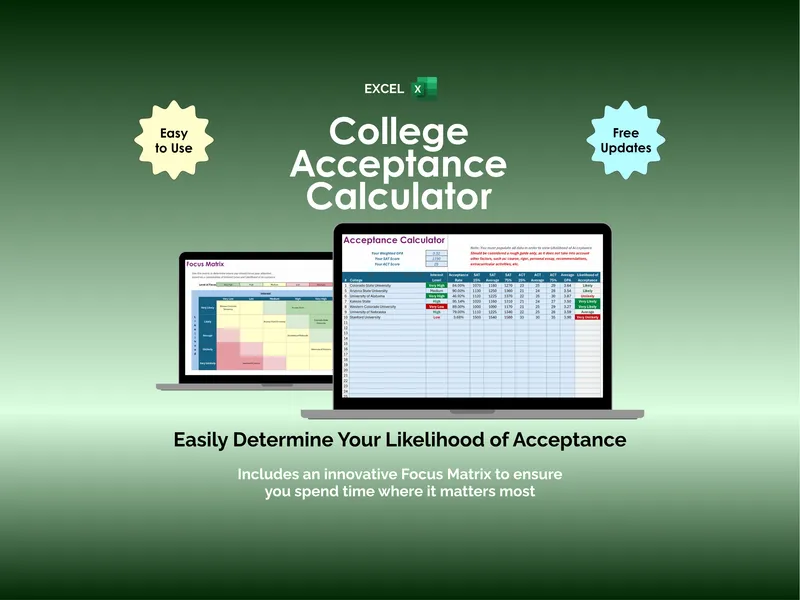
- Build a side-by-side comparison spreadsheet for the final 2–3 acceptances. A College Acceptance Calculator is built for exactly this — net price, room and board, transportation, and the lines most families forget, all in one view.
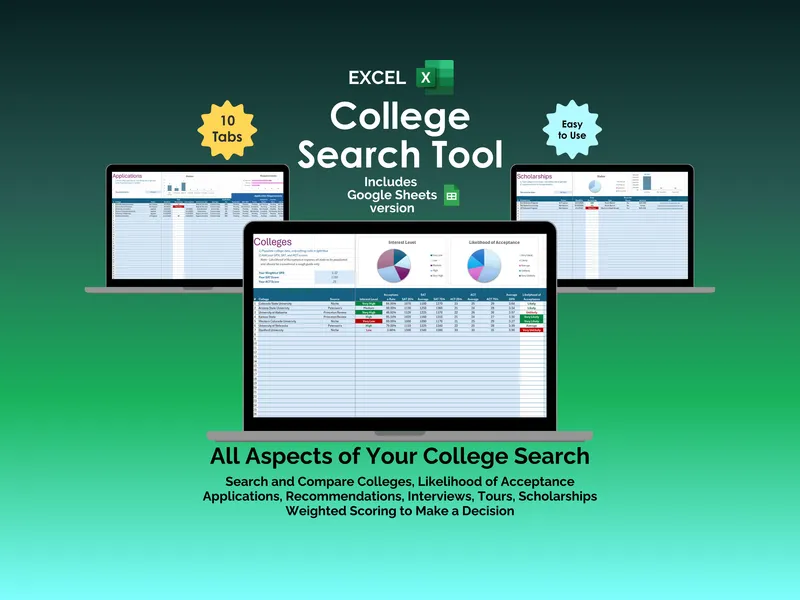
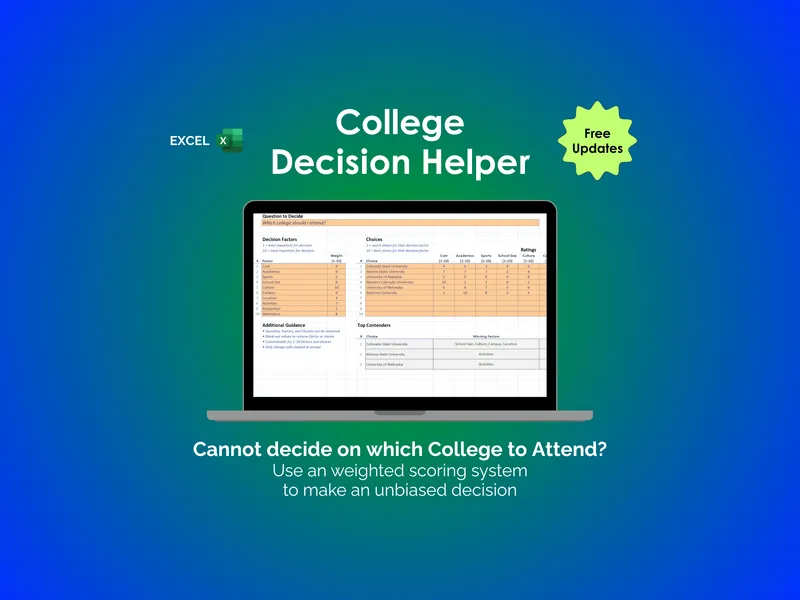
If the student is still in the search phase, the College Search Tool lets you track which schools you’re considering with the cost data and aid estimates pulled in side by side, so the comparison is honest before the applications go out. If the choice is down to two or three acceptances, the College Decision Helper walks through net cost, fit, distance from home, and the soft factors most families weigh in their heads but never write down.
And once the deposit is in, the next thing to plan for is the first semester itself — a freshman-year survival guide covers the week-by-week ramp-up that the orientation tour doesn’t.
The bottom line
A year of college in 2026 costs more than the tuition page says, less than the headline budget says, and almost nothing like what the school in the brochure is selling you. The real number is the sum of about a dozen line items — tuition, fees, housing, meal plan, books, transportation, personal expenses, health insurance, and (if borrowing) loan fees and accrued interest — minus institutional aid, scholarships, and federal grants.
Public four-year in-state, all-in, for a typical student: roughly $28,000–$32,000 before aid.
Public four-year out-of-state, all-in: roughly $50,000–$60,000 before aid — and the closer the student lives, the lower; the more they fly home, the higher.
Private nonprofit four-year, all-in, post-discount: roughly $40,000–$50,000 for the average student receiving a typical aid package.
Those are not the numbers on the brochure. They are the numbers on the actual bills. Going in with that distinction is the difference between writing a check you understood and writing a check that surprises you in October.
Sources
- Trends in College Pricing 2025 — College Board (opens in new tab)
- Trends in College Pricing Highlights — College Board (opens in new tab)
- NACUBO 2024 Tuition Discounting Study (opens in new tab)
- NACS Student Watch Report on course materials spending (opens in new tab)
- Federal Student Aid: Interest Rates for Direct Loans 2025–26 (opens in new tab)
- Federal Student Aid: Origination Fees (opens in new tab)
- HealthCare.gov: Coverage Options for College Students (opens in new tab)
- BestColleges: Rule Would Require Colleges to Refund Unused Meal Plan Funds (opens in new tab)
- EducationData.org: Average Cost of Room and Board at College (opens in new tab)
- EducationData.org: Average Cost of College (opens in new tab)
- University of Michigan Domestic Student Health Insurance Plan 2025–26 (opens in new tab)
- Cornell Student Health Plan 2025–26 Rates (opens in new tab)
- College Navigator (Net Price Calculator directory) (opens in new tab)