

Operator OS 11 min read
How to Track Restricted Funds
Your bank balance is not the money you can spend. Here's how a small nonprofit tracks restricted funds — the ledger, the six steps, and a worked example.
Owned-workbook tools for a small church, mosque, temple, synagogue, or any small congregation — built to run the operation from a file you keep, not a per-seat subscription. Start with the operations workbook: members and households, a donations log, pledges, one-cell year-end giving statements, a facility calendar, and a volunteer roster, all in one connected file.
A small congregation runs on trust and a lot of unpaid hours — a directory in one person's contacts, giving in a notebook, the calendar on the wall — until that person is away, two groups book the hall for the same evening, or January arrives and nobody can produce clean giving statements. The tools here gather the whole operation into one owned file, so nothing falls through the cracks and the knowledge stays with the congregation.
Running grants and volunteers alongside the giving? The Nonprofit & Congregation Operations Kit collects the operations workbook with five more files and adds a connective workbook that computes what none of them can alone: months of runway on money you are actually free to spend, once every restricted balance comes out. Try the Nonprofit Operating-Reserve Check free first, or read what an operating reserve is.
New to keeping giving in a file? Start free with the free congregation donations log — no signup — then read what a year-end giving statement is and how a workbook produces one from your log.
Weighing your options? Compare a spreadsheet vs church-management software for the size your congregation is at.
Recommended tools
3 templates
Owned workbooks for the work a small congregation runs by hand — the operations kit that gathers six shipped files and adds a connective workbook computing months of runway on unrestricted cash only, an operations workbook that runs members, giving, pledges, year-end statements, the facility calendar, and volunteers from one file, and the nonprofit grant-tracking workbook alongside for congregations that raise grant money — in Excel, Google Sheets, and LibreOffice. More congregation tools are on the way.
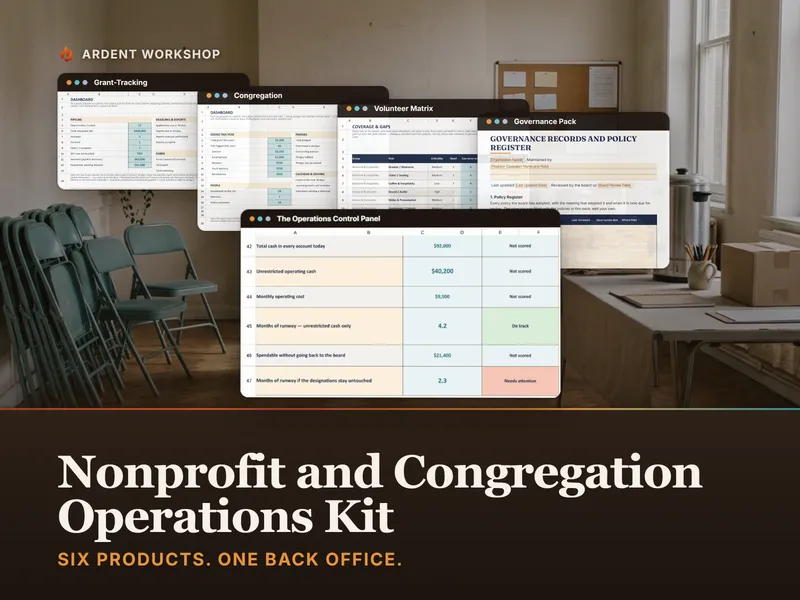
Six nonprofit and congregation products in one kit, plus a Control Panel for Excel or Google Sheets that computes runway on unrestricted cash only.

A church and congregation operations workbook for Excel & Sheets — donations, pledges, year-end giving statements, members, and volunteers in one file.
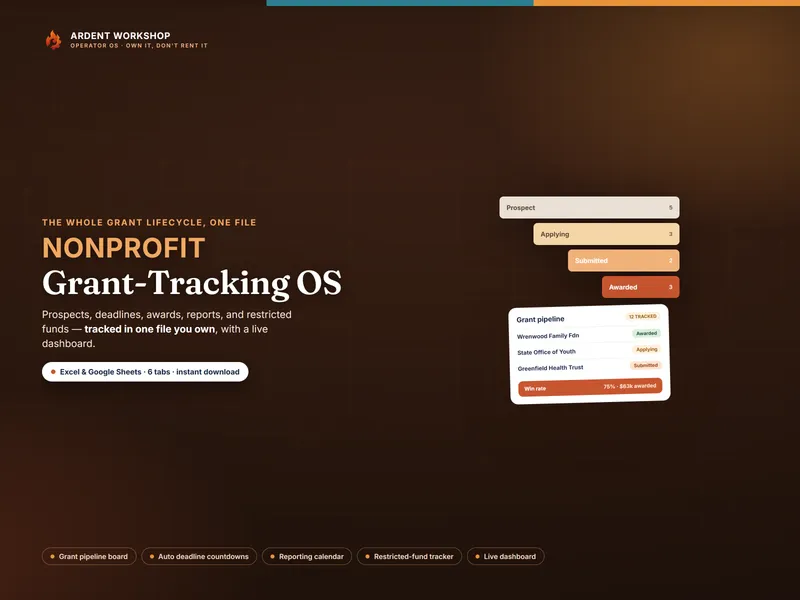
A nonprofit grant tracker for Excel & Google Sheets — manage your grant pipeline, deadlines, reports, and restricted funds in one owned file.
Where we fit
Compare the setup effort, collaboration, and automation you need. Ardent Workshop sells ready-made templates; a custom spreadsheet or software platform may fit better depending on the job.
Build the structure around your own process, with time set aside for formulas, layout, and maintenance.
Owned, structured, connected workbooks — a one-time price, yours to keep.
Consider a platform when you need shared workflows, automation, or integrations. Check the specific plan, permissions, and export options.
Reading list
A congregation runs on unpaid hours — how to keep the people giving them, and how to record what they gave.
Your bank balance is not the money you can spend. Here's how a small nonprofit tracks restricted funds — the ledger, the six steps, and a worked example.

A volunteer skills matrix maps every volunteer against every role and how ready they are for it — so you can see real coverage, find the roles resting on one person, and roster without guessing.
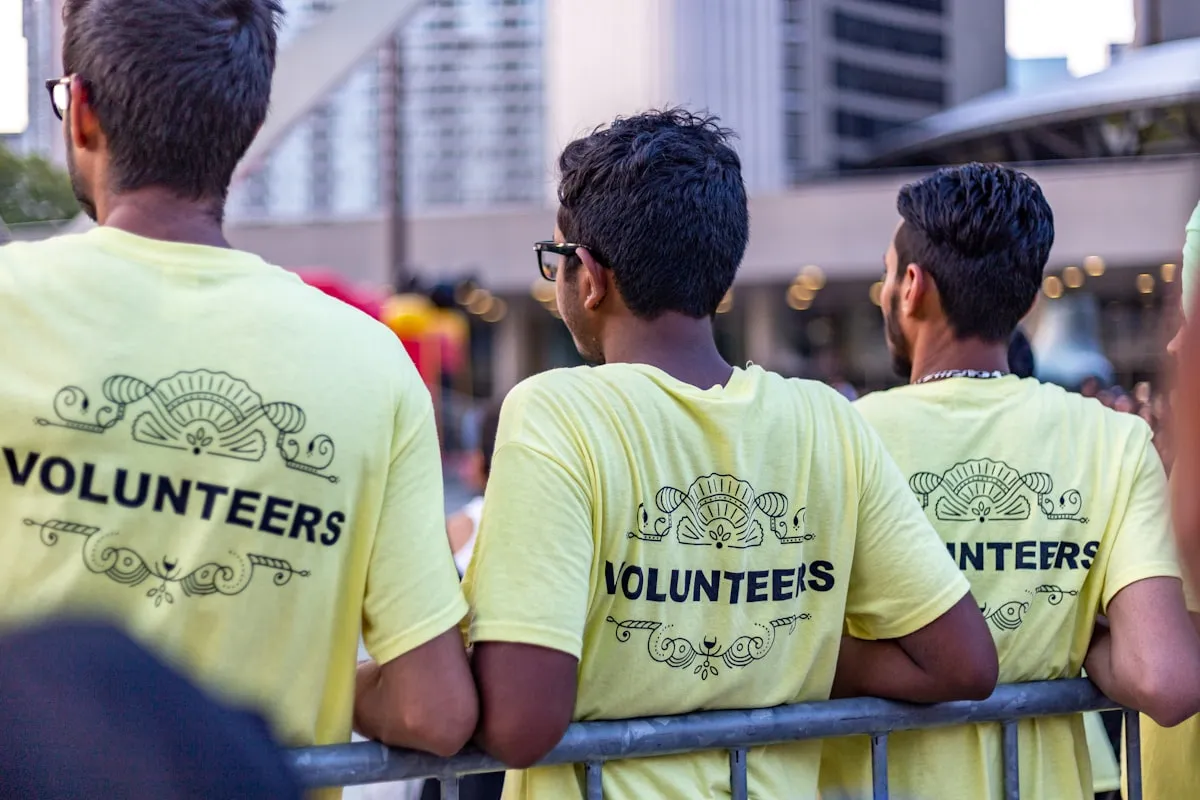
Volunteer retention isn't one problem, it's six. Here's how to recognize each type of volunteer on your roster, and the one move that actually keeps each one.

Volunteer hours land in grant reports, financial statements and your annual return. Here's the four-field log that captures them without nagging anyone.

Follow one invented food pantry's letter of inquiry from blank page to signed PDF — the word budget, the weak first drafts, and the rewrites that get a full grant proposal invited.