The 5 Ps of evacuation are People, Prescriptions, Papers, Personal needs and Priceless items — the five things to take when you have to leave home in a hurry, in roughly the order you should grab them. It is the short list FEMA teaches because it fits in a panicked head: FEMA’s Ready.gov wildfire safety toolkit (opens in new tab) tells households to “Remember the Five Ps of Evacuation: People, Prescriptions, Papers, Personal Needs, and Priceless Items.”
The list is easy to remember and hard to execute. “Papers” is one word at the door and twenty minutes of opening drawers if nobody decided in advance which papers, and where each original lives. The 5 Ps only save time when every P has already been turned into specific items in specific places.
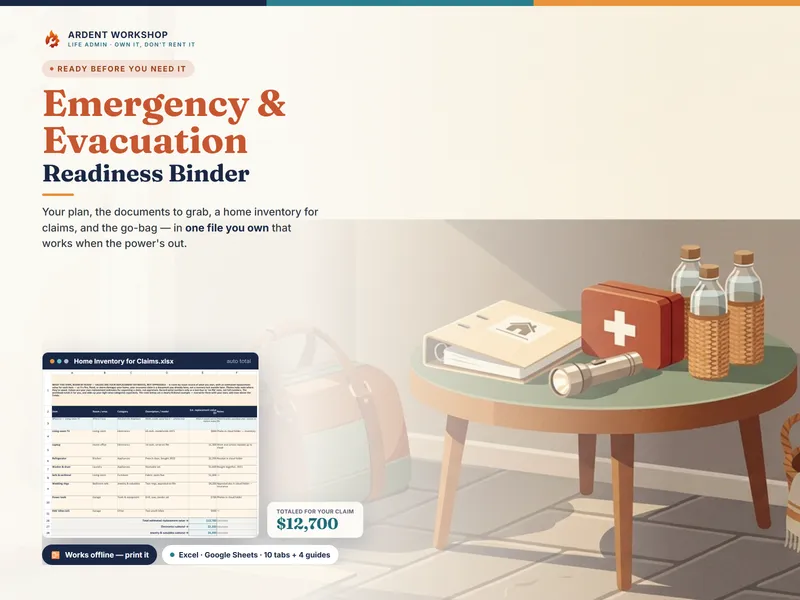
That conversion is the whole job. The Emergency & Evacuation Readiness Binder does it for every P but Priceless items in one file: a household plan, a document grab-list with where each original is kept, a medical and medications record, a go-bag checklist and a home inventory. You can also do it by hand with the list below. Either way, do it before the warning, not during it.
What are the 5 Ps of evacuation?
Each P is a category, not an item. The table turns each one into what to do tonight and what to pick up on the way out.
| The P | What it covers | Prepare now | Grab at the door |
|---|---|---|---|
| 1. People (and pets) | Everyone in the household, including animals | A meeting place, an out-of-area contact, two ways out | A headcount, leashes and carriers |
| 2. Prescriptions | Medicines, glasses, hearing aids, medical equipment and its chargers | A written medication list with doses; a week’s supply in the bag | The pill bottles in daily use, glasses, chargers |
| 3. Papers | IDs, insurance, deeds, titles, medical and financial records, contact numbers | Copies in the bag and in a cloud folder; originals in one place | The originals folder, if it is in one place |
| 4. Personal needs | Clothes, water, food, first aid, cash, phones and chargers | A packed go-bag by the exit | The go-bag, phones, wallet, keys |
| 5. Priceless items | Photos, heirlooms, irreplaceable keepsakes | Scan the photos; decide the one box that matters | That one box, if there is time |
The order is the point. Nothing in rows four and five justifies a delay to rows one and two.
The 5 Ps, one at a time
People: the plan, not just the headcount
The People P means everyone gets out and everyone knows where to go. That includes animals: if you are told to evacuate, Ready.gov’s pet guidance (opens in new tab) says your pet should evacuate too, and it warns that many public shelters and hotels do not allow pets inside. Find a pet-friendly destination before you need one.
The work behind this P is a plan written down once: a meeting place outside the neighborhood, one out-of-area contact everyone calls, and at least two routes out. Ready.gov’s evacuation page (opens in new tab) recommends choosing destinations in different directions so that you have options during an emergency.
Prescriptions: the medicine, and the list of it
The Prescriptions P covers every medicine someone takes, plus eyeglasses, hearing aids and any medical equipment with its batteries or power cords. The bottles are the easy part. The hard part is the information: drug names, doses and the prescribing doctor, so a pharmacy in another town can refill what you could not carry.
Keep a written medication list in the go-bag and a photo of it on your phone. A good rule of thumb is to keep a week of daily medicines in the bag, rather than counting on sweeping the bathroom cabinet on the way out.
Papers: copies ready, originals in one place
The Papers P is identification, insurance policies, property deeds and vehicle titles, medical records and the phone numbers you would need if every phone died. These are among the hardest items to replace and the slowest to find under pressure.
The fix has two halves. Keep copies in the go-bag and in a cloud folder you can open from any phone. Keep the originals together in one folder or box, so grabbing them is one motion. Never put passwords, PINs or full account numbers in either. For the step-by-step version, see how to make an emergency grab-list. For how long each kind of record is worth keeping at all, see how long to keep documents.
Personal needs: the go-bag
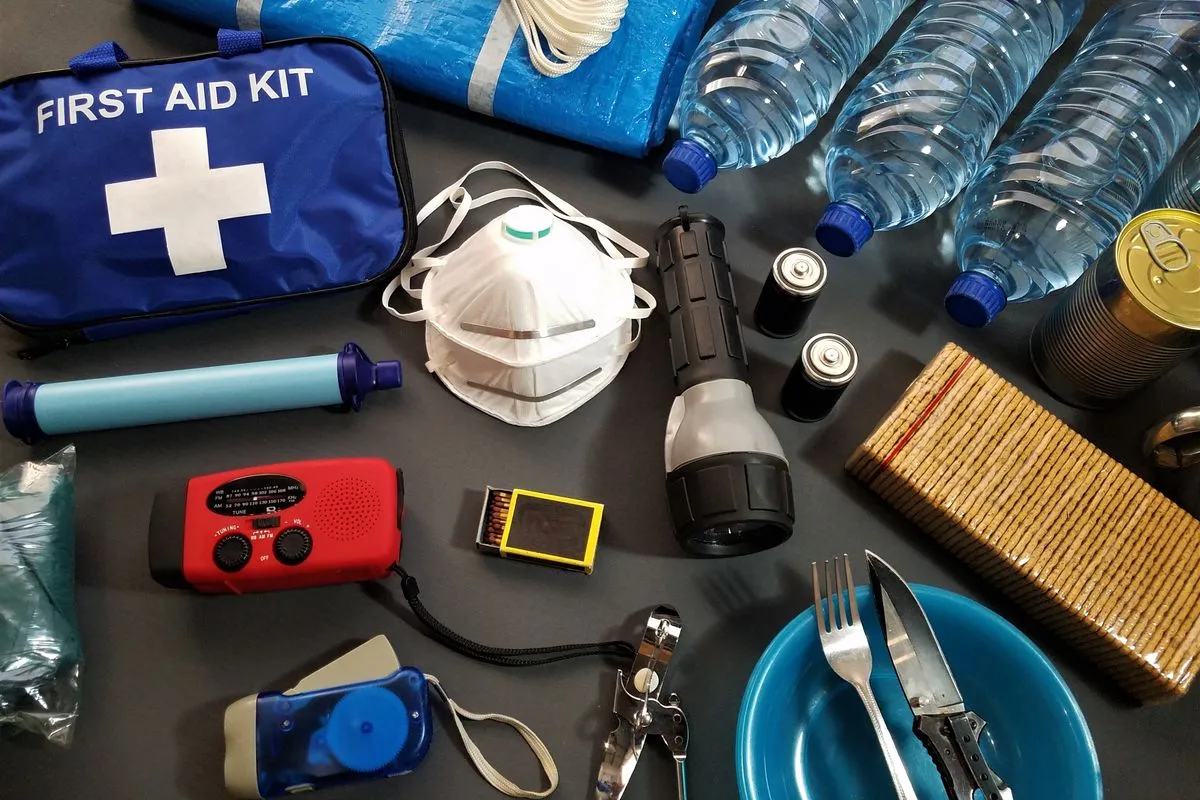
The Personal needs P is everything you would need for a few days away: clothes, water, food, a first aid kit, cash, phones and chargers, plus anything a family member with a disability or access need relies on. This is what a go-bag is for. Ready.gov’s evacuation guidance (opens in new tab) suggests building one so you are not scrambling during an evacuation.
Pack it once, keep it by the exit, and check it on a schedule you will actually keep; twice a year is easy to remember. The same Ready.gov page also suggests keeping your car’s gas tank at least half full, because the gas station is the wrong place to discover a queue.
Priceless items: decide now, grab last
The Priceless items P is the photos, heirlooms and keepsakes that money cannot replace. It comes last on purpose. It is the P that makes people go back inside.
The way to protect it is to make the decision in advance. Scan the photo albums now, so the originals become optional. Choose the one box of things that truly cannot be replaced and keep it where you can lift it in a single trip. If there is time, it comes. If there is not, you already decided you could live without it.
The 5 Ps by how much time you have
How much of each P you take depends on how long you have before you must leave. The tiers below are our framing of the same list, not an official standard, and when officials tell you to go, you go.
- Five minutes: People and pets, the go-bag, phones, wallet, keys and the medicine in daily use. Leave.
- Fifteen minutes: Add the originals folder from Papers, glasses and chargers, the pet carriers and food, and the one Priceless box.
- An hour or more: Work through Ready.gov’s “if time allows” evacuation steps (opens in new tab). Call your out-of-area contact. Unplug small electrical items. Shut off water, gas and electricity only if you are instructed to. Leave a note saying when you left and where you are going.
The difference between those tiers is preparation. In a household that has done the work below, the fifteen-minute list fits in five.
The 5 Ps vs the 7 Ps
You will also see longer versions of the list, and they describe the same idea. They split out items that the five-item version folds into Personal needs, Papers or Priceless items.
Siskiyou County, California, for example, publishes the Seven P’s in evacuation preparedness (opens in new tab):
- People and pets
- Papers, phone numbers and important documents
- Prescriptions, eyeglasses and vitamins
- Pictures and irreplaceable memorabilia
- Personal computers and information on hard drives and disks
- Plastic (credit cards, ATM cards and cash)
- Phone and charger
Use whichever version your local emergency office teaches. The 5 Ps are easier to remember. The 7 Ps make it harder to forget the cash and the charger.
Pre-stage the 5 Ps tonight
Each P takes a few minutes to prepare, and every one you finish now is one less decision at the door.
- People: write down the meeting place, the out-of-area contact and two routes out. Text them to every adult in the house.
- Prescriptions: write the medication list with doses and the prescriber; put a copy and a week’s supply in the bag.
- Papers: gather the originals into one folder; photograph or scan each one into a cloud folder.
- Personal needs: pack the go-bag and park it by the exit; add cash in small bills and a spare charger.
- Priceless items: pick the one box; schedule the photo scanning.
- The list itself: tape the 5 Ps inside a cabinet door by the exit, with where each item lives written next to it.
A free emergency grab-list covers the Papers and People half on one page. The Emergency & Evacuation Readiness Binder covers the People, Prescriptions, Papers and Personal needs Ps, adds a room-by-room home inventory spreadsheet for the insurance claim afterward, and keeps it in one file you own, in Excel or Google Sheets, that you can print for the go-bag.
Common questions about the 5 Ps of evacuation
Are pets part of the 5 Ps of evacuation?
Pets travel under the first P. Ready.gov’s list says People, while Siskiyou County’s seven-P version, for one, starts with “People and pets”, and the rule is the same either way: if you are told to leave, your animals leave with you.
What is the difference between the 5 Ps and a go-bag?
A go-bag is one of the things the 5 Ps tell you to grab. It holds most of the Personal needs P, and often the copies for the Papers P. The 5 Ps are the whole decision at the door: who, what medicine, which documents, what supplies, and what you can never replace.
Where should I keep my 5 Ps list?
Somewhere you will see it on the way out, not in a drawer you have to remember. Inside a cabinet door by the exit, taped inside the go-bag, and as a photo on every adult’s phone.