Here’s the five-minute version: the documents your college student needs are four signatures and one file, and you can get all of them done at the kitchen table in one sitting before they move out. Without them, the hospital, the bursar’s office, and the registrar are all legally allowed to tell you nothing — and August is the last quiet week you’ll have to fix that.
This isn’t paranoia. It’s the single cheapest thing on your back-to-school list, and the signing itself takes about ninety minutes.
What Changes the Day Your Student Turns 18
At the age of majority — 18 in most states — your child becomes an adult who controls their own records, and you stop being their default representative. Nothing announces this. No form arrives. It just quietly becomes true, and you find out about it on the worst possible day. (Check yours: Alabama Code § 26-1-1 (opens in new tab) and Nebraska Revised Statute § 43-2101 (opens in new tab) set the line at 19 instead.)
Three walls go up at once:
- Health. The U.S. Department of Health and Human Services is blunt about it: once your son or daughter reaches the age of majority (opens in new tab), they are “capable of exercising all of the health privacy rights under HIPAA.” A hospital can decline to confirm your child is even a patient there.
- School. Under FERPA, an eligible student (opens in new tab) is “a student who has reached the age of 18 or who is attending a postsecondary institution at any age.” Grades, disciplinary records, and academic standing become theirs, not yours.
- Money. No one at the bank, the bursar’s office, or the insurance company has to talk to you about an adult’s account.
The fix is not to argue with any of those institutions. It’s to have your student — who is an adult now, and who holds the pen for every one of these — sign a short stack of documents that grants access back.
The 5 Documents Your College Student Needs
| # | Document | What it actually unlocks | Where to get it |
|---|---|---|---|
| 1 | HIPAA authorization | Doctors may share information with you | Provider’s form, campus health center, or a state form |
| 2 | Health care power of attorney | You may make medical decisions if they can’t | Your state’s advance directive form |
| 3 | FERPA release | The college may discuss grades, billing, standing | The school’s own form, usually in the student portal |
| 4 | Durable power of attorney (financial) | You may sign, pay, and file on their behalf | Your state’s POA form, often notarized |
| 5 | The records kit | Everything above is reachable at 2 a.m. | Your own file — see below |
1. HIPAA Authorization
A HIPAA authorization is a signed permission slip that lets a health care provider release your student’s medical information to a named person — you.
The critical thing to understand: this covers information, not decisions. It’s what turns “we can’t discuss that” into an actual phone call.
There are two narrower routes to the same place, and it’s worth knowing why neither replaces the form. Your student can direct a provider to send a copy of their health information to a family member (opens in new tab) — HHS says the provider must comply with a written, signed request like that, but it only covers the records asked for, one request at a time. Separately, in an emergency a provider may use professional judgment about what to tell family. That one is genuinely discretionary — a call they may make, not one they must. A standing authorization removes the guesswork from both.
Two practical notes. Your student can revoke it at any time, and many forms carry an expiration date — so check the date and re-sign each year. And file a copy with the campus health center, not just the family doctor, because that’s where an urgent-care visit will actually happen.
2. Health Care Power of Attorney
A health care power of attorney names the person who can make medical decisions if your student can’t make them. This is the one people skip because it sounds like something for grandparents. It isn’t.
Also called a health care proxy, or bundled into an advance directive, it names the person who can make health care decisions (opens in new tab) if your student is unable to communicate them. Concussion, anesthesia, a bad reaction: any moment where someone has to say yes or no and your student can’t.
Get the form right. Advance directive laws vary by state, and the National Institute on Aging warns to check that any form you download is legally recognized in your state (opens in new tab) and to follow its witnessing or notarization instructions exactly. If your student is going to school out of state, it’s worth executing forms valid in both states.
3. FERPA Release
A FERPA release is the college’s own form authorizing the school to discuss your student’s education records with you — grades, academic standing, and often the tuition bill.
Do not rely on the tax-dependent workaround. It’s real: schools may disclose records to parents without the student’s consent if the student is a dependent for IRS tax purposes (opens in new tab). But it is permissive, not mandatory — the institution decides its own policy, and plenty of them decline. A signed release from your student is the version that actually works on a Tuesday afternoon.
Most schools put this in the student portal under something like “parent access” or “authorized user.” It’s usually a two-minute checkbox form, and it often has to be renewed each academic year.
4. Durable Power of Attorney (Financial)
A durable financial power of attorney lets you act on your student’s behalf on money and paperwork — settle a bursar hold, deal with a bank, file an insurance claim, sign a lease amendment, handle a car registration.
“Durable” is the word that matters: it means the authority survives if your student becomes incapacitated, which is the exact scenario you’re preparing for. These can be limited in scope — you don’t need blanket authority over an 18-year-old’s finances, and most families shouldn’t want it. Naming a few specific powers is often the better call. State rules differ and notarization is commonly required, so this is the one document where a short conversation with an attorney is genuinely worth the fee.
5. The Records Kit
The fifth item isn’t a signature — it’s the file that makes the other four reachable. Four signed documents in a drawer at home are worth nothing at 2 a.m., and this is the step that takes ten minutes and gets skipped anyway.
Put these together in one place:
- Signed copies of all four documents above (scanned, plus one printed set with your student)
- Health insurance card and the plan’s out-of-state network rules
- Prescription list, pharmacy, allergies, and the primary doctor’s number
- Immunization records — many colleges require proof of meningococcal vaccination (opens in new tab) before you start
- Photo ID, and the student’s own copy of everything
Two things to get right. Because these scans include a photo ID and insurance details, keep the digital copy in a folder you both control and keep access-restricted — never a public share link. And on insurance: young adults can stay on a parent’s plan until age 26 (opens in new tab) even if they’re not a tax dependent and not a student, but a plan that works beautifully at home can still leave a student paying out-of-network rates at a clinic three states away. Check the network before move-in, not after the first bill.
This is the same logic behind what to include in a family emergency binder, scaled down to one person and one file.
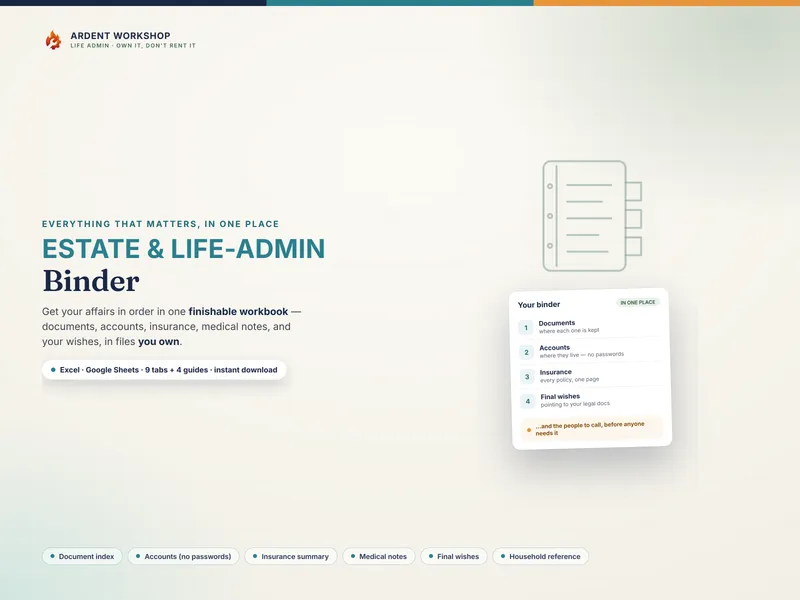
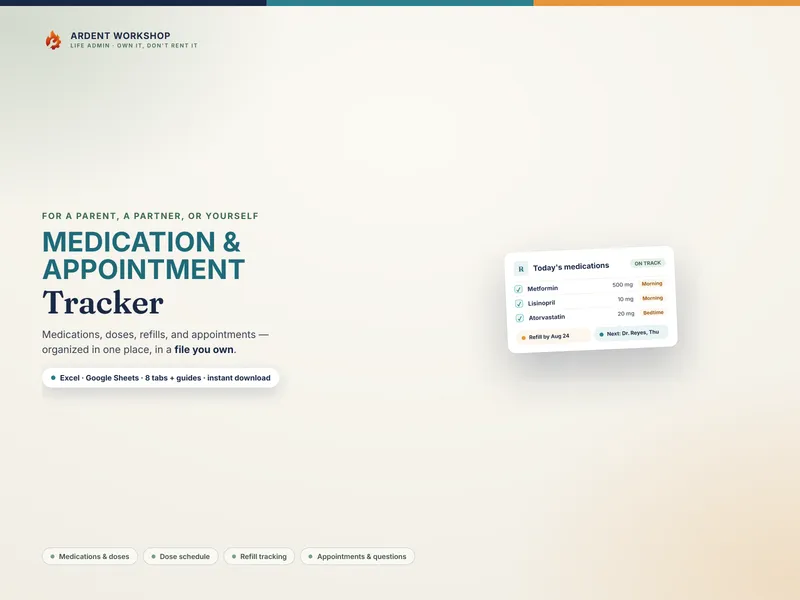
If you’d rather not build the file from scratch, the Estate & Life-Admin Binder is built for exactly this job — a Document Index that records where each signed original is kept and who to call. It deliberately has no password column, since a file like this often ends up printed, emailed, or handed to someone else. And if your student manages a prescription or an ongoing condition, the Medication & Appointment Tracker adds the at-a-glance page a campus clinic or a fill-in helper can act on.
How to Get These Signed in One Sitting
Block ninety minutes. Do it in this order:
- Download your state’s forms. Your state attorney general’s office, your state bar association, and many hospital systems publish free advance directive and POA forms.
- Pull the FERPA release from the student portal while you’re at it — it’s the fastest one and the easiest to forget.
- Fill them out together, but let your student sign. They are the one granting access. Talk through what each form does and doesn’t cover; a student who understands the HIPAA form is far less likely to feel surveilled by it.
- Handle witnesses and notarization per each form’s instructions. Many banks and shipping stores notarize for a few dollars.
- Scan everything. One copy in a cloud folder you both control and keep access-restricted — never a public or open share link, since these scans include a photo ID and insurance details. One printed set that travels with your student, one in your own file.
- Distribute the health forms to the campus health center and the family doctor — not just to yourselves.
Done. You now have, in writing, the access that used to be automatic.
Bonus Level: The August Re-Check
Put a recurring calendar reminder for the same week every August. Three things drift:
- FERPA releases often expire each academic year and need re-signing.
- HIPAA authorizations may carry an expiration date, and your student can revoke one at any time — which is their right, and worth a conversation rather than a discovery.
- Insurance networks change, and so does the campus clinic your student actually uses.
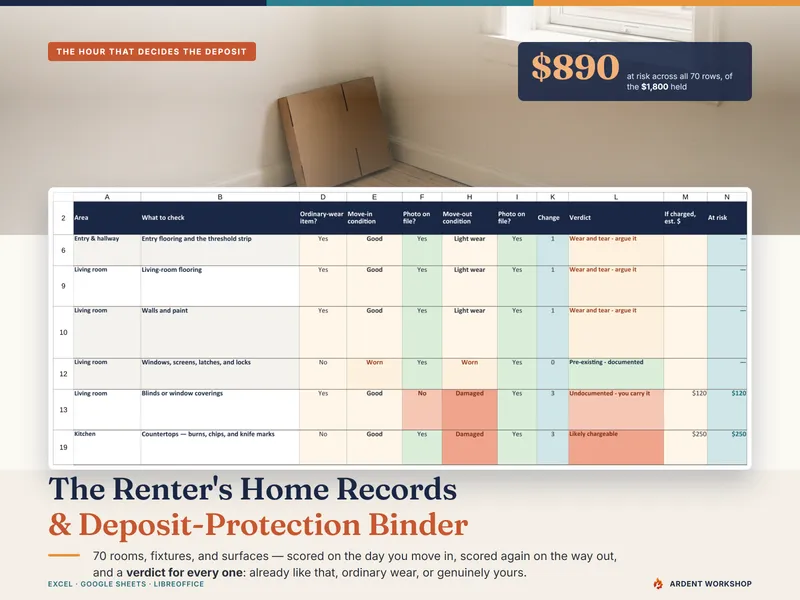
If your student is moving off campus this year, the lease adds a second file entirely — a move-in condition record and a notice-to-vacate deadline that costs real money to miss. That’s what the Renter’s Home Records & Deposit-Protection Binder is for, and it’s a conversation worth having alongside the decision about whether to live on or off campus in the first place.
The takeaway: four signatures and a file folder cost you ninety minutes in August and buy back the ability to help from 900 miles away. Everything else on the dorm list is replaceable. This part isn’t.
Disclaimer: This post is for informational and educational purposes only and does not constitute legal, medical, financial, or insurance advice. Advance directive, power of attorney, and age-of-majority rules vary meaningfully by state, and the forms that are valid where you live may not be valid where your student attends school — consult a licensed attorney, and your student’s health care provider or the campus health center, before making decisions based on this content.