What does PITI stand for?
- P — Principal. The portion of the payment that actually reduces what you owe. Early in a loan this is the smallest slice; it grows every month as the balance falls.
- I — Interest. The lender's charge on the outstanding balance. In the first years of a 30-year loan, most of your payment is interest — the way amortization works — which is why equity builds so slowly at the start.
- T — Taxes. Property tax, collected monthly into an escrow account and paid to your local government when due. This is charged whether or not you have a mortgage — it never goes away, not even after the loan is paid off.
- I — Insurance. Homeowners insurance, also collected into escrow. Where the down payment is under 20%, mortgage insurance is commonly bundled in here too — an extra premium that protects the lender, not you.
Why your PITI payment changes on a fixed-rate loan
Buyers are often surprised when a "fixed" payment rises. The fixed part is the principal and interest; the taxes and insurance are estimates the servicer trues up. When your assessment rises or your insurance premium jumps, escrow is short, and the servicer raises the monthly collection to catch up and stay ahead. On a 30-year loan the P and I never change — and every other letter can.
What PITI leaves out
PITI is a lending concept, not a household-budget concept. It answers "what will the servicer collect?", not "what will this house cost me?" The gap between those questions is made of four categories PITI itself excludes:
- Routine maintenance. Servicing and small repairs, which scale with the home's age and condition. Not optional — deferring it just converts it into a replacement.
- Capital replacements. The roof, the furnace, the water heater, the windows. Each has a service life and a replacement cost, which means each is a bill you are already accruing from the day you close. This is the line most easily left out of a budget.
- Association dues. HOA or condo fees, plus the risk of a special assessment if the association's reserves are thin.
- Utilities. Frequently including water, sewer, and trash that a landlord covered — lines that were invisible when you rented.
Those four are not a rounding error. On the worked example the calculator ships with — a $420,000 home at 6.5% with 10% down — they are most of the distance between a $2,389.22 mortgage payment and a $4,118.80 true monthly cost. That is one illustrative house, not yours, which is exactly why the number is worth calculating for the specific home in front of you rather than assuming.
PITI vs. the true cost of ownership
PITI is a subset of the total cost of ownership. A lender will qualify you against PITI plus your other debts; the house will bill you for everything else. Budgeting to the lender's number is how buyers end up house-poor while technically well within their approval. If you are weighing a purchase against staying put, the same gap is what decides buying vs renting a home.
How to calculate your true monthly cost in 4 steps
Start with a real loan estimate for PITI, then add the missing categories for the specific property. The free True Monthly Cost of a Home Estimator covers the operating side — dues, utilities, insurance, and a maintenance reserve scaled to the home's age — in about a minute, with no email required. The True Cost of Homeownership Calculator adds the fourth category: a capital replacement reserve built component by component, plus thirty years of owning compared against renting and investing the same money.
Whichever you use, the discipline is the same:
- Get the real property tax figure from the county assessor.
- Get a real insurance quote for the actual address.
- Ask the seller for twelve months of utility bills.
- Take the age of every major system from the inspection report, so the replacement reserve is based on what is actually installed.
PITI you can get from a lender in five minutes. The rest is the work that keeps the purchase honest.
Templates that implement this
Tools that go past PITI
5 templates
Workbooks for costing a specific home, comparing houses, and deciding whether to buy at all.
- $14.95 Spreadsheet
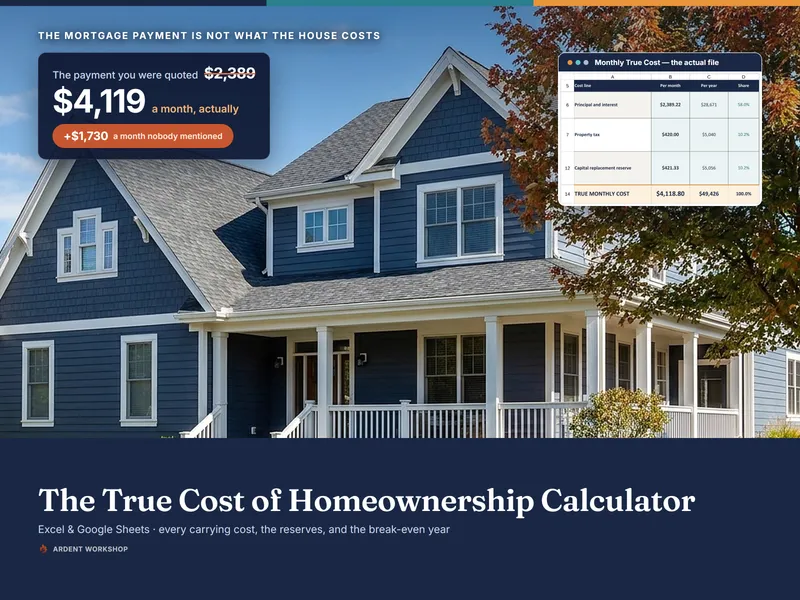
True Cost of Homeownership Calculator — Every Carrying Cost, the Replacement Reserves & the Buy-vs-Rent Break-Even Year (Excel & Google Sheets)
Find what a specific home really costs per month — the mortgage payment plus the seven lines listing sites leave out — and the year owning beats renting.
Big DecisionsView details - $2.95 Excel
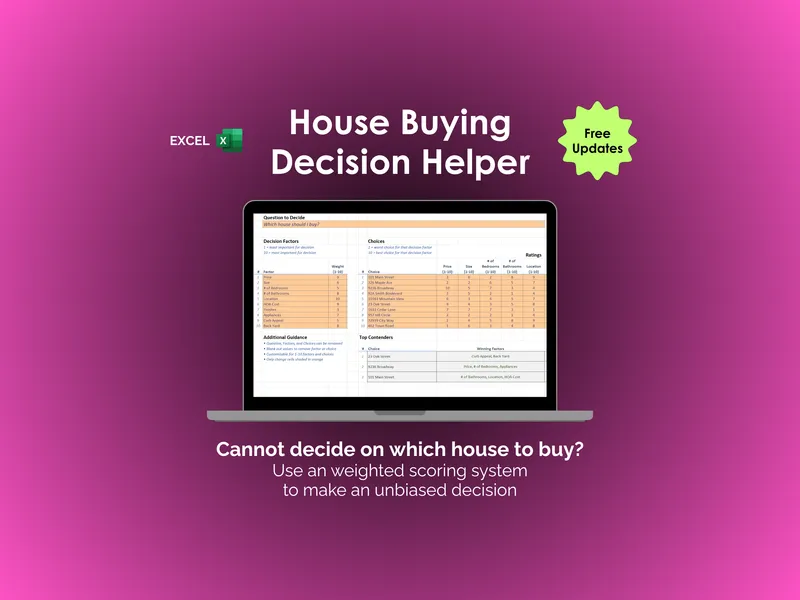
House Buying Decision Helper - Excel
Which house actually wins on the factors you care about? An excel house buying decision helper that scores up to 10 homes against 10 weighted factors.
Big DecisionsView details - $4.45 Excel
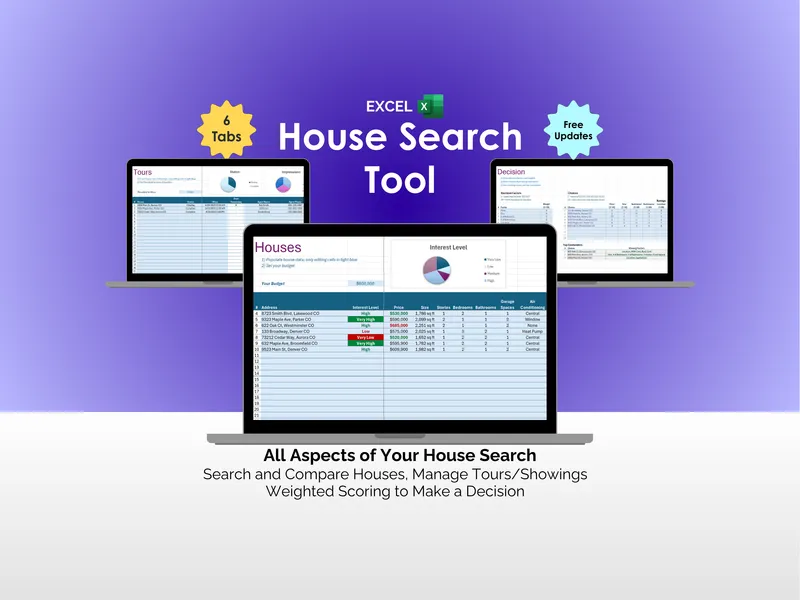
House Search Tool - Excel
Three showings deep and you can't remember which house had the big yard. This excel house search tool pairs every frustration with a fix — compare, tour, decide.
Big DecisionsView details - $4.95 Excel
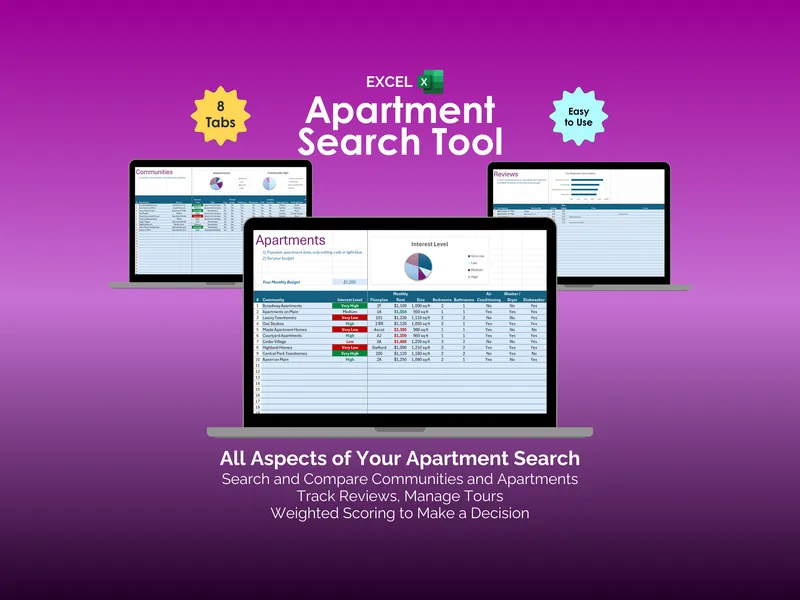
Apartment Search Tool - Excel
Apartment Search Tool is an eight-tab Excel workbook for renters comparing communities, apartment features, reviews, and tours, with weighted scoring to rank a shortlist.
Big DecisionsView details - $2.95 Excel
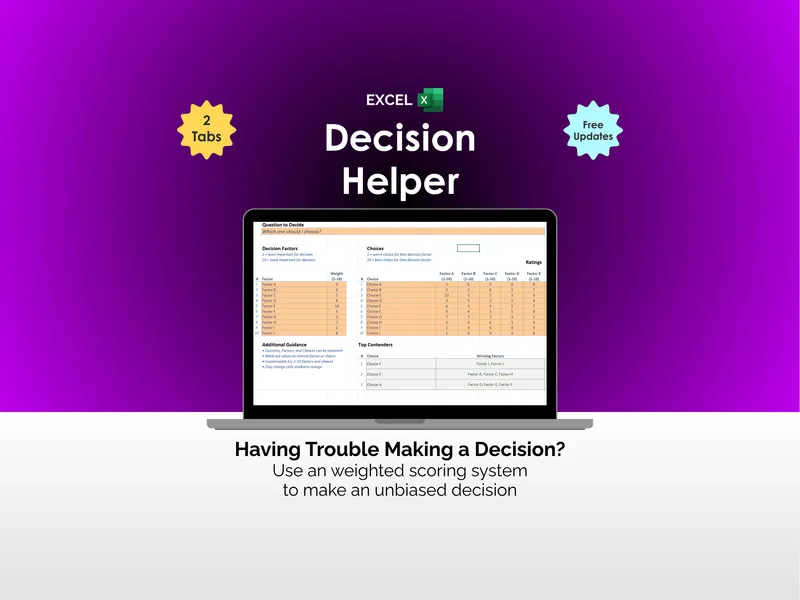
Decision Helper - Excel
Stuck on a big choice with five tabs open and zero clarity? This excel decision helper is a weighted decision matrix template that ranks options for you.
Big DecisionsView details