The mechanics, in plain English
Every month on an amortizing loan, the lender does two calculations:
- Interest for this month = current balance × (annual interest rate ÷ 12). On a $300,000 balance at 6.5%, month one's interest is $300,000 × 0.005417 = $1,625.
- Principal for this month = total payment − interest. If the fixed payment is $1,896, then $1,896 − $1,625 = $271 goes toward principal.
Next month the balance has dropped by $271, so the interest portion shrinks slightly, and the principal portion grows by the same amount. Repeat for 360 months (a 30-year loan) and the final payment lands almost entirely on principal. The total interest paid over the life of the loan, on a $300,000 mortgage at 6.5%, ends up around $382,000 — more than the loan itself.
Why early-loan interest is so high
The interest charge each month is a percentage of the current balance. When the balance is at its peak (the day you sign), the interest portion of your payment is at its peak too. There's nothing sneaky about this; it's the natural consequence of charging interest on the outstanding balance. But it surprises new homeowners regularly: ten years into a 30-year mortgage, the balance has barely budged. That's amortization doing exactly what it was designed to do.
What extra payments actually do
Every dollar of extra principal payment skips the interest that would have accrued on that dollar for the rest of the loan. Because early interest is so high, extra payments made in the first few years are worth dramatically more than the same dollars paid later. A single $5,000 lump-sum payment in year one of a 30-year mortgage at 6.5% can save more than $20,000 in total interest and shave nearly two years off the loan.
There are three common ways to pay extra:
- Recurring extra principal — adding $100 or $200 to every monthly payment. Slow and steady; the most psychologically sustainable.
- One annual lump sum — putting a tax refund or bonus toward principal each year. Fewer behavior changes; bigger visible chunks.
- Biweekly payments — paying half your monthly amount every two weeks. You end up making 26 half-payments = 13 full payments per year (one extra). Easy to set up; reasonably effective.
Amortizing loans vs. other loan structures
- Amortizing. Fixed payments, balance hits zero at maturity. Mortgages, auto loans, most student loans.
- Interest-only. You pay only interest for a period; the balance doesn't decrease. Common in commercial real estate and some HELOCs.
- Balloon. Small payments for a while, then a single large payment at the end to clear the remaining balance.
- Revolving (credit cards). No fixed payoff date. Minimum payments are calculated each cycle. The most expensive structure if balances persist.
Common mistakes when thinking about amortization
- Assuming all early payments are "interest only." They're not. They're heavily interest-weighted, but a small slice still goes to principal.
- Calculating savings on the wrong base. The number that matters is total interest paid, not monthly interest. A small monthly difference compounds across hundreds of payments.
- Refinancing without modeling the schedule. A lower rate on a longer term can cost more in total interest than the old loan. Run the amortization both ways before signing.
- Treating biweekly as "free." Biweekly payments work because you're paying more per year, not because of any banking magic. If you can't afford the extra month, you can't afford it.
Related templates and concepts
A mortgage payoff calculator is the standard tool for modeling amortization, but the same math drives auto loans, student loans, and business term loans — the Loan Payoff Calculator runs it for up to eight auto, student and personal loans at once, and how to read an amortization schedule walks through the table column by column. See the templates for personal finance hub for the rest of the household-finance toolset, or the templates for homebuyers hub if you're in the affordability phase.
Templates that implement this
Templates that model amortization
3 templates
Plug in your rate, term, and balance — see the full month-by-month schedule, compare scheduled vs. extra-payment scenarios, and watch the interest-saved number update in real time.
- $4.95 Excel
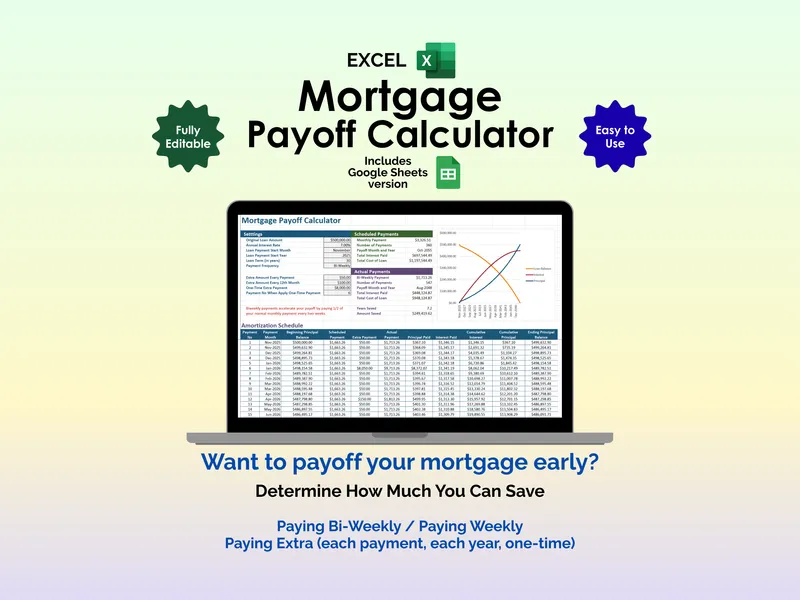
Mortgage Payoff Calculator - Excel
There are two kinds of homeowners: the ones who know what an extra payment buys them, and the ones who guess. This excel mortgage payoff calculator turns the guess into a number.
Personal FinanceView details - $4.95 Sheets
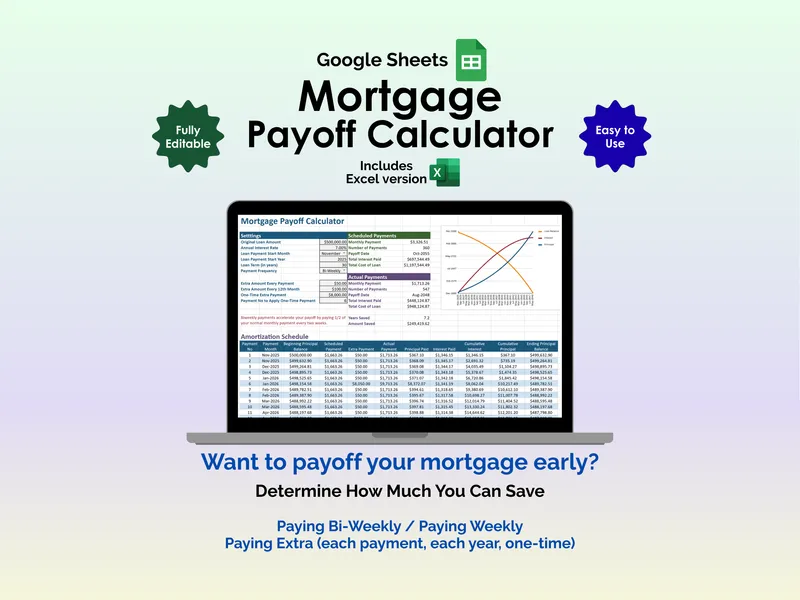
Mortgage Payoff Calculator - Google Sheets
You're staring at the amortization statement wondering what an extra $100 a month actually buys you. This google sheets mortgage payoff calculator shows the years and interest saved.
Personal FinanceView details - $4.95 Spreadsheet
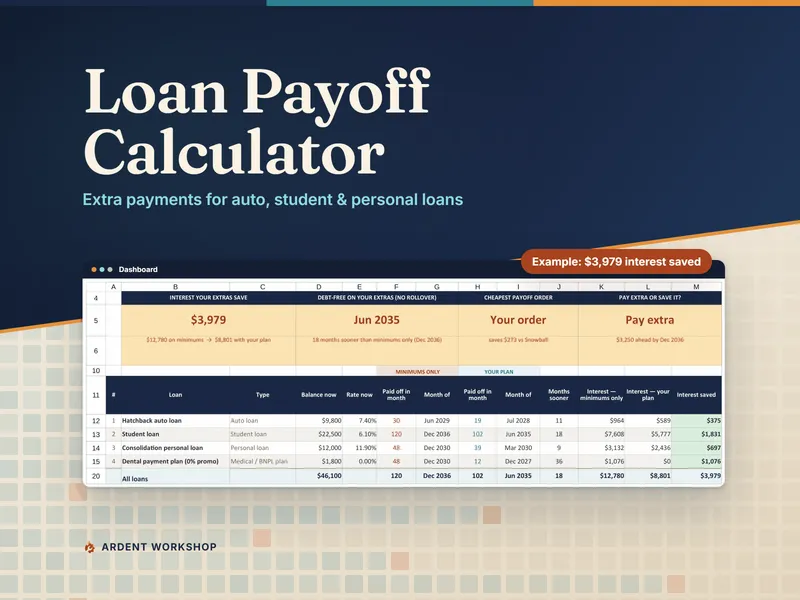
Loan Payoff Calculator - Extra Payments for Auto, Student & Personal Loans (Excel + Google Sheets)
Loan payoff calculator for Excel & Google Sheets: extra payments on up to 8 auto, student or personal loans, three payoff orders and pay-or-save after tax.
Big DecisionsView details