A fair comparison has one rule: both sides must start with the same money. If you buy, the down payment and closing costs go into the house. If you rent, that same cash stays invested and compounds. Any comparison that quietly forgets the second half is not a comparison — it is an argument for buying wearing a spreadsheet.
Should you buy or rent? The quick verdict
- Buying tends to win if you will stay well past the break-even year, rents in your area rise steadily, and you can cover the carrying costs without straining — including the ones nobody quotes you.
- Renting tends to win if your timeline is short or uncertain, the gap between rent and the true cost of owning is wide, or you would be stretched thin by a replacement bill arriving unannounced.
Buying vs renting: what each side actually costs
| Cost | If you buy | If you rent |
|---|---|---|
| Cash up front | Down payment plus closing costs, all due the same day | A deposit and possibly first month |
| The monthly housing payment | Principal and interest — fixed for the whole term | Rent — rises at renewal, in most markets and most years |
| Property tax and insurance | Yours, and both tend to rise | The landlord's; renters insurance covers your contents only and costs far less |
| Maintenance and repairs | Yours, scaled to the home's age and condition | The landlord's |
| Major replacements | Yours — roof, furnace, water heater, windows, on their own schedule | The landlord's |
| Opportunity cost | The return your down payment would have earned invested | None — provided the cash actually stays invested |
| Cost to exit | Commissions and transfer costs, on the full sale price | Give notice and move |
| What you build | Equity, slowly at first, faster as the loan amortizes | Nothing |
| Control and security | Yours to change; a payment nobody can raise | A lease that ends, and a landlord who may sell |
The three costs of buying that get left out
- The interest. In the early years of an amortizing loan most of the payment is interest, not equity — so the difference from rent is smaller than the slogan suggests.
- The opportunity cost. A down payment is cash withdrawn from wherever else it would have grown. Forgoing that growth is a real, ongoing cost that appears on no mortgage statement.
- The cost of selling. Commissions, transfer taxes, and concessions come out of the sale price — on the full appreciated value, on the way out. It is the main reason a short ownership period so rarely pays.
The buy-vs-rent break-even year is the whole decision
Put both paths on one axis — what you would hold at the end of each year, minus everything you paid out of income to live there — and they cross exactly once. Before the crossing, renting and investing left you better off. After it, buying did. That crossing is your break-even year.
Which reduces the decision to one comparison: is break-even sooner than the year you expect to move? Be honest rather than aspirational about that second number. The break-even year is a calculation on the house and your assumptions; how long you will stay is a guess about your life, and it is the guess the whole thing rests on.
Run it on a real house
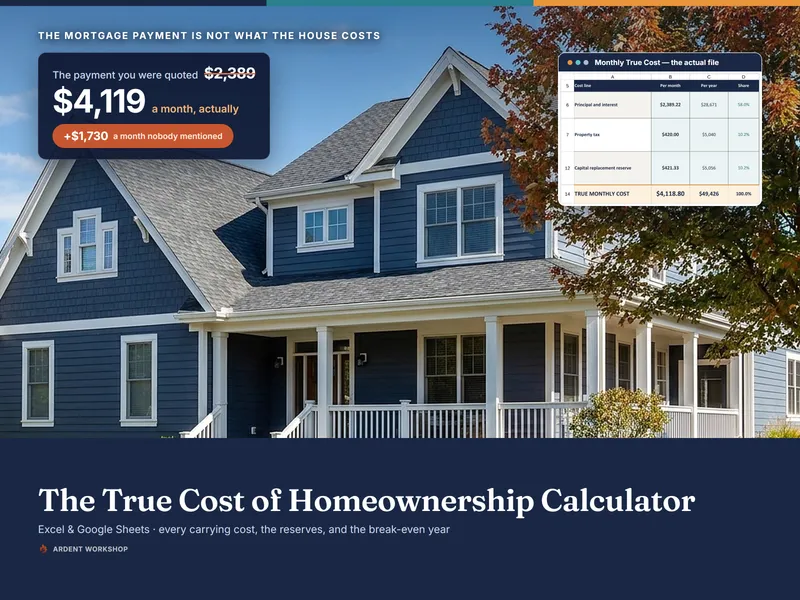
Break-even moves by years when you change a single assumption, so the only version of this comparison worth trusting is one you run yourself on a specific property with your own numbers. The True Cost of Homeownership Calculator does exactly that: it costs the home line by line — including a replacement reserve built component by component — then runs thirty years of owning against renting and investing the same money, and returns the break-even year and whether your planned stay clears it.
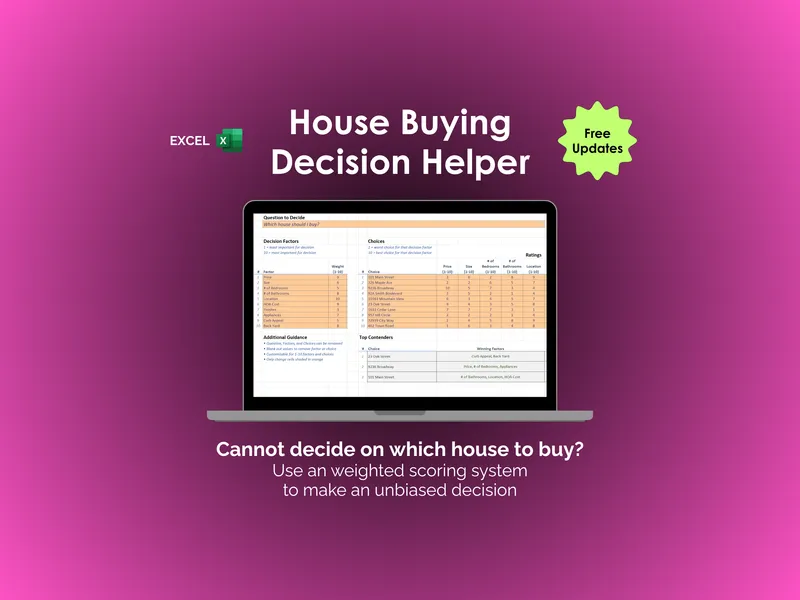
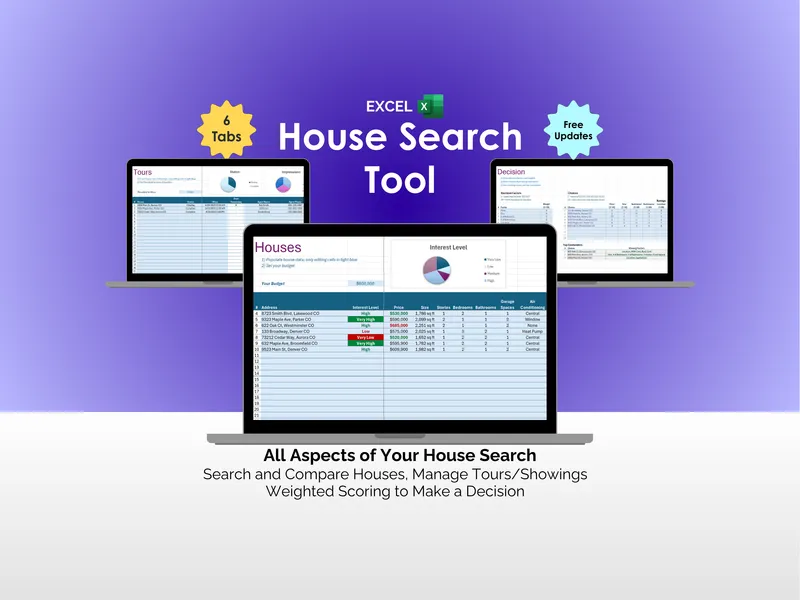
If you just want the monthly number first, the free True Monthly Cost of a Home Estimator gets you the past-the-mortgage figure in about a minute, with no email required. Either way, the assumptions stay in cells you control — because appreciation, rent growth, and investment returns are unknowable, and a model that hides that from you is not being honest.
Related reading: what PITI is and why it is not the cost of a home, and total cost of ownership — the framework this comparison sits inside.
Frequently asked questions
- Is renting really throwing money away?
- No — it is buying housing for a year, the same way a mortgage payment buys housing for a month. The slogan survives because it compares rent against the whole mortgage payment, as if all of that payment built equity. It does not. In the early years of an amortizing loan most of the payment is interest, which is as gone as rent is, and buying adds costs renting never has: closing costs, maintenance, replacement reserves, and the commissions you pay on the way out.
- What is the break-even year?
- It is the first year at which owning has left you financially ahead of renting the same home and investing the money you did not put down — after accounting for the cost of selling. Before that year, selling would leave you behind. After it, buying was the better financial call. The break-even year depends entirely on your inputs: the price, the rate, how fast rent rises, what the home appreciates, and what your down payment could have earned invested.
- How long do I need to stay for buying to pay off?
- There is no universal number, and any source that gives you one without your inputs is guessing. The honest answer is that break-even is a calculation, not a rule of thumb — it moves by years when you change the appreciation rate or the rent-growth rate. What is reliable is the direction: a short stay rarely pays, because you pay the cost of selling on the way out regardless of how briefly you owned.
- Does buying still win if the home does not appreciate?
- In many runs it still does, but much later — because the flat mortgage payment keeps winning ground against rent that rises every year, and principal repayment still builds equity. This is the single most useful test you can run: set appreciation to zero and read the break-even year again. If the decision only works when the house appreciates strongly, you are not buying a home so much as making a leveraged bet on your local market.
- What does a buy-versus-rent comparison leave out?
- Everything that is not money. Stability, a school district, a yard, the freedom to change the place, and the specific relief of a payment nobody can raise on you are real and often decisive — and none of them have a dollar value. A financial model cannot price them. What it can do is tell you what they cost, so you can decide whether they are worth it with your eyes open rather than discovering the price afterward.