Everyone saves for the down payment. Almost nobody saves for the second number — the one that shows up on page two of the Closing Disclosure, three days before you get the keys, and quietly asks for several thousand more dollars on top of everything you’d already budgeted.
That second number is your closing costs. And here’s what most first-time buyers don’t realize until they’re staring at the wire-transfer instructions: closing costs aren’t one fee. They’re a stack of fifteen-to-twenty separate charges from four different parties, bundled into a single eye-watering total. Pull back the curtain on that total and you’ll understand exactly where every dollar goes — and which dollars you can actually push back on.
Let’s open the bundle.
What closing costs actually are
Closing costs are the collection of fees, taxes, and prepaid expenses you pay to finalize a home purchase — separate from, and in addition to, your down payment. They’re due on closing day, when ownership legally transfers to you.
According to Freddie Mac’s homebuying cost guidance (opens in new tab), closing costs generally run between 2% and 5% of the purchase price. On a $400,000 home, that’s $8,000 to $20,000 — money you need in cash, on top of your down payment, on the day you close.
Why such a wide range? Because closing costs aren’t a single fee with a single price. They’re a bundle, and the contents of that bundle change depending on your lender, your state, your insurance, and the calendar date you happen to close on. The Consumer Financial Protection Bureau notes (opens in new tab) that as the buyer, you “generally pay all of the costs associated with that transaction” — though some can be negotiated onto the seller.
Here’s the part the rule of thumb hides: those costs fall into four distinct buckets, and only one of them is actually negotiable.
That one bucket belongs to the lender, and it is where the recoverable money is — which is why the Mortgage / Loan-Offer Decision Helper exists to rank competing Loan Estimates on what borrowing actually costs, rather than on the rate. But you need the map before the negotiation, so here are the four buckets.
The four buckets every closing cost falls into
Every line item on your Closing Disclosure belongs to one of four categories. Knowing which bucket a charge lives in tells you instantly whether you can shop it, negotiate it, or just have to pay it.
| Bucket | What it pays for | Can you control it? |
|---|---|---|
| Lender fees | Processing and underwriting your loan | Sometimes — shop lenders |
| Third-party services | Appraisal, title, inspection, settlement | Partly — shop some providers |
| Government charges | Recording the deed, transfer taxes | No — set by law |
| Prepaids & escrow | Property taxes and insurance paid in advance | No — but timing affects the amount |
The first two buckets are where buyers leave money on the table by not shopping around. The last two are fixed costs that surprise people precisely because nobody warns them. Let’s go bucket by bucket.
Bucket 1: Lender fees — what the bank charges to make the loan
Lender fees are what your mortgage company charges to process, underwrite, and fund your loan. This is the bucket most people picture when they hear “closing costs,” and it’s the one you have the most power over — because you chose the lender.
The headline item is the loan origination fee, which Freddie Mac puts at typically 0.5% to 1% of the total loan amount (opens in new tab). On a $360,000 loan, that’s $1,800 to $3,600 just to originate the mortgage. Around it cluster a handful of smaller charges:
- Application fee — covers the cost of starting your file
- Underwriting fee — the lender’s review of your finances and the property
- Processing fee — administrative handling of the loan
- Discount points (optional) — prepaid interest you can buy to lower your rate
Here’s what most buyers don’t realize: these fees vary meaningfully from lender to lender for the exact same loan. The mortgage interest rate gets all the shopping attention, but the origination and junk fees are negotiable too — and they’re itemized on the Loan Estimate every lender is required to give you. When you’re comparing two mortgage offers side by side, run both through a tool like the Mortgage / Loan-Offer Decision Helper so you can see how a lower rate but higher fees actually nets out over the years you plan to stay. (Comparing the offers line by line is its own job, and we’ve written it up separately.)
Bucket 2: Third-party services — the people who verify the deal
Third-party fees pay the independent professionals who confirm the home is worth what you’re paying and that the title is clean. Your lender requires most of these, but the providers are outside companies — which means some are shoppable and some aren’t.
The big ones, with typical ballpark ranges — your actual quotes will vary by market and provider:
- Appraisal ($500–$800) — an independent valuation confirming the home is worth the loan amount. Required by your lender; you generally can’t skip it.
- Home inspection ($300–$600) — optional but strongly recommended; it’s your protection, not the lender’s.
- Title search — confirms the seller actually owns the home free of liens or competing claims.
- Title insurance — a one-time premium protecting against ownership disputes that surface later. There are two policies: a lender’s policy (required) and an owner’s policy (optional, but it protects you, not the bank).
- Settlement / closing / attorney fees — what the escrow company or closing attorney charges to actually run the closing.
Title insurance is the sleeper cost here. It can run $1,000–$3,000+ combined, and in many states you have the legal right to shop for the title company rather than accepting your lender’s default. Few buyers know that, so few do it.
Bucket 3: Government charges — the fees you can’t argue with
Government charges are the taxes and recording fees that local and state authorities collect to make the sale official. This bucket is completely non-negotiable — it’s set by law — and it’s the single biggest reason closing costs vary so wildly from one state to the next.
Two line items live here:
- Recording fees — a modest charge (often $50–$250) for the county to record the new deed and mortgage in public records.
- Transfer taxes — a tax on the transfer of property ownership, charged by the state, county, or city. This is the wild card.
How wild? Bankrate’s 2025 analysis of average closing costs (opens in new tab) found that total closing costs range from under 1% of the sale price in some states to nearly 3% in others — and transfer taxes are the main driver. Washington, D.C. topped the list at an average of $17,545 (2.39% of the sale price), while South Dakota came in lowest at $1,551 (0.46%). Same house, wildly different closing day, depending entirely on the line on the map.
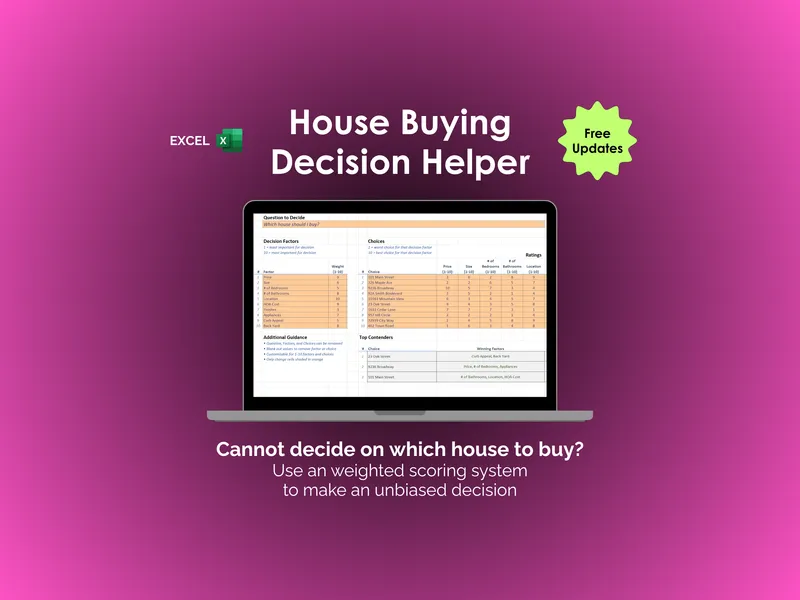
If you’re choosing between homes in different counties or states, those transfer taxes belong in your comparison — not as a footnote, but as a real cost difference. A side-by-side tool like the House Buying Decision Helper lets you weight total cost of ownership rather than fixating on the sticker price of two listings that look identical until closing day.
Bucket 4: Prepaids and escrow — the bucket that ambushes everyone
Prepaids are costs you pay in advance at closing — chiefly property taxes and homeowners insurance — so your lender can fund your escrow account from day one. This is the bucket nobody warns first-time buyers about, and it’s often the largest single chunk of the whole bill.
Here’s the logic the lender is following: your mortgage payment includes a slice for property taxes and insurance, which the lender holds in escrow and pays on your behalf. But on closing day, that account is empty — so they front-load it. The CFPB lists these prepaid items as a standard part of closing: property taxes, homeowners insurance, and prepaid interest (opens in new tab) up to your first payment.
What lands in this bucket:
- A full year of homeowners insurance, paid upfront ($1,500–$2,500+ depending on the home and region)
- Several months of property taxes, prepaid into escrow so the account has a cushion
- Prepaid mortgage interest — the interest accruing between your closing date and your first monthly payment
- An escrow reserve — an extra cushion (often 2 months) the lender keeps on hand
Two things make this bucket sneaky. First, it isn’t really a “fee” — it’s money you’d owe eventually anyway, just collected early. Second, the amount depends on when in the month you close. Close near the end of the month and you prepay less interest; close at the start and you prepay nearly a full month. It’s the one closing cost you can shrink just by picking your closing date wisely.
A worked example: closing costs on a $400,000 home
Let’s put illustrative numbers on it. The figures below are a sample breakdown to show how the buckets stack up — your actual numbers will differ by lender, state, and insurer. Assume a $400,000 home with a $360,000 loan (10% down):
| Line item | Bucket | Illustrative cost |
|---|---|---|
| Loan origination (0.75%) | Lender | $2,700 |
| Underwriting + processing | Lender | $900 |
| Appraisal | Third-party | $600 |
| Home inspection | Third-party | $450 |
| Title insurance (lender’s + owner’s) | Third-party | $1,900 |
| Settlement / closing fee | Third-party | $800 |
| Recording fees | Government | $150 |
| Transfer taxes | Government | $1,600 |
| Homeowners insurance (1 yr prepaid) | Prepaid | $1,800 |
| Property taxes (escrow setup) | Prepaid | $2,400 |
| Prepaid interest | Prepaid | $700 |
| Total | — | ≈ $14,000 |
That’s 3.5% of the purchase price — squarely inside Freddie Mac’s 2–5% range, and roughly $14,000 you need in cash on top of your $40,000 down payment. The buyer who budgeted only for the down payment just discovered a $14,000 gap three days before closing.
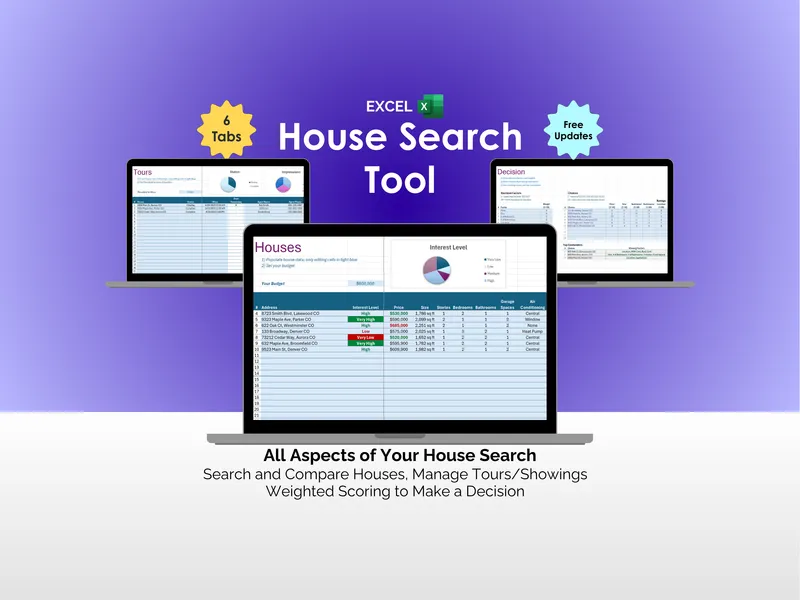
This is exactly why the down payment is the wrong number to anchor on. The number that determines whether you can actually close is down payment + closing costs + moving and setup costs — and that full picture is what a planning tool like the House Search Tool is built to keep in front of you while you’re still comparing listings, not after you’ve signed a contract. (If you haven’t pressure-tested the monthly payment yet, our 5-minute house affordability check is the step that comes before this one — and if you’re still weighing whether to buy at all this year, start with our 2026 buy-or-wait framework.)
Why the bill is bigger than the “2–5%” rule suggests
The 2–5% rule is a useful starting point, but three things push real-world closing costs toward the top of that range — or past it.
- Prepaids scale with the calendar and the property. A high-tax county or a pricey insurance market inflates the prepaid bucket independently of your loan.
- Transfer taxes are geographic luck. As the Bankrate state data (opens in new tab) shows, where you buy can swing your total by tens of thousands of dollars on an identical home.
- Lender fees hide in plain sight. “Junk fees” — vague processing, courier, and administrative line items — add up, and many buyers never compare them across lenders.
The national average total, per Bankrate, was about $4,661 in their 2025 dataset — but that figure excludes prepaid items like insurance and property-tax escrow, which is part of why it lands below the 2–5% rule. For a median-priced home in a transfer-tax state, plan closer to the 3–5% end.
What you can actually do about it
You can’t dodge closing costs, but you can shrink them. Here’s where the leverage actually is:
- Shop lenders on fees, not just rate. Compare the Loan Estimate line by line. Origination and processing fees are negotiable, and they differ for the same loan.
- Shop title and settlement services. In many states you can choose your own title company instead of the lender’s default — and the difference can be hundreds of dollars.
- Ask the seller for a credit. In a buyer-friendly market, sellers will sometimes agree to cover a percentage of closing costs as part of the deal. The CFPB confirms that, depending on the contract, the seller may pay some of these costs (opens in new tab). On a financed purchase, a seller credit is capped by your loan program and can only offset costs you actually have — and it is not always the better ask: repair credit vs price reduction after a home inspection runs the math on taking the same money as a lower price.
- Time your closing date. Closing later in the month reduces prepaid interest.
- Check for first-time buyer assistance. Many state and local programs offer closing-cost grants or low-interest loans for eligible buyers.
The buyers who do best aren’t the ones who avoid closing costs — there’s no avoiding them. They’re the ones who saw the full number coming, budgeted for it from the start, and shopped the two buckets that are actually shoppable.
The bottom line
Closing costs are not a surprise fee — they’re a predictable bundle of fifteen-to-twenty charges across four buckets: lender fees, third-party services, government charges, and prepaids. Expect them to run 2–5% of the purchase price, lean toward the higher end in transfer-tax states, and budget for them as a separate line item from your down payment from the very beginning.
The buyers who get ambushed are the ones who only ever saved for the down payment. The buyers who close calmly are the ones who knew the second number was coming — and ran the full math before they ever fell for a listing.