Six records cover most of the moments somebody asks you for paperwork about your animal: identity and microchip, vaccinations, medications, vet history, the care routine, and emergency contacts with a treatment authorization. Collecting them is not the hard part — you already have them. Getting them somewhere a second person can open is.
Because you do have them. A vaccination certificate in a drawer. A discharge sheet folded into a bag. A dose written on a bottle in the cupboard. The feeding routine in your head, and nowhere else.
All of it describes what already happened, and all of it is filed where you are. The moments someone needs it are the moments you are somewhere else — at a boarding counter, on a plane, or not picking up while an emergency clinic decides what to do next.
The six pet records worth keeping
Six records earn a place; everything else — grooming receipts, training notes, which toy is the good toy — is nice to have. They are identity, vaccinations, medications, vet history, the care routine, and who may authorize treatment.
| Record | Who asks for it | What to capture |
|---|---|---|
| Identity & microchip | Shelters, clinics, airlines, whoever finds them | Chip number, the registry holding it, breed, color, distinguishing marks, a current photo |
| Vaccination record | Boarding, groomers, daycare, travel | Date given, what it covers, how long it stays valid, the clinic, the lot number off the certificate |
| Medications & preventatives | Sitters, boarders, any vet who is not yours | Drug, dose, time of day, what it treats, days of supply left |
| Vet history | A new or emergency vet, at intake | Practice name and number, chronic conditions, allergies, surgeries, last visit |
| Care routine | Whoever is holding your keys | Food and amount, feeding times, walks, what frightens them, what they will steal |
| Emergency contacts & authorization | The clinic, at 9pm, when you do not answer | Your vet, the nearest 24-hour clinic, two humans who can act, and a spending ceiling |
Read down the middle column and the pattern is hard to miss: almost nobody asking is you. That is the entire reason these have to exist outside your head — and it makes the answer to “where” the same for all six: somewhere a second person can open without you. That one rule is what separates a pile of paperwork from a pet records binder.
Your microchip number is not a record
A microchip stores a number. It does not store your name, your address, or your phone number.
That number only reaches you if it has been registered with a database, and registration is a separate act from the implant. AAHA’s pet microchip registry lookup tool (opens in new tab) is blunt about the division of labor: it “does not disclose pet owner information or allow pet owners to update their pets’ microchips. It is a lookup tool to help identify the registry where a pet’s microchip is registered.” The same page notes that “occasionally, microchips are implanted but not registered to specific pets.”
So keep two things, not one: the chip number, and the registry that holds it. Re-check it after a move or a new phone number — a chip registered to a number you gave up in 2019 points nowhere.
Write down who is allowed to approve treatment
Somebody who is not the owner generally cannot authorize veterinary treatment on their own, and a clinic that cannot reach you has no direction on cost. Those two things together are how a sitter ends up at a front desk at 9pm holding a sick animal and no authority.
Four lines fixes it: who may bring the animal in, what you authorize them to approve, a spending ceiling, and two numbers to try. It is a practical handover note rather than a legal document, and the clinic may still call to confirm — but it turns a stall into a decision.
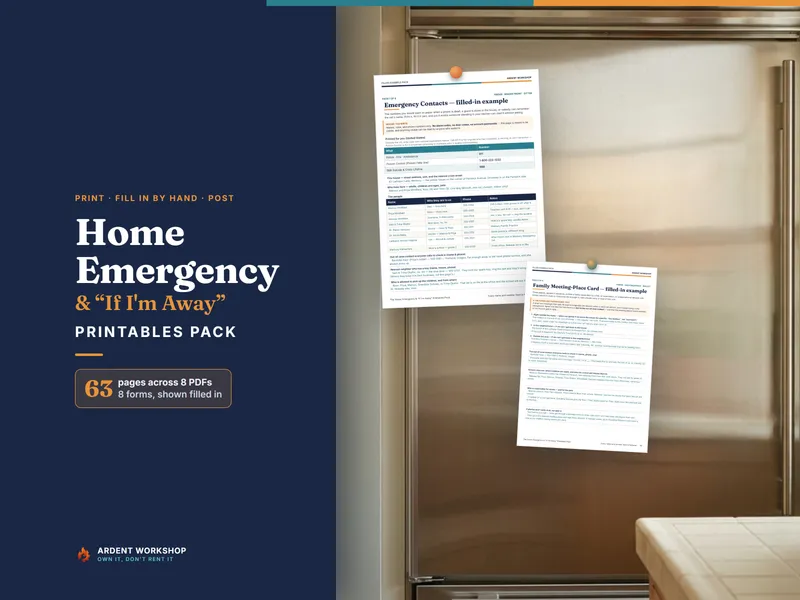
If you would rather have the page than write it, our free printable pet sitter sheet already carries that authorization block, and our walkthrough on how to write pet sitter instructions covers what else belongs on it. The Pet Care & Records Binder keeps the same page beside the sitter handoff sheet so the two go out together.
What changes when you travel
Travel converts your pet’s records from a convenience into a requirement. Two rules worth knowing before you book anything:
- Leaving the country. USDA tells owners to “contact a USDA-accredited veterinarian as soon as you decide to travel,” who will “help you determine your destination country’s pet entry requirements” and assist you through obtaining a USDA-endorsed pet health certificate (opens in new tab). The accredited vet issues that certificate, and per USDA’s live-animal export FAQ (opens in new tab), “many countries require the Federal government to stamp or endorse the health certificate before an animal departs from the United States.” The same FAQ is blunt about timing: “The process could take a few weeks to many months, depending on the importing country’s requirements.”
- Entering or returning to the US with a dog. Under CDC’s dog entry requirements (opens in new tab), as of its August 27, 2026 update, “all dogs entering or returning to the U.S. must be accompanied by a CDC Dog Import Form receipt” — and every dog must also be “at least 6 months of age” and carry a microchip that “must be detectable with a universal scanner.”
Both have the same consequence. The microchip number stops being a nice-to-have and becomes a document number that has to match across every piece of paperwork you are carrying — which is a problem if it lives only on a certificate in a drawer.
The five-minute version
Do this today, in whatever you already use:
- Photograph every certificate in the drawer, plus a current photo of the animal.
- Write the chip number and the registry name in the same place as the photos.
- List every medication with its dose and its time of day.
- Write the feeding routine as it happens today — food, amount, times, and the one thing that frightens them.
- Add your vet and the nearest 24-hour emergency clinic, with numbers, plus any chronic condition or allergy in one line.
- Type four lines authorizing someone to act — who may bring the animal in, what they can approve, a spend cap, and two people to call, with numbers.
Then share it with the people who actually need it — your sitter, your boarder, your vet — rather than putting it anywhere public, and tell the two people you named as emergency contacts that you have named them.
That is the floor, it beats a drawer and a phone, and it fits in a coffee break.
Where this should actually live
The five-minute version has one weakness: it is still a pile of what already happened. It cannot tell you that a booster lapsed last month, or that two pets are due in the same week.
That is the job the Pet Care & Records Binder does. Give it a last-done date and a repeat interval and it computes the next due date, counts the days, and flags the line Overdue or Due Soon. Pick a pet from a dropdown and the sitter handoff sheet fills itself in — identity, microchip, feeding, medications, your vet, the emergency clinic — with the treatment authorization and its spend cap on the same page.
It is a file you own rather than a subscription you rent, which matters for records that have to outlive whichever app was popular the year you adopted — a trade-off worth understanding either way, and we set it out in pet binder vs pet app. And if what you are missing is the financial record rather than the medical one, the Pet Insurance Plan Decision Helper is built for that math. Same logic as a family emergency binder for the humans, or the habit behind tracking family medications, which will carry the animals too.
Do the five-minute version today. When you want the dates worked out for you instead of remembered, that is what the Pet Care & Records Binder is for.
Common questions about pet records
How long should I keep my pet’s vet records?
Keep them for the life of the animal, and then some. Chronic conditions, past surgeries and drug reactions matter to a vet years later, and an insurer assessing a claim may ask about a condition first noted long before the policy started. For the household paper around them, see how long to keep documents.
What does a boarding facility usually ask for?
Proof of vaccination. Requirements vary by facility, so confirm with yours rather than assuming — some want the certificate still valid on the last night of the stay, not just the first, so check the dates against your return date.
Where should pet records be stored?
Somewhere that is not only on your phone and not only in a drawer — shared with the people who need it, not posted anywhere public. The test is whether a sitter, a boarder or an emergency clinic could get what they need while you are unreachable, which rules out anything that lives behind your face ID. In practice that means one file you and a sitter can both open — see where this should actually live.