Everything you know about your animals is already written down somewhere. A vaccination certificate in a drawer. A discharge sheet folded into a bag. A dose on a bottle in the cupboard. The feeding routine in your head, and nowhere else.
All of it is a record of what already happened. None of it tells you what’s next — and none of it is any use at all to the person holding your keys while you’re away.
The Pet Care & Records Binder is one spreadsheet that fixes both: 15 tabs for Excel, Google Sheets or LibreOffice, plus three PDF guides, holding every animal in the house — and working out what each one is due next.
It works out what every pet is actually due
Give it two things — when something was last done, and how often it repeats — and it does the rest. The next due date, the days remaining, and a status word: Overdue, Due Soon, Not done yet, or OK.
Then the Care Dashboard puts the whole household on one screen, a row per pet. Which animal needs something. What it is. When. How much you’ve spent on each of them this year. Underneath it, a single queue pools the next eight care items from across every pet and sorts them by date, so you can stop asking “how is each one doing” and just read down the list.
The warning window scales with the interval, which sounds like a detail and isn’t. A flat thirty-day rule leaves a monthly flea preventative permanently amber — and once a color always means “warning,” you stop seeing it. So a monthly item warns about a week ahead, a quarterly one about three weeks, and anything half-yearly or longer gets the full thirty days.
The sitter handoff sheet fills itself in
Pick a pet from one dropdown at the top of the page. Everything below it arrives on its own: the name, the breed, the age, the markings, the microchip number and who it’s registered with, the temperament and the warnings a stranger genuinely needs. The feeding schedule, meal by meal, with amounts and add-ins and what treats are allowed — up to four meals on the printed page. Current medications with the dose, how often, and when — up to six of them. Your regular vet and a 24-hour emergency hospital, both matched by their role on your contacts tab and printed by name. And the live vaccination status: current, nothing recorded yet, one or more expired, or due soon — and on due soon, a prompt to check the date still covers the whole stay.
Print it. Sign it. Hand it over with the key.
The vet treatment authorization a sitter needs
At the bottom of that page is a veterinary treatment authorization with a spend cap you set yourself.
This is the part that matters and the part that gets forgotten. A caregiver who isn’t the owner generally can’t authorize veterinary treatment on their own, and a clinic that can’t reach you has no direction on how — or whether — it’s going to be paid. Put those two together and an ordinary emergency stalls at the front desk over a question nobody in the room can answer.
Name an amount you’re comfortable with. Name a second contact who can decide if you’re unreachable. Sign it. It’s a practical handover note rather than a legal document, and a clinic may still call to confirm — but it turns “we can’t do anything until we find the owner” into “go ahead.”
What each animal actually costs you
Log a line when you pay for something and the Cost of Care tab totals it — per pet, per category, for the year, and per month, against a budget you set. Eight categories, separated on purpose: the routine spending you can plan for, and the spending you can’t.
“Per month” divides by the months that have actually elapsed rather than by twelve, so a January figure isn’t flattered and a December one isn’t alarming. Give it one full calendar year and you’ll have the number nobody has when the insurance question comes up.
Gotcha Days, birthdays and the milestones nobody writes down
The Pet Register carries the adoption date — the Gotcha Day — alongside the birthday, and works out how long you’ve had them. The Care Dashboard carries every pet’s next Gotcha Day, and the Milestones tab shows the next one in the house. That tab also holds the firsts, with their age on the day computed for you, because that’s the detail nobody writes down and everybody later wishes they had.
The same file that flags an overdue booster also remembers the day they came home.
Own it, don’t rent it
A blank spreadsheet asks you to build all of this yourself. A pet app asks you to keep paying, and can be discontinued or acquired or repriced while your animals’ whole history sits inside it.
This is the file in between. The structure is already built, the arithmetic is already done, and there’s nothing to renew. It opens in Excel, Google Sheets and LibreOffice, and the Google Sheets version is a real Sheet you copy with one click — not an .xlsx you have to import and hope survives the trip.
Download it once. Keep it for as long as your animals need it.
The free pet sitter sheet, and what the binder adds
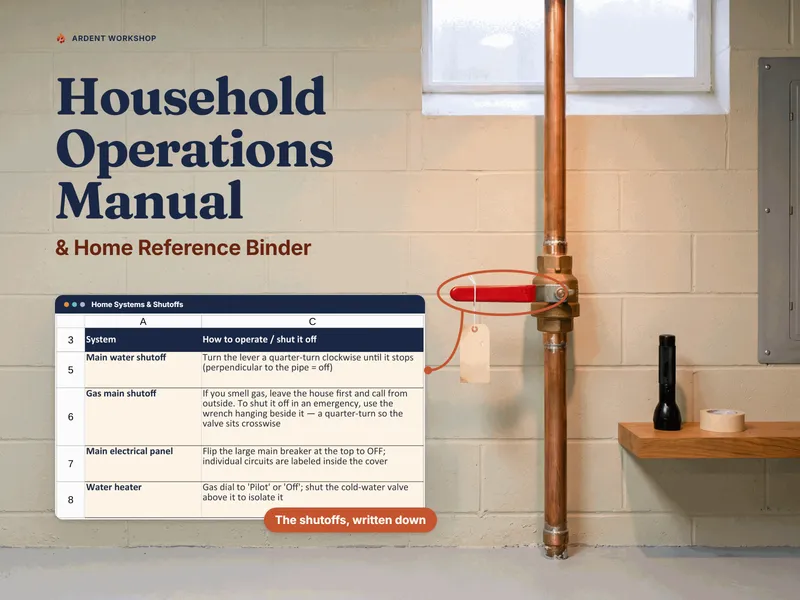
The free Pet Sitter Sheet is the handoff page on its own — printable, no signup, one dog or cat per copy. You fill it in by hand before every trip. The Pet Care & Records Binder is the version that fills it in for you, from records you already keep, for every animal in the house. And the Household Operations Manual & Home Reference Binder does the same job for the home your animals live in.
A record you keep — not veterinary advice
The Pet Care & Records Binder is a record-keeping tool, not veterinary, legal or financial advice. Every example in it is illustrative — your veterinarian sets your pets’ actual schedules, doses and intervals, and state and local law sets the rabies requirement where you live. This file stores what you were told; it doesn’t decide it.