Here’s what you’ll have in five minutes: a realistic number for how much water you actually need in summer, a faster signal than counting ounces, and a 30-second tracking habit you’ll actually keep.
The “eight glasses a day” rule you’ve heard your whole life isn’t based on much. The real target is higher, it’s different for everyone, and in summer heat it climbs again. The good news: you don’t need an app, a smart bottle, or a math degree to hit it. You need one number and one habit.
Let’s get to it.
How Much Water Do You Actually Need? (Forget the 8 Glasses Rule)
For most adults, daily water needs are closer to 9–13 cups of fluid than the old “eight glasses.” The U.S. National Academies set an adequate total-water intake of about 2.7 liters (91 oz) per day for women and 3.7 liters (125 oz) for men — and that’s a baseline, not a ceiling (National Academies dietary intake report (opens in new tab)).
Two things make that number less scary than it looks:
- It’s total water, not glasses you have to pour. About 20% comes from food — fruit, soup, yogurt, salad — so roughly a fifth of your target is already covered before you fill a single glass.
- All fluids count. Coffee, tea, milk, and sparkling water all contribute. You’re not chasing eight glasses of plain water on top of everything else.
So the honest answer to “how much water do I need” is: most people land around 2.7–3.7 liters of total fluid a day, minus what they get from food — call it 9–12 cups you actually drink (an 8 oz cup being the unit here). That’s your starting line.
How Much Extra Water Do You Need in Summer Heat?
In hot weather, you need more — because you’re losing more. Those National Academies numbers assume a temperate climate and moderate activity. Heat and sweat push the target up, sometimes well beyond the baseline.
You don’t need to calculate it precisely. Use these summer add-ons:
| Situation | Add on top of baseline |
|---|---|
| Sitting in the heat / mild sweating | +1–2 cups |
| Active outdoors (yard work, walking, sports) | +2–4 cups |
| Sustained exertion in high heat | A cup of water every 15–20 minutes while you’re at it |
That last one isn’t a guess — it’s the CDC’s heat-stress hydration recommendation for people working in the heat (opens in new tab): one cup every 15–20 minutes, because sipping steadily beats chugging a bottle once an hour. The bigger point: don’t wait until you’re thirsty. By the time thirst hits, you’re already behind.
The 30-Second Way to Track Your Water (The Move)
Stop counting ounces. Count refills of one container. This is the whole trick. Counting every glass fails because the unit keeps changing — a sip here, a gulp there, a mug you lost track of. Fix the unit and the math does itself.
Here’s the move:
- Pick one container and learn its size once. Your water bottle, a specific glass, your travel tumbler. Fill it, check the volume (most bottles list it; a measuring cup settles it in ten seconds). Say it’s 24 oz.
- Set your refill target. If you need ~88 oz of drinking water on a hot day and your bottle is 24 oz, that’s 4 refills. One number to remember.
- Make one mark per refill. A tally on a sticky note, a row in a tracker, a hair tie moved up the bottle — anything you mark the instant you refill. Don’t track sips. Track refills.
That’s it. You’re no longer doing arithmetic all day; you’re hitting a count of four. On a brutal day, bump it to five. The container is the measuring cup, the refill is the unit, and the daily mark is the only habit you have to keep.
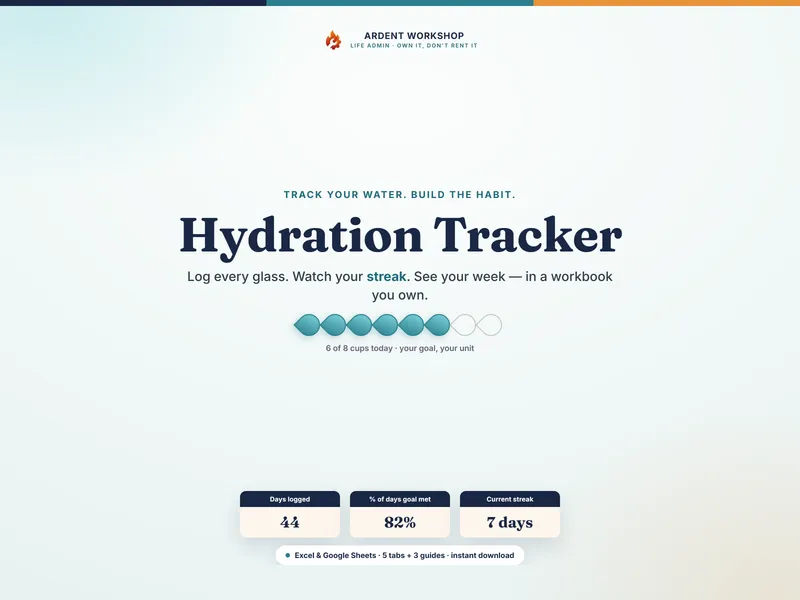
If you’d rather see the pattern over a week — and spot the days you fall short before they become a habit — a simple Hydration Tracker turns those refill marks into a trend you can actually read.
A Better Signal Than Counting Ounces
The most reliable hydration gauge isn’t a number — it’s the color of your urine. Pale yellow or nearly clear usually means you’re well hydrated; the darker it gets, the further behind you are (CDC heat and health guidance (opens in new tab)). It’s free, it’s instant, and it adjusts for your body, your activity, and the weather automatically.
Pair the color check with one habit the CDC recommends for hot days: carry a bottle and refill it throughout the day rather than drinking in big infrequent batches. The refill-counting method above does double duty here — keeping the bottle moving is the hydration strategy.
A quick caveat in the other direction: more is not infinitely better. You’re aiming for steady and pale-yellow, not drowning yourself — the goal is a habit you keep, not a competition.
Bonus Level: Three Tweaks That Make It Stick
- Front-load the morning. A glass when you wake up, before coffee, banks one refill before the day gets busy and resets overnight losses.
- Anchor refills to things you already do. Refill at every meal, every time you get up from your desk, every time you get in the car. Habits ride on existing habits.
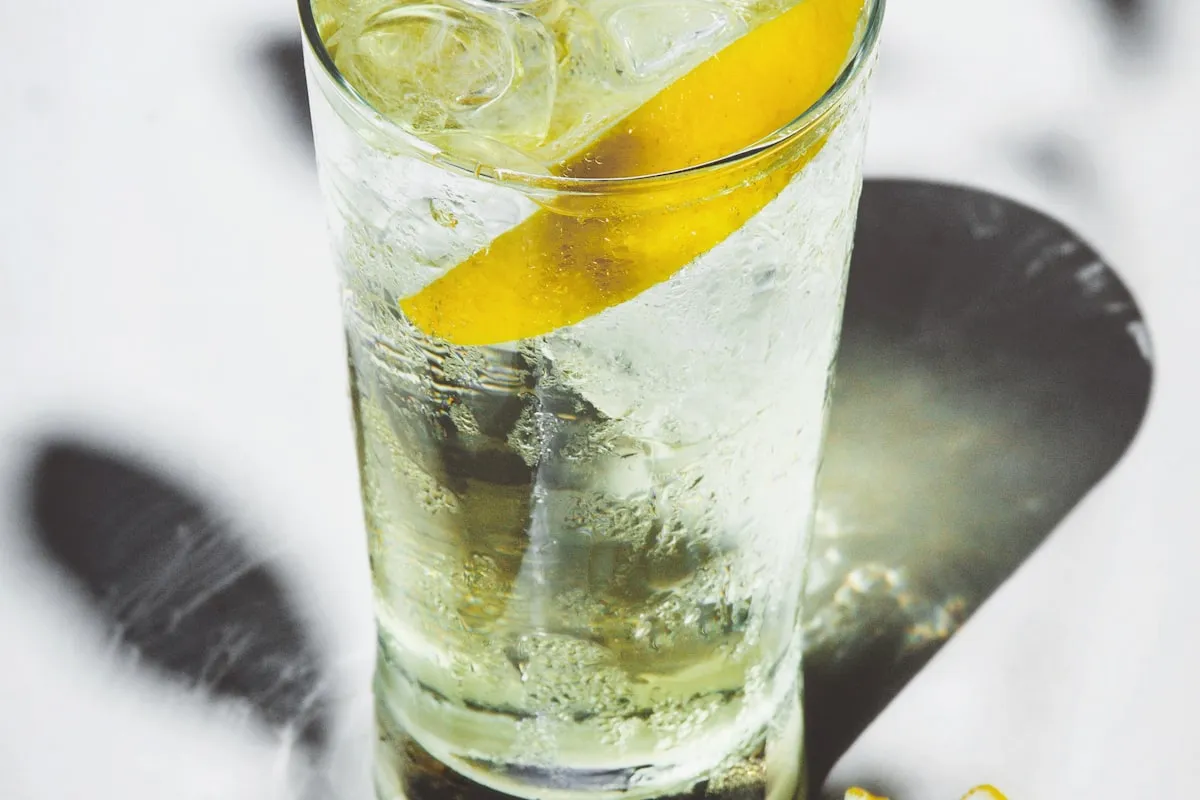
- Watch the salt-and-sugar drinks in heat. Soda, energy drinks, and heavy alcohol work against you on hot days — fine occasionally, but they don’t count toward “hydrated.” Water, plain or with a lemon slice, is doing the real work.
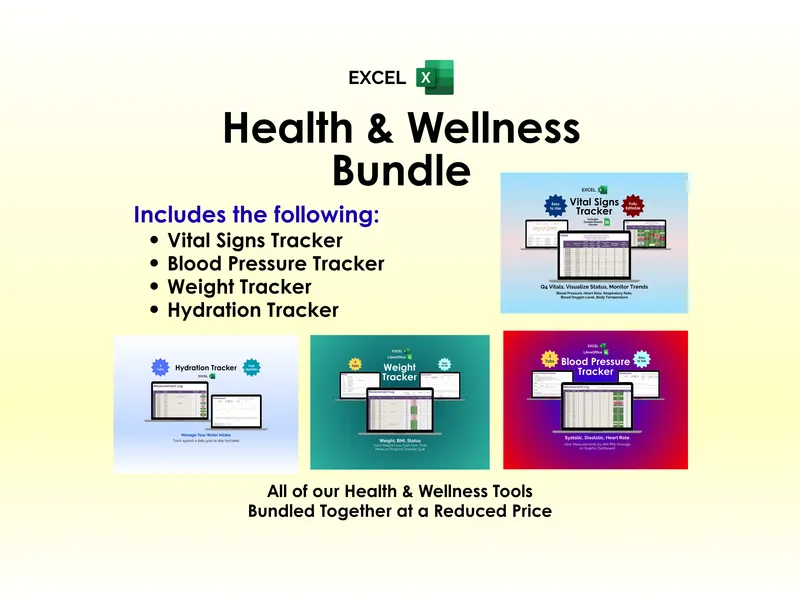
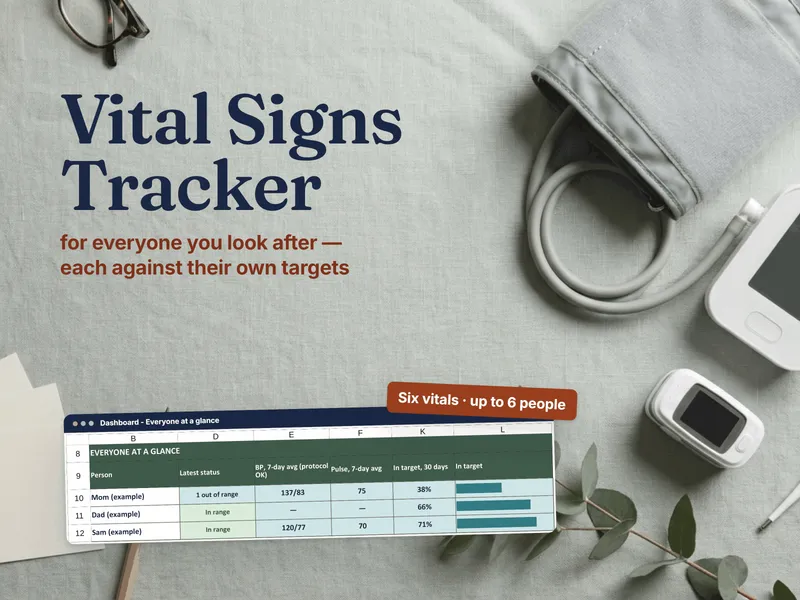
Hydration is one of those vitals that only matters when you’ve ignored it. If you’re already tracking your numbers — and a Vital Signs Tracker or the broader Health & Wellness Bundle make that painless — water belongs right next to them. For the bigger picture on why a logbook beats a wearable for this kind of thing, see why your smartwatch isn’t enough for real health tracking.
The takeaway: aim for roughly 9–12 cups of fluid a day, more when it’s hot, count refills instead of ounces, and let your urine color be the final word. Five minutes of setup, one mark per refill, done.