In the next ten minutes you can turn “should I renew my lease or move?” into a single number: the monthly discount a new place has to beat. It’s your one-time moving cost divided by the months you plan to stay. Once you have it, you open listings, see whether that discount exists in your area, and you’re done deciding.
Here’s the check.
Why comparing rent to rent gets this wrong
Your renewal letter usually lands a month or three before the lease ends, with a new rent and a deadline. The instinct is to hold the new number up against your old number, feel annoyed, and start browsing.
That comparison is the trap. It puts one recurring cost next to another recurring cost and quietly leaves out everything a move charges you once.
So price the whole year instead. Both ways.
Step 1: Price a full year of staying
Take the renewal rent, multiply by 12, and add any renewal-only changes: a parking increase, new pet rent, a utility fee the landlord is passing through.
That’s your cost of staying. Nothing else belongs in this column — you already own the furniture, you already know the commute, and your deposit stays exactly where it is.
Using illustrative numbers throughout: rent goes from $1,600 to $1,720, no other changes.
Cost of staying: $20,640. You won’t plug this total into the formula — it’s the yardstick the moving column has to beat, and you’ll see it again at the end.
Step 2: Price a full year of moving
This column has two parts: 12 months at whatever a new place charges — you don’t know that yet, and you don’t need to — plus the one-time cost of getting there. Price that second part now; Step 3 turns it into the number that tells you which rent to go find.
| Bucket | What’s in it | Range to price against |
|---|---|---|
| Deposit gap | The new deposit goes out before the old one comes back — and some places want first and last month too | $500 to $3,000 |
| Overlap | Days you’re paying both places so you can move without a single-day scramble | $0 to one month’s rent |
| The move itself | Truck or movers, boxes and supplies, moving insurance, time off work | $300 to $2,500 |
| Setup | Utility connection fees, internet install, renters insurance restart, mail forwarding | $150 to $600 |
| Re-buying | Curtains, shelving, and anything that doesn’t fit the new floor plan | $100 to $800 |
| Application friction | Application and screening fees on every place you apply to, plus admin or “move-in” fees | $50 to $500 |
These are starting points to price against, not published averages. Use the ranges now to get your number in the next few minutes, then firm up your two biggest buckets with real quotes before you sign anything. If you want the longer version of this column, we broke down how much moving actually costs bucket by bucket.
Say your one-time total comes to $2,400 — a $1,200 deposit gap, no overlap, $800 for the move, $250 in setup fees, $100 re-buying, $50 in application fees. Yours will land wherever your buckets land, and adding a single overlap month pushes this example past $3,900.
Step 3: Should you renew your lease or move?
Here’s the whole check in one line:
Break-even monthly discount = one-time move cost ÷ months you’ll stay
You’re spreading that one-time pile across the months you’ll be paying the lower rent. Use 12 for a first-year answer:
$2,400 ÷ 12 = $200 per month.
So in this example, the new place has to be more than $200 a month cheaper than your renewal offer — under $1,520 against a $1,720 renewal — before moving wins on money in year one.
Check it: $1,520 × 12 = $18,240, plus the $2,400 move = $20,640, exactly the cost of staying. That’s what break-even means.
If you expect to stay two years, divide by 24 instead. The same $2,400 move only needs a $100 monthly discount to pay for itself over that horizon.
One adjustment before you compare: if the new place changes a recurring cost — parking, pet rent, utilities included or not — fold that into the monthly difference first.
Worth knowing before you look: the national rental market is soft right now. The national median rent was $1,388 in July 2026, down 1.1% year over year — a decline that has been narrowing since April — according to Apartment List’s July 2026 national rent report (opens in new tab), with multifamily vacancy at 7.2%, near a recent peak though now easing. High vacancy is what makes a discount findable, and it gives your landlord a reason to negotiate rather than re-list.
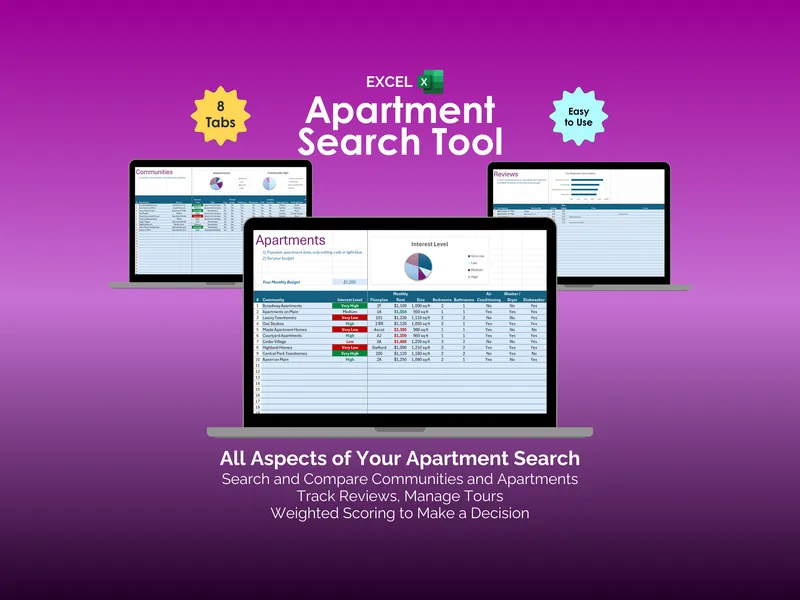
Now go look at listings with your break-even number written down — the Apartment Search Tool keeps candidates side by side while you compare. Either that discount exists near you or it doesn’t, and you have your answer.
Three tiebreakers when the numbers are close
-
Counter the renewal before you decide. Reply in writing with two or three comparable listings and ask them to match or split the difference. Turning over a unit isn’t free for a landlord either — cleaning, listing time, and empty weeks all cost them something, which is why a modest increase is often negotiable. A “no” costs you one email.
-
Price your own time. A move costs you a stack of hours — packing, logistics, address changes, unpacking — so estimate yours before you decide. Say you find a place $250 a month cheaper: that’s $50 past your $200 break-even, or about $600 over the year. If the move takes you 30 hours, you’re working for about $20 an hour. It may still be worth it. Just decide it on purpose.
-
Watch the deadline, not the lease end date. Notice periods and auto-renewal terms vary by state and by lease, and missing the window can roll you into a month-to-month rate set by the landlord rather than by your lease. Read your lease first, then check your state’s tenant rights agency (opens in new tab) for the local rules.
Bonus: score what the math can’t
Money settles most of these. The rest is commute, light, noise, storage, laundry, and whether your landlord fixes things. Don’t leave those to a vibe — score them.
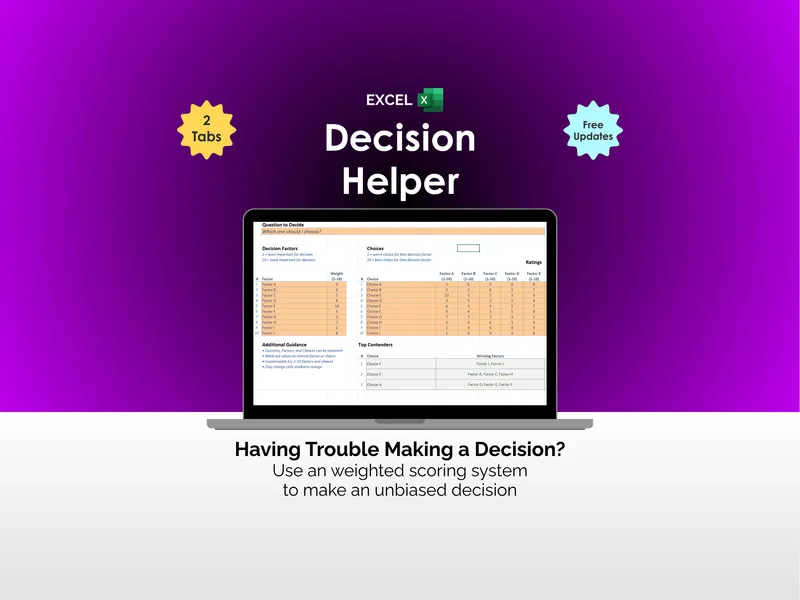
Rate each factor 1 to 5 for staying and for the best real alternative you found, weight the ones you actually care about, and let the totals argue with the cost check. The Decision Helper does the weighting for you, and if you land on moving, our guide to choosing between two apartments picks up exactly where this leaves off.
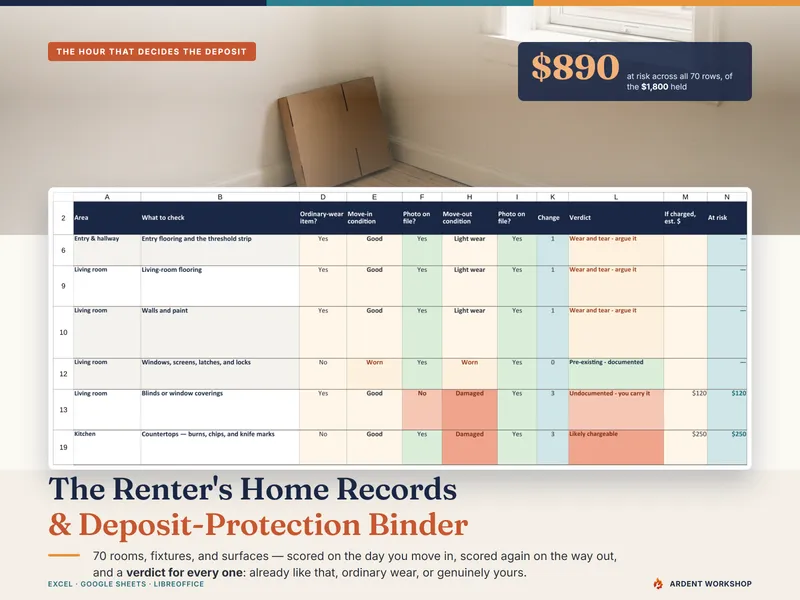
And if you do move, photograph and log the old place on your way out. A documented move-out costs you an hour and can save the whole deposit — that’s the job the Renter’s Home Records and Deposit Protection Binder was built for.
The takeaway: divide your one-time move cost by the months you plan to stay. If a nearby listing is cheaper than your renewal offer by more than that number, move. If nothing is, renew — and negotiate on your way there.