Here’s the payoff: in about five minutes, you can turn “they both feel right” into a clear winner — on paper, not in your head. The fix is a weighted scorecard: list the 6–8 factors that matter, weight each one, score both apartments, and total the columns — the higher score wins. No more re-litigating the same two apartments at 11 p.m.
The reason the tie feels impossible is simple. Your brain isn’t built to weigh this many competing factors at once. Rent, commute, light, that weird bathroom, the deposit, the noisy street, the great closets — you compare two of them, feel good, then a third factor flips your gut, and you’re back to zero. A scorecard fixes that by making every factor visible at the same time and forcing you to say what actually matters before you look at the answer.
The 5-minute apartment scorecard
A weighted scorecard is a decision method that scores each option against the factors you care about, weighted by how much each factor matters. You do it in four moves.
- List what matters. Pick the 6–8 things you’re really deciding on. A solid default set: rent, commute, space/layout, light & noise, condition, neighborhood, upfront cost, lease flexibility.
- Weight each factor 1–5. How much does it matter to your daily life? A 5 is make-or-break; a 1 is nice-to-have. This step is the whole trick — it’s where your real priorities come out of hiding.
- Score each apartment 1–5. Rate how well each unit delivers on each factor. Do this before you total anything, so the number doesn’t bias the score.
- Multiply and total. Weight × score for every cell, add the columns, and the higher total wins.
Here’s the move, worked through with illustrative numbers:
| Factor | Weight (1–5) | Apt A score | Apt B score | Apt A weighted | Apt B weighted |
|---|---|---|---|---|---|
| Rent fits budget | 5 | 3 | 5 | 15 | 25 |
| Commute | 4 | 5 | 2 | 20 | 8 |
| Space & layout | 4 | 4 | 3 | 16 | 12 |
| Light & noise | 3 | 5 | 3 | 15 | 9 |
| Condition | 3 | 3 | 4 | 9 | 12 |
| Neighborhood | 3 | 4 | 4 | 12 | 12 |
| Upfront cost | 2 | 3 | 4 | 6 | 8 |
| Lease flexibility | 2 | 4 | 3 | 8 | 6 |
| Total | 101 | 92 |
On gut feeling, Apt B looked like the winner — it’s cheaper and nicer inside. But once commute and light got the weight they deserve for your life, Apt A pulls ahead by nine points. That’s the number your gut was struggling to compute.
The two tiebreaker rules
The scorecard gives you a total, not a verdict. Two rules turn the total into a decision.
- Deal-breakers override the math. If an apartment fails a hard requirement — no in-unit laundry when you have a newborn, a lease that won’t allow your dog, a rent that only “fits” if nothing goes wrong — cross it out no matter how high it scored. A weighted average can quietly outvote a factor that should have been a veto.
- If the totals are within ~5 points, it’s a real tie — use the gut check. Ask one question: “A year from now, which place am I relieved I picked on a bad day?” When the numbers say it’s close, they’re telling you either choice is fine, so let the intangible break it.
Notice what just happened: you didn’t ignore your gut, you sequenced it. Score first, feel second. That’s the order that keeps one shiny feature from hijacking the whole decision.
Bonus level: lock it in before you sign
Once the scorecard names a winner, do two things before the lease.
- Inspect the actual unit, not the listing. Your scores were partly from photos and a quick walk-through — verify them in person with the 10-minute apartment walk-through checklist so a hidden problem doesn’t ambush a “5” you gave on faith.
- Keep the scorecard. It’s your receipt. When move-in stress makes you second-guess the choice, the file reminds you why you picked it — with the weights you set on a calm day, not a panicked one.
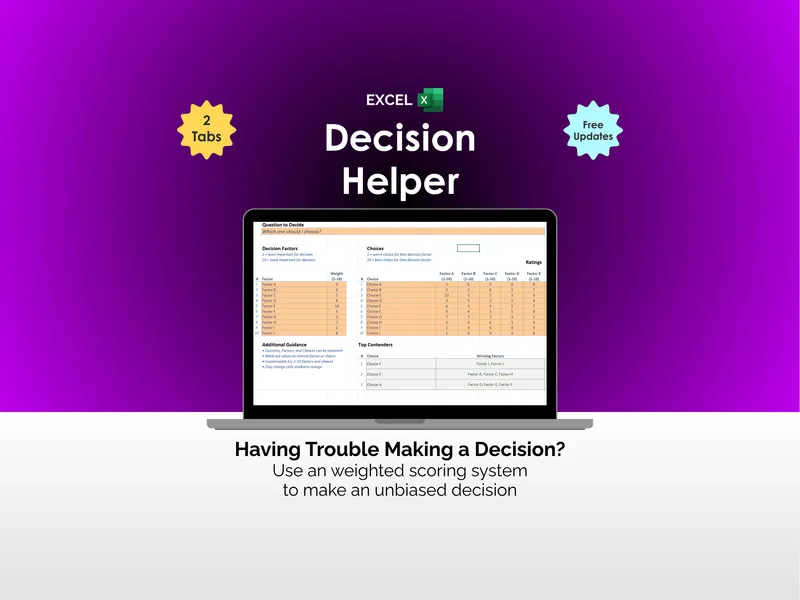
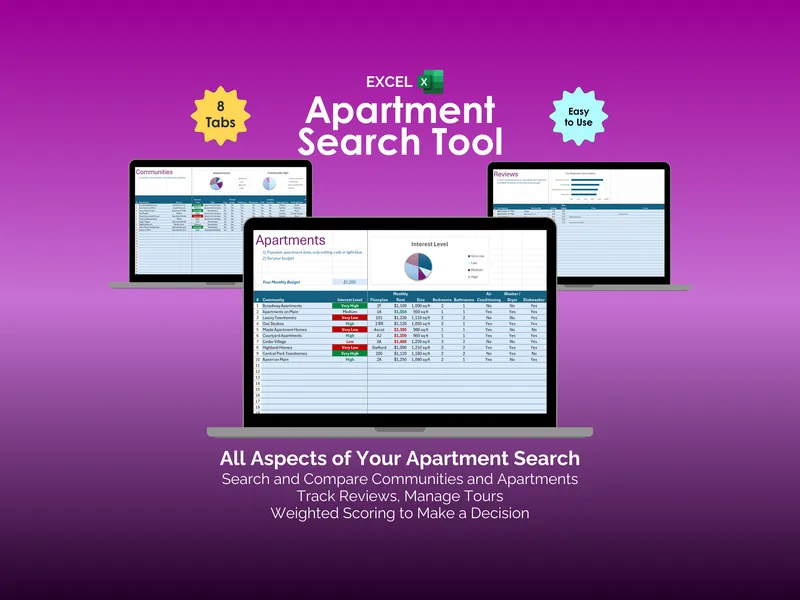
If you’d rather not rebuild the grid from scratch, the Decision Helper (Excel) is this exact weighted-scoring method pre-built for any high-stakes either/or — an apartment, a car, a job offer, a school. Earlier in the hunt, when you’re still narrowing a long list down to two, the Apartment Search Tool (Excel) stacks listings side by side so the finalists rise to the top.
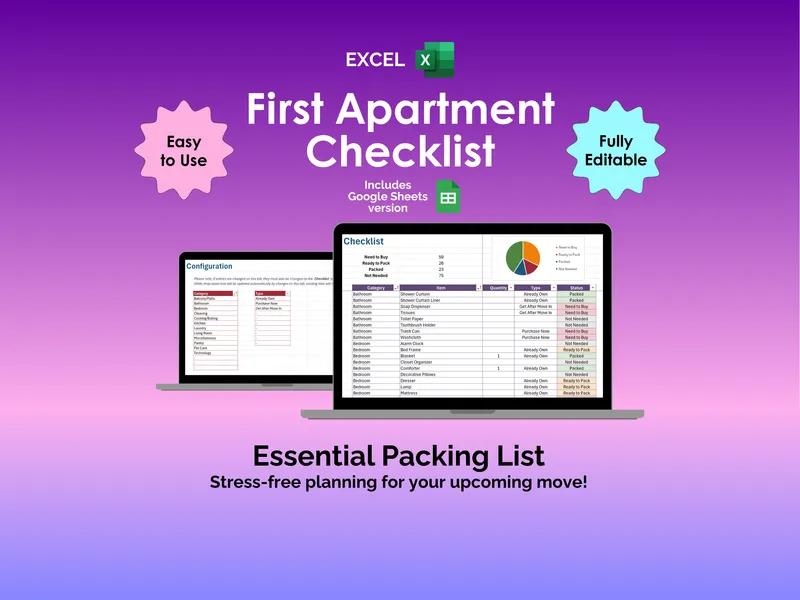
And once you’ve signed, the First Apartment Checklist covers what to buy and what to skip so move-in day doesn’t blow the budget your scorecard just protected.
The takeaway: you don’t need certainty to choose between two apartments — you need your priorities on one page. Weight what matters, score both, total it, and let the tiebreakers finish the job. Five minutes, one clear winner, and a decision you can actually stand behind.