In the next ten minutes, you’ll know exactly what to check during an apartment walk-through so you catch the deal-breakers before you sign the lease — not after your couch is already wedged in the doorway.
An apartment walk-through is the short window between “I love it” and “I’m legally responsible for it.” Once you sign, a weak water heater, a dead outlet, or a wall of street noise stops being the landlord’s problem and starts being yours. Most renters spend that window admiring the light and forgetting to flush the toilet. Here’s the fast version that doesn’t.
What to Bring With You
Five things, all of which fit in a pocket. Show up without them and you’ll default to looking instead of testing:
- Your phone charger. The only outlet tester most people will ever carry. Plug it into a couple of outlets per room and watch for the charging icon.
- Your phone, with storage free. You’ll want photos and a slow video of every room, and you’ll want them timestamped.
- A tape measure (or a measuring app you’ve actually used before). Measure the bedroom wall your bed has to fit against, the doorway your couch has to clear, and the gap the fridge sits in if you’re bringing one.
- This checklist, on screen. Not in your head. In your head is how you end up remembering the light and forgetting the water pressure.
- A second person, if you can. They notice the smell you stopped smelling after ninety seconds, and they’re the one who asks the awkward question about the noise.
That’s the kit. Nothing else earns its space.
The Room-by-Room Loop
Work through the unit in one loop — entry, kitchen, bathroom, bedroom, then back out. Don’t admire; test. Open it, run it, switch it, flush it.
| Zone | Check this | The 10-second test |
|---|---|---|
| Entry & general | Door locks, deadbolt, windows, light switches | Lock and unlock the door; flip every switch you pass |
| Kitchen | Water pressure, hot water, outlets, fridge, under-sink | Run the tap hot, open the fridge, look under the sink for leaks |
| Bathroom | Toilet, drainage, water pressure, ventilation, mold | Flush the toilet, run the shower, look at the grout |
| Bedrooms | Outlets, windows, closet, natural light, cell signal | Open a window, check your phone’s signal bars |
| Whole unit | Heat/AC, smoke detectors, floors, walls, smell | Turn on the thermostat; sniff for damp or smoke |
Print it, screenshot it, or keep it open on your phone. Ten minutes of tapping and flushing beats twelve months of regret.
The 5 Tests Most Renters Skip
These are the high-value checks that separate a careful walk-through from a polite tour. Each one takes under a minute and catches a problem that’s genuinely expensive or miserable to live with.
- Water pressure — run two fixtures at once. Turn on the shower, then flush the toilet. If the shower drops to a trickle, the plumbing can’t keep up — and it won’t improve after you move in.
- Hot water recovery. Let the kitchen or shower tap run hot for 90 seconds. Lukewarm-at-best now means cold showers in a building with one tired water heater.
- Cell signal in every room. Walk into the bedroom and bathroom and watch your bars. Thick walls and interior units can kill reception — a real problem if you work from home or have no landline.
- Outlets that actually work. Bring a phone charger and test a couple of outlets per room. Dead or loose outlets hint at older wiring and limit where your furniture can go.
- Noise at the real time of day. A unit that’s silent at 11 a.m. on a Tuesday can sit above a bar or beside a bus stop at night. If you can, swing by once after dark.
A quiet, well-lit apartment can hide all five of these. The only way to know is to test, not trust.
Red Flag or Deal-Breaker?
Not everything you find should end the tour. The useful question isn’t “is this bad?” — it’s “can this be fixed, and can it be fixed before I sign?” Some problems are a line in the move-in report. Others are a year of your life.
| What you found | Read it as | Why |
|---|---|---|
| Scuffed paint, worn carpet, a sticky drawer | Note it, don’t sweat it | Cosmetic. Photograph it so it’s not billed to you later. |
| One dead outlet | Fix-before-signing | Cheap for them, annoying for you. Get it in writing. |
| Shower drops to a trickle when the toilet flushes | Deal-breaker-ish | Plumbing capacity. It will not improve, and no lease clause changes physics. |
| Never gets hot, or takes forever | Deal-breaker-ish | Undersized or tired water heater, often shared with other units. |
| No cell signal in the bedroom | Deal-breaker if you work from home | Building construction. Nothing the landlord can do. |
| Musty smell, soft baseboards, dark grout patches | Walk away | Possible ongoing moisture. The one problem that gets worse, not better. |
| Windows painted shut or won’t lock | Fix-before-signing | Safety and ventilation, not preference. |
| Missing or dead smoke detector | Fix-before-signing | Usually a legal requirement. If they shrug at this, note how they’ll handle a real repair. |
| Loud at 10 p.m., quiet at 10 a.m. | Your call — but know first | Unfixable. You’re deciding whether you can live with it, not whether it’ll change. |
The distinction that matters: cosmetic problems are documentation problems. Systems problems — water, heat, power, moisture, noise — are decisions. A landlord who’s quick to fix the first category and vague about the second is telling you exactly how the next twelve months go.
Questions to Ask While You’re Standing There
You get a small window with someone who knows the building. Spend it on things you can’t test yourself:
- “What’s the average utility bill for this unit?” Not the building — this unit. A cheap rent in a poorly insulated top-floor apartment isn’t cheap.
- “How old are the water heater, the HVAC, and the appliances?” Age predicts outages, and outages are your inconvenience even when they’re the landlord’s cost.
- “Who handles maintenance, and what’s the response time for something urgent?” An on-site manager and an off-site management company are different living experiences. Ask what happens at 9 p.m. on a Saturday.
- “How long has this unit been vacant, and why did the last tenant leave?” A long vacancy in a tight market is worth a follow-up question. So is a tenant who left after six months.
- “Is there anything you’re planning to repair or replace before move-in?” Then get the answer written into the lease or the move-in report. A verbal “oh, we’ll take care of that” is worth exactly nothing in a deposit dispute.
- “What’s the actual policy on the deposit — what gets deducted, and when do I get it back?” Listen for specifics. Vagueness here is a preview.
Before You Sign: Document the Damage You Didn’t Cause
The walk-through isn’t just for deciding — it’s for protecting your deposit. Photograph every existing flaw before move-in day, and you remove the argument months later.
- Take date-stamped photos and a slow video of every room, including scuffs, stains, chipped paint, and worn flooring.
- Note anything broken in writing and ask for it in the move-in condition report, not a verbal “we’ll fix it.”
- Keep a copy for yourself. A landlord’s “that was already there” carries far less weight than your timestamped photo.
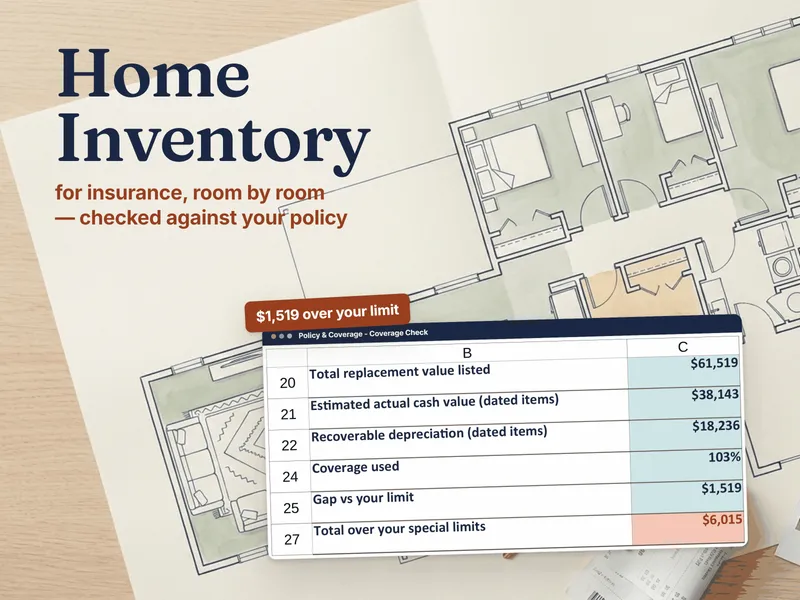
For a deeper record once you’re in, a simple Home Inventory - Excel log of what you own — and the apartment’s existing condition — is exactly the kind of paper trail that protects a deposit and an insurance claim.
Bonus Level: Compare Apartments Without the Memory Fog
Here’s the move if you’re touring more than one place: by the third unit, they blur together. Was it the second apartment with great light and bad water pressure, or the first?
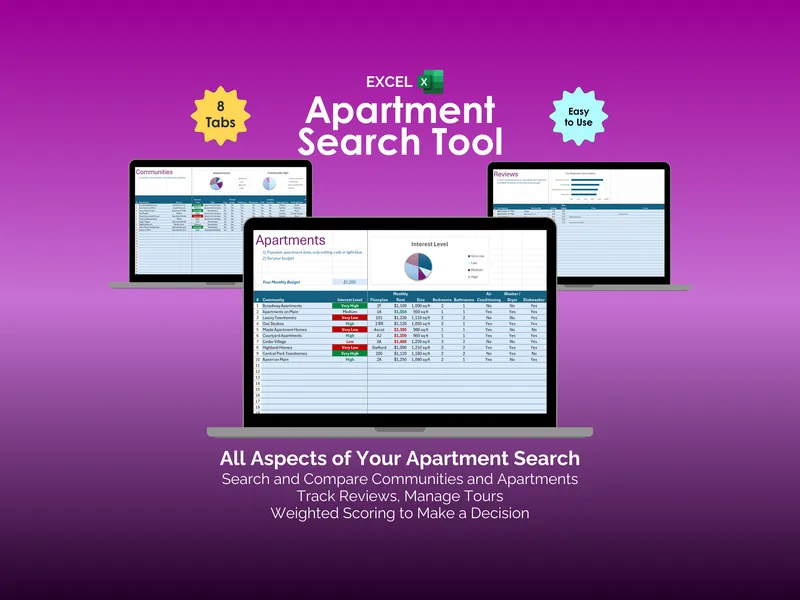
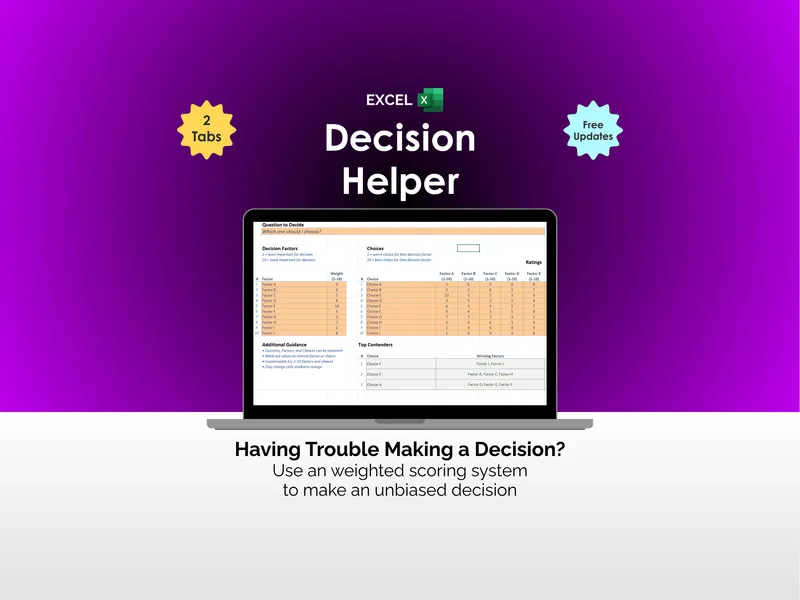
Capture each walk-through the moment you finish it. A scoring tool like the Apartment Search Tool - Excel lets you rate each unit on rent, commute, light, noise, and the checklist above, so you compare apartments on the same scale instead of by gut feeling. When two options feel equally good, a Decision Helper - Excel forces the trade-offs into the open and breaks the tie.
And once you’ve signed and the keys are yours, shift from inspecting to furnishing — our guide to what to actually buy for a first apartment covers what’s worth your money in week one and what can wait.
Common Questions About Apartment Walk-Throughs
Is a walk-through the same as a move-in inspection?
No, and confusing them is expensive. A walk-through happens before you sign — it’s how you decide. A move-in inspection (often a condition report) happens after you sign, usually on or near key day, and it’s how you protect your deposit. Do both. The first one is optional and skipping it costs you a bad year; the second is your evidence and skipping it costs you money.
What if I’m touring a unit that’s still occupied?
You’re seeing someone’s life, not the apartment, so adjust what you test. Water pressure, hot water, outlets, and signal all still work. Judging light, space, and smell through someone else’s furniture doesn’t. Ask whether you can see the actual unit — or an identical floor plan that’s empty — before signing, and be wary if the answer is no.
They’re showing me a model unit instead of mine. Is that a problem?
It’s common in larger buildings and it’s not automatically a red flag — but a model unit is a sales tool. Floor, orientation, noise exposure, appliance age, and view can all differ from the unit you’d actually get. Ask specifically what’s different, and ask to see your unit before the lease is signed rather than after.
How long should a walk-through really take?
Ten minutes of testing is enough to catch the systems problems. Add time for the questions above and for a second visit at a different hour if noise or light matters to you. The point of the ten minutes isn’t speed — it’s that there’s no excuse to skip it.
What if the landlord rushes me?
Notice that. You’re not being difficult by flushing a toilet before committing to a year and thousands of dollars, and a landlord who treats basic diligence as an inconvenience is showing you their maintenance philosophy for free. Slow down anyway.
The takeaway: an apartment walk-through is ten minutes of testing — water, power, signal, noise, and condition — that decides whether the next year is comfortable or a series of small daily annoyances. Run the loop, document everything, and sign with your eyes open.