Downsizing a long-time home is two problems wearing one coat.
The first one is emotional, and nobody can do it for you. The second one is arithmetic — a four-bedroom house holds several times what a two-bedroom apartment holds — and until somebody works out how much more, every conversation about the china cabinet is a conversation about feelings with no facts in it. That is why those conversations go badly. Not because anyone is being difficult, but because there is nothing on the table to point at.
This binder does the arithmetic, so you have more of yourself left for the part that matters.
Will what you’re keeping actually fit?
That is the question the whole move turns on, and almost nothing helps you answer it before the truck arrives.
Here, every item you list resolves to cubic feet through a built-in Size Guide of 41 household size classes — book carton, wardrobe carton, dish barrel, three-seat sofa, china cabinet, upright piano — each carrying a volume and a weight estimate. You never measure a sofa.
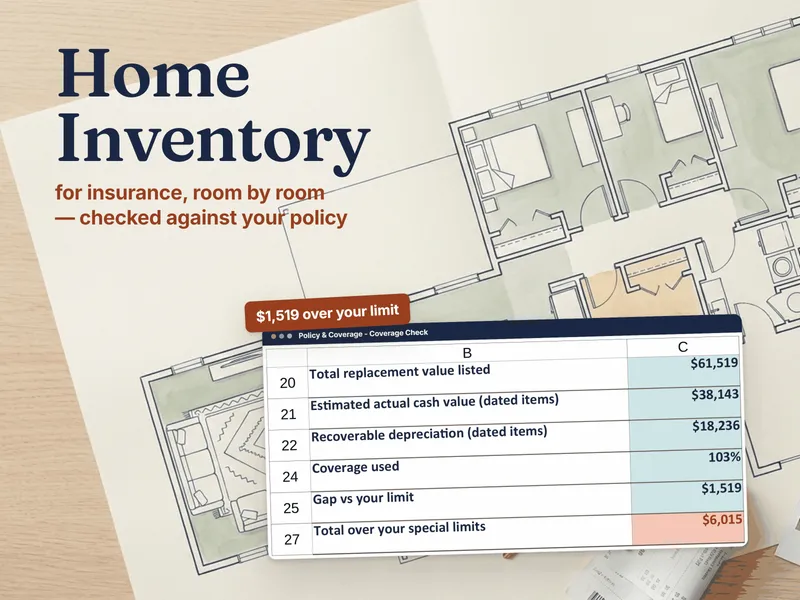
Then you put in the square footage of each room in the new home, and the binder works out roughly what it can hold. Everything you’ve marked Take and sent to that room is totaled against it. Every room reads Fits, Tight, or Over, with a bar and the exact cubic feet over or under.
When the living room reads 109%, that is not an opinion about the china cabinet. It is a fact about the living room — and facts are much easier to disagree with kindly.
What the move actually costs, in the same unit
Movers charge for space on a local move and weight on an interstate one. Both follow from volume — which is the part families rarely connect to the sorting.
Set your rate per cubic foot or per pound and the binder prices the move off what you’re actually taking, then shows you the figure that changes how sorting feels: what every 100 cubic feet you release saves. On most moves, deciding not to take something is worth more than selling it — and it arrives without a listing, a viewing, a no-show buyer, or a Saturday.
There’s a storage-unit line too, costed honestly: the monthly rate times how long these things actually get kept, sitting right next to what they would have fetched.
One date, and the whole schedule writes itself
Type your move date into a single cell and 42 tasks lay themselves out behind it with real due dates and an overdue flag. Not generic advice — the things families actually miss: the certificate of insurance the new building wants before a truck can unload, the pharmacy transfer that takes days rather than minutes, the paint and propane no mover will carry, somewhere calm for the person moving to spend the day.
Then there are the 38 organizations that need the new address, spread across six phases because a Medicare service-area question and a newspaper cancellation are not the same errand. Each one carries what to have ready and why it matters.
It holds nothing sensitive, on purpose
The address tracker records whether you notified someone — never the account number. The documents tab records where something lives — never what’s written on it.
That’s deliberate, because of where a downsizing binder actually goes: emailed to a sibling, opened on a shared laptop, printed and left on a kitchen table through a busy fall. A list of an older person’s accounts, insurers, and benefit programs is exactly the raw material a scam is built from.
What you get
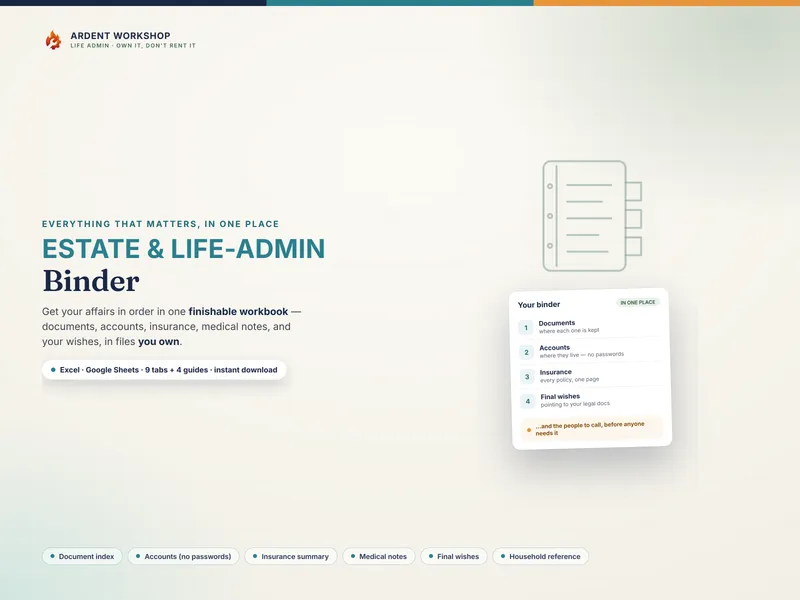
A 12-tab workbook — Size Guide, Room-by-Room Inventory, New Home Plan, Move Budget & Cost, Move Timeline, Address & Accounts, Movers & Quotes, Contacts & Helpers, Documents & Records, a Dashboard, a Start Here checklist, and a Read Me — that opens on a complete worked example you clear out, including a living room that doesn’t fit.
Plus three PDF guides: a Start Here guide, a Room-by-Room Downsizing Playbook covering 11 rooms in the order that hurts least (start in the garage, leave the attic until last), and Printable Move Pages with six sort signs to tape to a wall, a new-home tally sheet, a blank inventory, and a move-day packet.
It works in Excel, Google Sheets, and LibreOffice, and ships with a one-click native Google Sheets copy — a real copy, not an import, with the lookups and the fit check already working.
Own it, don’t rent it
No login. No subscription. No account to lose. The file opens on your computer, goes to a sibling in another state without inviting anyone into anything, and still works in ten years.
That’s the whole idea behind Ardent Workshop: owned, organized files that sit between a blank spreadsheet and a rented app holding your family’s details on someone else’s computer.
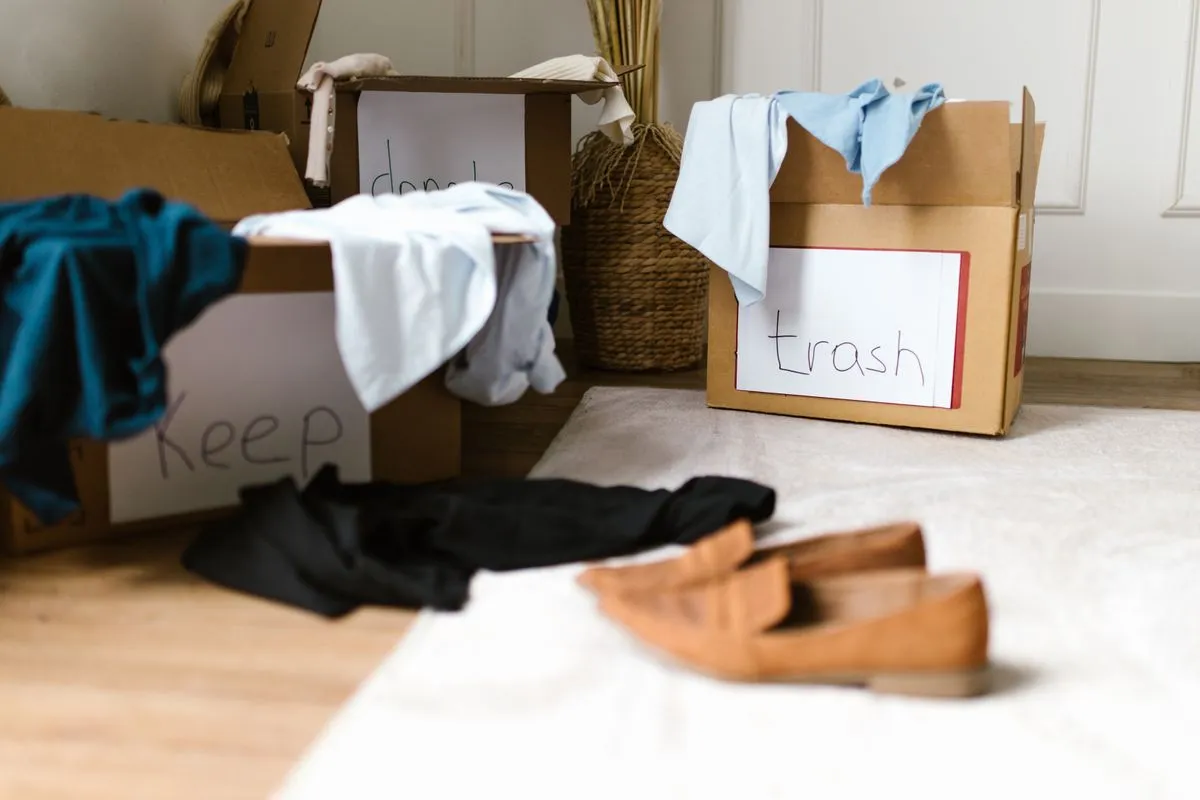
Not ready for the full binder? The free Downsizing Room-by-Room Sort List is a good first step — a printable one-pager for sorting a single room into keep, gift, sell, and donate.
A move-planning and records workbook — not legal, tax, financial, real-estate, or medical advice, not an appraisal, and not a mover’s estimate. The cubic-foot and weight figures are planning estimates for typical household goods: useful for sizing a move and sanity-checking quotes, and no substitute for an in-home survey by a mover. The room-capacity figures are this binder’s own conservative starting numbers, and you can change them. Donation values you enter are your own estimate recorded for your files — ask a tax preparer what applies. Rules for benefits, licensing, and residency vary by state and change; confirm anything that matters with the organization itself.