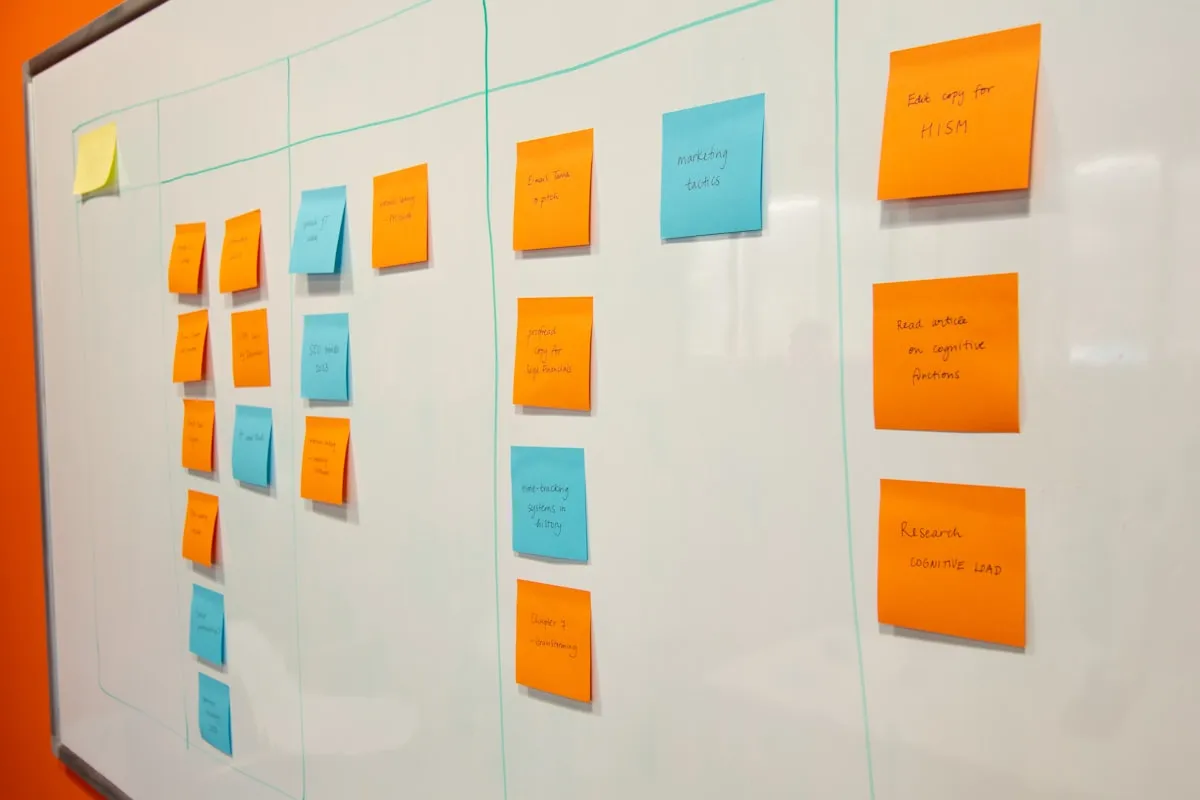
No, Agile isn’t dead — but the ceremony layer that got bolted onto it is dying, and that’s what people are actually reacting to when they say it. The Agile Manifesto (opens in new tab) values — individuals over processes, working software over documentation, collaboration over contracts, responding to change over following a plan — describe how effective teams still work. What’s collapsing is the industry that grew on top of those four lines: the mandatory standup, the story-point ritual, the two-day quarterly planning event, the certification ladder. Teams aren’t abandoning Agile’s ideals. They’re abandoning its overhead.
The distinction matters because it changes what you do on Monday. “Agile is dead” implies you need a new framework. “Agile’s ceremonies outgrew their purpose” implies you need to audit which meetings still earn their hour. The second is true, and it’s cheaper.
Here’s the rest of the argument: where Agile came from, which specific parts stopped paying for themselves, what’s genuinely replacing them, and the contexts where plain old Scrum still beats everything else on offer.
What Is the Agile Framework, and How Long Has It Been Around?
Agile is not a single methodology. It’s a set of four values and twelve principles published in 2001, from which dozens of concrete methods were derived.
The origin is specific: in early 2001, seventeen software practitioners met at Snowbird, Utah, and signed the Agile Manifesto (opens in new tab). They weren’t inventing a process. They were naming a common thread across methods several of them had already been practicing — Scrum, Extreme Programming, Crystal, DSDM, Feature-Driven Development — that shared a bias toward short cycles and direct customer contact over big up-front specification.
What grew from that seed splits into three distinct layers, and conflating them is why the “is Agile dead” argument goes in circles:
| Layer | What it is | Examples | Is it dying? |
|---|---|---|---|
| The values | Four value statements, twelve principles | The Manifesto itself | No — they read as common sense now |
| The methods | Concrete team-level practices | Scrum, Kanban, XP | No — still widely used, selectively |
| The scaled frameworks | Enterprise rollout structures | SAFe, LeSS, Nexus | This is the contested layer |
Over two decades, all three layers spread well past software engineering. Marketing teams run sprints. HR departments hold retrospectives. Hardware R&D groups keep backlogs. Enterprises bought scaled frameworks to impose the same cadence across hundreds of teams at once — and that’s the layer where the friction concentrated, because it’s the layer that reintroduced the bureaucracy the Manifesto was written against.
What Did Agile Actually Get Right?
Before the critique, the credit — because the parts that worked are the parts you should keep when you strip the rest.
- Feedback loops beat forecasts. Shipping something small and watching real users touch it surfaces information no requirements document produces. This was Agile’s central bet and it won outright.
- Cross-functional teams beat handoffs. Putting design, engineering, and QA on one team with one goal removed the queue between them. Nearly every modern org structure still assumes this.
- A regular cadence beats heroics. A predictable planning rhythm — whatever its length — lets a team forecast without a death march at the end of each quarter.
Those three ideas are now so absorbed into normal practice that people forget they were ever controversial. That’s what winning looks like. The problem is what got attached to them.
Where Agile Breaks Down in Practice
Four failure modes account for most of the frustration, and none of them are in the Manifesto:
- Ceremony overload. Add up a standard Scrum week: 15 minutes daily standup, an hour of backlog refinement, two hours of sprint planning, an hour of demo, an hour of retro. That’s roughly 5.25 hours of scheduled meetings per person, per two-week sprint — before any actual coordination happens. On a team of eight, that’s 42 person-hours a sprint. The question isn’t whether those meetings have value; it’s whether they have that much value, every time, forever.
- Velocity as a target. Story points were designed as a capacity-forecasting tool for the team’s own use. The moment they become a number reported upward, Goodhart’s law (opens in new tab) applies: a measure that becomes a target stops being a good measure. Teams inflate estimates, split tickets cosmetically, and hit their points while shipping nothing users noticed.
- Scaling reintroduced the hierarchy. Big-room planning events, release train engineers, and layered reporting structures are recognizable as the exact coordination bureaucracy the Manifesto’s authors were reacting against — now wearing Agile vocabulary.
- The sprint treadmill burns people out. Continuous two-week commitment cycles with no slack mean there’s never a week for cleanup, learning, or recovery. Technical debt accrues because there is structurally no sprint in which to pay it down.
Notice the pattern: every one of these is an implementation failure, not a values failure. That’s the case for evolution over replacement.
What’s Replacing Agile’s Ceremonies?
Rather than a wholesale death, what’s emerging is a set of leaner practices that keep the feedback loop and drop the ritual. Five are worth knowing.
Flow-Based Value Management
Borrowed from Lean, teams map the end-to-end value stream — idea to production — and optimize for flow efficiency (the share of elapsed time an item is actually being worked, rather than waiting in a queue) instead of sprint throughput.
The reframe is useful because it makes waiting visible. A ticket that takes 3 days of work but sits 12 days in review queues has 20% flow efficiency, and no amount of sprint planning fixes that — the bottleneck isn’t capacity, it’s the handoff. Velocity metrics would never have shown you this.
Continuous Discovery Paired with Continuous Delivery
Instead of committing to a three-week sprint of build-then-QA, teams ship minimal increments behind feature flags, expose them to a slice of users, measure, and iterate. Discovery research runs continuously alongside, not as a discrete “phase zero.”
The practical effect: the unit of commitment shrinks from a sprint to a change. You don’t need a ceremony to change direction if you never committed two weeks out.
DevOps and Site Reliability Engineering
Folding operations and security into the delivery team (DevSecOps) removes the handoff to a separate ops group. An SRE mindset adds explicit reliability targets and error budgets, which do something ceremonies never managed: they give a team an objective, agreed basis for saying “we’re slowing feature work to fix stability” without it being a negotiation.
Organizational Models Beyond Scrum
Holacracy, sociocracy, and the widely-copied “Spotify Model” of squads, tribes, chapters, and guilds emphasize autonomous teams and lightweight coordination. Their common feature is that cadence is a team decision, not a corporate standard.
Worth noting: the Spotify Model was a snapshot of one company at one moment, described in a 2012 write-up — and Spotify itself has said it was never a framework to copy. Teams that adopt it as a rigid structure recreate exactly the problem they were escaping.
Data-Driven Experimentation
Rather than sizing a fixed backlog, teams frame work as hypotheses and settle them with A/B tests, flag experiments, and usage analytics. The roadmap becomes a living document shaped by measured response rather than a quarterly guess defended for political reasons.
When Is Agile Still the Right Answer?
Agile — actual Scrum, Kanban, or XP — remains the strongest available option in four specific conditions:
| Condition | Why Agile fits |
|---|---|
| Requirements are genuinely uncertain | Early-stage products where the point is to learn and pivot; a plan-driven approach optimizes a spec that’s wrong |
| Small to medium teams (roughly 5–10) | Coordination is cheap enough that ceremonies stay short and useful |
| Customer feedback is decisive | B2B SaaS and consumer apps, where expectations shift faster than a release plan |
| You’re building digital products | Code, cloud, and metrics are first-class, so iteration is cheap and measurable |
The inverse is also worth stating plainly. If your requirements are fixed by regulation, your release cost is high (firmware, medical devices, physical manufacturing), or your team is a hundred people who need one coordinated answer, sprint ceremonies are overhead you’re paying for benefits you can’t collect.
How Do You Actually Fix a Ceremony-Heavy Team?
Five steps, in order, none of which require adopting a new framework:
- Audit the calendar first. For one sprint, note what decision each recurring meeting produced. Any meeting that reliably produces zero decisions is a status report wearing a meeting’s clothes — replace it with writing.
- Kill velocity as a reported metric. Keep story points inside the team if the team finds them useful for forecasting. Stop putting them in a deck. Report shipped outcomes upward instead.
- Measure one flow metric. Cycle time — first commit to production — is usually enough. It exposes queues, which is where the time actually goes.
- Make slack explicit. Reserve a fixed share of capacity for debt, learning, and interrupts. If it isn’t scheduled, it doesn’t happen, and the treadmill wins.
- Set the cadence per team. Some teams need a weekly planning rhythm. Some are better with continuous flow and no sprint at all. Standardizing this across an org is the thing that created the problem.
Conclusion
Agile isn’t dead — but it has outgrown some of its trappings. Today’s high-velocity organizations pivot toward flow management, continuous discovery, DevOps alignment, and data-driven roadmaps. These shifts don’t discard Agile’s manifesto; they honor it by reducing ceremony, focusing on outcomes, and empowering teams to deliver real customer value faster.
If a practice on your calendar can’t answer “what decision does this produce?”, the Manifesto is on your side when you cancel it.
Empower Your Teams with Ardent Workshop’s Tools
Ready to supercharge your workflow? Ardent Workshop offers a comprehensive suite of project management tools:
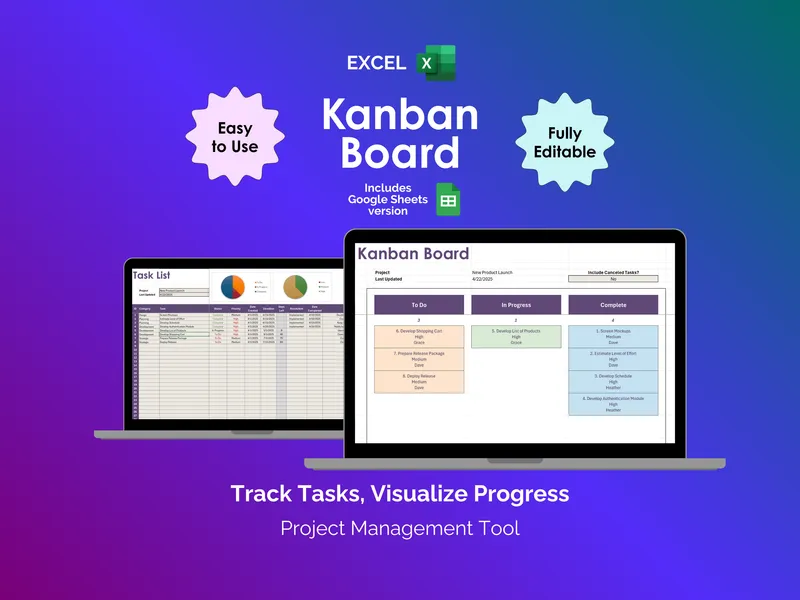
- Kanban Board for visually tracking your work in progress
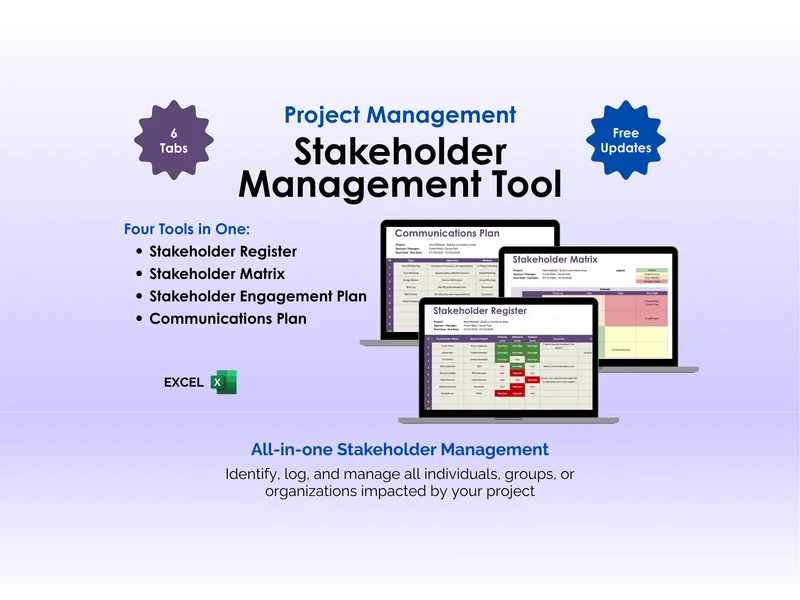
- Stakeholder Management Tool to streamline communication and engagement
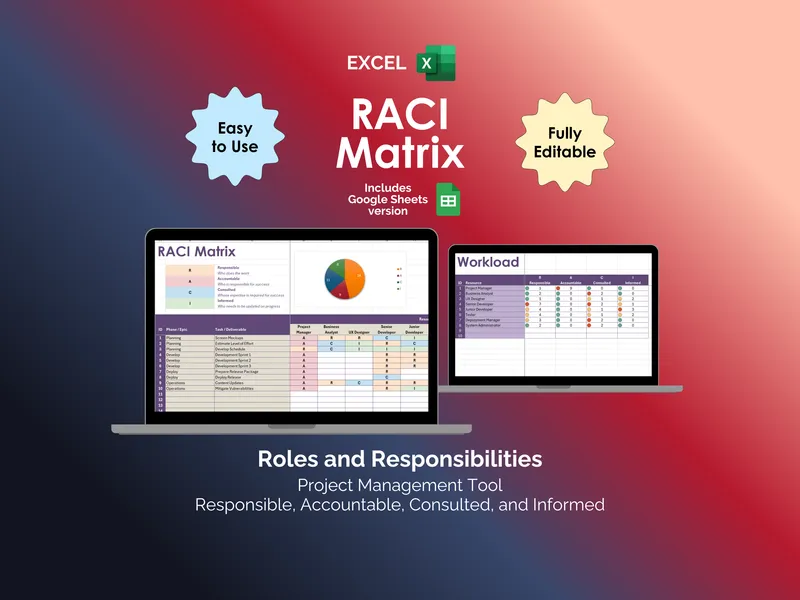
- RACI Matrix for crystal-clear role accountability
- Risk Register and Matrix to proactively identify and mitigate project threats
- SWOT Analysis Tool to evaluate strategic strengths, weaknesses, opportunities, and threats
- Time Tracker to log worked against projects and tasks
Each tool seamlessly integrates with your existing processes—whether you follow Agile, Lean, or a hybrid approach—so you can focus on delivering outcomes, not filling out forms. Explore Ardent Workshop’s business tools today and take the next step toward high-velocity, outcome-driven delivery.