Sit in on enough project kickoffs this year and you’ll notice something that would have gotten you laughed out of the room in 2015. Someone—often a senior engineer, sometimes a frustrated PM—says out loud that maybe, just maybe, the team should write down what they’re building before they start building it. And instead of an eye-roll, the room nods.
For two decades, “just write the requirements up front” was the cardinal sin of modern project management. Agile won the argument so completely that “Waterfall” became a slur. So when you see planning, documentation, and phase gates creeping back into 2026 roadmaps, it’s fair to ask: is Waterfall making a comeback?
The honest answer is more interesting than the headline.
The short answer: no, but its best ideas are back
Pure Waterfall is not staging a takeover. If anything, the strictly sequential “finish phase one, then never look back” model is less common than it was three years ago. According to PMI’s Pulse of the Profession 2025 (opens in new tab), which surveyed 2,841 project professionals, predictive (Waterfall-style) approaches declined 24% over the prior three years.
So if you were expecting a chart with Waterfall rocketing back to the top, it doesn’t exist.
What is happening is subtler and more important: the ideas Agile told us to throw away—up-front requirements, written documentation, defined phases, predictable milestones—are being quietly rehabilitated. They’re showing up inside Agile teams, inside hybrid models, and inside the way smart organizations now plan. Waterfall the monolith isn’t back. Waterfall the toolkit never really left, and in 2026 teams are reaching for it without embarrassment again.
How Agile became the default in the first place
To understand the shift, you have to remember how total Agile’s victory was. The Agile Manifesto (opens in new tab) landed in 2001 with four value statements, including “working software over comprehensive documentation” and “responding to change over following a plan.” Within a decade it had gone from a rebel position to the assumed default for nearly any software or product team.
The data fueled the takeover. The most-cited evidence came from the Standish Group’s CHAOS research, which reported Agile projects succeeding at roughly three times the rate of Waterfall ones (opens in new tab)—about 42% success for Agile versus 13% for Waterfall in its 2020 figures. That 3-to-1 number became the slide everyone used to win the methodology debate.
Two things are worth noting about that evidence today:
- It’s dated. Standish stopped publishing fresh CHAOS reports, so the headline stat is now several years old and reflects a very different era of tooling and team structure.
- It’s contested. Critics have long argued that CHAOS defined “success” narrowly (on-time, on-budget, on-scope) in ways that structurally favored short, iterative projects over large planned ones.
None of that means Agile didn’t deliver real wins—it did. But the orthodoxy hardened around a single, aging dataset, and orthodoxies that hard tend to crack.
What cracked the orthodoxy
The crack that got the most attention came in mid-2024, when the consultancy Engprax published a study claiming that software projects adopting Agile practices were 268% more likely to fail (opens in new tab) than those that didn’t. The same study found projects with clear requirements documented before development started were 97% more likely to succeed, and that engineers who felt free to raise problems were 87% more likely to ship successfully.
Here’s the honest caveat a good trend read owes you: that study was commissioned by Engprax, whose leadership was simultaneously promoting an alternative methodology, and reporters at The Register flagged it as “a thinly veiled plug” for that framework. It is not neutral gospel.
But the reason it went viral isn’t the precise percentage. It’s that it named a frustration thousands of practitioners already felt:
- Ceremony fatigue. Daily stand-ups, sprint planning, retros, refinement, and demos can consume a startling share of a week without obviously moving the work.
- “Agile” as a cargo cult. Many teams adopted the rituals (the board, the stand-up, the velocity points) while ignoring the principles, ending up with all the overhead and none of the adaptability.
- The documentation hangover. “Working software over comprehensive documentation” was never meant to mean no documentation—but plenty of teams read it that way, then drowned when a key person left and nobody had written anything down.
The backlash isn’t really against Agile. It’s against dogmatic, ritual-first Agile that forgot why the rituals existed.
What’s actually growing: the hybrid middle
If predictive approaches are shrinking and pure Agile is taking heat, what’s filling the gap? Hybrid.
The same PMI Pulse of the Profession 2025 (opens in new tab) found hybrid approaches grew 57% since 2020—even as pure predictive delivery shrank. Hybrid has quietly become the mainstream answer.
A hybrid model typically works like this: the project is planned predictively, while the work is executed adaptively. You define the scope, budget, compliance requirements, and major milestones up front—the Waterfall part—and then let teams deliver inside that frame using sprints, boards, and iteration—the Agile part.
That’s why “is Waterfall back?” is the wrong question. The structure people associate with Waterfall is back. It just arrived wearing a hybrid name tag.
Notably, PMI’s research also found that teams perform equally well across predictive, agile, and hybrid approaches when they’re properly trained and supported. That single finding undercuts the entire methodology war: execution quality matters more than which framework you picked. We covered the deeper version of that argument in our look at whether Agile is dead—the short version is that the label was always less important than the discipline behind it.
The five forces pulling teams back toward structure
Several specific pressures are nudging 2026 teams toward more up-front planning. None of them is “everyone misses Waterfall.” Each is a concrete, situational reason.
- AI-assisted delivery rewards clear specs. As teams lean on AI to generate code, copy, and analysis, vague requirements produce confidently wrong output at scale. A precise, written spec is now an input that directly improves AI results—which makes the old “document it first” instinct newly practical rather than bureaucratic. (We dug into where AI actually helps PMs in our 2026 AI-in-project-management breakdown.)
- Regulated work demands a paper trail. Healthcare under HIPAA, finance under frameworks like Basel III, payments under PCI DSS, and pharma under FDA review all require traceable, phase-by-phase documentation. Waterfall’s phase-gate structure maps almost perfectly onto an audit, which is why it never left these industries.
- Fixed-scope, fixed-budget contracts. When a client signs for a defined deliverable at a defined price, “we’ll figure out the scope as we go” is a financial liability. Predictable planning protects both sides.
- Distributed teams can’t rely on hallway context. With a large share of project professionals now working remotely at least part-time, the informal “just ask the person next to you” knowledge transfer that Agile quietly depended on is gone. Written documentation fills that gap.
- Executives want predictability back. After years of “it’ll be done when it’s done,” leadership increasingly wants dates, budgets, and milestones they can commit to externally—and that pressure flows straight into how projects get planned.
Predictive, agile, or hybrid: how to actually choose
The most useful 2026 mindset is to stop picking a team religion and start matching the approach to the work in front of you. Here’s a quick decision guide.
| If your project is… | Lean toward… | Why |
|---|---|---|
| Heavily regulated or audited | Predictive / phase-gate | Documentation and traceability are non-negotiable |
| Fixed scope, fixed price, fixed date | Predictive or hybrid | Predictability protects the contract |
| Clear goal, uncertain path | Hybrid | Plan the frame, iterate the work |
| Exploratory, evolving requirements | Agile | Fast feedback beats up-front planning |
| Cross-functional with many stakeholders | Hybrid | Structure for alignment, sprints for delivery |
The practical move for most teams is hybrid: keep the lightweight ceremonies that genuinely help, add back the planning artifacts you abandoned, and drop the rituals that are pure overhead.
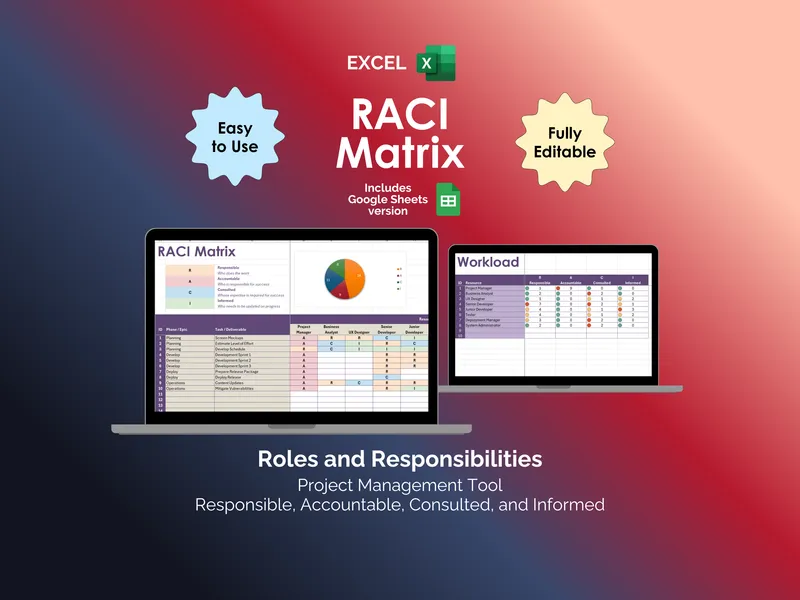
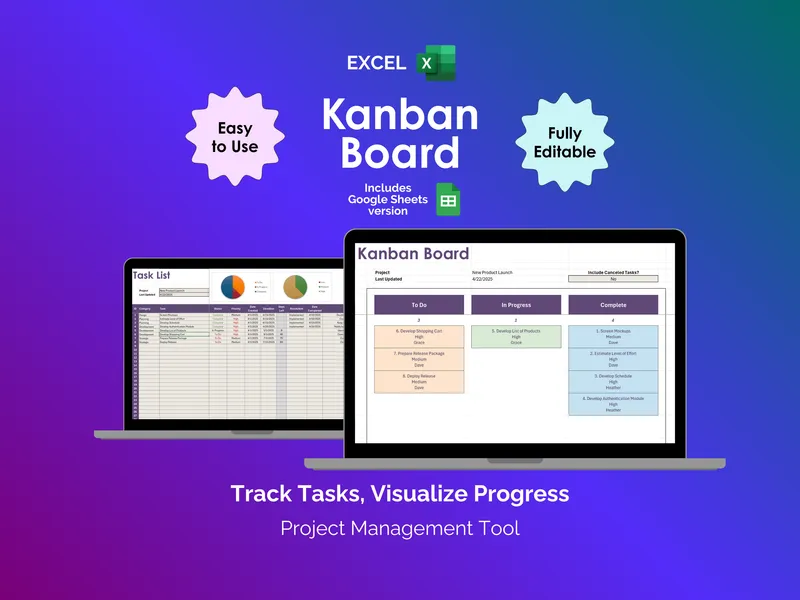
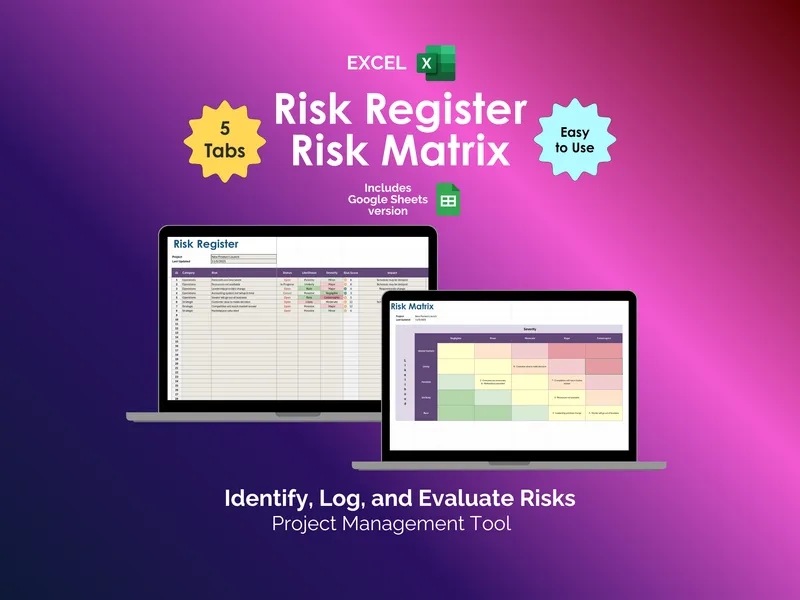
That usually means pairing an adaptive execution layer—a kanban board and a shared task tracker to run the day-to-day—with a predictive planning layer you build once and revisit at each gate. A clear RACI matrix settles who decides versus who delivers, and a living risk register captures what could derail you before it does. Those last two are exactly the kind of “Waterfall” artifacts teams quietly stopped maintaining—and are now sheepishly rebuilding.
The verdict
So, is Waterfall making a comeback? Not as a wholesale replacement for Agile—and the data is clear that pure predictive delivery is still slowly shrinking. Anyone selling you a “Waterfall is back, Agile is dead” headline is choosing drama over accuracy.
But the underlying instinct—that planning, documentation, and structure are valuable rather than embarrassing—is absolutely back. The 2026 winner isn’t Waterfall or Agile. It’s the team mature enough to take the best tool from each, ignore the dogma on both sides, and remember that the framework was never the point. Finishing the work was.
If your team has been running on Agile autopilot, the move this quarter isn’t to rip everything out and go back to a 40-page spec. It’s to ask a quieter question at your next kickoff: what would we actually be glad we wrote down before we started? Then write that down. That’s the comeback that matters.