Walk into any project management conference in 2026 and the keynote slide deck looks roughly the same: an “AI project assistant” demo, a number suggesting most PM work will be automated by 2030, and a panel about whether project managers will still exist in five years. Scroll through PM software vendor sites and the homepage hero is almost always “AI-powered” something.
Then walk back to your desk on Monday morning. You still have a status report due, a stakeholder who wants a one-pager by lunch, and three risks that just escalated overnight. The AI demo from the conference does not seem to be doing any of that for you.
The disconnect is the story. AI is genuinely reshaping parts of project management in 2026 — but not the parts the marketing decks emphasize, and not at the pace the predictions implied. After a year of “AI-powered” releases from every PM tool on the market, a clearer picture is finally emerging of what actually works in real project work, what was vaporware, and what is still a year or two from being useful.
This is that picture. But one finding runs through all of it, and it is worth stating before the detail rather than after: the feature that decides whether AI helps you is not in the AI. It is in the artifacts you were already maintaining — a current RACI matrix, a risk register someone actually touches, a board that reflects reality. Point a model at a stale tracker and you get confidently-worded slop. Everything below is which specific features earn a place on top of that, and which do not.
The Predictions That Set the Stage
Two numbers have been quoted at every PM conference since 2019. They are worth revisiting because they frame the current moment.
The first is Gartner’s 2019 prediction that 80% of today’s project management tasks will be eliminated by 2030 (opens in new tab) — specifically data collection, tracking, and reporting work. We’re four years from that target. The second is from PMI’s Pulse of the Profession 2025 (opens in new tab), a global survey of 2,841 project professionals that found only about 20% report having extensive or good practical AI skills. So we’re told 80% of the work will be gone, while 80% of practitioners say they don’t yet have the skills to use the thing that’s supposedly eliminating it.
That gap is where 2026 is being decided. Vendors are racing to make the prediction true. Practitioners are mostly figuring out, project by project, which features earn a spot in their actual workflow and which get muted after the second meeting where someone reads an AI-generated summary out loud and it gets a key detail wrong. It’s the same churn-and-evolution pattern behind the is Agile dead debate from last year — methodologies and tools shift; the underlying discipline doesn’t.
The Gartner outlook on AI projects more broadly is also worth holding in mind. In a June 2025 press release (opens in new tab), Gartner predicted that over 40% of agentic AI projects will be canceled by the end of 2027 due to escalating costs, unclear business value, or inadequate risk controls — and warned of widespread “agent washing,” where existing chatbots and automations get rebranded as agentic AI without much underneath. A separate July 2024 prediction (opens in new tab) flagged that at least 30% of GenAI projects would be abandoned after proof of concept by end of 2025. The same skepticism applies inside PM tooling. Some of the AI features released in the last 18 months are real and load-bearing. Many are demoware.
The job in 2026 is telling them apart.
What’s Actually Working
These are the categories where AI has moved past demoware into something PMs reach for repeatedly in real project work.
Meeting Summaries and Action Item Extraction
This is the one feature where the gap between the demo and the daily reality has closed. Auto-generated meeting transcripts, summaries, and action item lists from tools like the major video conferencing platforms now produce output good enough to ship to stakeholders with light editing instead of a full rewrite.
What changed: the models got better at speaker attribution, the integrations finally hand off cleanly into task systems, and the summaries lead with decisions and owners instead of paraphrasing the whole call. For many PMs, a 45-minute status meeting that once required ~20 minutes of post-meeting note cleanup can now be closer to a five-minute review-and-correct — illustrative numbers, but the direction is what most teams report.
The honest caveat: the summaries still confidently misattribute decisions and miss nuance in disagreements. For routine status meetings, the time savings are real. For high-stakes architecture debates or contentious stakeholder conversations, you still need a human note-taker because the AI will smooth out exactly the friction you needed to remember.
Status Report and Update Drafting
Drafting the first version of a weekly status report, an executive update, or a stakeholder one-pager is now reliably faster with AI assistance. Feed in your project tracker data, last week’s update, and a prompt about audience, and you can have a competent draft in under a minute. The editing time is still real — but you’re editing instead of staring at a blank page.
This works because status updates follow predictable structures (RAG status, milestones, risks, asks) and the LLM is good at the assembly job. It’s worse at the judgment calls about which risk to surface to which audience — that’s still your job — but the keystroke work is largely gone.
Risk Identification on New Projects
A surprisingly load-bearing use case in 2026 is asking an AI to brainstorm risks at project kickoff. You describe the project — scope, timeline, dependencies, team composition, vendor landscape — and ask for the top 20 risks you should be thinking about. The output is rarely all novel, but it consistently surfaces 3-5 risks you hadn’t put on your list yet, especially in domains adjacent to but outside your direct experience.
This works because risk identification rewards breadth over depth, and LLMs are very good at breadth. They’re trained on enough project post-mortems and case studies to pattern-match against scenarios that have gone wrong before. You still need a human to assess probability and impact, but the starting list is meaningfully better than what one person generates in a kickoff workshop.
Document Drafting and Template Filling
Generating first drafts of project charters, scope statements, communication plans, and similar standard artifacts has gone from an hour-long blank-page exercise to a short cycle of prompt, review, edit. The drafts need editing. They always need editing. But the cold-start problem has been solved for any project document that has a recognizable structure.
Code, Query, and Spec Review on Technical Projects
For PMs running technical projects, the most underrated use of AI in 2026 is asking it to review a technical artifact you don’t fully understand — a SQL query, a small code change, an architecture diagram, an API spec — and explain it in plain language with a few “questions worth asking the team” attached. You’ll never know enough to challenge an engineer on the merits, but you’ll know enough to ask the right next question. That changes the meeting dynamic.
What’s Still Hype
These are the features that the demos sell hard and the daily reality doesn’t yet deliver.
“Autonomous” Project Management Agents
The most aggressively marketed and most under-delivering category. The pitch is an AI agent that reads your project plan, monitors progress, replans automatically when something slips, sends nudges to stragglers, and updates stakeholders without you in the loop. The reality is that these agents work in tightly constrained demo environments and fall apart the moment they meet a real project with ambiguous status, political dynamics, and humans who don’t update their tickets on time.
Gartner’s April 2026 finding that only 28% of AI use cases in IT infrastructure and operations fully succeed and meet ROI expectations (opens in new tab), with 20% failing outright, is a useful proxy for the broader AI-project failure pattern. The PM-agent category looks to be following the same curve: lots of pilots, few that make it to production.
This will probably get real eventually. It is not real in mid-2026.
Predictive Schedule and Budget Forecasting
The dream is an AI that looks at your project data and tells you exactly when you’ll finish and what it will cost, with calibrated confidence. The reality in 2026 is that these forecasts are only as good as the historical data they were trained on, and most organizations’ historical project data is patchy, inconsistently labeled, and full of survivorship bias.
The forecasts are not useless. They are not yet trustworthy enough to bet a roadmap commitment on. Treat them as one input into your judgment, not as a substitute for it.
“AI-Powered” Resource Optimization
A frequent feature in capacity planning tools. The pitch is an AI that optimally allocates people to projects given skills, availability, and priorities. The reality is that the optimization is real but the inputs are wrong — skills data is out of date, availability is fiction once meetings get scheduled, and “priority” is a political variable that doesn’t survive contact with quarterly planning. Garbage in, optimized garbage out.
Auto-Generated Stakeholder Communications
You can use AI to draft stakeholder messages (see above). You should not let AI send stakeholder messages. The cautionary stories from teams that tried this in 2025 are familiar: a tone-deaf auto-sent update landing during a sensitive moment, an escalation framed as routine, a layoff-week status that read like any other week. The judgment about when and to whom to communicate is the PM’s actual job. Don’t outsource it.
What’s Promising but Not Yet Real
A category worth tracking but not yet betting on.
Cross-Project Pattern Detection
The next genuinely useful category, but the products aren’t here yet. The idea: an AI that watches your organization’s project portfolio over time and surfaces patterns — “projects with these characteristics tend to slip by 30%,” “you’ve had four projects in a row miss this milestone,” “the same dependency keeps showing up as a risk and nobody owns it.” This requires accumulated structured data across many projects and a meaningfully different kind of model than today’s chat-style assistants.
Early versions exist. They’re not yet good enough to act on. Watch this space in 2027.
Live Risk Re-Scoring
The promise: an AI that continuously re-scores risks based on current project state, external signals, and changes in the dependency graph. The reality: most risk registers are still updated manually once a month, the live signal data isn’t piped in anywhere useful, and the “re-scoring” amounts to flagging things that already changed. Useful when it works. Doesn’t work yet at the level needed to replace judgment.
Stakeholder Sentiment Tracking
Some tools claim to read meeting transcripts, email threads, and Slack channels to assess stakeholder sentiment over time. The signal is real but noisy, the privacy implications are real and uncomfortable, and the action you’d take from a “stakeholder sentiment dropped 12%” alert is usually “go talk to them” — which you should have been doing anyway. Interesting telemetry, unclear ROI.
A Quick Comparison: What to Actually Adopt
If you only have time to integrate two or three AI capabilities into your 2026 workflow, here’s how the categories above stack up on effort versus payoff.
| Capability | Adoption Effort | Payoff Today | Verdict |
|---|---|---|---|
| Meeting summaries & action items | Low | High | Adopt now |
| Status report drafting | Low | High | Adopt now |
| Risk identification at kickoff | Low | Medium-High | Adopt now |
| Document and template drafting | Low | Medium | Adopt now |
| Technical artifact review (for non-technical PMs) | Low | Medium-High | Adopt now |
| Predictive schedule/budget forecasts | Medium | Low-Medium | Pilot, don’t commit |
| AI-powered resource optimization | High | Low | Wait |
| Autonomous PM agents | High | Low | Wait |
| Auto-sent stakeholder communications | Medium | Negative | Avoid |
| Cross-project pattern detection | High | Not yet | Watch in 2027 |
The pattern is clear. The low-effort, high-payoff cluster is all drafting and summarization — work where the AI gives you a better starting point and you do the editing. The high-effort, low-payoff cluster is all decision-making and autonomous action — work where the AI is supposed to replace judgment and currently can’t.
Adopt the first cluster. Let vendors burn money perfecting the second one.
What This Means for Your Actual Workflow
Treat 2026 as the year you redesign the boring parts of your PM workflow around AI assistance, while keeping the judgment parts firmly in your hands.
The redesign is not dramatic. It looks like:
- Stop drafting status updates from scratch. Feed your tracker data into an AI, get a draft, edit it for tone and audience, ship it. For many PMs this reclaims a meaningful chunk of weekly admin time.
- Start every kickoff with an AI risk brainstorm. Then bring the list to your team and stress-test it. You’ll catch more, faster.
- Auto-generate meeting summaries for every recurring status call. Review and forward. Reserve human note-taking for high-stakes meetings.
- Use AI as your “explain this to me” partner when a technical artifact lands in your inbox. The questions you generate from a five-minute AI explanation are usually the right questions.
- Don’t change your decision-making process. Stakeholder management, prioritization, escalation, scope negotiation — these are still the job. Nothing in 2026’s AI toolkit replaces them.
The PMs who’ll have a clear edge by the end of 2026 are not the ones running pilots on autonomous agents. They’re the ones who quietly rebuilt their weekly admin around AI drafting and freed up real time to spend on the work that actually moves projects.
The Underlying System Still Matters
One pattern that’s becoming visible: AI assistance amplifies the quality of the system feeding it. If your project tracker is messy, your status reports are inconsistent, and your risk register hasn’t been touched in two months, AI drafting produces confidently-worded slop. Garbage in, polished garbage out.
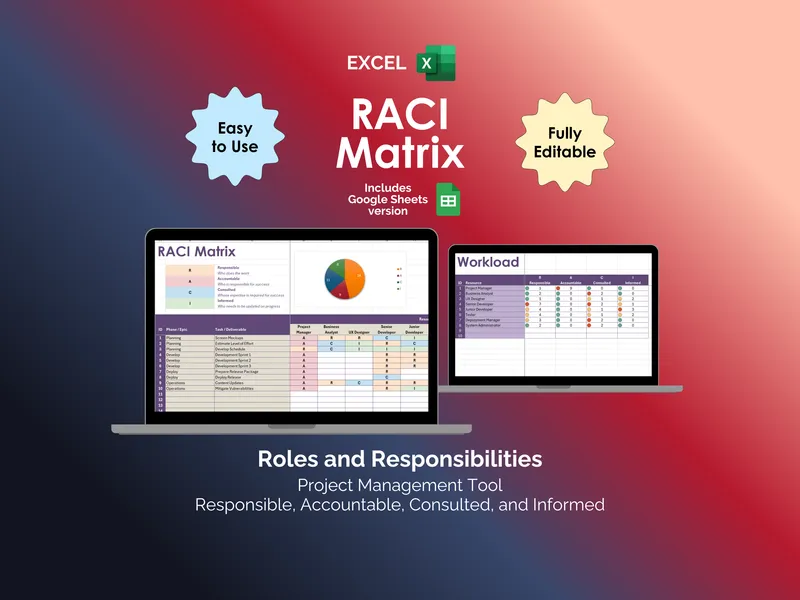
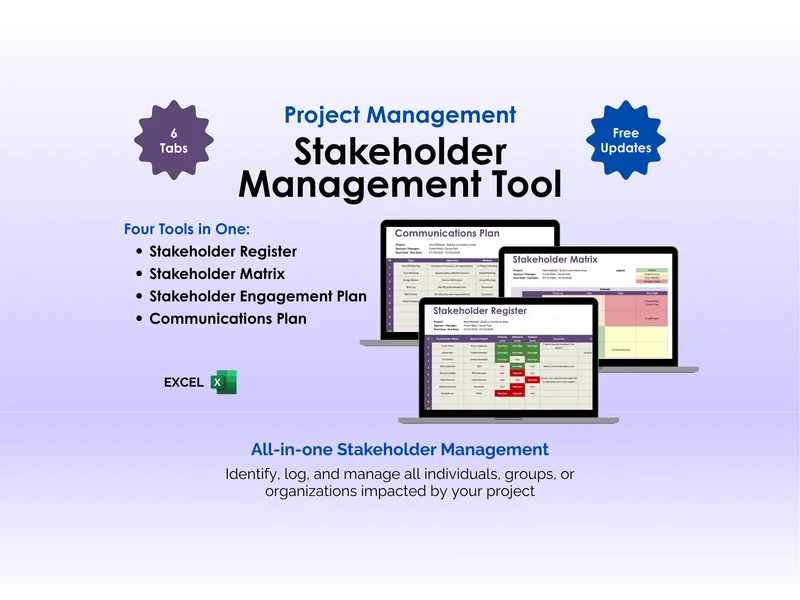
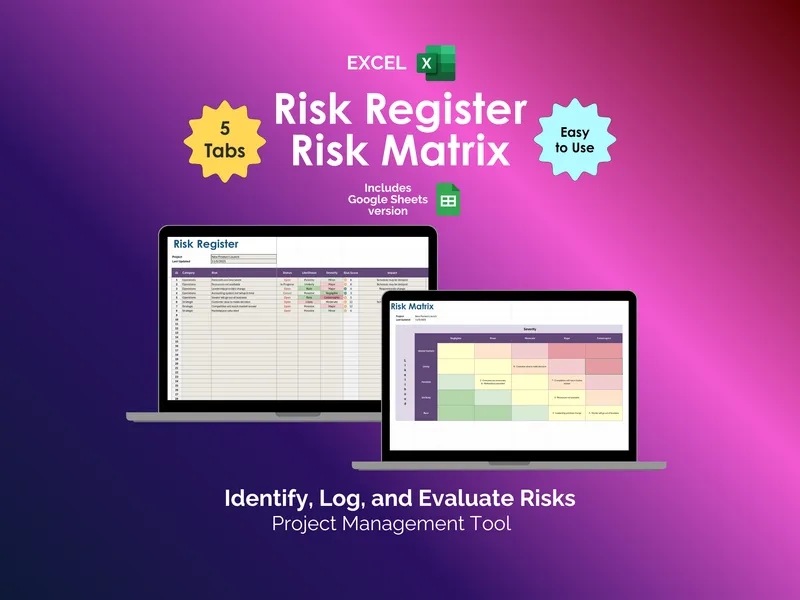
The PMs getting the most out of AI in 2026 are the ones whose underlying artifacts — RACI matrices, risk registers, stakeholder maps, communication plans, kanban boards — were already reasonably well-maintained. The AI is then doing pattern-matching against a real signal. Without the signal, it’s just confabulating in your voice.
This is the unglamorous answer to “how do I get more out of AI in my PM work in 2026”: maintain the boring artifacts.
- A current RACI matrix makes AI-drafted stakeholder updates land with the right people.
- A real stakeholder register gives the AI enough context to tailor a message instead of producing generic copy.
- A maintained risk register is what makes AI risk brainstorming a stress-test instead of a from-scratch exercise.
- A working kanban board and task tracker give AI status drafting the inputs it needs to be useful.
- A live communications plan keeps AI-drafted messages on the right cadence and tone for each audience.
The teams that built these habits before AI got good are the ones for whom AI is now genuinely accelerating. The teams that hoped AI would replace the underlying discipline are the ones whose pilots are quietly winding down.
And when your project portfolio outgrows individual tracking artifacts and you need a unified system across teams, Ardent Seller (opens in new tab) is the next step.
The 2026 Bottom Line
AI is not eliminating project management in 2026, and the 80%-by-2030 prediction (opens in new tab) looks increasingly like a useful provocation rather than a literal forecast. What AI is doing — quietly, and faster than most vendors are telling the story — is collapsing the time PMs spend on drafting, summarizing, and template work. What it is not doing, despite the marketing, is replacing the judgment calls that make a PM useful in the first place.
The right posture for 2026 is to adopt the boring AI features that save hours and ignore the exciting ones that promise to replace you. The first group is real. The second group is mostly vendors trying to make the 2019 prediction true on schedule.
Project management isn’t dying in 2026. It’s getting its admin time back.
Sources
- Gartner: 80 Percent of Today’s Project Management Tasks Will Be Eliminated by 2030 as Artificial Intelligence Takes Over (March 2019) (opens in new tab)
- PMI Pulse of the Profession 2025 (PDF) (opens in new tab)
- Gartner: Over 40% of Agentic AI Projects Will Be Canceled by End of 2027 (June 2025) (opens in new tab)
- Gartner: 30% of Generative AI Projects Will Be Abandoned After Proof of Concept By End of 2025 (July 2024) (opens in new tab)
- Gartner: AI Projects in I&O Stall Ahead of Meaningful ROI Returns (April 2026) (opens in new tab)