What the clinical process covers
AHRQ's PSNet primer on medication reconciliation describes reviewing the medication regimen at admission, transfer and discharge against the regimen intended for the new setting. Differences can be intentional or accidental. Identifying and resolving discrepancies is part of the care team's work, not just copying a list.
A three-column way to prepare questions
Our worksheet organizes the records into taken at home, given during the stay, and prescribed at discharge. This is a practical organizing format, not a required clinical protocol. Mark apparent changes as New, Stopped, Dose or timing changed, or Unchanged; add “needs confirmation” whenever the instructions are unclear.
For an illustrative comparison of eleven medicines, you might count two new, two stopped and one with changed instructions. That count prepares five questions; it does not establish whether any of those changes are correct. Ask the prescriber or pharmacist to confirm the current plan before acting on a discrepancy.
Why the family's own list matters at admission
A current home list gives the care team a starting point when the patient cannot recall every medicine. Check it with the person taking the medicines and include any uncertainty about actual use. Treat the family copy as information to verify with the care team, not as an independent prescription.
The family's record supports clinical review
A family can record names, actual use and questions; clinical reconciliation goes further by resolving discrepancies. AHRQ's brown-bag review guidance recommends bringing medicine containers and discussing how they are actually used with the reviewing clinician, pharmacist or nurse. Include over-the-counter medicines and supplements as well as prescriptions.
Medication reconciliation vs a medication tracker
A medication tracker is an ongoing record: the medicines someone takes day to day, their doses, and their refill schedule, kept up over months. Medication reconciliation is tied to a transition — it includes the clinical review done around a hospital stay, at the points where the list is most likely to change without anyone noticing. A well-kept tracker helps prepare the "what was taken at home" column for confirmation; the two support each other rather than replacing one another.
More on a hospital stay
Reconciliation is one piece of a discharge. The discharge summary is the clinical record the hospital writes about the whole stay, and its medicine list is meant to be the reconciled one; what to ask before a hospital discharge covers the medicines alongside the five other domains a discharge turns on; and a printable kit versus the patient portal discusses how a personal record can complement the hospital portal.
Where to start
Begin with the free One-Page Patient Summary — no email, no signup. It's the single sheet that records the home medicine list, conditions, and allergies to hand a new clinician on arrival.
The Hospital Stay & Discharge Field Kit is built around the comparison itself: a working sheet that takes those three lists and writes New, Stopped, Dose changed, or Unchanged against every medicine, counts the result, and writes the hand-over page from the same numbers — a fillable PDF, print-and-carry, no spreadsheet involved. The caregiver templates hub has the rest of the set.
This is a records-organizing approach — not medical advice, and not a substitute for the prescriber or pharmacist going through the list with you.
Templates that implement this
Templates that carry the comparison
4 templates
A print-and-carry and fillable field kit built around the three-column comparison, plus the day-to-day medication tracker and the wider caregiver binder it feeds into.
- $12.95 PDF
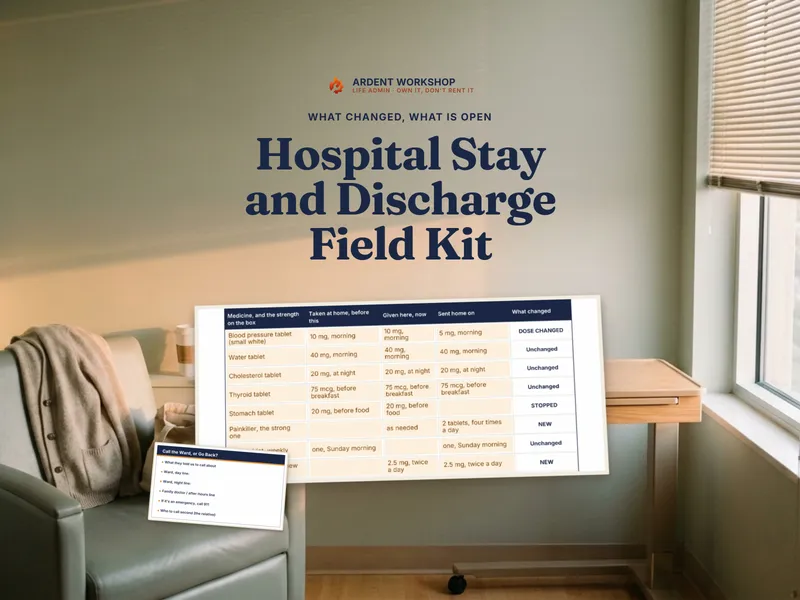
Hospital Stay & Discharge Field Kit — Print-and-Carry Pages, Cut-Out Cards, and a Fillable PDF That Compares the Medicine List and Counts What Is Still Open Before Discharge
A hospital stay and discharge kit that compares the medicine list for you — new, stopped, dose changed — and counts what is still open before you leave.
Life AdminView details - $18.95 Spreadsheet
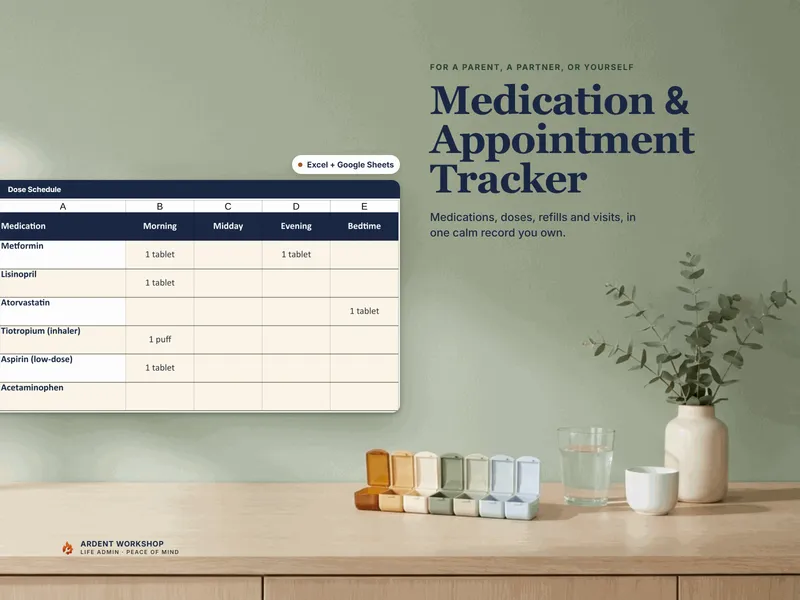
Medication & Appointment Tracker — Medication List, Dose Schedule, Refill & Appointment Organizer (Excel + Google Sheets)
A medication and appointment tracker to organize medications, doses, refills, and upcoming appointments in one file you own (Excel + Google Sheets).
Life AdminView details - $24.95 Spreadsheet

Caregiver / Aging-Parent Care Binder — Medications, Refill Status, Appointments & an Emergency Handoff Sheet That Writes Itself (Excel + Google Sheets)
Caregiver binder for an aging parent: medications flagged Order now or Due soon by refill date, appointments, care team and documents — plus a self-writing emergency handoff sheet.
Life AdminView details - $59.00 Bundle
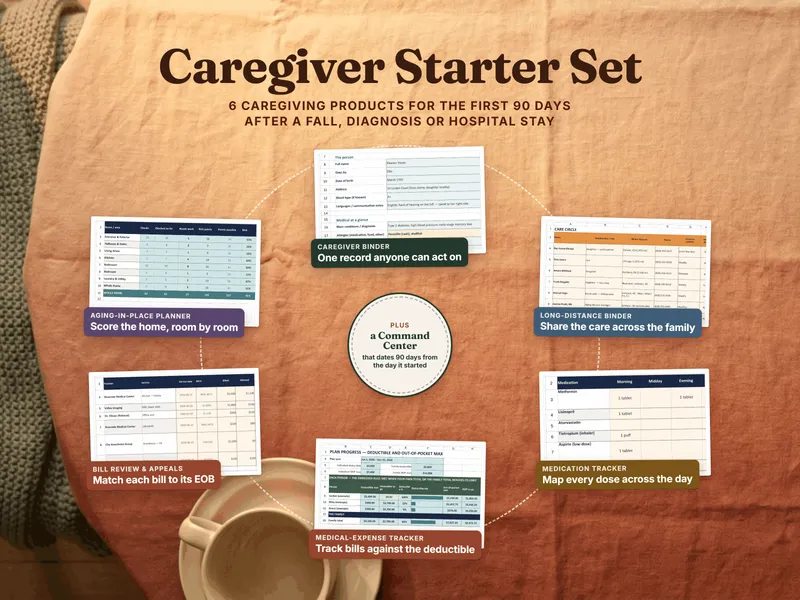
The Caregiver Starter Set — 6 Caregiving Products + a Command Center for the First 90 Days After a Fall, Diagnosis or Hospital Stay (Excel + Sheets)
Six caregiving products, plus a Command Center that plans the first 90 days after a fall, diagnosis or hospital stay, with owners and a cost split.
Life AdminView details