What aging in place actually involves
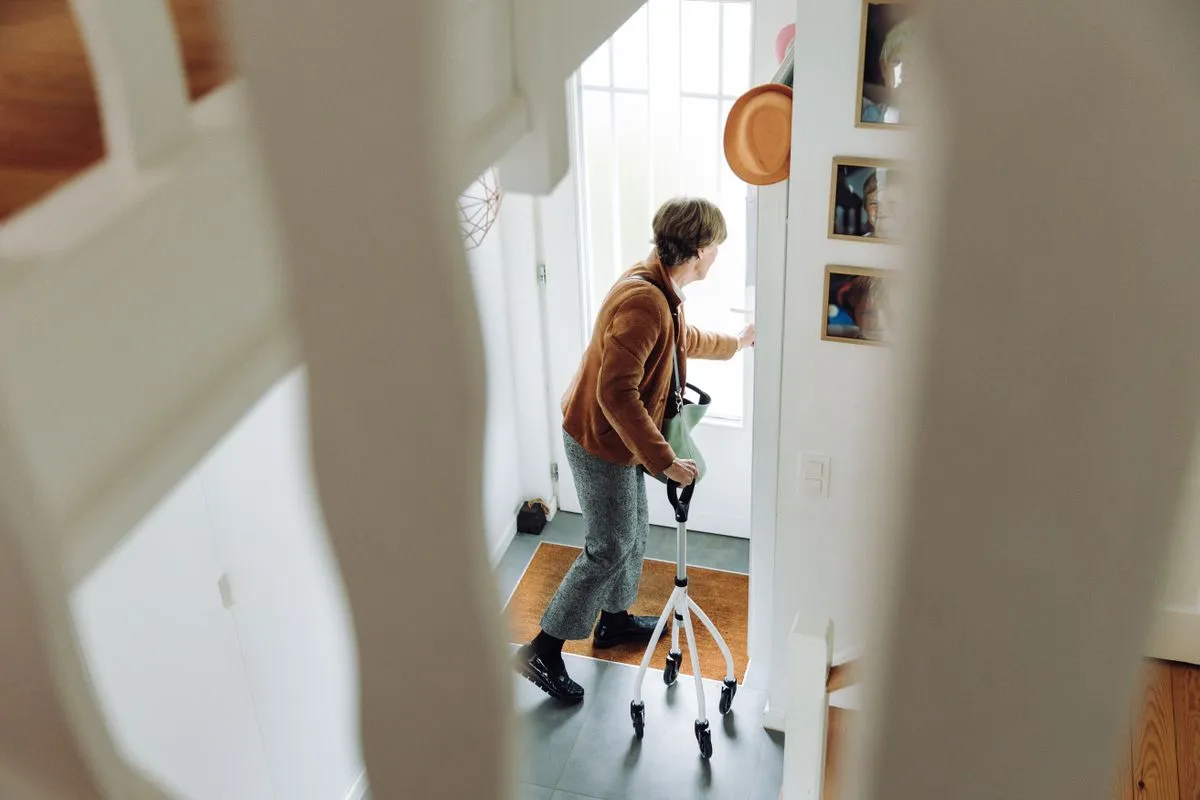
Aging in place — sometimes called "aging in community" — is less a single decision than an ongoing adjustment. As mobility, eyesight, and balance change, the home that worked for decades starts to work against the person living in it: stairs without a rail, a tub with a high wall, a dark hallway to the bathroom. The core of aging in place is closing that gap between the house as it is and the person as they are now, usually through home-safety modifications:
- Grab bars and handrails — beside the toilet, in the tub or shower, and running the full length of every stairway, anchored into studs so they hold.
- Lighting — brighter, more even light, and a lit path from the bedroom to the bathroom for the night trip that's made half-asleep.
- Trip hazards removed — loose rugs, cords across walkways, and clutter on the stairs; among the first things a home-safety visit addresses.
- Bathroom safety — non-slip surfaces, a shower seat, a comfort-height or raised toilet, and a door that can be opened from the outside.
- A way to call for help — a phone within reach from the floor or a medical-alert device, for the fall that happens when no one else is home.
Why aging in place matters
Surveys consistently find that most older adults want to stay in their own homes, and the emotional stakes are high on both sides — a parent's independence and a family's peace of mind. But "make the house safer" is a vague, overwhelming worry with no obvious first step. That's the real problem aging-in-place planning solves: turning a scattered list of "what needs fixing" into a prioritized plan, so the changes that matter most get made instead of postponed.
Start with the cheap, high-impact fixes
The trap is the expensive idea. Families often arrive fixed on the big project — a walk-in shower, a stairlift, a ramp — which needs a decision, so it gets put off, and while everyone waits the tub still has no grab bar and the hallway is still dark. The better order starts with the cheap, high-impact fixes: non-slip strips, night lights, a removed rug, and a grab bar cost very little between them and address some of the most serious risks. A good aging-in-place assessment ranks the work by safety gained per dollar so the weekend fixes come first and the expensive ones stay on the list for when the money and the moment line up.
Aging in place is planning, not medical advice
Organizing a home-safety plan is a family's own record-keeping — it isn't medical, occupational-therapy, or building-code advice, a safety certification, or an inspection. For an assessment of a specific person in a specific home, ask a doctor for a referral to an occupational therapist: they assess the actual person in the actual home, they see what family misses, and it is often covered by Medicare or insurance when a doctor orders it, though coverage varies by plan. A planning tool is a very good way to arrive at that appointment prepared; it is not a way to skip it.
Where to start with aging in place
Begin with the free Home-Safety Walkthrough Checklist — a printable room-by-room list of the higher-risk checks — and follow the step-by-step guide to planning home modifications to age in place. Then turn it into a scored, ranked plan with the Aging-in-Place & Home-Safety Modification Planner, a file the family owns. Weighing a subscription app instead? See aging-in-place planner vs a home-safety app, and the caregiver templates hub for the full set.
Templates that implement this
Plan the home modifications
3 templates
A planner that walks a parent's home against 62 safety checks, scores the risk room by room, and ranks every fix by safety gained per dollar — a file the family owns.
- $21.95 Spreadsheet

Aging-in-Place & Home-Safety Modification Planner — 62-Point Room-by-Room Fall-Prevention Assessment, Ranked by Safety Per Dollar (Excel + Google Sheets)
Aging-in-place home safety, made into a plan: walk a parent's home against 62 checks, score the risk by room, and rank every fix by safety per dollar.
Life AdminView details - $24.95 Spreadsheet

Caregiver / Aging-Parent Care Binder — Medications, Refill Status, Appointments & an Emergency Handoff Sheet That Writes Itself (Excel + Google Sheets)
Caregiver binder for an aging parent: medications flagged Order now or Due soon by refill date, appointments, care team and documents — plus a self-writing emergency handoff sheet.
Life AdminView details - $19.95 Spreadsheet
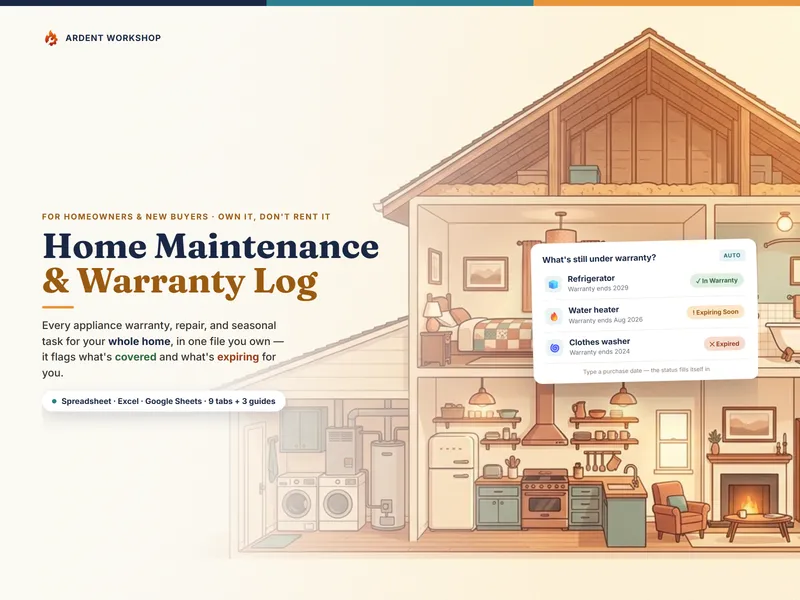
Home Maintenance & Warranty Log — Appliance Warranty Tracker, Repair Log & Seasonal Home Maintenance Checklist (Excel + Google Sheets)
Track every appliance warranty, repair, and seasonal task in one spreadsheet you own — type a purchase date and it flags what's still under warranty.
Life AdminView details