What a security deposit is for
A deposit exists to give a landlord a source of recovery for a narrow set of things, without having to sue for them. In most places that set is roughly: unpaid rent, damage beyond ordinary wear and tear, and sometimes cleaning costs or other charges the lease specifically allows. It is not a general fund the landlord may draw on for anything they would like to improve.
The most important consequence of that narrowness is easy to miss: the deposit is your money. A landlord who keeps part of it is asserting a claim against you, and many states require them to say what the claim is — check whether yours is one. That framing changes how the end of a tenancy feels. You are not asking for a favor; you are answering an itemized bill.
What can a landlord deduct from a security deposit, and how long do they have?
Security deposits are governed almost entirely by state law, and sometimes city ordinance, alongside the terms of your own lease. Those rules commonly address:
- A cap on the amount — many states limit a deposit to a multiple of the monthly rent. Many others do not cap it at all.
- How it must be held — some jurisdictions require a separate or escrow account, notice to the tenant of where it is held, or interest paid to the tenant.
- What may be deducted — and, critically, that ordinary wear and tear is generally not deductible.
- A deadline for return, usually counted in days after the tenancy ends or after you hand over keys or give a forwarding address.
- Whether an itemized statement is required when anything is withheld.
- A penalty for non-compliance — several states provide real consequences for a landlord who misses the deadline or withholds in bad faith.
Every one of those varies enormously between places, and they change. That is why this page deliberately states no number of days, no cap, and no deduction rule: any figure printed here would be wrong for most people reading it. Look up your own state's rule once — your state or city housing agency, your state attorney general's consumer division, and local tenants' rights organizations all publish it, usually for free — and write it down where your tenancy records live. USAGov's tenant-rights and landlord-complaint page (opens in new tab) is a reasonable place to find the agency that covers your state.
What a security deposit is not
- Last month's rent paid in advance is often treated as a different thing — a month you have already paid for rather than security held against a claim. Some states treat it as a deposit anyway. Read which one your lease says you paid, and check your state.
- A non-refundable fee — some leases charge a separate cleaning, pet, or administrative fee described as non-refundable. Whether that is permitted, and whether calling something a fee changes its treatment, depends on where you are.
- An amount you are stuck with. Deductions can be disputed. What usually stops a tenant is not agreement — it is having nothing to answer with.
What decides a security-deposit dispute, once the law and the lease are settled
Beyond what your state's rule and your own lease say, what decides it is dated evidence of the condition of the unit at both ends of the tenancy — not who is more insistent. At move-out, two people look at the same worn carpet. One of them has a photograph of it taken on the day the keys changed hands. That person is describing a fact; the other is offering a recollection.
That gives a short, unglamorous list of things worth doing — each one covered step by step in how to document a rental to protect your deposit:
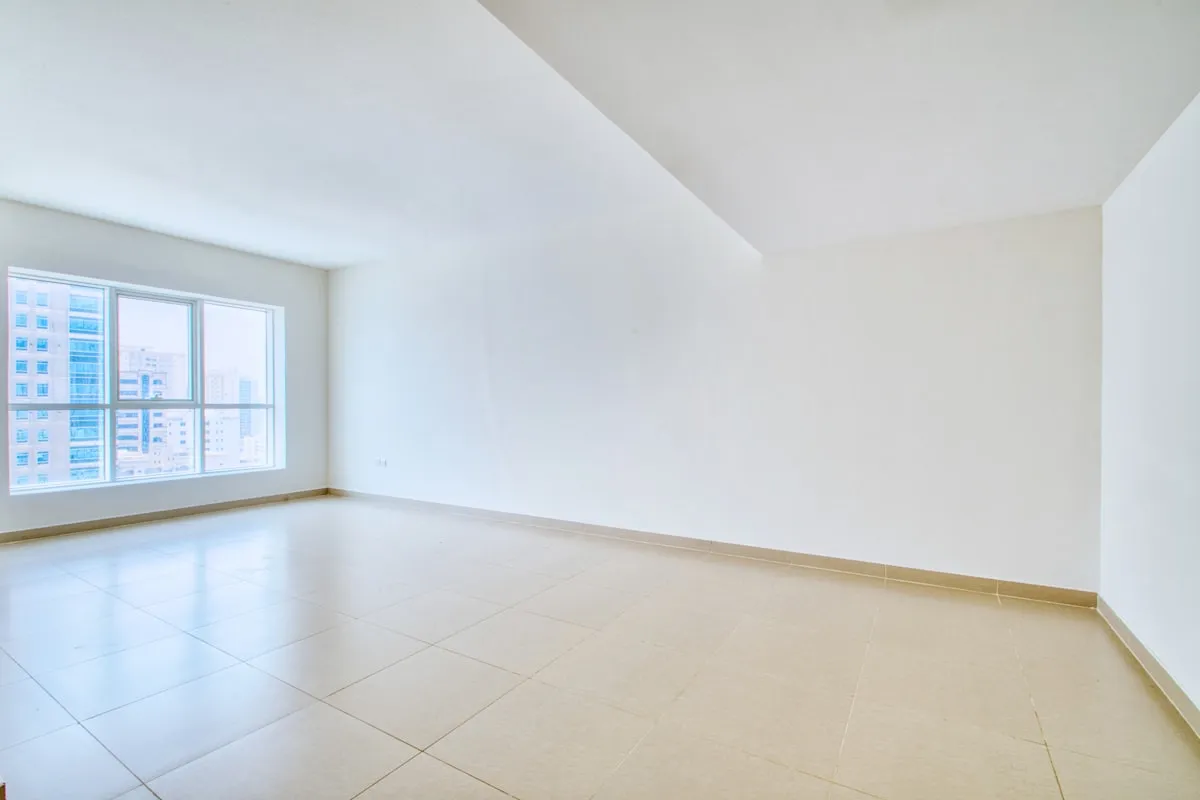
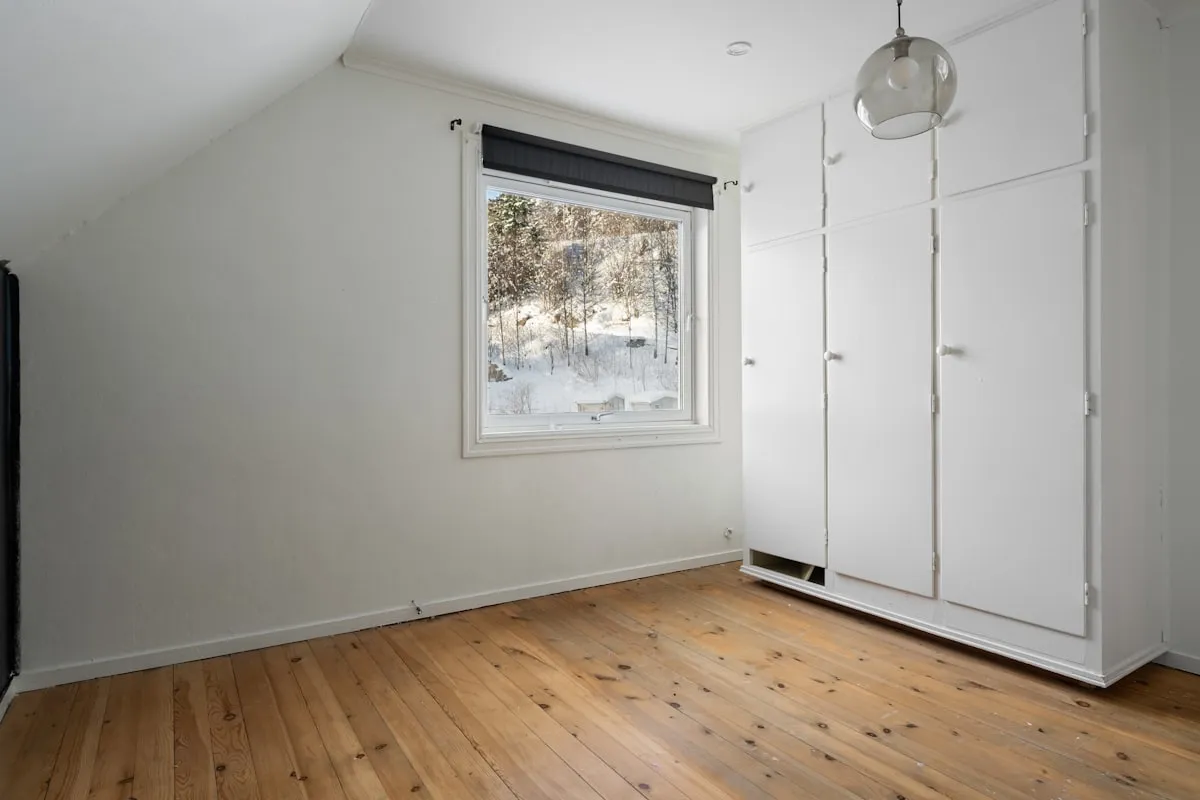
- Photograph the empty unit before a single box comes in — wide shot of each room, then close on every mark, floors shot low from two opposite corners. An empty room photographs honestly.
- Record the items that are already imperfect, and photograph those especially. "It was already like that, and here is the picture" is the strongest sentence available to a tenant.
- Send the completed condition record to the landlord and keep proof that you sent it. Sent, it is a shared record; unsent, it is your private opinion of a unit you were alone in. Keep the record to conditions, dates, and photo references — no account numbers, no policy numbers, no logins, no door or alarm codes — because this is a file you may end up emailing to a landlord, a mediator, or a small-claims clerk.
- Ask for repairs in writing, always, even the ones you also phone in — and keep the thread.
- Walk the unit again before you leave, in the same order, from the same angles. Do it about two weeks early, while a forty-dollar problem is still a forty-dollar problem.
- Give a forwarding address in writing. In some states the return deadline runs from this rather than from the day you hand back the keys — one more reason to do it in a form you can prove.
If your security deposit does not come back
Work from the itemization rather than from a feeling. Go through their statement line by line and accept the lines you honestly owe — a demand that concedes four genuine charges is far harder to dismiss than one that concedes none. Then dispute the rest with evidence rather than adjectives: name the photograph, the date it was taken, and what it shows. State the figure you believe is owed, give a reasonable date, and say plainly what you will do next. Small-claims courts are generally designed to be used without a lawyer, and a written demand that names dates and photographs gives a landlord a reason to answer before it gets that far.
A demand letter is the usual form that takes. Before you send one, look up your own state's deadline and penalty rules — and if real money is at stake, a tenants' rights organization or a legal-aid organization near you (opens in new tab) is the next call — legal aid is free if you meet its income eligibility.
Protecting a security deposit starts on day one, not on the last day
The free Move-In Condition Checklist is the day-one walk on paper: 28 checks, room by room, with a box for the condition and a box for whether you photographed it. No email, no signup. The Renter's Home Records & Deposit-Protection Binder is the same walk with all 70 checks, scored again on the way out and compared row by row.
Wherever you keep the record, keep it somewhere you will still have it after you hand back the keys. Your landlord's portal holds the landlord's version of the tenancy and access to it commonly ends when the lease does — that is the argument for keeping your own file rather than relying on a rental-management app. More letters and records for tenants are on the templates for renters page.
This page is general information about how security deposits work, not legal advice, and it does not describe the rule in any particular state. For your own situation, check your lease and your state's own guidance.
Templates that implement this
Records that protect a deposit
2 templates
The evidence a deposit argument turns on is made on day one, not at move-out. A binder that scores the unit when you arrive, scores it again when you leave, and compares the two.
- $21.95 Spreadsheet
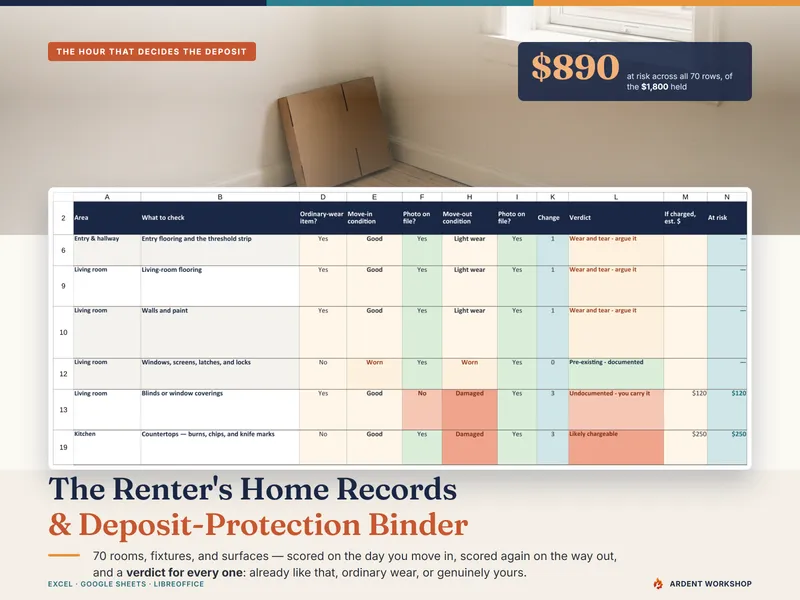
Renter's Home Records & Deposit-Protection Binder — a 70-Row Move-In / Move-Out Condition Log That Scores Both Ends, a Notice-to-Vacate Countdown, and a Deposit Worksheet (Excel + Google Sheets)
Score 70 things on move-in day and again on the way out. The binder compares them and shows what your own record has as pre-existing, wear, or at risk.
Life AdminView details - $14.95 Mix

Home & Household Scripts & Letters Swipe Bank — 37 Household Letter Templates, Each Also Shown Written Out in Full: Repair Requests, Deposit Demands, Billing Disputes & HOA Letters
37 household letter and message templates, each shipped twice — as a fill-in-the-blanks version and written out in full. 74 written messages in all.
Life AdminView details