It is almost never the repair that is hard. It is the message.
The contractor who started the job and then stopped turning up. The deposit that came back $615 short with “full clean” on the statement and no invoice behind it. The bill with a charge nobody at the company can explain. The neighbor whose music carries, who you have to keep living next door to afterward. You open a blank reply box, write three sentences, delete them, and put it off for another week — and every week you wait makes the thing harder to fix.
This is a bank of 37 of those messages, already written.
These are message templates and general guidance — not legal advice. What you are entitled to, and by when, is set by state and sometimes local law; the templates route you to look yours up rather than telling you what it says. There is a fuller note at the foot of this page.
Every template comes twice — and the second one is the product
The first version is the template, with the blanks in brackets. Copy it, swap in your own facts, send it.
The second version is the same message written out in full — real dates, real numbers, real sentences, for a household we invented so the whole book hangs together. That is the version most people read first, because a blank template only shows you the shape of a message. It cannot tell you how firm is too firm, how much detail is enough, or where a sentence should stop. A finished one can, in about thirty seconds.
What is on every card
Each of the 37 templates sits on a card that carries:
- The situation it is written for — so you can tell quickly whether this is your message or the one after it
- The channel, the delivery method, and a realistic wait — email, a portal, mail with tracking or a return receipt, or a note through the door, and why that one; plus how long before a silence has become a fact worth writing down
- A before-you-write list — the two to five facts to have in hand first. This is the step people skip, and it is the one that decides whether a message gets answered, because a message carrying the account number, the date, and the prior reference reaches somebody who can act on it
- The message itself, with every blank bracketed
- What a good reply looks like — so you know whether you got one
- What to do if nothing comes back — the next rung, and where to stop and get real advice instead
- One make-it-yours note — the single change that most reliably makes that particular message work
The nine situations
- Hiring a contractor, and when the work goes wrong — quotes in identical words to everyone, asking for a lump sum to be itemized, declining without burning the bridge, chasing a contractor who has gone quiet mid-job, asking for defective work to be put right
- Renting — repairs, entry, and getting your deposit back — the standard written repair request, the urgent one, the follow-up when nothing has happened, the deposit request, and disputing a deduction line by line
- Bills, utilities and services — disputing a charge, correcting an estimated meter read, asking for a late fee to be waived or a plan set up, canceling so the billing actually stops
- Warranties, faulty goods and recalls — making a claim, asking for a replacement after repeat repairs, a faulty item the store won’t take back, checking a serial against a recall
- Movers, deliveries and damage — comparable moving quotes, a damage-and-loss claim, a delivery that arrived damaged or short, deliveries that keep failing
- Insurance claims and medical bills — notifying your insurer, chasing an adjuster, appealing a denial, requesting an itemized medical bill
- Neighbors and the HOA — the first note about noise, a shared fence or tree, responding to a violation notice, an architectural request written to be approved first time
- House-sitters, cleaners and the people you hand keys to — the sitter brief, setting or resetting scope, ending a regular service politely
- Subscriptions, and when you have to escalate — canceling an auto-renewal with proof, the four-line nudge, the final request before a formal complaint, and a written demand for money owed
The rule the whole bank is built on
Describe the thing, not the person.
“The faucet has leaked since May 30 and the cabinet base is now soft” is a fact somebody has to deal with. “Nobody in your office ever does anything” is an opinion they can dismiss — and it hands them the easier argument. The Start Here playbook takes that apart into six rules and then shows you twelve pairs of it side by side in a rewrite gallery: the same point written the way people write it when they are tired and fed up, and the way that actually gets a reply.
What “in writing” actually means
A perfect message sent the wrong way is a message that never happened. The playbook covers where each kind of message has to go and why — the portal your lease names for notices, the mailed copy with proof of delivery for anything you might take further, and the two-line habit that belongs after every phone call that mattered: “Just so I have it noted — you confirmed that…” Almost nobody writes back to correct one of those, which is exactly what makes it work.
Formats, and where these live
Nothing to install and nothing to log into. The four PDF books open on any device. The 37 plain-text files open in any editor, on any phone or computer — they exist because copying out of a PDF drags line breaks and stray spacing into your email and copying out of a .txt does not. The index opens in Excel, Google Sheets, Numbers or LibreOffice. The nine worksheets print at 100% on any ordinary printer, in US Letter or A4.
Own it, don’t rent it
These are files you keep. Edit the 37 text files, rewrite the ones you can improve, keep a copy of what you sent and when, hand one to a friend who is going through it. The four PDF books are the reference half; the text files and the index are the editable half. No account, no seat, and no subscription that decides one day it is no longer strategic and takes your templates with it.
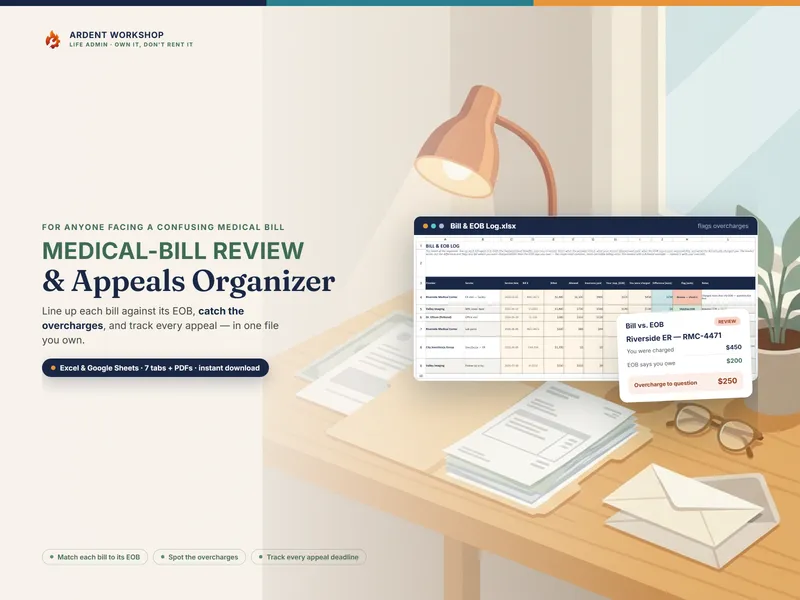
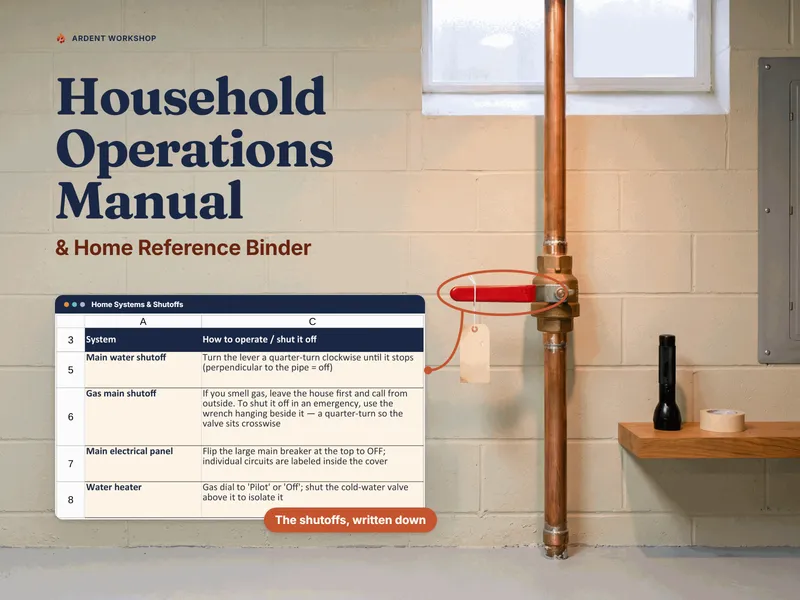
Nearly every template here asks for the same handful of things — the account number, the model and serial, when it was installed, who last serviced it, what the policy covers. The Household Operations Manual & Home Reference Binder is where a household keeps all of that, so those answers are already written down on the day you need to write one of these. If you are working through medical bills specifically — denials, appeals, and a paper trail across several dates of service — the Medical Bill Review & Appeals Organizer is built for that job.
Please read — what this is not
These are message templates and general guidance for writing clearly and keeping a record. They are not legal advice and are not a substitute for it. Deposit-return deadlines, what a landlord may deduct, what a warranty or a policy actually obliges anyone to do, what an association may enforce, how long you have to bring a claim, and what a small-claims court will hear are all set by state and sometimes local law, and they vary sharply. Nothing here tells you what your rights are.
What it does do is make sure that when you go and find out, you are holding a complete dated record and a clearly written request — which is the position everybody wishes they had started from. For anything where real money or your housing is at stake, spend an hour with a local attorney, a legal-aid clinic, or a tenants’ service before you take a step you can’t undo.
The example household in the worked examples — its people, addresses, account numbers, neighbors, and every business it writes to — is invented, and its phone numbers use the 555-01xx range reserved for fiction.
Want a taste first? Two of these templates are free and ungated: the repair request and the contractor quote request, both shown written out in full, exactly as they appear in the paid bank. Neither costs anything and neither asks for an email.