What goes in a demand letter
A demand letter does five things, and the order matters more than the wording. What follows is general guidance on how these letters are usually put together — not legal advice, and not a statement of what you are owed.
- The amount, in the first line. One figure, stated plainly. Not "compensation for the inconvenience" — a number.
- The arithmetic behind it. A list of lines that add up to that figure, each one explained. A demand for a round number reads as an opening position; a demand for $615 that is $420 plus $195, each with a reason, reads as a calculation.
- The dated history. What you asked for, when, through what channel, and what came back — including the times nothing came back. A gap in a dated list is part of the record too.
- The evidence you hold, listed and enclosed. Statements (redact account numbers and any lines that are not part of the claim), photographs, receipts, a condition report, the contract wording you are relying on.
- A deadline and a named next step. A real date, and the specific thing you intend to do if it passes.
Only name a next step you will actually take
This is where these letters lose their force. "I will be seeking legal advice" commits you to nothing and names no action, which is exactly why it is easy to set aside. A named, correct, proportionate next step is harder to ignore, because it tells the reader what specifically happens next: a filing in small-claims court, a complaint to a state public utility commission, a state insurance department, a state attorney general's consumer division, or a licensing board. Which of those covers your situation — and whether it covers it at all — depends on the dispute and on where you live, so find out before you name it, and be prepared to use it. USAGov's directory of state attorneys general is one place to start.
What a demand letter is not
- It is not a lawsuit. Nothing is filed and no case number exists. In most situations nobody is obliged to reply — though in some states, for some kinds of dispute, a written demand carries statutory consequences if it is ignored, which is one reason it is worth checking the rules where you live before you send one.
- It is not a threat. Stating what you intend to do next is normal; implying harm outside that, or demanding money you are not owed, is a different thing entirely and can rebound badly.
- It is not a first move. Sent before you have asked properly, it reads as unreasonable and makes the ordinary route harder. Ask, nudge, then formalize.
- It is not always required. In some situations a written demand is a sensible or expected step before a claim; in others a state makes one a prerequisite to filing, or attaches a deadline to the reply. Whether one is needed — and what it must say — depends on where you live and what kind of dispute it is, so check before you assume either way.
How to send a demand letter
By a method that gives you proof of delivery — mail with tracking or a return receipt — and by email as well, so the date is on record even if a letter goes astray. Keep the receipt with your copy of the letter. Proof that it arrived is half the point of sending it that way.
Where a demand letter sits on the escalation ladder
Skipping rungs makes you easier to dismiss, not harder. The usual order is:
- The ask — clear, dated, specific, sent the way that makes it count.
- The nudge — four lines on the same thread, with a new date on it.
- The formal complaint — the dated history, one named outcome, a real deadline, and the next step named.
- The demand letter, then the outside body — the regulator, agency, or court that actually covers this.
Get these letters written
Ardent Workshop publishes two of the ordinary asks that come first — a repair request and a contractor quote request — free, with no signup, each shown as a fill-in template and written out in full. The Home & Household Scripts & Letters Swipe Bank carries the rest, including the follow-up nudge, the final request before a formal complaint, and the demand letter itself — every one of them also written out in full for a worked example, so you can see the register before you write a word.
If you are earlier in the sequence, read how to ask a landlord for a repair in writing, or weigh swipe templates vs hiring help before you pay anyone. More tools for renting are collected at templates for renters.
This is general guidance on what a demand letter contains — not legal advice, and not a substitute for it. How long you have to bring a claim, what a small-claims court in your area will hear and up to what limit, and whether a written demand is required first are set by state and sometimes local law and vary sharply. For anything where real money or your housing is at stake, talk to a local attorney or a legal-aid organization near you before you send one.
Templates that implement this
The letters that come before it
3 templates
A demand letter only works if the record behind it exists. These are the messages that build that record — and the demand letter itself, written out in full.
- $14.95 Mix

Home & Household Scripts & Letters Swipe Bank — 37 Household Letter Templates, Each Also Shown Written Out in Full: Repair Requests, Deposit Demands, Billing Disputes & HOA Letters
37 household letter and message templates, each shipped twice — as a fill-in-the-blanks version and written out in full. 74 written messages in all.
Life AdminView details - $21.95 Spreadsheet
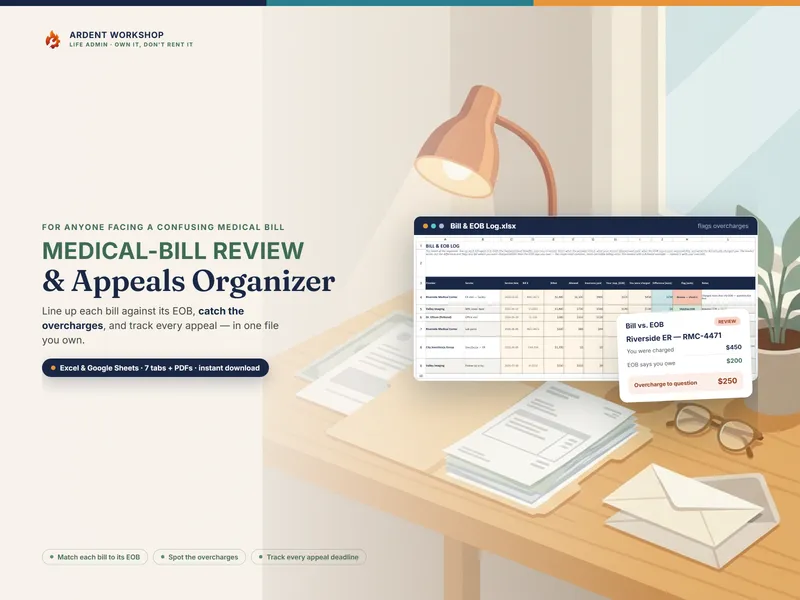
Medical-Bill Review & Appeals Organizer — EOB Matching, Denial & Appeal Tracker for Excel & Google Sheets
A medical-bill review & appeals organizer for Excel & Sheets — match bills to EOBs, catch overcharges, and track every denial and appeal you own.
Life AdminView details - $24.95 Spreadsheet
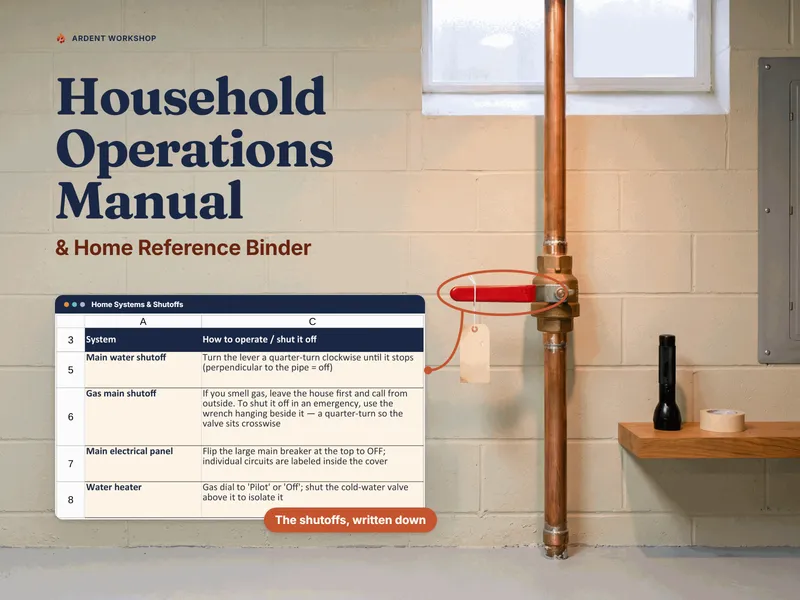
Household Operations Manual & Home Reference Binder — Utilities, Shutoffs, Maintenance, Emergency Contacts & House-Sitter Info (Excel, Google Sheets & Word)
Household operations manual for Excel, Google Sheets & Word: shutoffs, a maintenance schedule that computes what's due, and a house-sitter packet.
Life AdminView details