This isn't really templates-versus-consultants. Writing grants is a job with two separable bottlenecks, and most organizations have not worked out which one is theirs. The mistake is paying per-proposal rates to fix a problem that was actually “we have never written our boilerplate down.”
What each one is for
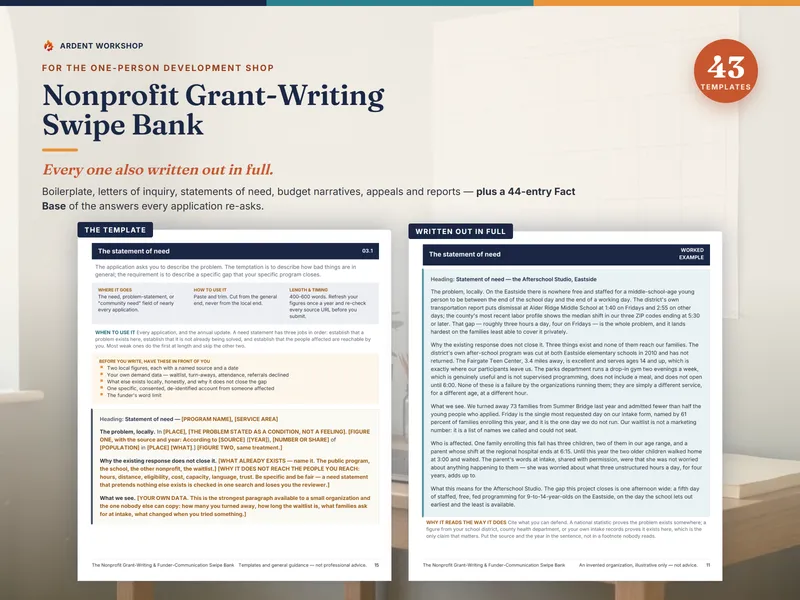
- A template library fixes the language bottleneck. It gives you the structure of every passage a grant year asks for, the order reviewers expect, the questions to answer, and — in a good one — a worked example so you can see what a finished version reads like. You own it, and it works for every funder, forever.
- A contracted grant writer fixes the capacity and judgment bottleneck. They bring hours you do not have, an opinion about which funders are worth approaching, and often relationships. They work per project, and the knowledge leaves with them unless you keep what they wrote.
What a template cannot do
- Decide who to approach. Funder research and fit judgment is the highest-value thing an experienced writer does, and no template supplies it.
- Supply your facts. Your number served, your budget, your outcome data and your local evidence are yours to produce. A template makes their absence obvious; it cannot fill the gap.
- Do the hours. Somebody still sits down and writes.
- Fix a weak case. If the program has no schedule, the outcomes are really outputs, or the ask is three times the funder's median grant, no phrasing rescues it.
What hiring cannot do
- Leave you better at it. Unless you keep and reuse what was written, the next deadline starts from the same blank box.
- Cover the small writing. The thank-you, the interim report, the reply when you are funded for less than you asked for, the email that says the hire is running late — nobody contracts a writer for those, and they are most of the year's funder communication.
- Answer the questions only you can. A writer's first task is to interview you for exactly the facts a fact base would already hold. Turning up with them written down makes the engagement cheaper and better.
The order that usually works
- Write the reusable facts once. Legal name and EIN, year founded, mission as approved, who you serve, number served and how you counted, budget, audit firm and year, indirect rate and its basis, board composition, your three most credible funders. Roughly a third of every application is these.
- Write your boilerplate at three lengths — 60 words, 150 words, and a full page — and freeze them.
- Submit two or three applications yourself using a structure, and find out where you actually get stuck.
- Then decide. If the answer is “we know what to write and there are no hours,” hire — and brief them from the material you now have. If the answer is “we did not know what a budget narrative was supposed to contain,” that is the part templates fix permanently.
The honest cost comparison
A template library is a single low one-time cost you keep and reuse for every funder and every year. A contracted writer is priced per proposal or per hour, recurring for as long as you need the help. The templates are not a substitute for a good writer on a complex federal application; they are what stops you paying professional rates to have somebody type your mission statement into a fourth portal.
Try the free half first
The Organization Boilerplate Builder is free and ungated — two of the Swipe Bank's 43 templates, each shown as a fill-in version and written out in full, plus the fact-gathering worksheet behind them. It is enough to tell you within a minute whether your bottleneck is language or hours.
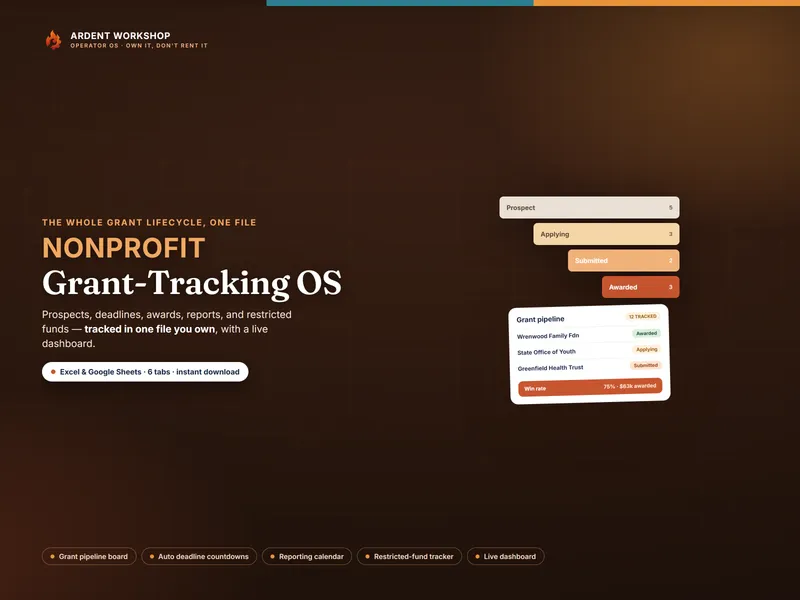
If it is language, the full Swipe Bank carries the other 41. If what you actually need is to know which report is due in March, that is the Nonprofit Grant-Tracking OS — and spreadsheet vs grant management software covers that decision. See also what a letter of inquiry is. One field grant budgets routinely ask for is your indirect cost rate and its basis — and it is rarely computed, because volunteer time and shared facility cost are seldom tracked, so there is nothing to divide. The Nonprofit & Congregation Operations Kit works it out from your own spend; the same kit's free Nonprofit Operating-Reserve Check is a no-signup way to try the same kit on a different figure — months of runway on unrestricted cash. See also the templates for nonprofits hub.
Frequently asked questions
- What does a grant writer actually do that templates don't?
- A grant writer brings three things a template cannot: judgment about which funders to approach, relationships and knowledge of what particular program officers respond to, and the hours to actually write and submit. A template library gives you the structure, the language, and a worked example of what a finished passage reads like — but somebody still has to sit down and fill it in with your organization's facts. If the bottleneck is knowing what to write, templates fix it. If the bottleneck is that nobody has the hours, they do not.
- How much does a grant writer cost?
- Independent grant writers usually charge either an hourly rate or a flat fee per proposal, and rates vary widely by region, experience, and the size of the funder. Ask any prospective writer for their rate structure, their turnaround, and two references from organizations your size — and get the scope in writing, because 'a proposal' can mean a two-page letter of inquiry or a twenty-page federal application. Be cautious of anyone offering to work for a percentage of grants awarded. The Association of Fundraising Professionals' Code of Ethical Standards bars its members from accepting compensation based on a percentage of contributions, and from finder's fees and contingent fees; the Grant Professionals Association takes the same position. Many funders view the practice poorly for the same reason.
- Can a small nonprofit write its own grants?
- Most small nonprofits already do — usually the executive director, at eleven at night, three hours before a portal closes. The problem is rarely that they cannot write; it is that they start every application from a blank box, rewrite the same facts about their organization for the fourth time, and have never seen what a funded application actually reads like. A structured template library with worked examples closes that gap directly, and it costs a fraction of one contracted proposal.
- Should we use templates or hire someone?
- It is usually a sequence rather than a choice. Templates first: write your boilerplate and your fact base once, submit a few applications yourself, and find out what your real bottleneck is. If it turns out to be capacity rather than language — you know what to write and there are simply not enough hours — that is the point at which a contracted writer earns their fee, and you will brief them far better because your organizational facts and past applications are already written down.
- Do funders mind if you use templates?
- Funders care whether your application answers their questions with specific, checkable facts about your organization and your community. A template is a structure; what fills it is entirely yours. What reviewers do notice is a generic application — no local figures, no schedule, outcomes with no baseline — and that is a symptom of thin content rather than of using a structure. A good template pushes you toward the specifics; it cannot supply them.