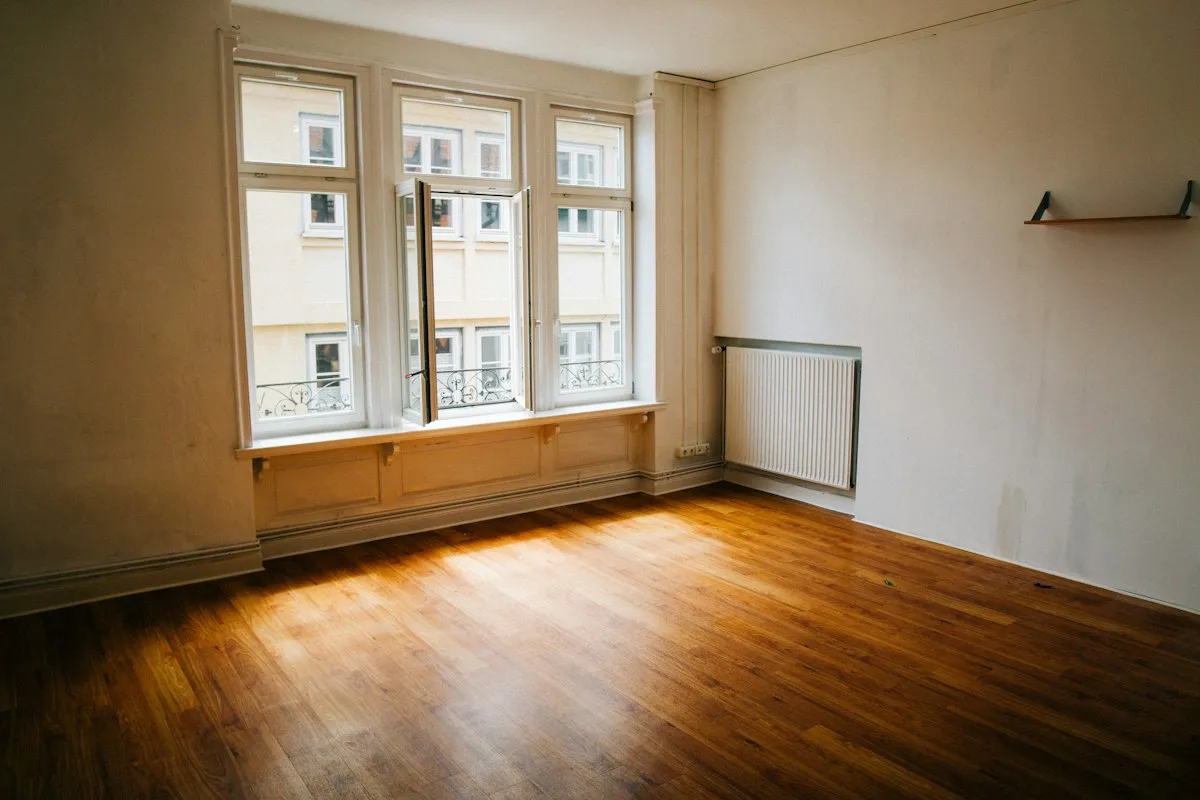
Ask five landlords what a scuffed wall is worth and you will get five confident answers. The tenant who just moved out has an answer too, and it is zero.
The strange thing about the argument is that nobody disputes the facts. Both sides are looking at the same wall, the same carpet, the same chipped countertop. What they disagree about is which of two buckets it belongs in — and it is that classification, not the repair estimate, that decides who pays.
Normal wear and tear is deterioration from living there, not from anything the tenant did
Normal wear and tear is the decline in a rental’s condition that results from ordinary use over time — the deterioration that would have happened to that unit under any reasonable tenant. Damage is deterioration that would not have happened without something somebody did: an accident, neglect, or abuse. The first is a cost of owning rental property. The second can be charged against what a security deposit is held for in the first place.
There is no federal definition, which is why the phrase feels slippery. (If you want the plain-English version on its own, our glossary entry on what normal wear and tear means covers it from the renter’s side.) Each state writes its own, and the wording is more useful than the folklore. Washington’s deposit statute simply bars withholding anything “for wear resulting from ordinary use of the premises (opens in new tab).” Massachusetts allows a landlord to deduct “a reasonable amount necessary to repair any damage caused to the dwelling unit by the tenant,” with “reasonable wear and tear excluded (opens in new tab).”
California goes furthest, and its sentence is the one worth pinning above the desk:
The landlord shall not assert a claim against the tenant or the security for damages to the premises or any defective conditions that preexisted the tenancy, for ordinary wear and tear or the effects thereof, whether the wear and tear preexisted the tenancy or occurred during the tenancy, or for the cumulative effects of ordinary wear and tear occurring during any one or more tenancies.
— California Civil Code § 1950.5(e)(2)(A) (opens in new tab)
Read that last clause slowly, because it is the trap. Wear accumulates across tenancies, and under that provision the tenant standing in front of you is not responsible for ordinary wear at all — least of all for the decade of ordinary use that preceded them. The carpet that finally looks tired after four tenants is not the fourth tenant’s bill.
All of which means the deduction does not turn on how bad the wall looks. It turns on whether you can show what the unit looked like before. That is a records problem, and it is the part easiest to improvise until the day it matters: the Small-Landlord Income & Expense Workbook ships a printable move-in/move-out inspection sheet and a security-deposit itemization sheet alongside its lease-and-deposit tracker, so the condition record and the final statement come out of the same file. The method below matters more than the tool, though, so here it is either way.
The three questions that settle almost every disputed item
Work them in order. Most arguments end at the first or second.
- Would this have happened anyway? If the unit had sat occupied by a careful, ordinary tenant for the same number of years, would you be looking at roughly this? Faded paint, flattened carpet pile in the hallway, a dulled floor finish — yes. A cigarette burn, a punched door, a pet-urine stain through to the subfloor — no. This is the whole test in one sentence, and it is the test all three statutes below are reaching for.
- Was it already there? A condition that predated the tenancy is not chargeable, and in California it is not chargeable even if it was never written down — § 1950.5(e)(2)(A) (opens in new tab) bars claims for “defective conditions that preexisted the tenancy” with no writing requirement attached, which cuts against you, not the tenant. Massachusetts (opens in new tab) takes the opposite shape and forbids deducting for any damage listed in the written statement of condition given at move-in, unless the landlord repaired it in between and can prove the new damage is unrelated.
- Is this a difference of degree or of kind? Carpet wears. Carpet does not burn. A worn traffic path and a scorch mark are not the same phenomenon at different intensities; they have different causes, and cause is what the first question is asking about. When you genuinely cannot tell, you are usually looking at wear.
A useful discipline: write the answer to question one before you get the repair quote. Once you know the number, it becomes remarkably easy to persuade yourself the wall was worse than it was.
Wear or damage? Fourteen turnover items, and which side each falls on
| Item | Normal wear and tear (you absorb it) | Damage (generally chargeable) |
|---|---|---|
| Walls and paint | Faded paint, light scuffing along traffic paths, small nail holes from hanging pictures | Crayon or marker, a color change the lease did not allow, large anchor holes, a doorknob hole |
| Carpet | Flattened pile in walkways, gentle fading near a window, light general soiling | Burns, pet urine saturation, bleach or dye stains, tears |
| Hard flooring | Dulled finish, fine scratches from ordinary furniture use | Gouges from a dragged appliance, water damage from an unreported overflow, missing planks or tiles |
| Doors and trim | Sticking in humid weather, worn finish around the handle | Cracked or punched panels, doors off their hinges, removed trim |
| Countertops | Light surface scratches, dulling around the sink | Burn marks, cracks, impact chips |
| Appliances | Worn seals and finishes; mechanical failure at the end of the appliance’s life | A snapped shelf, a burner ruined by misuse, baked-on buildup from never cleaning |
| Bathroom | Grout discoloration, worn caulk, a loose toilet seat | Cracked tile or basin, mildew traced to an unreported leak, missing hardware |
| Windows and blinds | Slats yellowed by sun, sticky window tracks | Broken slats, torn screens, cracked glass |
| Light fixtures | Dimmed finishes, bulbs burned out at turnover | Missing fixtures, broken globes, wiring left exposed |
| Cleaning | Ordinary dust and light grime on surfaces | Grease caked on the range hood, food left in the refrigerator, trash left behind |
| Odors | Neutral household odors | Smoke or pet odor needing sealing or ozone treatment |
| Keys and locks | Worn keys, a stiff deadbolt | Keys not returned and a re-key made necessary, a lock changed without permission |
| Yard, where the tenant maintains it | Ordinary seasonal decline | A lawn dead from never being watered, ruts from parking on the grass |
| Smoke and carbon monoxide (CO) detectors | A dead battery | A detector removed or disabled |
The classification applies the wear-versus-damage distinction the three statutes below draw. Where exactly the line sits is set by your state and your lease, and what you may charge also depends on the age of the item.
The pattern running down the table is worth naming, because it generalizes to items the table does not list. Wear is diffuse, gradual, and spread across the surfaces people touch. Damage is localized, abrupt, and traceable to an event. A carpet that is uniformly tired is wear. A carpet that is fine except for one ruined patch in the bedroom is damage — and, as the next section explains, damage to one patch is not a bill for the whole carpet.
Age is the other half of the answer
Classifying an item as damage does not entitle you to its replacement cost. It entitles you to the value you actually lost, and a five-year-old carpet may already have spent most of what it was worth.
That is proration. None of the three statutes below spells it out, and this post is not claiming any state does — but it is the standard a tenant’s rebuttal reaches for, because it measures the value actually lost rather than the size of the invoice, and it is the reasoning behind the one piece of this that is statutory (step 4 below). The arithmetic is simple:
- Take the item’s installed cost, not the cost of today’s upgraded replacement.
- Divide by its useful life in years to get the annual value consumed.
- Multiply by the years of life remaining when the damage occurred. That figure — not the invoice — is the more defensible charge.
- Charge only for the damaged portion. This step is statute, not practice: Washington (opens in new tab) bars withholding more than “the cost of repair or replacement of the damaged portion” when the damage does not encompass the item’s entirety.
Which useful life to use is the genuinely contested part, and anyone who quotes you a single authoritative table is overstating the case. A common starting point is the IRS’s depreciation classes: Publication 527 (opens in new tab) puts “appliances, carpeting, and furniture used in a residential rental real estate activity” in the five-year property class. That is a tax classification, not a landlord-tenant standard, and none of the three statutes below adopts it as the measure of a deposit deduction — but it is a published, neutral number, which is worth a great deal more in a dispute than a figure you picked. The related distinction between a repair you deduct this year and an improvement you depreciate over years is a tax question in its own right; if that is the part you are stuck on, start with what expenses go on Schedule E for a rental property.
Labor gets the same scrutiny as materials. Washington (opens in new tab) requires a landlord doing the work personally to include “a statement of the time spent performing repairs and the reasonable hourly rate charged,” and California (opens in new tab) splits it: where the landlord or their employee did the work, the itemized statement must describe the work and give “the time spent and the reasonable hourly rate charged”; where somebody else did it, the landlord supplies that person’s bill, invoice or receipt instead. “Four hours of my Saturday, $400” is not an itemization.
Short-term rentals compress every one of these judgments into a few hours between guests, and the damage-versus-wear question arrives weekly rather than at the end of a lease. If that is your situation, the STR Owner P&L & Turnover Workbook runs the turnover checklist and the per-stay costs in the same file, so the thing you noticed on Tuesday is still recorded in October.
The statutes disagree with each other, and that is the honest answer
“Check your state law” is the advice everyone gives and nobody acts on, so here is what the variation actually looks like. Three states, three different sets of rules, all of them current.
| State | Deadline to itemize and refund | The rule that catches landlords out |
|---|---|---|
| California (opens in new tab) (Civ. Code § 1950.5) | 21 calendar days after the tenant vacates | Photographs are a statutory duty, not a best practice: since April 1, 2025 the landlord must photograph the unit both before and after any repair or cleaning deducted for, and for tenancies beginning on or after July 1, 2025 must also photograph it at move-in — both added by AB 2801 (opens in new tab) |
| Washington (opens in new tab) (RCW 59.18.280) | 30 days after termination and vacancy | No charge at all for fixtures, equipment, appliances or furnishings whose condition was not reasonably documented in the written move-in checklist — and missing the deadline makes you liable for the full deposit, absent circumstances beyond your control |
| Massachusetts (opens in new tab) (G.L. c.186 § 15B) | 30 days after the tenancy ends | The itemized list of damages must be sworn under the pains and penalties of perjury, and certain failures expose the landlord to three times the deposit plus interest, costs and attorney’s fees |
Three things generalize from that even though the details do not:
- A deadline you miss can cost you a deduction you were entitled to. In Washington (opens in new tab), failing to deliver the statement and documentation on time makes the landlord liable for the whole deposit regardless of what the tenant did to the unit, absent circumstances beyond the landlord’s control or an abandoned tenancy.
- Cleaning has a defined ceiling. California (opens in new tab) caps it at what is necessary “to return the unit to the same level of cleanliness it was in at the inception of the tenancy” — not to the standard you would like for the next listing.
- Keeping a record is a statutory duty in all three, but it does different work in each. California requires the move-in and move-out photographs on a schedule. Massachusetts requires a separate written statement of the premises’ condition within ten days of the tenancy starting, and bars deducting for damage listed on it. Washington goes further in one narrow lane and bars charging for fixtures, equipment, appliances or furnishings whose condition was not reasonably documented in the move-in checklist. Note the asymmetry: Washington’s bar is limited to those four categories, and California’s photo duty is a requirement on the landlord rather than a provision voiding an undocumented deduction.
Check your own state’s statute before you write the statement, and re-check it if your last read was more than a year or two ago. California’s photo requirements did not exist before 2025.
Three documents decide who wins, not the argument
By the time there is a dispute, the outcome was set months earlier by what you did or did not write down. Three records do essentially all the work:
- A move-in condition record, signed by both parties. Room by room, item by item, with the tenant’s own notes on it. This is the baseline that question two above depends on, it is what Washington (opens in new tab) requires before you can charge for an appliance at all, and it is the document that converts “it was like that when I moved in” from an assertion into a checkable claim.
- Dated photographs, at move-in and at move-out. California now requires these on a schedule; everywhere else they are simply the cheapest insurance available. Photograph the ordinary surfaces too, not just the problems — a picture of an unremarkable wall in year one is what proves the mark in year three is new.
- An itemized statement with real costs attached. Not a total. A list: what was damaged, what it cost to fix, and — where you prorated — the item’s age and the arithmetic you used. All three states above require receipts, invoices or estimates in some form (California (opens in new tab) excepts, among other cases, deductions for repairs and cleaning totalling $125 or less), and a statement that shows its working is dramatically harder to argue with than one that announces a number.
Keeping those three in one place, per unit, per tenancy, is the entire administrative job. It is also the part that falls apart fastest when a landlord is running two or three units out of a folder of photos on a phone and a notes app.
Five ways landlords lose a deduction they were entitled to
- Charging replacement cost on an old item. The error a tenant rebuts most easily, because the invoice is doing the arguing and the invoice is for a new carpet. Prorate, and show the arithmetic.
- Billing the last tenant for cumulative wear. Four tenants wore the carpet out; the fourth pays for a quarter of nothing. California (opens in new tab) forbids this in as many words, and the same reasoning applies wherever the statute excludes ordinary wear and tear — cumulative wear is still wear.
- Having no move-in record. Without a baseline, every disputed condition becomes your word against theirs, and the party with the burden of proof is you.
- Treating turnover cleaning as a deduction. Getting the unit ready for the next tenant is a cost of doing business. Getting it back to the state it was handed over in is a deduction. They are different jobs and only one of them is chargeable.
- Missing the deadline. It is the most avoidable loss on this list and the most expensive, because in Washington (opens in new tab), absent circumstances beyond your control, it makes you liable for the entire deposit including the parts you were plainly owed.
Common Questions About Normal Wear and Tear
Can I charge a tenant for repainting?
Faded paint and light scuffing along the traffic paths are the classic example of wear a landlord absorbs, because they happen in every occupied unit regardless of who lives there. What you can charge for is marking that would not have happened anyway: crayon, marker, a color change the lease did not allow, or large holes that need patching before the wall can be painted at all. Even then, prorate against the age of the paint job.
Is carpet cleaning normal wear and tear?
In most cases a routine end-of-tenancy carpet clean is a turnover cost rather than a tenant charge, and at least one state says so outright. Washington (opens in new tab) bars withholding any part of a deposit for carpet cleaning unless the landlord documents wear to the carpet beyond what ordinary use produces. A cleaning made necessary by pet accidents or spilled paint is a different matter, and that is what your photographs are for.
Can I keep the whole deposit if the damage costs more than the deposit?
A deposit is generally treated as security rather than a cap on liability, so a landlord whose chargeable loss exceeds the deposit may have a separate claim for the balance — but that is a question of state law and of your lease. What the deposit statutes control is the accounting: you still have to itemize what you spent, still have to exclude ordinary wear and tear, and still have to meet your state’s deadline. Skipping the itemization because the damage obviously exceeded the deposit is how landlords with a strong case lose it.
How long do I have to return a security deposit?
It depends entirely on the state, and it is the rule most worth putting in a calendar, because missing it can forfeit deductions you were plainly owed. California gives 21 calendar days, Washington and Massachusetts give 30, and other states set their own. In each of those three the clock starts when the tenancy ends and the tenant vacates, not when you finish the repairs.
The verdict
The reason the argument feels unresolvable is that both sides are answering different questions. The tenant is asking whether they were careless. The landlord is asking what it costs to make the unit rentable again. Neither question is the legal one, which is narrower and much easier to answer: would this condition exist anyway, and if not, what was the item still worth on the day it was damaged?
Answer those two, in that order, with a move-in record and dated photographs behind you, and most disputes never become disputes — because an itemized statement that shows its working is not something a reasonable tenant argues with. If you want the tenant’s side of the same process, the documenting your rental to get your deposit back walkthrough is the mirror image of this one, and reading it is a good way to find the gaps in your own paperwork.
The Small-Landlord Income & Expense Workbook was built for exactly this administrative layer: a lease-and-deposit tracker that records every deposit and where it is held, a maintenance log that keeps the repair-versus-improvement line straight, and printable move-in/move-out inspection and deposit-itemization sheets, in one file you own rather than a subscription you rent. It is the difference between reconstructing a tenancy from memory and reading it off a page.
Sources
Every statute and publication this post relies on, checked September 2026:
- California Civil Code § 1950.5 (opens in new tab) — the ordinary-wear-and-tear exclusion and its cumulative-effects clause, the cleaning ceiling, the 21-day deadline, the photograph requirements, the labor-itemization rule, and the $125 documentation exception.
- California AB 2801 (2023–2024), Tenancy: security deposits (opens in new tab) — the bill that added the April 1, 2025 and July 1, 2025 photograph duties.
- Washington RCW 59.18.280 (opens in new tab) — the 30-day deadline, the four prohibitions on withholding (ordinary use, carpet cleaning, undocumented fixtures, and more than the damaged portion), the landlord’s-labor statement, and the full-deposit liability with its beyond-control exception.
- Massachusetts General Laws c.186 § 15B (opens in new tab) — “reasonable wear and tear excluded”, the 30-day sworn itemized list, the bar on deducting for damage listed at move-in, and the treble-damages provision.
- IRS Publication 527, Residential Rental Property (opens in new tab) — the five-year property class that includes appliances and carpeting. Cited as a neutral useful-life reference only; it is a tax classification, not a landlord-tenant standard.