

Life Admin 8 min read
Build a Chore System That Sticks
Stop nagging and start delegating. Here's how to build a household chore rotation that everyone follows — for families, couples, and roommates.
Sharing a home is the version of running one where every decision has a counterparty in the next room. Nothing is governed by a lease and nobody is in charge — so the house runs on assumptions until the assumptions stop matching. These are the files that make them explicit.
What did we agree? Not what everyone remembers agreeing — what is written down, who confirmed it, and when. Who owes whom? Not roughly; exactly, with the arithmetic visible so nobody has to trust anybody's mental math. Whose turn is it? Decided once by a rule everyone signed up to, rather than renegotiated every week by whoever minds the mess least.
Most houses answer all three in a group chat, which is a terrible ledger: no totals, no structure, and no memory anyone can search at the moment it matters. Almost every roommate argument turns out to be an argument about a missing record rather than about money or noise.
Start free, no signup: the Roommate Bill-Split Calculator settles one month of shared costs in your browser and tells you who pays whom — the same method as the full shared-household kit.
Working something out now? Read splitting rent and bills with roommates fairly, or what a roommate agreement is and what it can and can't do. Deciding how to track it all? Compare a spreadsheet vs. a bill-splitting app. Dealing with the landlord rather than each other is a different problem — that's for renters.
Household records and arithmetic, not legal advice. A written understanding between housemates is not a lease and does not change your rights or obligations under one, and a balance in a spreadsheet is not a legal claim on anyone. Deposits, notice periods, subletting, and what a landlord may deduct are set by state and sometimes local law and vary sharply. Where real money or someone's housing is at stake, talk to a local attorney, a tenants' service, or a legal-aid organization near you.
Recommended tools
4 templates
A shared-expense ledger that names who pays whom, a house agreement already drafted, a chore rotation that fills itself in — plus the reference for how the place actually runs and the letters a tenancy needs.

A roommate bill-split and house-agreement spreadsheet for Excel & Google Sheets — split any cost four ways and see exactly who pays whom.
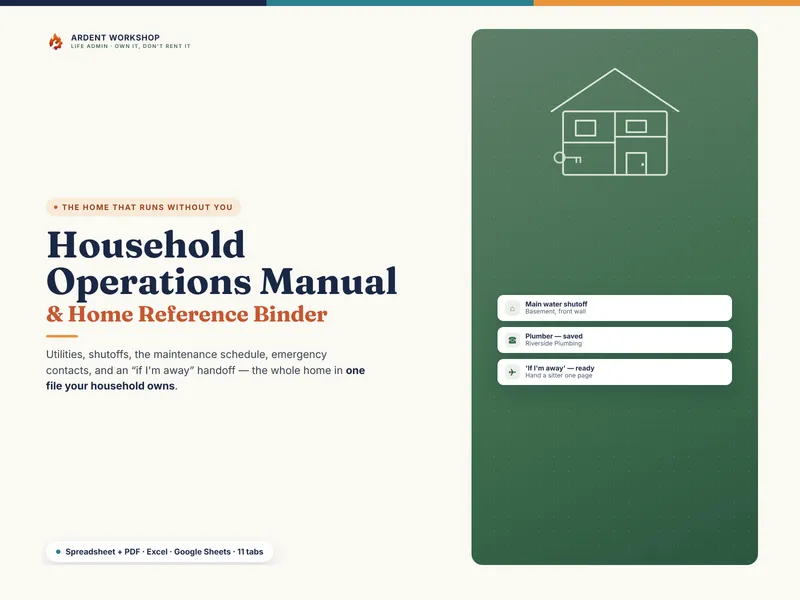
Run your whole home from one file — utilities, shutoffs, the maintenance schedule, emergency contacts, and an 'if I'm away' handoff, all in a file you own.
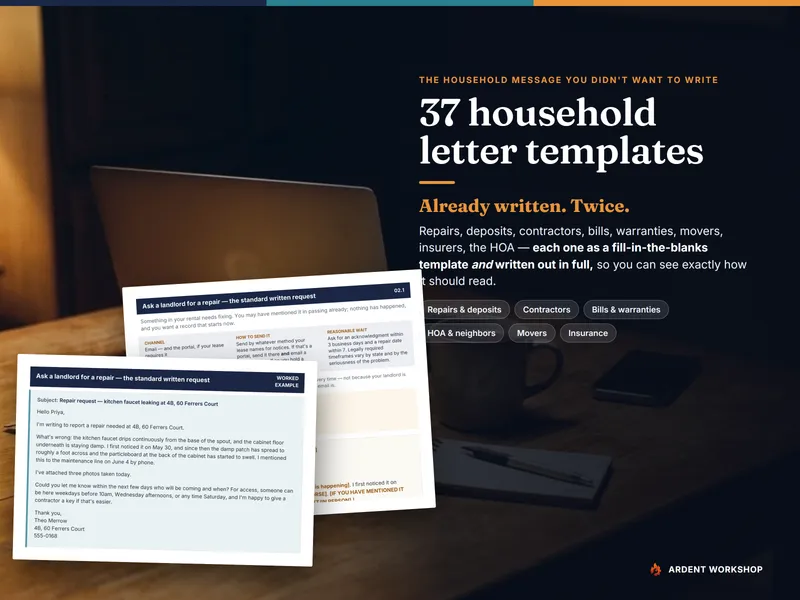
37 household letter and message templates, each shipped twice — as a fill-in-the-blanks version and written out in full. 74 written messages in all.
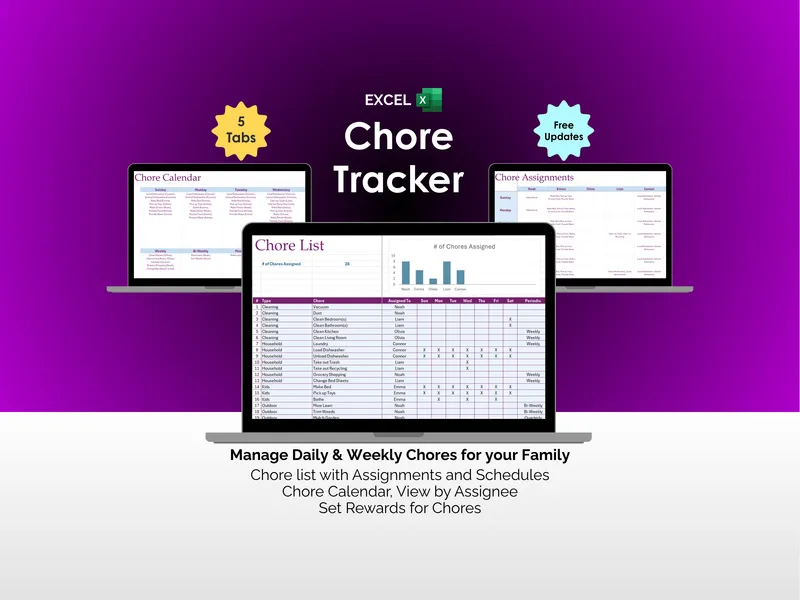
A chore chart spreadsheet isn't a guilt trip — it's a plan. This excel chore tracker assigns 100+ chores by day, person, and reward across 5 tabs.
Where we fit
Most tools force a choice between a blank spreadsheet you build from scratch and a monthly app that's overkill. Ardent Workshop is the rung in between — structure you own.
Free, but you build and maintain every formula, tab and layout yourself.
Owned, structured, connected workbooks — a one-time price, yours to keep.
Powerful, but overkill, rented and locked-in — built for someone bigger than you.
Reading list
Building a chore system that survives contact with real people, and clearing a backlog of household admin in one sitting.
Stop nagging and start delegating. Here's how to build a household chore rotation that everyone follows — for families, couples, and roommates.

Life admin day is a recurring 90-minute session that keeps renewals, records, and paperwork from becoming expensive emergencies—and how to run yours.