A booking is not finished when the client says yes. It is finished when the right documents have been signed, the retainer has landed, and the client knows exactly what to do on the day. Skip that and the problems surface at the worst moment: a parent who never signed for a minor, a client in white on a sandy beach, a rainy morning with no plan.
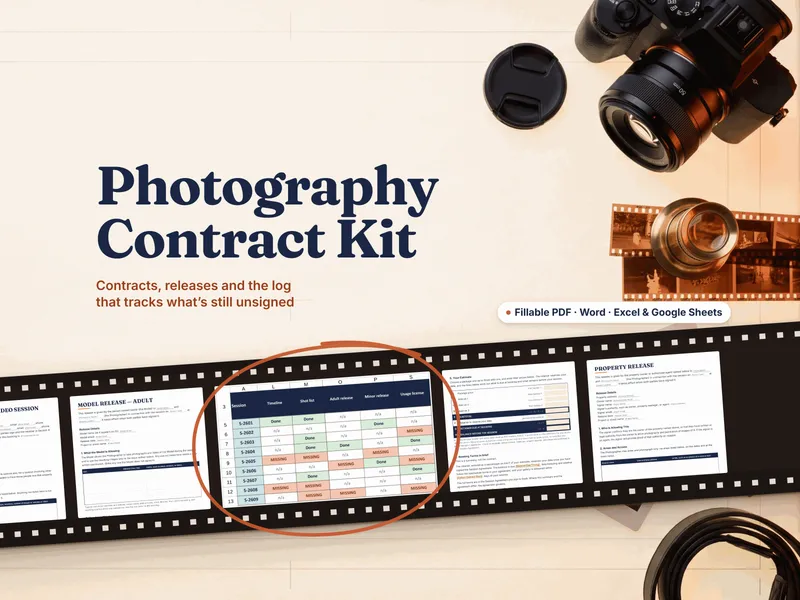
The Photography Client & Contract Kit is built around this exact sequence, and the free Model Release + Session Prep Starter gives you two of the pieces below at no cost: an adult model release and a one-page client prep guide, with a filled-in example. Here is the order to send things in.
1. The signed agreement and the retainer
Send the session agreement the moment the client says yes. It sets out what is being booked, what the client pays, what is delivered and when, and what happens if plans change. Hold the date only when two things have come back: the signed agreement and the retainer.
That ordering matters because a verbal yes is the weakest commitment you will ever hold a date against. A signed agreement with a paid retainer turns the date into a commitment on both sides. Keep the language genre-appropriate: a wedding, a newborn session, a property shoot and a commercial job each carry different clauses, so a single generic contract tends to be wrong for most of them.
2. The right releases
A session agreement and a release are different documents doing different jobs. The agreement covers the booking. A release covers what you may do with the images afterward.
- Adult model release. Use it when a recognizable adult appears in work you plan to use beyond their own gallery: styled shoots, brand and commercial work, stock, advertising, or a portfolio image of someone who is not your client. For a regular client, the session agreement’s portfolio and marketing clause usually covers portfolio use.
- Minor model release. When the subject is a child, the release is signed by a parent or legal guardian, not the child. The age at which someone counts as a minor, and who can sign, varies by state, so check locally.
- Property release. Use it on real estate and architecture shoots when the person who booked you (an agent, contractor or tenant) is not the owner; on commercial shoots on location at a private home, studio, shop or venue; and whenever you plan to publish images of a private space in your portfolio or marketing and the person who booked you does not own it.
Two related documents are worth knowing about: a print release, which lets a client print and share the images they receive for personal use, and a usage license for commercial work, where the fee depends on how the images will be used. Which of these you need depends on the genre and on what you plan to do with the work, and the rules on likeness and property differ by state. Ask a local attorney rather than assuming.
Send copies of the releases with the agreement so the client can read them ahead of time. A property release is signed before the session; a model release is filled in with the model before you start shooting, never after. A form first seen on location, with the light fading and the client waiting, is a form people sign without reading.
3. The prep guide
This is the piece that most improves the session itself. A one-page guide tells the client what to wear, what to bring, where to go and what the day will look like. It answers the questions you would otherwise field in a dozen messages, and it gets the client to the session calm, on time and dressed for the shoot you planned.
Keep it to one page. Cover the practical points: clothing choices that work with the location, anything to bring for the people or pets involved, where to park and where to meet, and how long each part will take. The free starter above includes a ready-made version you can adapt.
4. A timeline and a shot list, for events
For a wedding or any event, the prep guide is not enough. Agree two more things in writing:
- A timeline of the day, built with the client, so everyone knows when you need to be where.
- A shot list of the must-have shots and the key people, so the family portrait you were never told about does not become a complaint later.
If you will work with a second shooter, share the same documents with them so you are both working from one plan. A client who has reviewed and approved the list has also told you, in writing, what success looks like.
5. Weather and reschedule terms
Anything shot outdoors needs a plan for bad weather. Settle it before the day, in the agreement or a clear message, and cover four points:
- Who decides whether to move or postpone, and by when.
- What happens to the retainer if the session moves.
- How a new date is chosen, and whether there is a limit on how many times it can move.
- What counts as weather bad enough to move, so there is no argument on the morning.
A decision with no named decision-maker and no deadline gets made in an argument at the session. It is far easier to write the rule when nobody is annoyed.
6. Keep track of what each booking still needs
Once you are running several bookings at a time, the risk is not that you do not know the sequence. It is that one booking is missing one document and you find out the night before. A simple log with a row per booking and a column per document solves it: agreement signed, retainer received, release signed, prep guide sent, timeline agreed.
The kit’s Session Paperwork & Release Log workbook does this for you. It works out which documents each booking still needs signed, when the gallery is due, and when the archive should be purged, and it runs in Excel and Google Sheets. The documents themselves, 20 in all, come as fillable PDF, print PDF and Word, so you own them and edit them freely rather than renting a client portal. If you are weighing that trade, contract templates vs a studio-management app sets out when each fits.
A quick checklist
- Agreement sent, signed, and retainer paid.
- Releases matched to the shoot: adult, minor, property, as needed.
- Prep guide sent.
- Timeline and shot list agreed, for events.
- Weather and reschedule terms in writing.
- Everything logged against the booking.
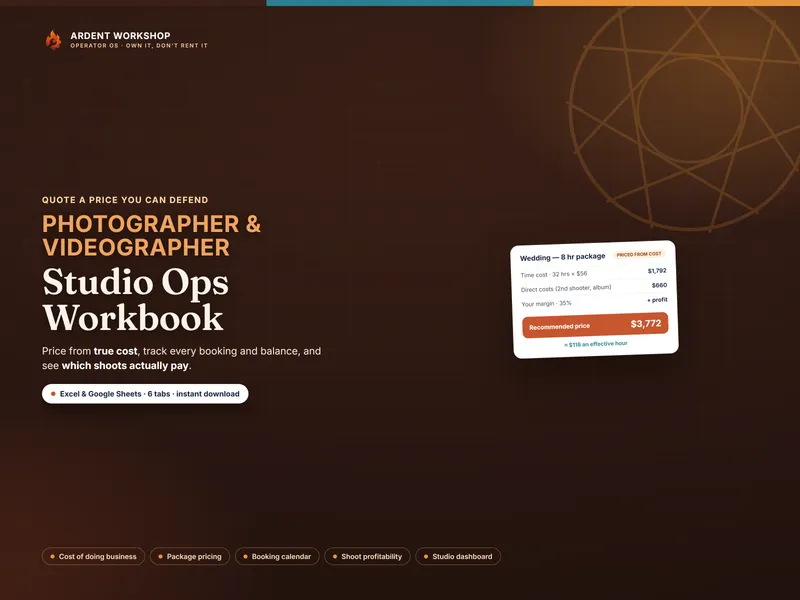
If you are still working out what to charge before any of this goes out, How to Price a Photography Package walks through building a price from cost, and the Photographer / Videographer Studio Ops Workbook carries the money side.