What makes staffing "seasonal"
Seasonal staffing has three features that set it apart from ordinary hiring. The demand is predictable — you know the peak is coming and roughly when. It is temporary — the extra people are hired for the surge, not for good. And it is time-boxed — there's a hard date you must be fully staffed by, and a date the season ends. That combination is why it rewards planning: the calendar is fixed, so the only variables you control are how many people you hire, when you start them, and what they cost.
Sizing it to the peak, not the average
The first question is how many people you actually need, and the honest way to answer it is from the work, not a gut feel. You forecast the demand for each week, turn it into the labor-hours that demand will take, and divide by the hours one worker really gives in a week — after breaks, training, and no-shows — to land on the heads you need. Subtract the core team you already have, and what's left is the seasonal hires to add.
Do that week by week and the peak reveals itself: the single busiest week is the most people you'll need at once, and it's your hiring target. Staff to the peak and you're covered on the hardest day; staff to the season's average and you'll be short exactly when it hurts.
Working the hiring calendar backward
Knowing you need thirty people is worthless if you learn it two weeks before the peak — hiring has lead time you don't control. So seasonal staffing works backward from the day you must be ready. People need training before they're productive, so they must start a training-length before the peak; they must be hired before they can start; and you must post the jobs a recruiting-length before that. Miss the post-jobs date and every step downstream slips, until you're onboarding people during the rush instead of before it.
One more piece of arithmetic separates a plan that works from one that comes up short: not every offer is accepted. If you need ten hires and seven of ten offers are accepted, ten offers leaves you three short. Gross the target up by your acceptance rate and extend enough offers to net the heads you need.
What the season actually costs
The wage on the offer letter isn't what a seasonal hire costs. On top of it sit payroll taxes, workers' compensation, and benefits — the employer cost load — plus a one-time training cost for onboarding and gear. A fully-loaded seasonal labor figure often runs well above the bare wage, and the number that tells you whether the season pays is labor as a share of the revenue it supports, measured against a target you can live with. Plan against the wage alone and a seasonal crew quietly costs more than the budget said.
Seasonal staffing vs. permanent hiring
They're often run the same way, and shouldn't be. Permanent hiring optimizes for a long-term fit and a career; seasonal staffing optimizes for speed, volume, and a clean wind-down. A seasonal hire has an end date on purpose — carrying a peak-sized crew a week too long is pure margin lost — so the plan includes tapering people off across the wind-down weeks and deciding early who you'd want back next season or convert to permanent.
Common mistakes
- Hiring off last year's number. Demand shifts; size this season from this season's forecast, not the count you happened to end on last time.
- Starting the ramp too late. The post-jobs date is the one that quietly sinks a season — put it on the calendar the day you set the opening date.
- Extending exactly as many offers as heads. Not everyone says yes; gross up by your acceptance rate or you'll be short.
- Planning against the bare wage. The employer load and training cost are real money — budget the fully-loaded number.
- Forgetting the wind-down. The end of the season is as much a plan as the start; set honest end dates and taper.
Own the plan, don't rent it
Planning a seasonal hire doesn't require a per-seat workforce platform. Between a blank spreadsheet you'd build from scratch and a monthly app sized for a much larger company sits an owned workbook that already does the sizing, the timing, and the costing for you. The free Seasonal Headcount Estimator is an ungated way to feel it — enter a week's forecast and watch the heads fall out. The full Seasonal & Peak-Season Hiring Workbook sizes the headcount week by week, works the hiring ramp backward from opening day, builds the temp roster with a fully-loaded cost, lays out shift coverage, and measures labor against revenue — for Excel and Google Sheets, yours to keep. See how it compares to a subscription in seasonal staffing template vs. scheduling software, or browse the tools for HR & people teams hub.
Templates that implement this
Plan a seasonal hire in an owned workbook
2 templates
Size the headcount from your forecast, work the hiring ramp backward from opening day, build the roster with fully-loaded cost, and total labor against revenue — one file you own, not a per-seat staffing app.
- $24.95 Spreadsheet
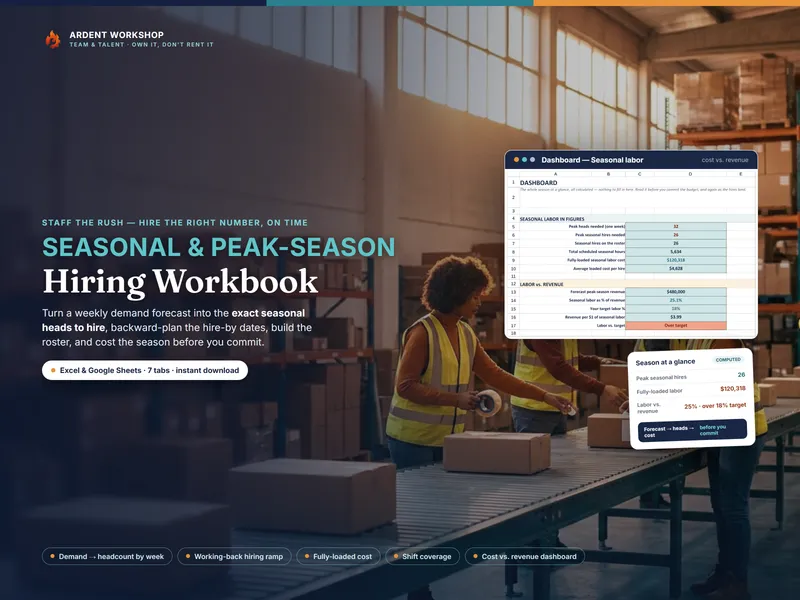
Seasonal & Peak-Season Hiring Workbook — Temp Staffing Plan for Excel & Google Sheets
Staff up for a peak without over- or under-hiring: a workbook that sizes seasonal headcount from your forecast, times the hiring ramp, and costs the season.
Team & TalentView details - $19.95 Spreadsheet
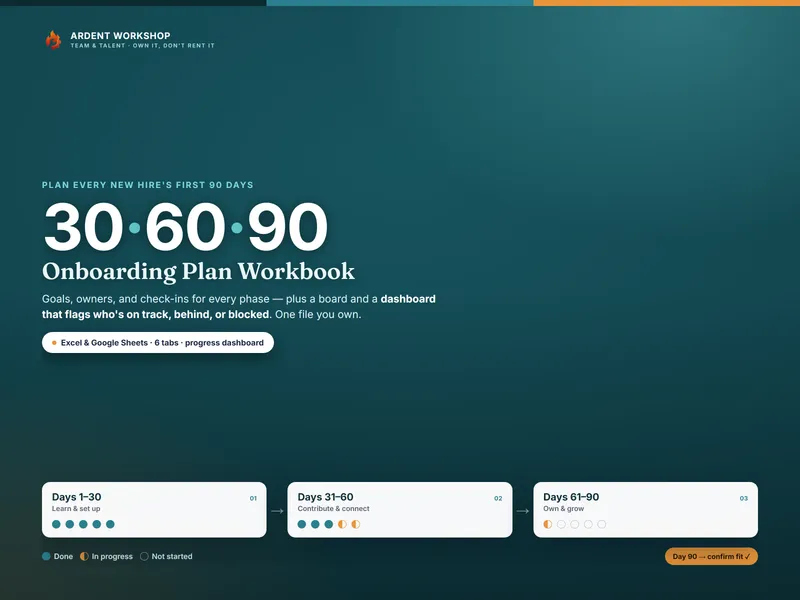
30-60-90 Onboarding Plan Workbook — New Hire Onboarding Tracker for Excel & Google Sheets
A 30-60-90 onboarding plan for Excel & Google Sheets — plan and track every new hire's first 90 days with goals, check-ins, and a progress dashboard.
Team & TalentView details