You did the responsible thing. The summer orders started stacking up, the markets ran every weekend, and instead of white-knuckling another season alone, you hired help — a part-time assistant, a maker friend, a neighbor’s kid for the three busiest months. Relief, finally.
So why are you somehow busier than before?
If you’ve ever brought on a seasonal hire and spent the first two weeks answering the same five questions, re-doing crooked work after everyone left, or hovering instead of producing — you are not bad at delegating. You simply haven’t been shown how to train seasonal help fast, which is a genuinely different skill from doing the work yourself. The good news: it’s a learnable system, and you can run it in the middle of your busiest stretch.
The short version: train seasonal help fast by triaging every task into green, yellow, and red and handing over green first; training the two or three highest-volume, lowest-risk tasks before anything else; teaching hands-on with the “I do, we do, you do” loop; tracking who can do what on a one-page ILUO coverage grid; and capturing each task as a one-page reference the first time you teach it. The rest of this post walks through each move.
It matters more than most owners admit. Gallup found that only 12% of employees strongly agree their organization does a great job onboarding new people (opens in new tab) — and that’s at companies with HR departments and months of runway. You have neither. You have a rush that’s already started and a person standing in your studio asking, “So… what should I do?”
Why Training Help Feels Slower Before It Feels Faster
Here’s the part nobody warns you about: bringing on help almost always slows you down before it speeds you up. That dip is normal, not a sign you hired the wrong person or that you’re bad at this.
Think of it as a J-curve. For the first few days, every minute you spend teaching is a minute you’re not producing — and the new person is slower than you at everything. The line dips. Then, if you’ve trained the right tasks the right way, it climbs above where you started and keeps going.
Most owners panic during the dip and make one of two mistakes:
- They try to teach everything at once. Pricing, custom orders, the finicky glue step, the online shop, the market setup — all in a frantic day-one download nobody could retain. The helper freezes, asks constant questions, and you conclude it’s faster to just do it yourself.
- They train nothing and react instead. They throw the person into the work and correct mistakes as they happen. This feels efficient for an hour and then turns into a full-time job of supervising, re-doing, and resenting.
The fix for both is the same: stop training reactively, and stop training everything. Train deliberately, in a specific order, starting with the work that’s safe to get slightly wrong. The five steps below are that order.
Step 1: Triage Every Task Before You Teach It
Before you teach a single thing, sort your work into three buckets. This one move prevents most of the chaos, because it stops you from handing over a high-stakes task on day one and stops you from hoarding the easy stuff you should have offloaded weeks ago.
Go through everything you do in a typical production day and drop each task into one of three colors:
| Bucket | What goes here | Maker examples |
|---|---|---|
| Green | Safe to get slightly wrong. Low risk, easy to check, hard to ruin. Hand these over first. | Packing and labeling orders, prepping raw materials, restocking the booth |
| Yellow | A new person can do it, but you check it before it ships. | Final assembly, quality inspection, photographing finished pieces |
| Red | Only you, at least this season. High judgment, high cost of error, or the heart of the brand. | Pricing, custom-order design, anything involving customer money or the recipe nobody else has |
The instinct is to start training the hard, satisfying stuff because that’s where you feel irreplaceable. Resist it. Green tasks are where a brand-new person creates value on day one with almost no risk. You’ll move tasks from red to yellow to green as the season goes on and trust builds — but you start at green.
Step 2: Train the High-Volume, Low-Risk Tasks First
Within your green bucket, train the two or three tasks that eat the most of your hours — not the ones that are easiest to explain. A rough 80/20 rule applies to a maker’s day: a small handful of repetitive tasks fill most of your time. Those are the ones that, once handed off, buy back the biggest piece of your week.
For most small operations running a summer rush, the volume hogs are some mix of:
- Order fulfillment — pulling, packing, labeling, and staging shipments.
- Material prep — the cutting, measuring, mixing, or sorting that happens before the “real” work.
- Restocking and setup — replenishing the booth, the shelf, or the workbench.
Train those first and train them well. A helper who can independently own fulfillment for an afternoon hands you back hours of focused production time — which is the entire reason you hired them. A helper who’s been taught seven half-things can’t independently own any of them, and you’re still the bottleneck.
The goal of week one isn’t a person who can do everything. It’s a person who can do one high-volume task completely on their own. Depth beats breadth when the clock is running.
Step 3: Teach With the “I Do, We Do, You Do” Loop
The fastest way to teach a hands-on task is to talk less and demonstrate more. Borrow the hands-on teaching loop “I do, we do, you do”:
- I do. You perform the task once, start to finish, narrating the why at the tricky parts (“I tape this corner first so it doesn’t shift”). They just watch. No multitasking.
- We do. You do it together for a few reps — they lead, you catch and correct in real time. Mistakes here are cheap and expected.
- You do. They do it solo while you stay nearby but quiet. Bite your tongue unless something’s about to go truly wrong. Let small, recoverable mistakes happen — that’s how the skill sticks.
- Released. They own it. You spot-check the output, not the process.
The whole loop for a simple green task can take twenty minutes. Compare that to the death-by-a-thousand-questions you get when you “explain” a task in words and then field interruptions for three days. If you can demonstrate something in ninety seconds, never describe it in five minutes.
Step 4: Put It on One Page — Build a Coverage Grid
Once more than one task and more than one person are in play, you need to see capability at a glance — not carry it in your head. This is where a coverage grid earns its keep: people down the side, tasks across the top, and a simple level in each cell.
A clean four-level scale called ILUO maps perfectly onto a seasonal hire’s first weeks:
| Level | Means | What you can rely on |
|---|---|---|
| I — In training | Still learning; needs you beside them | Nothing solo yet |
| L — Limited | Can do it, but check before it ships | Supervised output |
| U — Unsupervised | Cleared to run it alone | Hand it off and walk away |
| O — Operator | Could teach it to the next hire | Full ownership + training others |
Filling in the grid takes five minutes and tells you exactly what you couldn’t see before: which tasks are covered, which are stuck at “Limited,” and — critically — which tasks only you can do. That last column is your risk map. If you’re the single “O” on order fulfillment and you get a migraine on a market Saturday, your business closes for the day.
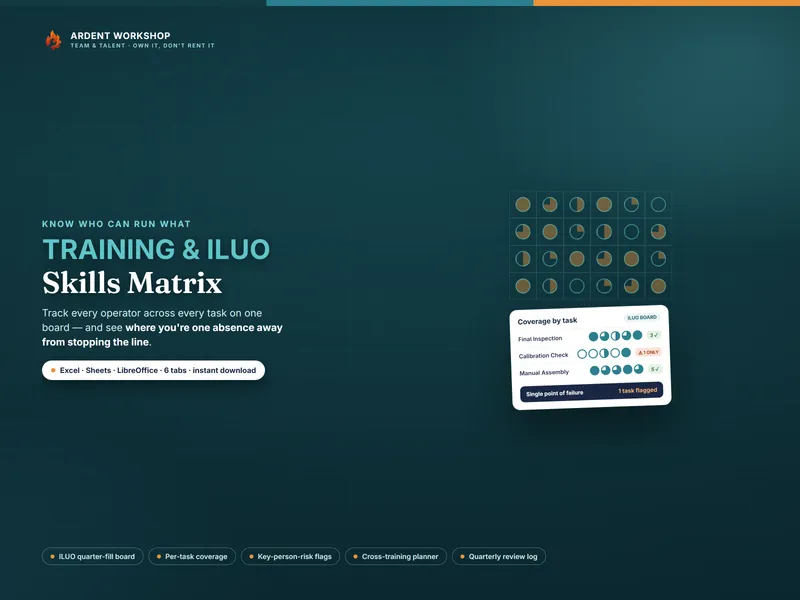
This is the entire idea behind the Training & ILUO Skills Matrix: a one-page grid that scores each person on each task, counts your coverage, and flags the single points of failure automatically — so “who can cover the booth Saturday?” is a glance, not a guess.
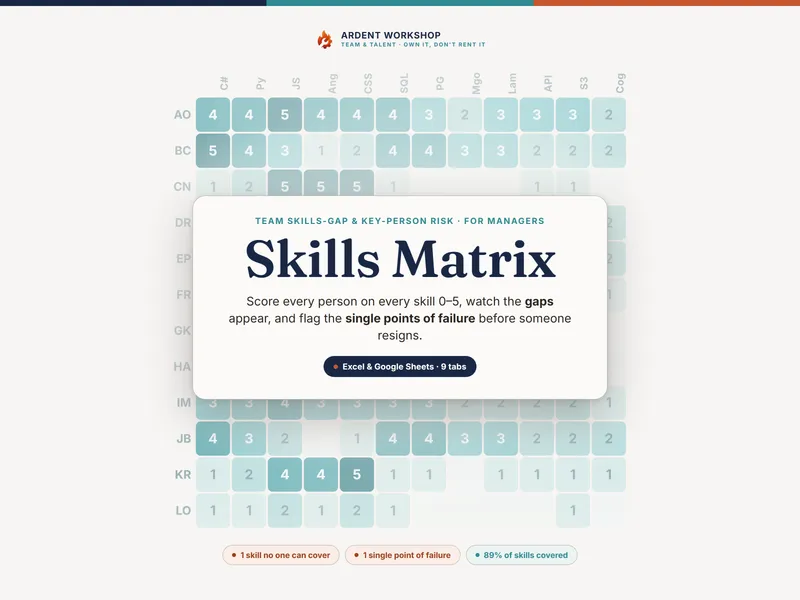
If your operation is bigger than a couple of helpers, the Skills Matrix template does the same across a wider team.
Step 5: Write the One-Pager Once, Stop Re-Explaining Forever
The first time you teach a green task, capture it as a one-page reference — then the answer to every repeat question becomes “check the card.” You do not need a polished operations manual. You need a single page per repeatable task that a tired person can follow at 4 p.m. on a Saturday.
Keep each one-pager to:
- A title and one line on what “done right” looks like
- 3–7 numbered steps, written the way you’d say them out loud
- A photo or two of the tricky steps and the finished result
- The two or three mistakes you keep having to correct (“label goes on the bottom, not the side”)
Build these as you train, not in some imaginary quiet week that never comes. Photograph the steps with your phone during the “I do” demonstration. Fifteen minutes of capture per task pays for itself the third time you’d otherwise have stopped your own work to answer the same question.
A quick gut-check checklist before you call a task “handed off”:
- The helper has done it solo, correctly, at least twice
- There’s a one-pager they can reach without asking you
- You’ve told them the one mistake that actually costs money
- You’ve marked them at least “Limited” (L) on the grid
Know What You’re Building for September
A season of training isn’t just about surviving July — it leaves you with something. By the time the rush fades, your coverage grid is a record of real capability: who became an Operator on what, where you’re still the only one who knows a task, and which seasonal hire is worth calling back next year.
That last point is the quiet payoff. The work you put into training a great seasonal helper is the work that makes them a returning helper — and a returning helper next summer starts at “Unsupervised,” not “In training.” You climb the J-curve once and bank it.
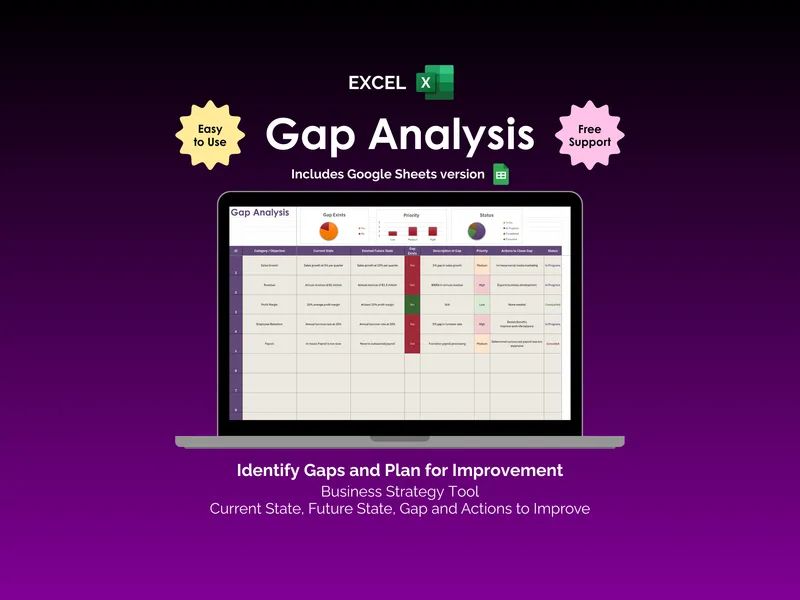
It also surfaces your real risk. If your end-of-season grid shows a wall of single-person tasks with no backup, you’ve found your key-person risk — the thing that turns one sick day into a closed shop. A gap-analysis worksheet turns those empty cells into a ranked cross-training plan for the off-season. Two guides go deeper than seasonal help alone: why your most reliable person is also your biggest risk on the danger of a single irreplaceable person, and how to spot the skills gap on your team before someone quits on auditing capability before it costs you.
The Five Steps, in Order
To recap the system you can start running today:
- Triage every task into green, yellow, and red — hand over green first.
- Train the volume hogs — the few high-frequency, low-risk tasks that eat your day.
- Teach by doing — I do, we do, you do, then release.
- Track capability on one page — an ILUO coverage grid that flags who can’t cover what.
- Write the one-pager once — so a repeated question becomes “check the card.”
Do these and the dip in the J-curve lasts days instead of weeks. You hired help to get your time back; this is how you actually get it.
And when your operation outgrows the spreadsheet — when you’re tracking real inventory, production runs, and a small crew across a growing business — Ardent Seller (opens in new tab) is the next step up from the workbook.