Ask five bakery owners whether to cross-train the whole team or hire a specialist, and you’ll get five confident, contradictory answers. The one who just lost their only cake decorator the week of three wedding orders swears by cross-training. The one whose “everyone does a little of everything” crew produces mediocre everything swears by specialists. They’re both right — for their kitchen. The hard part is knowing which kitchen is yours.
This is one of the first real management decisions a growing food business hits. For a while, the owner is the specialist and the whole team at once. Then a second and third person show up, the work stops fitting inside one head, and you have to decide how skill should be distributed across the people you now employ. Get it wrong in one direction and a single sick day takes out your Saturday. Get it wrong in the other and you’ve paid three people to be pretty good at everything and great at nothing.
Here’s the honest version of the trade-off — both sides made as strongly as they deserve — and a way to actually decide. The short answer: cross-train the broad tasks that need constant coverage, hire a specialist for the few tasks where depth wins the sale, and make the call task by task rather than as one team-wide policy. The rest of this post is how to tell which task is which.
Cross-Training vs. Hiring a Specialist: What You’re Actually Choosing
The question underneath “cross-train or specialize” is really a question about coverage versus depth. Do you want more people who can each do more things, or fewer people who each do one thing exceptionally well?
Two quick definitions, because the words get used loosely:
- Cross-training means deliberately teaching each person tasks outside their main role, so more than one person can cover any given station — mixing, shaping, the oven, packing, the front counter.
- Hiring a specialist means bringing in someone whose skill in one area — laminated doughs, custom cake decorating, high-volume production, wholesale account management — is deeper than anyone you could train up quickly.
Cross-training buys you resilience. A specialist buys you a higher ceiling. Neither is free, and the same dollar can only go to one of them at a time. That’s the whole tension.
The Case for Hiring a Specialist
Hire a specialist when the quality ceiling of a task is what wins or loses the order.
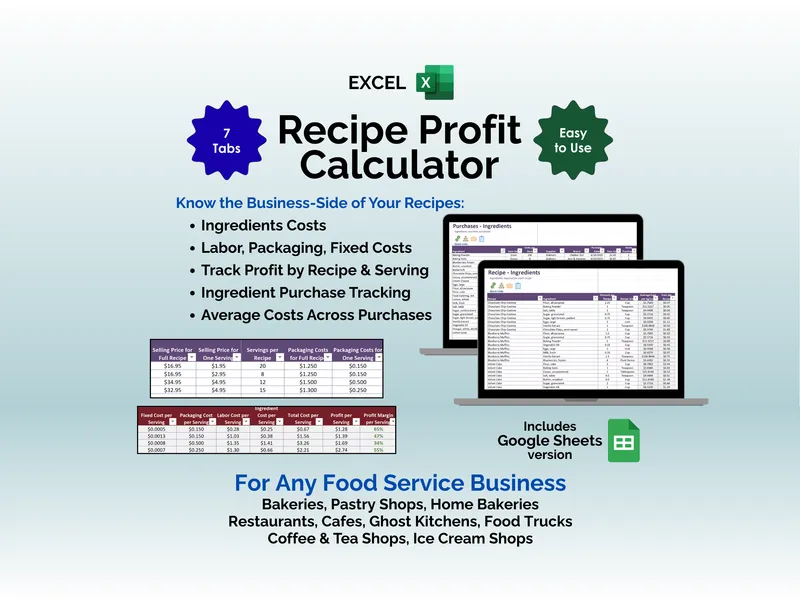
Some skills don’t cross-train in a weekend. A perfectly laminated croissant, a tiered wedding cake that photographs like the inspiration picture, a sourdough program with a consistent crumb — those are the product of hundreds of reps, not an afternoon of shadowing. If that skill is the reason customers choose you and pay a premium, spreading it thin across a team of generalists actively lowers your product. A specialist raises the ceiling, and a higher ceiling is something you can charge for. (Before you assume a fancier product pays for itself, it’s worth running the numbers in a recipe cost calculator — a specialist only earns their wage if the premium item actually clears a better margin.)
A specialist also frees the owner from the one task only the owner can currently do. If you’re the sole decorator, the business can’t grow past your hands and your calendar. Hiring that skill out is often the single move that lets you step back into running the place instead of working every station.
And a specialist is fast. You buy the skill instead of building it. When a wholesale account lands next month and you need laminated pastry volume now, “train someone over two quarters” isn’t an answer. Of course, buying the skill still means bringing that person in well — a great hire lost to a chaotic first two weeks is money burned. (That’s a whole discipline of its own; here’s how to onboard your first employee without losing the plot.)
The catch: a specialist is also a single point of failure. The rarer the skill, the truer this is. If your one decorator is out the week of three weddings, the skill walks out the door with them — and so does the revenue. You’ve raised the ceiling and lowered the floor at the same time.
The Case for Cross-Training Your Whole Team
Cross-train when coverage and resilience matter more than peak quality on any one task.
Someone is always out. It’s not pessimism, it’s scheduling math: people get sick, take vacations, and quit. Food service quits more than almost anyone — accommodation and food services consistently carries the highest quit rate of any major U.S. industry (opens in new tab) in the government’s turnover data, month after month. If your whole operation assumes everyone shows up every day, you’ve built a kitchen that breaks on the first Tuesday someone calls in.
Cross-training is the fix. When three people can run the oven instead of one, a call-out is an inconvenience, not a crisis. During a rush, you can flood whichever station is drowning. And crucially, it kills key-person risk — the quiet danger where your most reliable employee is also your biggest liability, because everything they know lives only in their head. (We wrote a whole piece on that trap: the bus factor and why your best employee is also your biggest risk.)
Per hour of resilience, cross-training is also cheaper than a redundant specialist. You’re not paying a second premium salary “just in case” — you’re extending the range of people already on the clock.
The catch: spread too thin and you get the jack-of-all-trades problem — everyone’s passable, nobody’s excellent, and your signature product drifts toward average. Cross-training also isn’t free. Every new skill has a J-curve: the person is slower while learning, and someone experienced has to stop producing to teach. Train everyone on everything and you’ll spend more time training than baking.
The Real Dividing Line: Decide Task by Task, Not Team-Wide
Here’s where it gets interesting. The mistake is treating this as one team-wide decision. It isn’t. The right answer is set task by task, and it falls out of two questions about each task in your kitchen:
- How hard is it to learn? (skill depth)
- How often does it need covering? (coverage need)
Plot every task against those two and the strategy names itself:
| Skill depth ↓ · Coverage need → | Rarely needs covering | Often needs covering |
|---|---|---|
| Easy to learn | Anyone can do it — no plan needed | Cross-train broadly (packing, mixing base doughs, front counter) |
| Hard to learn | Hire/keep a specialist (wedding cakes once a month) | Danger zone: specialist plus a trained backup (your signature high-volume product) |
The top-right box is easy money: cross-train the broad, coverable, low-depth work and you buy resilience cheaply. The bottom-left is a clean specialist call. The box that quietly sinks kitchens is the bottom-right — a skill that’s both hard to learn and needed constantly. That’s where you need a specialist to hold the ceiling and a second person deliberately trained toward it over time, so you’re never one resignation away from disaster.
The Verdict: Cross-Train the Coverable, Specialize the Decisive
For most growing kitchens, the answer isn’t either/or — it’s the split from the top of this post with one crucial addition: every specialist needs someone quietly training up behind them. Cross-train the coverable work, specialize the decisive work, and never let a decisive skill live in exactly one person’s hands.
Put concretely, that means doing three things instead of guessing:
- List every task and rate it on skill depth and coverage need, using the grid above. Most tasks sort themselves in about ten minutes — and knowing what each one costs in ingredients, labor, and overhead (a bakery business manager keeps that picture in one place) is what turns “can we afford a specialist?” into a data question instead of a gut one.
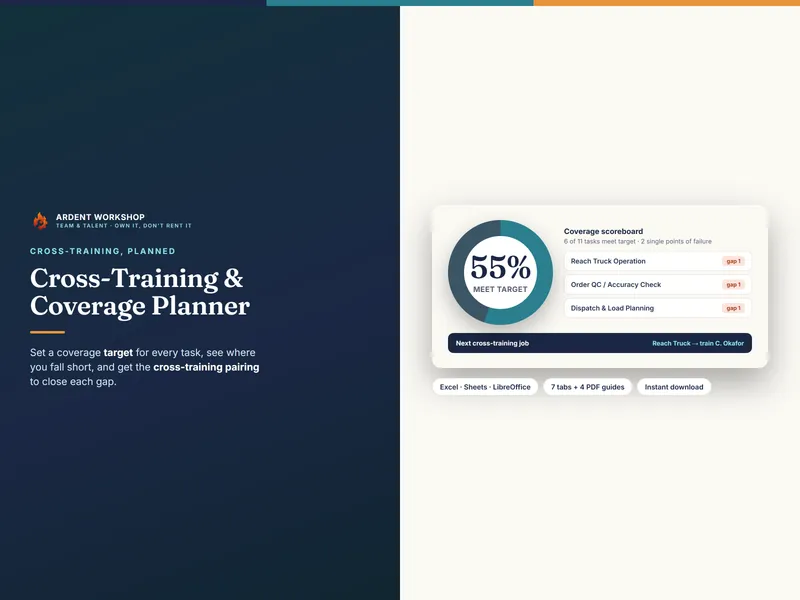
- Set a coverage target per task. Anything that ships every week needs at least two people who can do it, period. A cross-training and coverage planner does exactly this — you set a target per task, it shows the gap, and it hands you the pairings to close it, so “who can cover whom” stops being a thing you hold in your head.
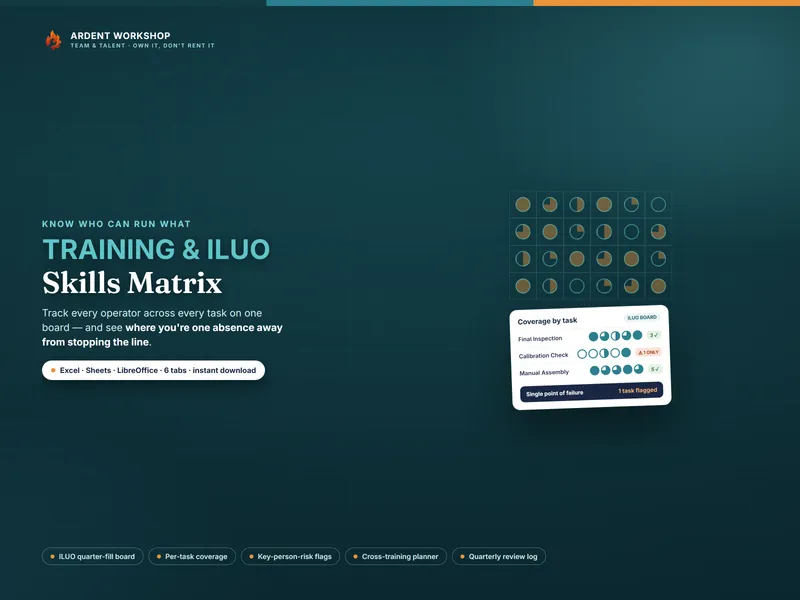
- Name a backup for your one or two irreplaceable skills and start training them now — before the wedding-week emergency, not during it. Tracking who’s at what level (still learning, can do it supervised, fully independent) turns a vague worry into a plan; a simple ILUO training matrix marks each person’s level on each task and flags every single point of failure for you.
The kitchens that get this right aren’t the ones that picked a side. They’re the ones that stopped asking “cross-train or specialize?” as a philosophy and started asking it one task at a time.
And when the coverage grid, the training levels, and the production schedule outgrow a stack of spreadsheets, Ardent Seller (opens in new tab) is the next step — the same operation, run as connected software instead of files you rebuild by hand.