Why claims get denied
Denials are common, and many are fixable. Frequent reasons include a missing prior authorization, a coding error on the provider's side, a service the plan calls not medically necessary, an out-of-network provider, or simply missing information. The denial reason — on the EOB or the denial letter — tells you what to address. Sometimes a single corrected code from the provider resolves it without a formal appeal at all.
The general shape of an appeal
- Internal appeal. You ask the insurer to reconsider, usually in writing, addressing the specific denial reason and including any supporting records.
- External review. If the internal appeal fails, you may have a right to an independent, external review — a party outside the insurer looks at the case.
- Escalation. A patient advocate, or your state insurance department for insurer disputes, can help when a case stalls.
The exact steps, forms, and timelines are set by your plan and the rules where you are — read the denial letter and your plan documents, and ask the insurer to walk you through their process.
The deadline is the whole game
Appeals have a firm window, often measured from the date on the denial. It is the most common way a winnable appeal is lost: not a weak argument, but a missed date. The move is to file something before the deadline even while you're still gathering records — a short letter that says "I am appealing this denial; supporting records to follow" preserves your right. The Medical-Bill Review & Appeals Organizer tracks each appeal deadline and counts down to it, so a window never closes while you're heads-down on the paperwork.
A paper trail beats a good memory
The difference between an appeal that stalls and one that resolves is usually a clear record. Log every call and letter — the date, who you reached, a reference number, and what was agreed. When you can say "on this date your representative confirmed this," you're no longer arguing from memory, and a case that changes hands keeps moving. Put disputes in writing when they matter, and keep copies of everything you send.
An honest word
Not every appeal wins, and this page is general explanation — not medical, billing, legal, or insurance advice, and no guarantee of a result. But the appeal rights are real, the deadlines are real, and the people who recover money are almost always the ones who tracked the deadline and kept a record. When in doubt, call your insurer, the billing office, or a patient advocate.
Related tools and concepts
Start by reading the EOB that explains the denial, and use the free Itemized-Bill Review Checklist to check the underlying bill. The full Medical-Bill Review & Appeals Organizer tracks the denial, the deadline, and the correspondence trail. The step-by-step tutorial walks a bill from arrival to appeal, and the tools for caregivers hub has more.
Templates that implement this
Tools that keep an appeal on track
2 templates
Track every denial and its appeal deadline, keep the correspondence trail that wins appeals, and line each bill up against its EOB — in one owned file.
- $21.95 Spreadsheet
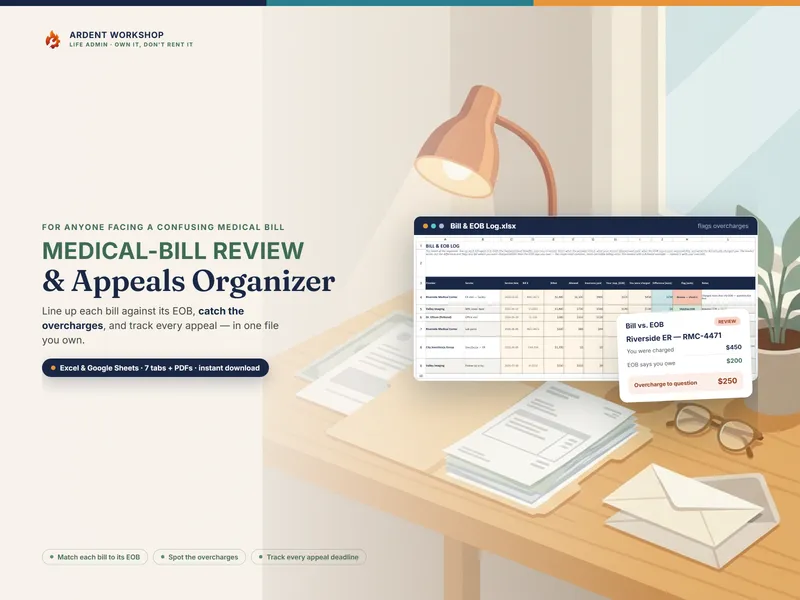
Medical-Bill Review & Appeals Organizer — EOB Matching, Denial & Appeal Tracker for Excel & Google Sheets
A medical-bill review & appeals organizer for Excel & Sheets — match bills to EOBs, catch overcharges, and track every denial and appeal you own.
Life AdminView details - $5.95 Excel
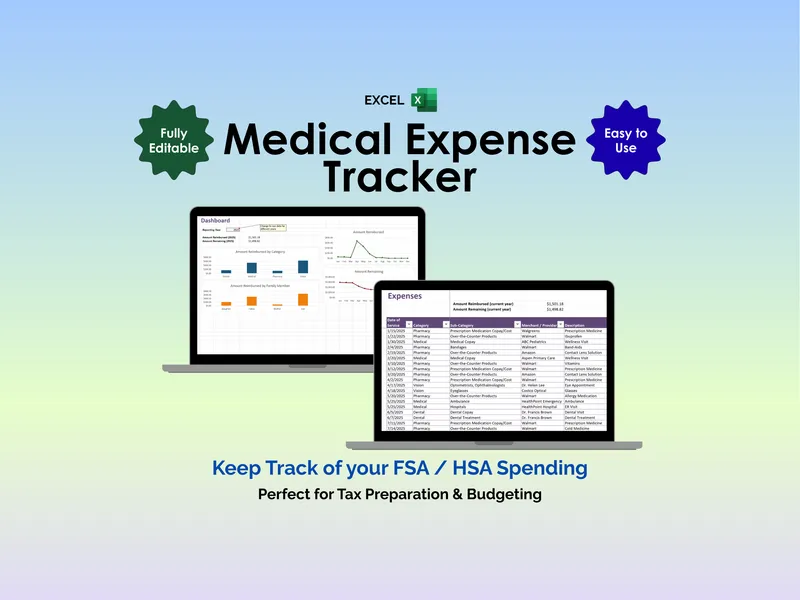
Medical Expense Tracker - Excel
Nobody really teaches you how to keep up with medical bills. This excel medical expense tracker holds the dates, providers, family members, and FSA/HSA reimbursements in one quiet place.
Life AdminView details